Tree · Pinaceae
Colorado Blue Spruce
Picea pungens
Give it full sun, cool air, and well-drained ground, and the blue spruce keeps its silver color for decades.
Full sun
Every 7–14 days
USDA 2–7
30–60 ft · 9.1–18.3 m
Overview
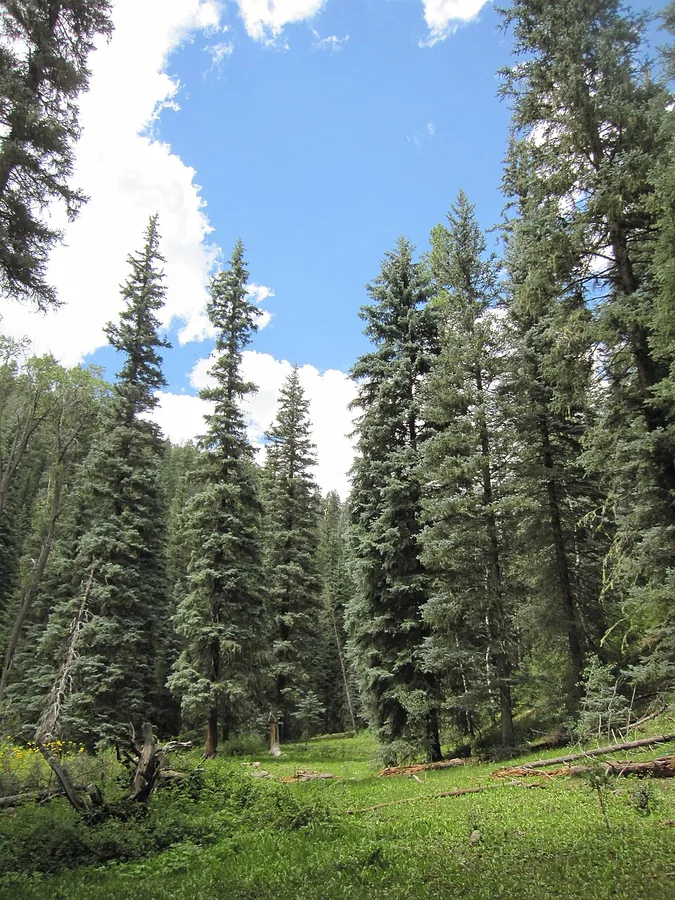
Not many trees turn heads like a Colorado blue spruce does, with those silvery-blue needles and that crisp pyramid shape. It's a Rocky Mountain native, from the cool, dry middle of the range where the air's sharp and water drains away in a hurry. Picture that mountain home and you've pretty much got the care sorted.
Here's the thing: it's a slow-growing evergreen that's in no rush whatsoever. Leave it to its own devices and it'll climb past 60 feet and spread 20 feet at the base, so it works as a standout specimen or a windbreak, not something you'd squeeze into a corner. And those stiff needles? They end in seriously sharp points, prickly enough to send most browsing critters packing.
Cold doesn't faze it one bit, since it's hardy from zone 2 to zone 7 and laughs off winters that would do in most trees. So what's the catch? Heat and humidity. Stick it in a muggy southern yard and it tends to thin out and drop its lower branches, so the cooler and breezier the spot, the better it'll hang onto its good looks.
Care
The short version: full sun, cool air, and rich, well-drained soil that never stays wet. Water it deeply while it's young, give it lots of room to spread out, and after that you can pretty much leave it be.
Light
Give a blue spruce full sun, ideally 6 or more hours a day, and you'll get the thickest growth and the brightest blue out of it. It'll handle a bit of afternoon shade, which actually does it a favor in hot spots, but stick it in deep shade and it just grows thin and loses its color.
Water
When it's young, water it deeply and keep the soil evenly moist but never soggy, because standing water is one of the few things that'll flat-out kill this tree. Once it's settled in, an older spruce gets pretty drought tolerant and mostly looks after itself, though a deep drink during a long dry spell never hurts.
Soil
Plant it in rich, moist, well-drained loam, though honestly it'll adapt to most soils as long as water keeps moving through. A pH anywhere from 5.5 to 7.0 is fine by it. The one thing it won't put up with? Ground that stays wet, which rots the roots.
Temperature
This is a tough mountain tree, happy from a bone-chilling -51°F (-46°C) all the way up to about 86°F (30°C). It's the heat that gets it, not the cold. Keep it in steady warmth and humidity and you'll stress it out and leave the door wide open for disease.
Humidity
Blue spruce likes things dry and airy, basically the opposite of a steamy greenhouse. Damp, stale air is exactly what lets needle-cast fungi move in, so the more open and breezy the spot, the healthier it'll stay.
Feeding
An established spruce in halfway-decent soil rarely needs feeding at all. If a soil test does turn up a real shortfall, a balanced slow-release tree fertilizer in spring is all you need. You can skip the yearly feeding routine, because this tree doesn't want it and doesn't need it.
Pruning
Keep the pruning light and never cut the central leader, since that's what gives the tree its shape. Just take off dead, diseased, or damaged branches, and do it in late winter or during a dry stretch so you're not spreading Cytospora canker through fresh cuts.
Repotting
A blue spruce wants to be in the ground, not a pot, so repotting rarely comes up beyond moving a young nursery tree to its forever home. If you are keeping one in a container for now, watch for roots circling the pot or poking out the drainage holes, and take that as your sign to plant it out.
Size & spacing
Plan for a big one, because a grown specimen hits 30 to 60 feet (9 to 18 m) tall and 10 to 20 feet (3 to 6 m) wide at the base. Give it all that open room and keep it well away from buildings, walks, and power lines right from the start.
When to plant
It's an evergreen, so there's no harvest to wait around for, just the right time to get it planted. Go for spring once the soil's thawed, or early fall while the roots still have some warm weeks to settle in before winter shows up. The one stretch to skip is the heat of midsummer, when a brand-new tree really struggles to keep its young roots happy.
Northern hemisphere
Southern hemisphere
Typical months for a temperate climate: start earlier in warm zones, later where spring frosts linger.
- Plant: Spring or early fall
- Harvest: Non-flowering; grown for evergreen foliage and pyramidal form
Hardiness
USDA hardiness zones: 2–7
Temperature: down to -46°C
Troubleshooting
Most blue spruce headaches show up first in the needles or on one branch that's clearly on its way out, and a lot of it comes back to heat, humidity, or a spot that holds water. Spot it early, though, and you can usually slow things down before they spread. Find what matches your tree below, then jump on it while there's still something to gain.
Lower branches dying off, bark caked with bluish-white resin
Cytospora canker tends to go after trees that are already run-down from drought or heat, picking off one scattered lower branch at a time. The dead giveaway is a hard, bluish-white crust of dried sap near the base of a dying branch. There's no spray that'll cure it, so just prune the dead wood out in dry weather, wipe your tools between cuts, and keep the tree watered and mulched.
Fix:
- Prune out and destroy infected branches during dry weather
- Disinfect pruning tools between cuts
- Repeat pruning over two consecutive seasons if needed
- Reduce stress with mulch and watering during drought
Old inner needles going brown and dropping, thinning it from below
If the older inner needles are browning and dropping and the tree's thinning from the lowest branches on up, you're probably looking at needle cast, usually the Rhizosphaera fungus, creeping up from the bottom. Grab a hand lens and check for neat rows of tiny black dots on the needles, something you'd never see on a healthy tree. Open the tree up for airflow, keep the foliage dry, and treat the new growth with a fungicide for at least two seasons in a row.
Fix:
- Improve air circulation by spacing and selective thinning
- Avoid wetting the needles with overhead sprinklers
- Apply chlorothalonil, copper hydroxide, or mancozeb when new needles are about half their mature length, with a second application 3 to 4 weeks later, for at least two consecutive years
- Remove and destroy fallen infected needles
The top shoot flopping like a shepherd's crook, then withering
When the leader flops over like a candy cane and dies back, the culprit is usually the white pine weevil, whose larvae bore down inside that top shoot. In spring, look for pinhead holes weeping sap on last year's leader. Cut the dead leader out below the damage before the adults can get away, then tie up one straight side branch and train it to be the new top.
Fix:
- Prune out and destroy the infested dead leader below the larval damage in summer before adults emerge
- Train a single straight side branch to become the new leader
- Apply a labeled insecticide to the leader in early spring where weevil pressure is high
Dull, speckled needles with a bit of fine webbing
Needles going dull and speckled under a haze of fine silk usually mean the spruce spider mite, which really kicks off in hot, dry, dusty weather. Tap a branch over a sheet of white paper and watch for little specks that crawl around. Hit the foliage with a hard jet of water, and grab some horticultural oil in the cool of spring or fall while the mites are still busy.
Fix:
- Hose down foliage with a strong stream of water to dislodge mites
- Apply horticultural oil or a labeled miticide when mites are active in cool spring and fall
- Avoid broad-spectrum insecticides that kill mite predators
Toxicity
Got pets or little ones at home? Good news, because the blue spruce is not poisonous. The only thing worth watching is the needles, which come to sharp points that can scratch skin or poke a small child near the eyes. If a pet chews a mouthful it might get a quick upset stomach, but honestly, that's the worst of it.
Safe for
People · Cats · Dogs · Horses · Rabbits · Livestock · Birds
Cats None
Not poisonous to cats. A cat that chomps a mouthful of needles might drool or be sick for a bit, but nothing worse than that.
Dogs None
Safe for dogs. Those sharp needles are more of a poke than a poison, though a big chew can leave a dog with a passing upset stomach.
Horses None
No toxin here for horses. The stiff, prickly needles aren't appealing to graze and don't carry any real risk.
Rabbits None
Harmless to rabbits, and that bristly foliage isn't something most of them will bother to nibble anyway.
Livestock None
Cattle, goats, and sheep can browse around it without getting poisoned. The sharp needles usually keep them off it regardless.
Birds None
Birds are in no danger from it. A lot of them actually shelter and nest right in its dense, prickly branches.
People None
Not toxic to people. The one thing to watch is the needle tips, which are sharp enough to scratch skin or poke a small child near the eyes.
The needles are stiff, sharp, and bristly and can mechanically poke or scratch skin and eyes, and the species has been noted to cause injury to toddlers from its sharp leaf tips; this is physical irritation, not a poisoning. Chewing on needles may cause mild mouth or stomach irritation in pets.
Varieties
Most of the blue spruce you'll find at the garden center are named cultivars, each one picked for a certain color, shape, or size. A few pop up way more than the others, and they run all the way from full-size giants down to little rock-garden dwarfs.
Hoopsii
Hoopsii is a dense, pyramidal pick that's grown for the most intense silvery-blue needles of the lot, and it tops out around 30 to 50 feet.
Fat Albert
Fat Albert is a broad, full pyramid that stays a manageable 8 to 15 feet, so its bright blue needles fit right into a smaller yard.
Baby Blue
Baby Blue is a semi-dwarf with a neat, even cone shape to about 15 to 20 feet, all dressed up in closely set silvery blue-gray foliage.
Montgomery
Montgomery is a slow dwarf that builds a broad cone or globe just 2 to 3 feet across over the years, which is what makes it perfect for rock gardens and foundation beds.
How to propagate
You've got two ways to make more blue spruce, seed or grafting, and which you pick really depends on whether you care about that famous blue. One's slow but easy, the other's fussy but dependable.
SeedModerate
Sow stratified seed in spring · Several years to reach landscape size
You can grow the species from seed, and while it works fine, it's a slow road, and a tree takes several years to reach any real landscape size. Sow it in spring after a cold, moist stratification to get germination moving. Just keep in mind the seedlings vary in color, so that famous blue? Far from guaranteed.
GraftingDemanding
Late winter onto seedling rootstock · Several years
The named blue cultivars like Hoopsii and Fat Albert won't come true from seed, so they get grafted instead. That's done in late winter onto a seedling rootstock, and even then the young graft needs several years to settle in. It's exacting work, so it's really better left to an experienced propagator than a first-timer.
Myths
The Colorado blue spruce is a no-hassle, long-living tree that does great pretty much everywhere across North America.
Truth is, it comes from the cool, dry central Rocky Mountains, and it really struggles once you plant it somewhere that doesn't match. All across the humid East and Midwest it tends to thin out and lose its lower branches as needle casts and Cytospora canker move in, and several extension programs no longer recommend it for those areas.