Tree · Pinaceae
Dwarf Alberta Spruce
Picea glauca
A neat, slow-growing evergreen cone that just wants full sun, steady moisture, and air that moves.
Full sun
Every 7–14 days
USDA 3–6
10–13 ft · 3–4 m
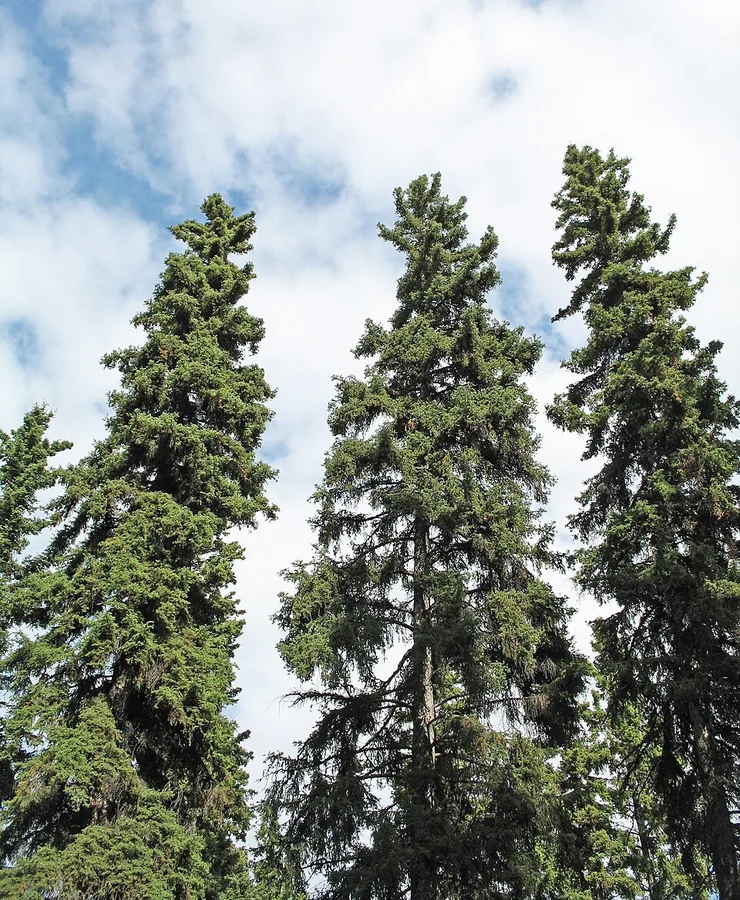
Overview
You've probably walked past a dwarf Alberta spruce without thinking about it. It's that tidy little evergreen cone tucked beside doorways and anchoring foundation beds. It's a slow-growing sport of the white spruce, which means it turned up as a naturally compact mutation and folks have grown it ever since for that dense, near-perfect pyramid of soft green needles. The best bit? It pretty much shapes itself.
It really pulls its weight in cold gardens, holding up through hardiness zones 3 to 6 and laughing off winters as low as -40°F (-40°C). Growth is slow, just a couple of inches a year, so a young plant stays small for ages before it ever looks like a tree. That easygoing pace is what makes it so simple to fit into a small yard or even a big pot.
Two things really decide how well it does, and neither is hard. It wants full sun and air that keeps moving, because those hot, still, dusty corners are where spider mites get started, and that's the one pest that can hollow it out from the inside. Sort that out, keep the moisture steady, and it'll hold its clean shape for years without asking much of you.
Care
The short version: full sun, soil that stays moist but drains well, and good air circulation. Water deeply in dry spells and before winter, give it a light feed in spring, and keep half an eye out for spider mites when it's hot and still.
Light
Give it full sun and you'll get the densest, healthiest growth. It'll handle partial shade, but a shaded plant grows thinner and more open, and shade with stuffy airflow is exactly where spider mites love to set up shop.
Water
Keep the soil evenly moist and well-drained, watering about every 7 to 14 days and more when it's dry. A deep soak before the ground freezes in late fall is hands down your best defense against winter burn. Dry foliage and moving air help keep mites away too.
Soil
Plant it in moist, well-drained loam that runs acidic to neutral, a pH of 6.0 to 7.0. It hates sitting in soggy ground, so if you've got heavy clay, work in some amendments or plant it on a raised spot.
Temperature
This is a seriously cold-hardy conifer, happy anywhere from -40°F to 95°F (-40°C to 35°C). It takes deep cold way better than long, hot, dry heat, which wears it down and basically rolls out the welcome mat for mites.
Humidity
Regular outdoor humidity is plenty, so there's no number to chase here. What matters way more is air circulation, because still, damp air around the needles is what bumps up the risk of pests and disease.
Feeding
A light feed in spring with a balanced or acidifying slow-release evergreen fertilizer is all it needs. Once a season is plenty for such a slow grower, and overfeeding really doesn't help.
Pruning
Pruning's mostly minimal, which is nice. Clear out any dead or mite-damaged wood, and the second a vigorous, large-needled shoot reverts to the wild white spruce form, cut it back below where it starts before it can take over.
Repotting
If it's in a pot, repot every 2 to 3 years with fresh mix. Watch for roots circling or poking out the drainage holes, water running straight through, or growth that stalls and dies back, since those all mean it's outgrown its pot.
Size & spacing
Given enough years it gets to about 10 to 13 feet (3 to 4 m) tall with a 7 to 10 foot (2.1 to 3 m) spread. Give it open ground and room for air to move, both so it has space to fill out and so mites stay away.
When to plant
There's no sowing season to think about, since the dwarf form comes from cuttings or grafts instead of seed. Just pop young plants in the ground in spring or early fall, when the soil's easy to work and the roots get some mild weather to settle in before the heat or hard frost shows up.
Northern hemisphere
Southern hemisphere
Typical months for a temperate climate: start earlier in warm zones, later where spring frosts linger.
- Plant: spring or early fall
Hardiness
USDA hardiness zones: 3–6
Temperature: down to -40°C
Troubleshooting
Most of the trouble with this spruce shows up in the needles or the shape. Browning foliage usually means spider mites or winter burn, while a sudden coarse limb is just the dwarf form reverting. Match what you're seeing below and jump on it early, because a stressed conifer takes its sweet time bouncing back.
Inner needles going bronze with a bit of fine webbing
What you've run into is the spruce spider mite, and it goes after plants that are already stressed in hot, dry, dusty corners where the air just sits. Want to be sure? Tap a branch over white paper and see if tiny crawlers show up. Then hose the foliage off with a hard spray and follow up with insecticidal soap or horticultural oil, and since deep watering and better airflow keep the plant tough, it'll usually shrug the whole thing off.
Fix:
- Wash foliage with a strong water spray weekly to bi-weekly to dislodge mites
- Apply insecticidal soap or horticultural oil to affected foliage
- Apply a dormant oil spray in mid-winter to kill overwintering eggs
- Reduce plant stress with deep watering and improved air circulation
Scorched brown needles on the windy side late in winter
That's winter burn, and here's what's going on: the soil is frozen so the roots can't grab water, but the winter sun and wind keep pulling moisture out of the needles anyway. So the exposed south or southwest side dries out and browns while the sheltered side stays green. The fix is easy enough, since a deep soak in late fall before the ground freezes helps a lot, and a burlap screen gets young or exposed plants through their first few winters.
Fix:
- Water deeply in late fall before the ground freezes
- Provide a windbreak or burlap screen on the exposed side
- Site away from drying winter wind and reflected heat
One coarse, fast limb messing up the cone shape
Here's the backstory: the dwarf 'Conica' started out as a sport of the regular full-size white spruce, so every so often a shoot reverts and throws back to that bigger parent, usually after some stress. It's not hard to spot, since the reverted growth has longer needles, grows faster, and looks coarser than the tight little dwarf foliage next to it. Just cut that shoot off cleanly below where it starts as soon as you notice it, because if you don't, it'll take over the whole plant.
Fix:
- Prune the reverted shoot off cleanly below where it emerges as soon as it is noticed
- Remove repeatedly reverting plants if they cannot be kept in character
Toxicity
Good news if you've got pets: dwarf Alberta spruce is not toxic. It's not on the ASPCA's list of poisonous plants, and there's nothing in the needles or wood that'll hurt cats, dogs, or anything else. The only thing worth watching is the sharp, stiff needles, which can prickle a curious mouth or upset a stomach if something chews on them.
Safe for
People · Cats · Dogs · Horses · Rabbits · Livestock · Birds
Cats None
Cats are fine around it. If one chews the stiff needles it might drool or bring a little back up, but that's just the prickle bugging it, not poison.
Dogs None
Nothing here to scare a dog owner. The worst a mouthful of sharp needles does is leave a dog with a mild upset stomach, and that's it.
Horses Safe
Horses can graze right next to it without any trouble, because there's no toxin in the foliage.
Rabbits Safe
Rabbits are totally fine with it, and honestly the needles are too coarse to tempt much nibbling anyway.
Livestock Safe
Cattle, goats, and sheep have nothing to worry about, since this spruce won't poison them.
Birds Safe
Birds can shelter and perch in it all they like, because nothing on the plant is poisonous to them.
People Safe
People don't need to worry either. There's nothing here to eat, and the only real catch is getting poked by the sharp needles.
No special toxicity precautions needed; discourage pets from chewing sharp evergreen needles.
Varieties
Most of what you'll see for sale is the plain old 'Conica', but a few named picks change up the size, color, or density. Here are the ones worth knowing about.
Jean's Dilly
It's even tinier and slower than 'Conica', putting on just 2 to 4 inches a year toward roughly 5 feet, with very short, slightly twisted needles in a tight little cone.
Rainbow's End
Its fresh early-summer growth comes in creamy yellow against the light-green older foliage, so you get a fun two-tone, variegated look.
Pixie
It's a more compact, denser little version of the 'Conica' form, great when space is really tight.
Sander's Blue
A 'Conica' sport with soft blue-green needles that keeps a cone shape but eventually gets bigger, reaching around 20 feet.
How to propagate
Don't bother starting this one from seed, because seedlings just revert to the full-size white spruce. Both real ways of making more are slow and need patience, so most people end up buying it rather than growing their own, and that's totally fine.
Stem cuttingsDemanding
Late summer to fall (semi-hardwood) · Several months to over a year to root
Seed won't stay true to the dwarf form, so the 'Conica' gets grown from cuttings instead. Take semi-hardwood cuttings from late summer into fall, and then settle in for a long wait, because rooting can take anywhere from several months to more than a year.
GraftingDemanding
Late winter onto white spruce rootstock · One or more seasons
Grafting is the reliable way to copy the dwarf form, and it means joining it onto sturdy white spruce rootstock in late winter. That union needs a season or more to take hold before the young plant's ready to grow on.
Myths
Dwarf Alberta spruce stays tiny forever.
It's slow, not actually small. Give it decades and it works its way up to about 10 to 13 feet, so what you've really got is a small tree that just takes its time, not a forever-dwarf.