Tree · Pinaceae
Mugo Pine
Pinus mugo
A tough evergreen mountain pine that just wants full sun and sharp drainage, and then it pretty much takes care of itself.
Full sun
Every 7–14 days
USDA 2–7
2–25 ft · 0.6–7.6 m
Overview
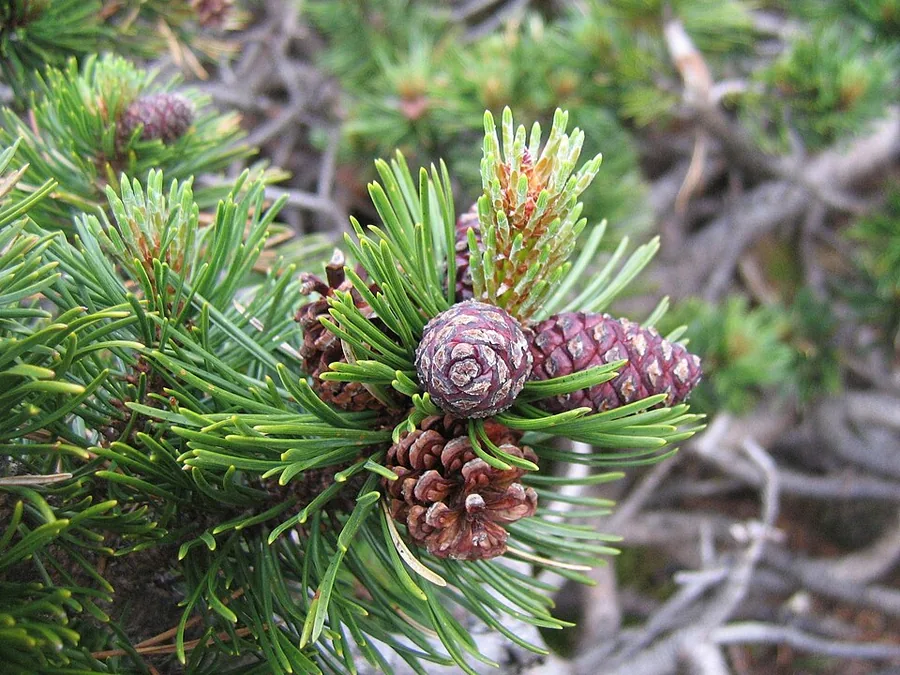
Mugo pine hails from the mountains of central and southern Europe, and it's held onto all that hardiness. It laughs off cold down to -40°F (-40°C), handles wind and rough ground without complaint, and stays green all year, so you'll spot it along foundations, in rock gardens, and as a low evergreen anchor in cold-climate beds.
Most folks picture a tidy little mound, but here's the thing: that picture can trick you. A mugo pine is really variable, and whether you get a knee-high shrub or a 25-foot tree usually comes down to one choice, a named dwarf cultivar or an unnamed seedling. Grafted cultivars stay compact for good, while seedlings just do whatever their parents did.
And the care? Honestly easy. Give it sun, drainage it can count on, and a yearly pinch of the new spring growth if you want it to stay small, and a mugo pine doesn't ask for much more. Its main headaches are a couple of pests, sawfly and pine needle scale, and both are simple to head off once you know when to keep an eye out.
Care
The short version: full sun, well-drained soil where it never sits wet, and a yearly candling in spring if you want to keep it small. Once it's settled in, it handles drought and poor ground all on its own.
Light
Give a mugo pine full sun and it grows its densest, healthiest, though it'll take a little partial shade too. Leave it in too much shade, though, and it thins out and goes open and leggy, losing that compact look that made it worth planting.
Water
While a young plant is settling in, water enough to keep the soil moist but never soggy, and let the top half dry out between drinks. Once it's established, it turns genuinely drought tolerant and shrugs off poor, dry, sandy ground. The one thing it really won't put up with? Wet feet.
Soil
It does best in moist, well-drained loam or sandy soil, but honestly, its real strength is how adaptable it is. Clay, dry ground, poor fertility, even alkaline soil all work for it, as long as water drains away instead of pooling around the roots.
Temperature
This is a cold-hardy mountain plant, comfortable anywhere from -40°F to 95°F (-40°C to 35°C). That toughness is exactly why it does so well in northern gardens where plenty of other evergreens just give up.
Humidity
Regular outdoor humidity is all it wants, so there's no number to chase here. Airflow matters way more than moisture in the air, since it's still, damp conditions that let needle blight get going.
Feeding
An established mugo pine rarely needs feeding. If the growth looks weak, a light application of a balanced or slow-release fertilizer in spring is plenty, and overfeeding actually does more harm than good.
Pruning
Keep it compact by candling, which just means pinching or cutting the soft new spring shoots back by about half before the needles open. You can do a little light shaping in late winter too, but candling is the real tool for holding its size.
Repotting
A container-grown mugo pine needs repotting every 2 to 3 years. Roots circling the pot, water running straight through, or slowed growth with yellowing needles are all telling you it's time to size up.
Size & spacing
Its size totally depends on the plant you started with. A named dwarf stays a low mound, but an unnamed seedling can climb from 2 feet to 2 to 25 feet (0.6 to 7.6 m) tall and spread just as wide, so give it room based on the cultivar you actually got.
When to plant
Since it's a slow, woody evergreen, a mugo pine doesn't have a sowing season the way a vegetable does. Just set new plants out in spring or early fall so the roots settle before the weather turns extreme, and do your size-keeping by pinching the soft new candles in late spring.
Northern hemisphere
Southern hemisphere
Typical months for a temperate climate: start earlier in warm zones, later where spring frosts linger.
- Plant: Spring or early fall
- Harvest: Non-flowering; grown as an evergreen conifer (cones mature late summer to fall)
Hardiness
USDA hardiness zones: 2–7
Temperature: down to -46°C
Troubleshooting
A healthy mugo pine barely gives you any grief, and when something does go wrong, it usually shows up on the needles. Get to know the spring and summer windows when its main pests turn up, and you can stop trouble before it spreads. Find your symptom below, then act while it still does some good.
White waxy specks on the needles and a dusted, whitewashed look
When the needles look powdered with white and start going yellow, that's pine needle scale, and it's one of the tougher pests to deal with on mugo pine. Each waxy speck is only about 3 mm long, but let a lot of them build up and they'll turn the needles yellow-brown and leave everything looking whitewashed. Here's the trick: catch the tiny reddish crawlers with horticultural oil or an insecticide in mid to late May and again from mid-July, snip off any branches that are really crusted over, and go easy on the lady beetles and parasitic wasps, since they're already hunting the scale for you.
Fix:
- Apply horticultural oil or a registered insecticide against the first-generation crawlers in mid-to-late May and again for the second generation from mid-July through August
- Prune out and destroy heavily encrusted branches
- Conserve natural predators such as lady beetles and parasitic wasps
Bunches of caterpillar-like larvae munching the old needles in spring
Those little grazers packed together on the branches? They're European pine sawfly larvae, and mugo pine is one of the plants they go for. You'll see them from mid-May into June eating last year's needles while the fresh spring growth stays fine, which is why a branch can look stripped but still green at the tips. The good news is they stick together, so a strong spray of water or a bit of hand-picking clears a small group, and you can just spot-treat a bigger one.
Fix:
- Hand-pick or knock larvae off with a strong spray of water for small infestations
- Spot-treat colonies with a registered insecticide since larvae feed in groups
- Fall soil application of imidacloprid or dinotefuran can control larvae the following spring
Brown needle tips over reddish bands, with needles dropping early down low
If the needle tips are browning above green bases and dropping early, mostly on the lower branches, you're probably looking at Dothistroma needle blight. It's a fungus that gets going in wet weather and on stressed plants, though a tip blight like Diplodia can look a lot like it. Since it likes moisture, water at the base instead of over the top, open the plant up so air can move through, and reach for a copper fungicide before spring bud break and again once the summer needles have hardened.
Fix:
- Improve air circulation through proper spacing and selective branch removal
- Avoid wetting the needles with sprinklers and water at the base
- Apply a copper fungicide before spring bud break and after summer needle maturation to protect new growth
A dwarf that just keeps growing and outgrows its spot
Ever bought a dwarf that just wouldn't stop growing? Odds are it was a seedling-grown plant sold as a dwarf. The species is all over the place, so an unnamed seedling can hit 15 to 25 feet instead of staying a neat little mound. You can keep it in check with yearly candling and some late-winter pruning, but the real answer is to grab a named, grafted cultivar next time, like var. pumilio, 'Mops', or 'Slowmound'.
Fix:
- Maintain size by candling (pinching new spring shoots by about half each year)
- Prune annually in late winter to retain a compact form
- Choose a named dwarf cultivar (e.g. var. pumilio, 'Mops', 'Slowmound') when replanting
Toxicity
Good news if you've got pets or grazing animals around: mugo pine is a true pine, so there aren't any known toxins to worry about. The needles are stiff and the sap's sticky, so a chewing pet might get a scratchy mouth or some resin on the fur, but nothing here is going to poison cats, dogs, horses, or livestock.
Safe for
People · Cats · Dogs · Horses · Rabbits · Livestock · Birds
Cats None
Cats are fine. It's a true pine, so there's nothing in it to poison one, and a curious nibble isn't going to hurt. About the worst you'd see is a bit of drooling or a mild upset stomach from those stiff needles or sticky sap.
Dogs None
Dogs don't have to worry either. There's no poison in the needles or the bark, so a chewy pup ends up with, at most, a scratchy mouth or some resin stuck in the fur that wipes right off.
Horses None
Nothing to stress about with horses. This isn't one of the pines linked to trouble in pregnant mares, so they can graze around it just like any other conifer.
Rabbits None
It's non-toxic to rabbits. They'll sometimes gnaw pine bark over winter and come away just fine, though the woody needles aren't much of a meal, so keep the hay coming as their main food.
Livestock None
Cattle, goats, and sheep can browse it without any issue, since it isn't one of those ponderosa-type pines that cause problems for pregnant grazing animals.
Birds None
Birds actually love it. They tuck into the thick growth for cover and peck at the seeds, and none of it puts them at any risk.
People None
People are in the clear too. Sure, the sap is sticky and the needles can poke you, but neither one is poisonous, so if you get resin on your skin, just wash it off.
Sap is sticky and resinous and the needles are stiff and pointed, which can cause mild mechanical irritation; otherwise no known toxicity.
Varieties
Buying a mugo pine by cultivar name is really the only way to know how big it'll get. Here are the named dwarfs worth tracking down.
var. pumilio
It's a low, spreading dwarf that mounds up to about 3 to 5 feet tall and 6 to 10 feet wide, and it's been a rock-garden favorite for ages.
'Mops'
This one's a tight, rounded dwarf around 3 to 4 feet, with very short paired needles that can pick up a yellow cast over winter.
'Slowmound'
A slow-growing low mound that tops out near 2 to 5 feet, so it's a great fit for small gardens and foundation beds.
'Gnom'
A dense, dark green globe that's grown for its neat, compact shape and barely needs any shaping from you.
How to propagate
There are three ways to propagate a mugo pine, and which one makes sense really comes down to whether you care about keeping a plant true to its parent.
GraftingDemanding
Late winter (dormant season) · 1-2 years
Grafting is how growers keep a named dwarf cultivar true to form, joining a cutting onto seedling rootstock during the dormant season in late winter. It's skilled work, though, and a grafted plant needs a year or two to knit together and settle in, which is why these cultivars cost more than a plain seedling.
SeedModerate
Spring, after cold stratification · Several years to landscape size
Seed comes up pretty easily once you've given it a stretch of cold stratification and sown it in spring. The catch? Seedlings vary a lot in size and shape, so seed's really best for raising the species or rootstock rather than a named dwarf. And be patient, because a young plant takes several years to reach landscape size.
Stem cuttingsDemanding
Late winter to early spring · 1-2 years
Cuttings taken in late winter to early spring are slow and stubborn about rooting, and even the ones that take need a year or two to establish. So most growers just skip them and graft instead, which gives a far more reliable plant when you want cultivars.
Myths
Every mugo pine stays small and shrubby.
Only the named cultivars grown from grafts or cuttings can be trusted to stay compact. A seedling sold as a plain old mugo is a gamble, because the species varies so wildly that an unnamed one can shoot up into a small tree 15 to 25 feet tall and wide. Want a real dwarf? Buy it by cultivar name.