Tree · Pinaceae
Eastern Hemlock
Tsuga canadensis
Give it cool, moist shade and eastern hemlock turns into a soft, feathery evergreen that'll stick around for generations.
Partial shade
Every 3–7 days
USDA 3–7
40–70 ft · 12.2–21.3 m
Overview
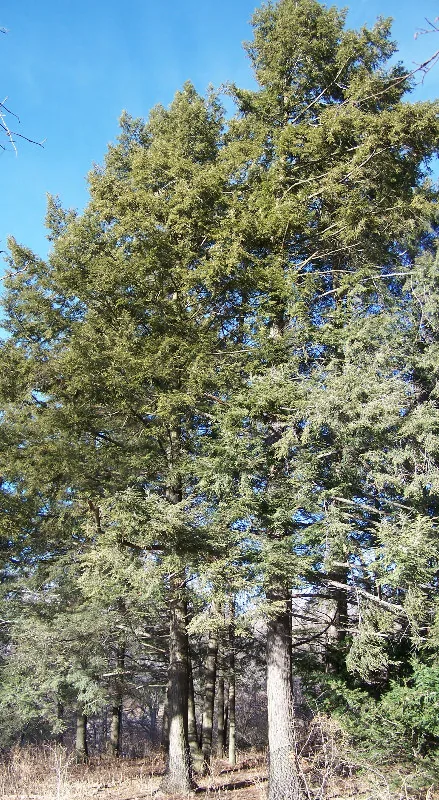
Eastern hemlock is a slow-growing evergreen conifer from the cool forests of eastern North America, and out there the old trees can stand for centuries. It's got short, flat needles and small brown cones, and the whole tree settles into a soft, feathery, pyramidal shape that feels a lot gentler than the stiff pines and spruces. Leave it be and it climbs to forest height, but it also takes shearing well, which is exactly why so many people grow it as a hedge.
What does this tree want most? Cool, moist shade, hands down. It's one of the most shade-tolerant conifers out there, perfectly happy under taller trees where a lot of evergreens would just thin out and sulk. The catch is that it doesn't deal well with stress, so heat, drought, drying wind, road salt, and city air all wear it down, which means a sheltered north-facing or woodland spot suits it way better than an open, sunny lawn.
There's one real thing to watch for. The hemlock woolly adelgid, a tiny invasive insect, has killed off huge stretches of wild hemlock across the eastern states, and a garden tree isn't off the hook either. Still, put it in the right spot and check it for pests now and then, and a hemlock barely asks for anything while handing you a dense, year-round wall of green.
Care
The short version: cool partial shade, steady moisture, and rich acidic soil that never dries out, plus a yearly once-over of the needles to catch woolly adelgid.
Light
Hemlock's happy in partial to full shade, and it's one of the few conifers that actually grows well under taller trees. It'll put up with some sun, but an open, hot spot bleaches and thins the foliage, so when in doubt, go for a cool, sheltered corner.
Water
Keep the soil consistently moist and never let it bake dry. This tree's got zero patience for drought, and a long dry spell can flat-out kill it, so water deeply in dry weather and mulch to hold that moisture in.
Soil
Plant it in cool, moist, acidic, well-drained ground, and loam, sand, or clay all work fine. A pH of 5.0 to 6.0 is what it likes best. The one thing it won't put up with? Soil that dries out or sits soggy and warm.
Temperature
Eastern hemlock's cold-hardy all the way down to -40°F (-40°C) and handles summer heat up to about 95°F (35°C). It's the dry, exposed heat that does the real damage, not the temperature on its own, so cool air and shade matter a lot more than whatever the thermometer says.
Humidity
Regular outdoor humidity is plenty, so there's no number to chase here. The tree just likes a cool, moist setting over a hot, drying one, and a sheltered woodland edge keeps the air around it nice and gentle.
Feeding
Feed it lightly in early spring with a balanced or acidifying tree fertilizer. Hemlock's a slow grower that doesn't ask for much, so one seasonal feeding is all it needs, and going heavy on the fertilizer just does more harm than good.
Pruning
Hemlock takes shearing better than most conifers, and that's what makes it such a great hedge or screen. Trim formal hedges in late spring to early summer. Left as a specimen, it barely needs any pruning and honestly looks best in its own natural feathery shape.
Repotting
This is a landscape tree, not a container plant, so it hardly ever gets repotted. If you do keep a dwarf form in a pot, only bump it up when roots circle the inside, growth stalls, or water runs straight through the soil.
Size & spacing
A mature forest tree hits 40 to 70 feet (12 to 21 m) tall and spreads 25 to 35 feet (7.5 to 10.5 m) wide, so give a specimen plenty of elbow room. Dwarf cultivars stay way smaller and fit nicely into beds and rockeries.
When to plant
Hemlock's hardy through zones 3 to 7, and you plant it rather than rushing it along from quick-sown seed. Set young trees out in spring or early fall while the soil's still cool and damp, and if you'd rather start from seed, just give it a long winter chill first, since germination takes its time.
Northern hemisphere
Southern hemisphere
Typical months for a temperate climate: start earlier in warm zones, later where spring frosts linger.
- Sow: Sow stratified seed in late winter; seed needs about 100 days of moist chilling before sowing
- Plant: spring or early fall
- Harvest: Non-flowering conifer; tiny brown cones about 2 cm long mature in autumn
Hardiness
USDA hardiness zones: 3–7
Temperature: down to -40°C
Troubleshooting
Most hemlock trouble turns up in the needles, either as pests on the undersides or as browning from a spot that runs too hot and dry. The good news? Catch the woolly adelgid early and you can save the tree. Find what you're seeing below, then step in before the canopy thins out.
White woolly fluff on the twigs and a tree that's slowly thinning
See little cottony white blobs sitting at the base of the needles? That's the hemlock woolly adelgid, an invasive sap-sucker that's flattened wild hemlock across the eastern states and can kill an untreated tree in just a few years. The way to stop it is a registered systemic insecticide, put down as a soil drench or injection from late September into October. Got a big, prized tree? Then it's worth handing the job to a certified arborist.
Fix:
- Apply a registered systemic insecticide (soil drench/injection or basal bark) per label, most effectively late September through October
- Treat high-value landscape trees preventively and re-treat on the label interval
- Consult a certified arborist for large trees needing soil injection
Yellowing needles with skinny scales tucked underneath
When a branch starts yellowing, flip it over and take a look, because you'll often find the slim waxy covers of elongate hemlock scale stuck to the needle undersides. Treat it with horticultural oil or a systemic insecticide, timed to when the young crawlers are out and about, and just prune off any branch that's heavily crusted. Here's the thing though: a well-watered tree shakes off a light case way more easily than a stressed one does.
Fix:
- Apply horticultural oil or a registered systemic insecticide timed to crawler emergence
- Prune out and destroy heavily infested branches
Stippled, bronzing needles with fine webbing when it's hot
If the needles look dull and stippled with a bronze tinge and you spot some faint webbing, spider mites are usually behind it, and they really get going in hot, dry weather. Want to be sure? Tap a branch over white paper and watch for the tiny mites crawling around. Hose the foliage down hard, then reach for horticultural oil or a miticide if it's gotten bad. A bit more water and some afternoon shade go a long way toward keeping them away.
Fix:
- Spray foliage with water to dislodge mites
- Apply horticultural oil or miticide if severe
- Improve watering and provide afternoon shade
Browning, scorched needles on a hot, exposed spot
Browning needles and a thinning canopy on a sunny, windy, or salt-splashed spot usually mean drought and scorch, not a bug, so don't go hunting for pests. Hemlock just can't handle hot, dry, exposed conditions, and that's all there is to it. Water deeply through dry weather, mulch to keep the roots cool, and give the tree some cover from afternoon sun, drying wind, and road salt. The real fix? Plant it in a cool, moist, shaded spot right from the start.
Fix:
- Water deeply and regularly during dry periods
- Apply mulch to keep roots cool and moist
- Provide shelter from wind, afternoon sun, and road salt
Toxicity
Got pets or little kids? Then here's a relief: the eastern hemlock conifer is not poisonous. The ASPCA lists it as non-toxic to cats, dogs, and horses, and no part of the tree is harmful to chew or handle. Just don't mix it up with poison hemlock, an unrelated weed that's covered in the myths below.
Safe for
People · Cats · Dogs · Horses · Rabbits · Livestock · Birds
Cats None
No worries with a cat around. The ASPCA calls this conifer non-toxic, so if yours sneaks a nibble on the needles, it's nothing to fuss over.
Dogs None
Your dog can chew the foliage or mouth a fallen cone and be totally fine, though like with any plant, a really big mouthful might give it a bit of a tummy ache.
Horses Safe
Horses are good here too, and they can browse right near an eastern hemlock without any poisoning risk at all.
Rabbits Safe
Rabbits have nothing to worry about, since the needles aren't poisonous, so a wild or pet bunny nibbling the lower branches is just fine.
Livestock Safe
Cattle, goats, and sheep can graze around the tree safely, because there's no toxin in any part of it.
Birds Safe
Birds are completely safe, and plenty of species shelter and feed in hemlocks while the seeds make a handy natural snack.
People Safe
Nothing on this tree is poisonous to people. Just remember it's the harmless conifer, not that deadly poison hemlock herb it happens to share a name with.
No special handling precautions for toxicity; foliage is harmless.
Varieties
Past the giant forest tree, breeders have come up with dwarf and weeping forms that fit a small garden or rockery just right. These are the ones you'll most likely run into at a nursery.
'Pendula' (Sargent's weeping hemlock)
It's a low, mounding weeper whose branches spill down to the ground, and it ends up much wider than it'll ever grow tall.
'Jeddeloh'
This one's a slow-growing dwarf shrub with a dished, nest-like center, and it's a great pick when you're working with a small garden or a foundation bed.
'Cole's Prostrate'
It's a ground-hugging dwarf that creeps flat across rocks and slopes instead of climbing up, so it slots into tight spots nicely.
How to propagate
You can raise eastern hemlock from seed or from cuttings, but heads up, neither one's quick, and the named garden forms are almost always grown from cuttings so they stay true.
SeedModerate
Collect seed from cones just beginning to open; sow after stratification in late winter to spring · Slow; several months to germinate and years to establish
Growing hemlock from seed is going to test your patience, so be ready for that. Give the seed about 100 days of moist chilling over winter before you sow it in late winter to spring, because it just won't sprout without that cold rest. Germination drags on for months and the seedlings need years to settle in, but here's the upside: they handle deep shade better than just about any other young conifer.
Stem cuttingsDemanding
Late fall to winter using semi-hardwood cuttings · Several months to root; rooting can be slow and erratic
Cuttings are how growers keep the named dwarf and weeping forms true to type, since seed won't copy them. Take semi-hardwood cuttings from late fall into winter and dip them in rooting hormone to boost your chances. Even then, rooting comes along slowly and unevenly, often over several months, so this one's really for the patient grower.
Myths
The hemlock tree is the deadly poison hemlock that killed Socrates, so it is dangerous to grow.
Don't let the name spook you, because the eastern hemlock tree is a harmless evergreen conifer in the pine family, and no part of it is poisonous. The poison that killed Socrates? That came from poison hemlock, an unrelated weed in the carrot and parsley family, and water hemlock is yet another toxic plant from that same family. The tree and those poisonous herbs share nothing but a name, and that's pure coincidence.