Houseplant · Marantaceae
Pinstripe Calathea
Goeppertia ornata
Hand it warmth, humidity, and the right water, and the pinstripe calathea gives back painted leaves that move along with the day.
Partial shade
65–75°F · 18–24°C
USDA 11–12
1–3 ft · 0.3–0.9 m
Overview
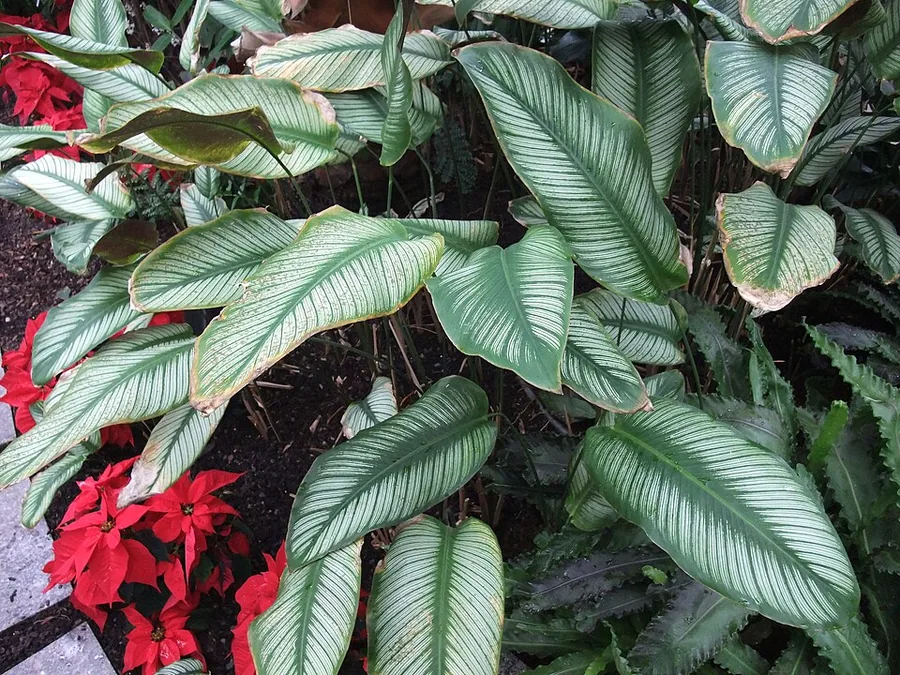
Ever wonder where the pinstripe calathea gets its name? It's those fine pink and white lines running across each deep green leaf, neat enough to look drawn on. It's a member of the prayer plant family, and it grew up on the shaded forest floors of South America, from southeastern Colombia down into Venezuela. That backstory pretty much spells out what it likes at home: filtered light, warmth, and air that doesn't dry out.
Here's a fun part. Every night this plant folds its leaves up, then opens them back up by morning, and that little daily routine is exactly why the family is called the prayer plants. It clumps instead of climbing, so it stays small enough for a tabletop or a shelf. The catch with those gorgeous leaves? It's a bit fussy, and it'll let you know fast when something's off.
You've probably heard calathea called a demanding houseplant, and that's fair. Get the water, humidity, and light dialed in and the leaves stay full and bright. Skimp on any one of them, though, and you'll spot crisp brown edges before too long.
Care
The short version: bright indirect light and no direct sun, soil kept evenly moist with distilled water or rainwater, humidity above 60%, plenty of warmth, and a light feed through the growing season.
Light
Give it bright, indirect light, basically what it'd catch under a forest canopy. A few hours of filtered light a day does the trick, and direct sun? That'll scorch the leaves and bleach the stripes right out. A partly shaded spot near an east window is just about perfect.
Water
Keep the soil evenly moist but never soggy, and don't let it dry out all the way. The tricky bit is the water itself, because calathea really doesn't like the fluoride, chlorine, and salts in tap water, which turn the leaf edges brown. Distilled water or rainwater is the way to go.
Soil
Pot it up in a well-drained, peat-based or African violet mix that feels loamy and holds moisture without going to mud. A pH from 6.0 to 8.0 is fine, but keeping it closer to 6.0 to 6.8 helps tie up fluoride and saves the leaves.
Temperature
Warmth isn't optional with this one. Shoot for 65°F to 75°F (18°C to 24°C) and keep it clear of cold drafts, chilly windows, and AC vents, all of which it really doesn't appreciate.
Humidity
This is where a lot of calatheas struggle indoors. The plant wants humidity above 60%, which is way more than most rooms have, so a humidifier or a pebble tray under the pot helps a ton, since dry air leads straight to those crispy brown edges.
Feeding
Feed it lightly with a balanced liquid houseplant fertilizer about once a month through spring and summer. Back off in fall and winter when growth slows down, and keep it light all around, because salt buildup from heavy feeding is another reason tips scorch.
Pruning
Good news, there's hardly any pruning to bother with. Just snip off any damaged, browned, or dead leaves at the base to keep it looking sharp. No shaping or cutting back needed.
Repotting
Repot it every 1 to 2 years in spring, or sooner if it gets rootbound. You'll know when roots start circling the pot or poking out the drainage holes, water runs straight through, or growth just stalls. And hey, spring repotting is the perfect time to divide it too.
Size & spacing
Picture a clumping plant that gets 1 to 3 feet (30 to 91 cm) tall and about as wide. It spreads out slowly instead of shooting up, so give it a pot with a little room to fill in.
Troubleshooting
Almost every calathea hiccup turns up in the leaves first, and most of it comes back to water, light, or dry air. The nice thing? The early signs are easy to read, so you can usually fix the cause before more leaves go. Find what looks like yours below, then tweak the conditions behind it.
Floppy yellow leaves and mushy roots underneath
If your calathea's drooping in soggy soil, it's root rot from overwatering, not thirst. The roots go mushy, dark, and smelly once they're stuck sitting in waterlogged mix. Tip the plant out, cut away the rotted roots, repot into fresh well-drained soil, and only water again once the surface isn't saturated anymore.
Fix:
- Remove from pot, cut away rotted roots, and repot into fresh well-drained mix
- Reduce watering frequency and ensure the pot drains freely
Little webs and dusty-looking speckled leaves
Hot, dry air is basically an open door for spider mites, which hang out on the leaf undersides and leave fine webbing with a faded, speckled look up top. Rinse the foliage and wipe the leaves to knock them off, then treat with insecticidal soap or horticultural oil. Keeping humidity high is your best bet long term.
Fix:
- Rinse foliage and wipe leaves to dislodge mites
- Treat with insecticidal soap or horticultural oil
- Raise humidity, which discourages mites
Crunchy brown tips showing up on the foliage
This is the classic calathea gripe, and nine times out of ten it's your tap water. The fluoride, chlorine, and salts in city water burn the leaf edges, and dry air just makes it worse. Switch over to distilled water or rainwater, bump up the humidity, and trim the dead edges so it looks clean again.
Fix:
- Switch to distilled water, rainwater, or well water instead of fluoridated tap water
- Increase ambient humidity with a humidifier or pebble tray
- Trim damaged leaf portions; keep soil pH around 6.0-6.8
- Avoid overfertilizing and flush soil periodically to remove salts
Washed-out stripes and sun-bleached blotches
When the pink-and-white striping fades and you see pale burnt spots, that's too much direct sun. Remember, this plant grew up on a shady forest floor, not in a sunny window. Move it back into partial shade or bright indirect light, where it gets a few hours of filtered sun and nothing harsher than that.
Fix:
- Move plant out of direct sun to a partial-shade or bright-indirect location
- Provide filtered light (2-6 hours indirect light daily)
Toxicity
Good news if you've got pets: the pinstripe calathea is completely non-toxic. The ASPCA gives it a thumbs up for cats, dogs, and horses, so a stray nibble is nothing to stress about. It's honestly one of the safest leafy plants you can keep around animals or little kids.
Safe for
People · Cats · Dogs · Horses · Rabbits · Livestock · Birds
Cats None
The ASPCA lists calathea as non-toxic to cats, so a curious nibble isn't going to poison your cat. A mouthful of any leaf could still upset a sensitive tummy and bring on a little drool or vomiting, but the plant itself doesn't have any toxin in it.
Dogs None
Dogs are just as safe here. There's nothing poisonous in the leaves, though a pup that gulps down a chunk might cough or get a quick stomach upset just from the rough plant matter.
Horses None
The ASPCA clears calathea for horses too. It's a tender tropical houseplant a horse would hardly ever run into, and no part of it is toxic.
Rabbits None
There's nothing in the plant that'll hurt a rabbit. Greens outside a rabbit's usual diet can loosen its stomach, so treat any stray nibble as a one-off and not a snack.
Livestock None
Goats, sheep, and cattle don't face any toxin from this plant. As an indoor tropical, it stays well out of their way anyhow.
Birds None
Pet birds can perch among the broad leaves no problem, since there's no poison in the foliage. A bird that shreds a leaf might just make a bit of a mess.
People None
Calathea's safe to keep around kids. It isn't grown to be eaten and doesn't have any edible parts, but a leaf ending up in a small mouth is nothing to panic over.
Varieties
Most of the named calatheas sold as pinstripe types come down to the color and width of their stripes. Here are the ones you'll bump into most.
'Albolineata'
This one skips the usual pink for thin stripes in white to light green.
'Beauty Star'
It's a compact pick at about 2 feet tall, with bright silvery veins.
'Roseolineata'
Its stripes show up in a soft, pale pink.
'Sanderiana'
You'll see fine pink stripes across the top of each leaf, plus a purplish flush underneath.
How to propagate
There's really just one dependable way to make more pinstripe calatheas, and it's easiest to do while you've already got the plant out for repotting.
DivisionModerate
Spring, before new growth starts, typically at repotting · Several weeks to a few months to root and resume growth
The one and only way to make more calatheas is by division, since it won't root from a stem or leaf cutting the way a lot of houseplants will. Do it in spring before new growth kicks off, and honestly the easiest time is when you've already got it out for repotting. Just gently pull the rhizome clump into sections that each keep some roots and leaves, give them warmth and steady moisture, and figure on anywhere from a few weeks to a few months before they settle in and start growing again.
Myths
Cats and dogs can get poisoned by chewing on a calathea or prayer plant.
You'll hear this one tossed around, but it's just not true. The ASPCA lists both calathea and the prayer plant as non-toxic to dogs, cats, and horses, and NC State Extension says the same about Goeppertia ornata. It's a genuinely pet-safe houseplant, no asterisks.
Scientists still officially know this plant as Calathea ornata.
That name's still all over plant tags, but botanists have already moved past it. Kew's Plants of the World Online now treats Goeppertia ornata as the accepted name, with Calathea ornata kept around just as a synonym. It's the exact same plant, so don't sweat it if your label still says Calathea.