Houseplant · Marantaceae
Never-never Plant
Ctenanthe burle-marxii
Get the light, humidity, and water right and this prayer plant rewards you with bold, patterned leaves that fold up each night.
Bright indirect
50–84°F · 10–29°C
USDA 10–12
2–3 ft · 0.5–1 m
Overview
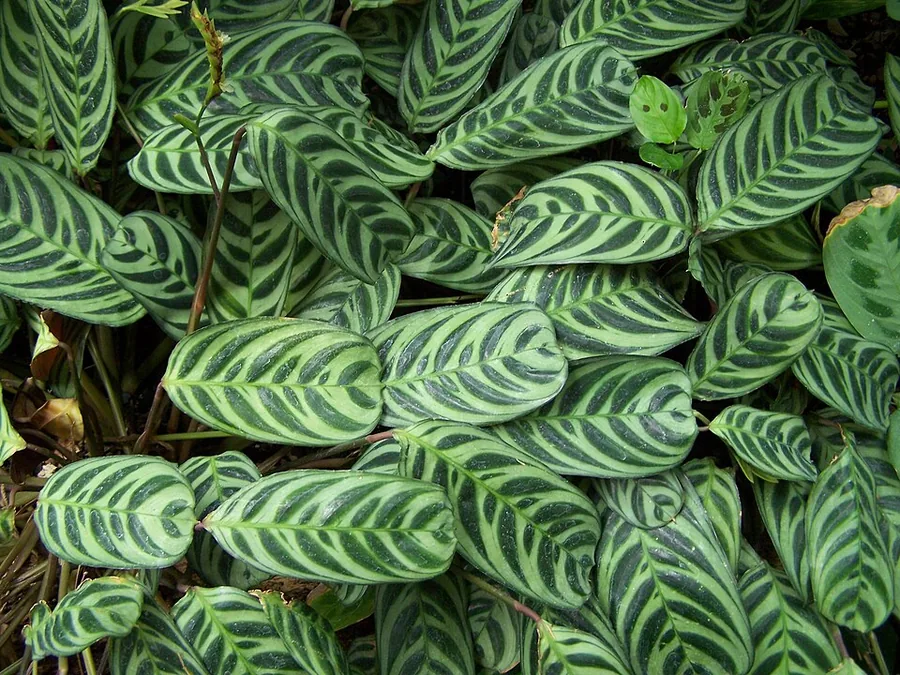
Ctenanthe is all about the leaves, not the flowers, and honestly, what leaves they are. The patterns go from creamy-white splashes to dark green fishbone bars, and a lot of them are backed by a flush of purple or wine-red. It's part of the prayer-plant family, comes from the seasonally dry forests of southeast Brazil, and it brings that lush, tropical feel to any bright corner.
Like its calathea and maranta cousins, ctenanthe is a prayer plant, and that's where the name comes from. Its leaves lie flat to soak up the light all day, then fold upward at night, so the whole plant seems to shift and settle as the evening comes on. It grows as a clumping perennial, filling out a pot rather than climbing or trailing around.
So is it fussy? A bit, yeah. Ctenanthe is a demanding plant that wants steady warmth, high humidity, and water with the minerals taken out. Hit those marks and it stays full and richly marked, but let the air dry out or reach for the tap and it'll let you know fast with browning edges.
Care
The short version: bright indirect light and no direct sun, with steady warmth and high humidity. Keep the compost evenly moist using distilled or filtered water, plant it in a rich, well-drained mix, and feed it monthly through spring and summer.
Light
Give ctenanthe bright, indirect light and keep it away from direct sun, which bleaches the markings and scorches the leaves. It's fine in partial shade and medium light too, so an east- or west-facing spot back from the glass works nicely.
Water
Keep the compost evenly moist through spring and summer, then water more sparingly in winter, and never let it dry out fully or sit waterlogged. But here's the thing that matters most: use distilled, filtered, or rainwater, because ctenanthe can't handle the minerals and salts in tap water and shows it with brown leaf tips.
Soil
Plant it in a rich, well-drained potting mix built on loam and humus, loosened up with orchid bark and perlite so it holds moisture without turning into mush. Any pH from 6.0 to 8.0 is fine, so the makeup of the mix matters way more than fiddling with acidity.
Temperature
Ctenanthe likes things warm, roughly 50°F to 84°F (10°C to 29°C), and it's not a fan of cold drafts. Keep it toward the warmer end of that range for the best growth, and well away from chilly windows and doorways in winter.
Humidity
This plant wants high humidity, more than most homes have going on by default. Sit the pot on a tray of moist gravel, cluster it with other plants, or run a humidifier nearby, since dry air brings on brown tips and tempts in spider mites.
Feeding
Feed it monthly through spring and summer, while it's actively growing, with a general liquid houseplant fertilizer. Then ease off in autumn and winter when growth slows down and it just doesn't need as much.
Pruning
Pruning is pretty much minimal. Just take off any damaged, browned, or yellowing leaves at the base to keep the clump looking tidy and to steer the plant's energy into healthy growth.
Repotting
Repot it once a year, ideally in late spring or early summer, going up a pot size when the roots start crowding or circling and growth stalls. The fresh mix each year also rinses out the salt buildup that bugs this plant, so it's worth doing.
Size & spacing
Ctenanthe gets to about 1.5 to 3 feet (50 to 100 cm) tall and spreads 4 to 20 inches (10 to 50 cm) wide as a clump. It grows at a moderate pace, so give it a pot and a spot with a little room to fill out.
Troubleshooting
Just about every ctenanthe problem shows up on the leaves, and most of them come back to water, light, or humidity. Catch the early signs and you can sort out the cause before things get worse. Find what matches below, then make the change while it still does some good.
Yellow leaves sitting over soft, mushy roots
If the older leaves go yellow while the soil stays wet, you're looking at root rot from overwatering. Here's the tell: healthy roots feel firm and pale, but rotting ones go dark, soft, and smell off. Stop watering and let the mix drain, then slip the plant out, cut away the blackened roots, and pop it into fresh well-drained mix in a pot that actually drains.
Fix:
- Stop watering and let the mix drain
- Unpot and trim soft, blackened roots
- Repot into fresh well-drained mix in a pot with drainage
Faint webbing and a dull, speckled cast on the leaves
Dry air rolls out the welcome mat for spider mites, which leave fine webbing under the leaves and a stippled, bronzed look up top. Start by rinsing the foliage and wiping the leaves, then raise the humidity, since these mites can't stand damp air. Still got a few hanging on? An insecticidal soap or horticultural oil used per the label will see them off.
Fix:
- Rinse foliage and wipe leaves
- Raise humidity to discourage mites
- Treat with insecticidal soap or horticultural oil per label
Fuzzy gray mold turning up on the leaves
That fuzzy gray stuff is Botrytis gray mold, and it moves in when high humidity meets still, stagnant air. First thing? Get the affected leaves off the plant. Then keep the air moving and stop wetting the leaves, because the plant wants humid air, not soggy surfaces the mold can settle into.
Fix:
- Remove affected foliage
- Improve air circulation
- Avoid wetting foliage and reduce standing moisture
Crispy brown tips and edges showing up on the leaves
Nine times out of ten this is mineral and salt buildup from tap water, because ctenanthe just can't deal with the fluoride, chlorine, and salts most taps carry, and dry air only pushes it along. So what fixes it? Switch over to distilled, filtered, or rainwater, snip the crispy edges off, and bump up the humidity around the plant.
Fix:
- Switch to distilled, filtered, or rainwater
- Trim off dead brown edges
- Raise humidity (tray of moist gravel, group plants, or humidifier)
Markings washing out with pale, scorched patches
When that bold pattern fades and pale burns show up where the light's strongest, too much direct sun is the answer, and ctenanthe really has no patience for direct rays. The good part? It's an easy fix. Move it back into bright indirect light or partial shade, and pull off the most scorched leaves so the plant can spend its energy elsewhere.
Fix:
- Move to bright indirect light or partial shade
- Remove the worst-scorched leaves
Leaves curling, wilting, or flopping over
Curled, wilting leaves over dry soil usually just mean the plant's thirsty, and the edges might brown a bit while it waits for a drink. Nothing dramatic here. Give it a good, thorough watering with distilled or filtered water, then get back into the rhythm of keeping the compost evenly moist so it doesn't bounce between bone-dry and soggy.
Fix:
- Water thoroughly with distilled/filtered water
- Resume keeping the compost evenly moist
Toxicity
Got pets? Good news. Ctenanthe is a prayer plant in the non-toxic Marantaceae family, the same crowd as calathea and maranta, and it carries no known toxin. You can keep it around cats, dogs, and kids without a worry. Sure, a pet that scarfs down a big helping of any houseplant might get a bit of a stomach upset, but there's nothing poisonous going on here.
Safe for
People · Cats · Dogs · Horses · Rabbits · Livestock · Birds
Cats Safe
A cat can rub against it or take a nibble and be totally fine, since there's no toxin in it. If a nosy cat wolfs down a big mouthful, the most that'll happen is a quick upset tummy, same as with any houseplant.
Dogs Safe
Dogs are in the clear around ctenanthe, because the leaves don't carry anything poisonous. A chewed-up plant just means a mess to sweep up, not a vet bill.
Horses Safe
There's nothing in here that'd hurt a horse. It's a tender houseplant a horse won't ever really run into, but even a bite wouldn't do any harm.
Rabbits Safe
Rabbits are perfectly okay around ctenanthe, since the leaves are harmless. A stray nibble? Nothing to fuss over.
Livestock Safe
Grazers like goats and sheep won't be poisoned by this one, because it holds no toxic compound. It lives indoors anyway, so it's hardly ever going to cross their path.
Birds Safe
Pet birds are fine around the leaves, since nothing in ctenanthe is toxic to them. A bird that perches on it or gives it a peck won't come to any harm.
People Safe
It's grown for those patterned leaves, not for the dinner plate, but there's no toxin in it, so it's no danger to adults or kids who touch it or give it a taste.
Safe to keep around pets and children; the foliage contains nothing harmful if nibbled
Varieties
Ctenanthe takes in a handful of species and cultivars, and they mostly differ in leaf pattern and size. Here are the ones you're most likely to run into.
Ctenanthe oppenheimiana 'Tricolor' (never-never plant)
You'll spot this one by its lance-shaped, leathery leaves, dabbed with uneven creamy-white over pale and dark green and washed wine-red on the back.
Ctenanthe burle-marxii (fishbone prayer plant)
Its pale green leaves wear dark green herringbone bars in a fishbone pattern, and the purple undersides peek out when the leaves fold up at night.
Ctenanthe lubbersiana (bamburanta)
This one's a quick grower that gets to 2 to 3 feet tall and 3 to 4 feet wide, and its yellow-and-green variegated leaves make it the showiest of the bunch.
Ctenanthe amabilis
A smaller, really frost-tender species that stays around 4 to 20 inches tall and wide, so it's happiest kept indoors.
How to propagate
The easiest way to end up with a second ctenanthe is to split the one you've already got, ideally when you're repotting in spring.
DivisionModerate
Spring (or late spring to early summer at repotting) · Several weeks
Want more ctenanthe? The easiest route is division in spring, and it's handy to do while you're already repotting in late spring or early summer. Lift the plant and gently tease the clump into sections, leaving each piece its own roots and a few leaves. Keep the new divisions warm, humid, evenly moist, and out of drafts, and they'll settle in over several weeks. You can grow it from seed too, sown warm at 66°F to 75°F (19°C to 24°C) in spring.
Myths
Ctenanthe is just a calathea by another name.
They look like twins, but ctenanthe is its own genus, not a calathea, even though both sit in the prayer-plant family. And does the mix-up matter for safety? Not at all, since calathea, maranta, and ctenanthe all belong to the non-toxic, pet-safe Marantaceae family. The names are different, but a curious pet is fine around any of them.
Ordinary tap water is fine for prayer plants.
Ctenanthe really can't handle the minerals and salts that build up from tap water, and the first thing you'll notice is brown, crispy leaf tips. Distilled, filtered, or rainwater keeps the foliage looking clean. And if brown edges have already shown up? Just changing your water is usually what turns it around.
Sources
- Plants of the World Online, Royal Botanic Gardens Kew
- Plants of the World Online, Royal Botanic Gardens Kew
- NC State Extension Gardener Plant Toolbox
- NC State Extension Gardener Plant Toolbox
- Royal Horticultural Society (RHS)
- ASPCA Animal Poison Control
- ASPCA Animal Poison Control
- Royal Horticultural Society (RHS)