Herb · Amaryllidaceae
Chives
Allium schoenoprasum
Chives just want full sun and steady moisture, and one small clump keeps the kitchen stocked for years.
Full sun
Every 3–7 days
59–77°F · 15–25°C
80–90 days
Overview
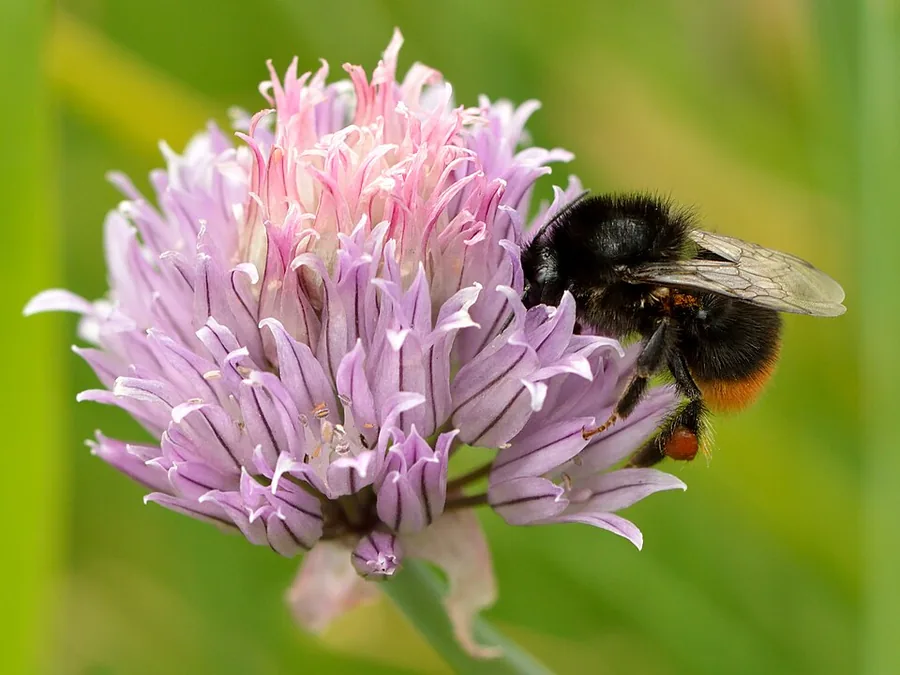
Chives are the gentlest member of the onion family, grown for their slim, hollow leaves and that mild oniony taste. They form neat little clumps of grass-like foliage that come back year after year, and in late spring they send up pink-purple pompom flowers that look just as good in a flower bed as they do on your plate. And here's the nice part: both the leaves and the blooms are edible.
If you're after something that won't fuss, this is it. Chives are a hardy perennial that asks for next to nothing, growing happily in a bed, along a path, or in a pot on a sunny windowsill, and they'll shrug off cold winters all the way down to USDA zone 3. Snip off what you need and the plant just pushes out more.
There's one catch, and it's all about animals. Chives are part of the genus Allium, right alongside onion and garlic, so the whole plant is dangerous to cats, dogs, horses, and livestock, even though people can eat it without any trouble at all.
Care
The short version: chives are about as easygoing as herbs get. Give them full sun, keep the soil moist and fertile, and once the clump's about 6 inches tall, start snipping. Split it every few years and it'll basically keep going forever.
Light
Chives love full sun, which is what keeps the leaves nice and stout and the flavor sharp. They'll put up with partial shade too, but give them too little light and they'll grow thin and start leaning toward wherever the brightness is.
Water
Try to keep the soil evenly moist if you want the biggest crop of leaves, especially while a new plant's still settling in. An older clump can handle a short dry spell just fine, but if it keeps drying out over and over, both the flavor and the yield will take a hit.
Soil
Stick chives in average, fertile, well-drained soil with a good bit of organic matter mixed in. A pH somewhere between 6.0 and 7.0 suits them well, and soil that drains freely keeps the bulblets from sitting wet and rotting.
Temperature
Chives do their best growing in the cool of 59°F to 77°F (15°C to 25°C). They're tougher than they look, so in cold climates they'll just die back over winter and pop right back up once the ground warms again in spring.
Humidity
No need to fuss over humidity here. Regular household levels of 40% to 60% are plenty, so there's nothing to chase. What matters more is airflow, since damp, crowded leaves are exactly what rust likes.
Feeding
A balanced fertilizer or a bit of compost in spring is all chives need to coast through the season. Go easy though, because too much feed actually waters down the flavor instead of helping the plant.
Pruning
Once the clump hits about 6 inches (15 cm), snip leaves near the base whenever you need them, and every so often cut the whole thing back to bring on fresh, tender growth. Pulling off the spent flower heads keeps the plant from seeding itself all over the place too.
Repotting
Chives don't really need repotting so much as dividing every 2 to 3 years. When the clump gets crowded, the leaves thin out, or the middle starts dying back, that's your cue to lift it and split it up.
Size & spacing
A grown clump stands about 8 to 16 inches (20 to 40 cm) tall and spreads roughly 8 to 12 inches (20 to 30 cm) wide. Give each one that kind of room so air can move around it and rust stays away.
When to plant
Chives are happiest in cool spring weather, and honestly they don't ask for much in the way of timing. Start seed indoors in late winter, or just set divisions out once the last frost's passed. After that you can cut leaves all season and enjoy the flowers when late spring rolls around.
Northern hemisphere
Southern hemisphere
Typical months for a temperate climate: start earlier in warm zones, later where spring frosts linger.
- Sow: 8-10 weeks before the last spring frost
- Plant: Spring, after the last frost
- Harvest: Snip leaves once plants are about 15 cm (6 in) tall and established; pink-purple pompom flowers appear late spring to early summer
Hardiness
USDA hardiness zones: 3–9
Temperature: down to -40°C
Troubleshooting
Chives don't cause much drama. When something does go wrong, it usually shows up on the leaves or comes down to a clump that's gotten too crowded. Take a look at what's happening, find it below, and fix it early while it's still an easy job.
Rusty orange spots with tips that are dying back
Those raised orange-brown spots are rust, a fungus that moves in when a crowded clump traps damp air around the leaves. Cut off the affected leaves, open the clump up by dividing it, and water at the base so the leaves can stay dry. Pretty simple to turn around.
Fix:
- Cut back and remove affected foliage
- Improve spacing and air circulation by dividing crowded clumps
- Water at the base to keep leaves dry
A packed clump that's thinning and dying in the center
When a clump gets too packed and the center starts dying out, it's just an overcrowded clump that's run out of room, with the bulblets all fighting over food and water. The fix is easy enough: lift it in spring or early fall, pull it apart, and replant the healthy outer pieces in fresh, fertile soil. A good soak afterward helps them settle right back in.
Fix:
- Lift and divide the clump in spring or early fall
- Replant healthy divisions in refreshed, fertile soil
- Water in well after dividing
Those pale, silver-streaked marks on the leaves
Seeing a silvery sheen and pale stippling? That's usually thrips, tiny insects that scrape at the leaves and leave that shimmer behind. Onion fly maggots or just plain heat and drought stress can cause the same browning tips, so don't jump to conclusions. Blast the thrips off with a hard jet of water, trim away the worst leaves, and keep the soil evenly moist through hot weather.
Fix:
- Rinse plants with a strong jet of water to dislodge thrips
- Remove and discard badly damaged leaves
- Maintain even soil moisture during hot weather
Toxicity
Here's where the kitchen and the pet bowl go their separate ways. Chives are a totally safe, everyday herb for people, but because they're an Allium, they're toxic to cats, dogs, horses, and livestock, where the organosulfur compounds damage red blood cells and bring on hemolytic anemia. Cats are the most sensitive of the bunch, so keep the plant and its trimmings somewhere they can't get at them.
Toxic to
Cats · Dogs · Horses · Rabbits · Livestock · Birds
Safe for
People
Cats Severe
Cats take the hardest hit from this one, so keep a close eye on them. You'll see vomiting, weakness, and pale gums first, then red or brown urine as their red blood cells break down. A racing heart and heavy panting point to the hemolytic anemia that makes even a small nibble dangerous.
Dogs Moderate
A dog that chews the leaves might throw up, mope around looking listless, and show pale gums or bloody urine. And the more it eats, the bigger the chance of full-blown hemolytic anemia.
Horses Severe
Horses are really vulnerable to Allium poisoning, so be careful around them. Watch for weakness, dullness, and pale membranes, plus dark or discolored urine as the same oxidative damage wrecks their red blood cells.
Rabbits Toxic
Don't ever feed chives to a rabbit. The organosulfur compounds go after red blood cells just like they do in cats and dogs, and a rabbit's little body just doesn't have much margin for it.
Livestock Toxic
Cattle, sheep, and goats that graze on chives are looking at the classic Allium toxicosis, with weakness, anemia, and discolored urine. The trouble can sneak up quietly over a bunch of meals, too.
Birds Toxic
Birds have zero defense against these compounds, and even a scrap can mess up their blood. Keep chives and any kitchen trimmings well away from pet birds and backyard flocks.
People Safe
Good news for you: chives are a kitchen herb, and the leaves and flowers are great to eat raw or cooked. The same compounds that harm animals just aren't a threat to people in normal amounts.
All parts are toxic to pets whether fresh, dried, or cooked; even small or cumulative amounts can be dangerous, particularly to cats. Wash hands after handling and keep trimmings and harvested leaves out of reach.
Helpline numbers

United States
ASPCA Animal Poison Control: (888) 426-4435 (fee applies)

United Kingdom
Animal PoisonLine: 01202 509000 (fee applies)

Australia
Animal Poisons Helpline: 1300 869 738
Varieties
Most chives you'll buy are just the plain species, and that's honestly fine. Still, a couple of named picks are worth knowing about for their flowers and how they behave.
'Forescate'
Forescate is the one to grab if you want vivid rose-pink flowers and strong, vigorous foliage.
'Profusion'
Profusion is a sterile cultivar that flowers like crazy but never sets seed, so it won't self-sow all over the garden.
Common chives (species)
Common chives are the everyday culinary type, with hollow, grass-like leaves, a mild onion flavor, and those familiar pink-purple pompom flowers.
Companions
The strong onion scent of chives can steer some pests away from neighbors like carrots, but the same plant chemistry sets back legumes, so keep it clear of beans and peas.
Plant near
Carrots: Strongly scented alliums like chives are reputed to help deter pests such as carrot fly, and onions/alliums are commonly paired with carrots in extension companion guidance.
Keep apart
Beans: Alliums (onion, garlic, chives) stunt the growth of beans and should not be interplanted with them.
Peas: Like beans, peas are legumes whose growth is inhibited by nearby alliums such as chives.
How to propagate
Want more chives? They're really easy to multiply. You can split a clump you've already got for instant plants, or grow a fresh batch from seed if you don't mind the wait.
DivisionEasy
Spring or early fall · A few weeks to reestablish; divisions are productive the same or following season
Splitting a clump is the fastest way to get more chives, no question. Every 2 to 3 years, lift an established plant, pull it apart into smaller bunches of bulblets, and get them replanted right away. They'll settle back in within a few weeks and crop the same season or the next one.
SeedModerate
Start indoors 8-10 weeks before the last frost, or direct sow after the last frost · About 80-90 days to a usable harvest from seed
Seed takes a bit more patience, since it's slow to germinate and grow at first. Start it indoors 8 to 10 weeks before the last frost, or just sow it straight into warm, moist soil afterward, and thin the seedlings as they fill in. Figure on roughly 80 to 90 days before you've got a clump worth cutting.
Myths
Chives taste pretty mild, so surely they're fine for the dog or cat, right?
Easy mistake to make, but no. Chives are an Allium, the same family as onion and garlic, and the ASPCA lists them as toxic to cats and dogs. Even a mild-tasting herb can trigger Heinz-body hemolytic anemia in animals, so keep it off the menu for your pets.
Isn't it just the underground bulb that can actually harm an animal?
Nope, it's not just the bulb. The toxic organosulfur compounds run all through the plant, including the hollow leaves and the flowers. Every part can poison a pet, so the whole thing's off limits.