Herb · Amaryllidaceae
Garlic Chives
Allium tuberosum
Cut them over and over all season long, and garlic chives just keep coming back with flat, garlic-scented leaves.
Full sun
Every 5–10 days
80–90 days
USDA 4–9
Overview
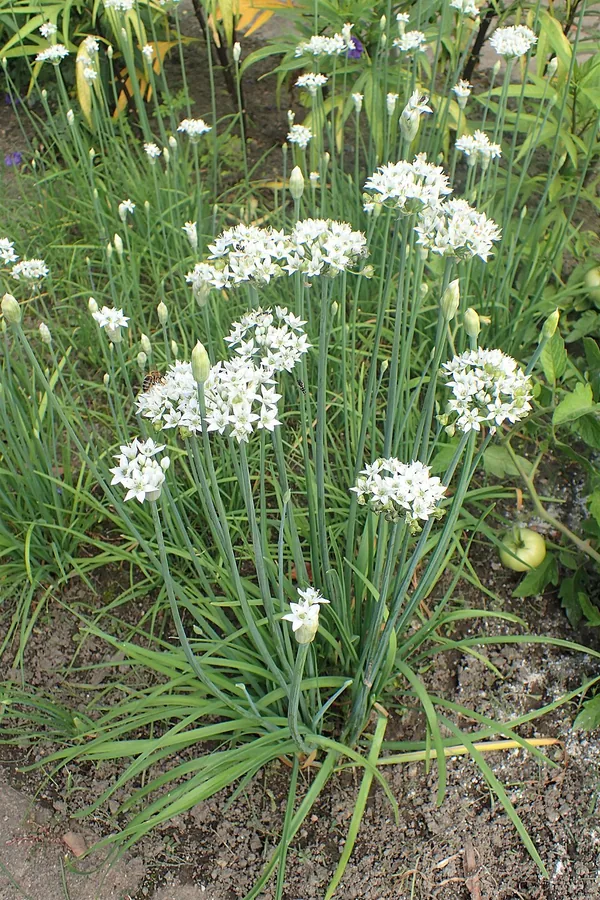
Garlic chives are a tough little clumping perennial in the onion family, and they're grown for flat leaves that taste of mild garlic instead of the sharp onion flavor you get from common chives. The plant goes way back in eastern Asia, where it's been a kitchen staple for ages, and you'll run into it under names like Chinese chives, Chinese leek, and nira. Come late summer, it puts out white, star-shaped flowers that smell sweet and pull in the pollinators.
Want an herb that basically takes care of itself? This is the one. It laughs off cold down to -22°F (-30°C), handles summer heat without complaint, and hardly asks for anything once the clump gets going. You snip leaves whenever you need them, and the plant just grows more to fill in the gap.
The one thing to keep an eye on is how much it wants to spread. Let it flower and go to seed and garlic chives self-sow freely, wandering off well past where you first planted them. But cut the flower heads before the seed ripens and it'll stay right where you want it.
Care
The short version: give them full sun and fertile, well-drained soil, and keep it evenly moist for the most tender leaves. Shear the clump for fresh regrowth, split it every few years, and snip the flowers so it doesn't seed all over the place.
Light
Garlic chives do best in full sun, which keeps the leaves stocky and full of flavor. They'll take partial shade too, though the growth ends up thinner and a little softer there.
Water
Keep the soil evenly moist for the tenderest leaves, which usually works out to a watering every 5 to 10 days depending on the weather and your soil. An established clump can coast through a short dry spell, but let it hit real drought and the flavor fades while the leaves turn tough.
Soil
Plant them in fertile, well-drained loam with a good bit of organic matter mixed in. A pH somewhere between 6.0 and 7.0 is what they like, right about neutral.
Temperature
Not many herbs are this tough. Garlic chives make it through winter cold down to -22°F (-30°C) and hold up in heat to around 95°F (35°C), which is exactly why the clump keeps coming back year after year.
Humidity
Regular air is fine, somewhere around 40% to 60%. There's no reason to fuss over humidity outdoors, and honestly good airflow does way more to keep rust off than any humidity number ever will.
Feeding
Feed them through spring and summer with a balanced or nitrogen-heavy fertilizer to push leafy growth. One seasonal feeding is usually all a clump needs if the ground's halfway decent.
Pruning
Snip leaves to about 2 to 3 cm above the crown whenever you want some, and a full shear of the clump brings on fresh, tender new growth. Just cut those spent flower heads off right away, or the plant'll seed itself all over the bed.
Repotting
Garlic chives don't really need repotting so much as dividing. Every 2 to 3 years, dig up and split a crowded clump once the center gets congested, the leaves thin out, and it starts producing less.
Size & spacing
Each clump gets 12 to 20 inches (30 to 50 cm) tall and spreads 8 to 12 inches (20 to 30 cm) wide. Give them that kind of room so air can move through freely, and rust has a much tougher time getting a foothold.
When to plant
Garlic chives aren't fussy about timing at all. Start seed indoors 6 to 8 weeks before your last frost, or just sow it outside in spring, and put transplants out once the hard frost's done. You can cut leaves all season, and when those white flowers show up in late summer, snip them off before they seed.
Northern hemisphere
Southern hemisphere
Typical months for a temperate climate: start earlier in warm zones, later where spring frosts linger.
- Sow: 6-8 weeks before the last spring frost
- Plant: Spring, after danger of hard frost has passed
- Harvest: Snip leaves through the growing season; fragrant white star-shaped flowers appear in late summer (deadhead before seed set to prevent aggressive self-seeding)
Hardiness
USDA hardiness zones: 4–9
Temperature: down to -34°C
Troubleshooting
Garlic chives stay healthy most of the time, and the handful of problems that do come up are easy to figure out. Almost all of them show on the leaves or in an older clump. Find what matches below and deal with it early, before a little thing turns into a big one.
Leaves gone silvery and dotted with pale specks
Seeing speckled, twisted leaves with a silvery sheen? That's onion thrips, little insects that scrape at the foliage and really take off when the weather turns hot and dry. Blast them off with a strong jet of water first, then hit the clump with insecticidal soap. Pull the worst-looking leaves and you're back on track.
Fix:
- Spray foliage with a strong jet of water to dislodge thrips
- Apply insecticidal soap or horticultural oil to affected plants
- Remove heavily infested leaves
Little rust-orange bumps scattered across the leaves
Notice orange spots that smudge off on your fingers? That's allium rust, a fungus that moves in when clumps get crowded and the leaves stay wet for too long. Snap off the spotted leaves and toss them, then thin or divide the clump so air can move through. And try to keep the water aimed at the base, not the foliage.
Fix:
- Remove and destroy infected leaves
- Improve air circulation by thinning and dividing clumps
- Avoid overhead watering
Baby plants showing up everywhere around the clump
Once those flower heads ripen into seed, garlic chives self-sow like crazy, and pretty soon you'll spot new sprouts way past the parent clump. It's no big deal if you stay ahead of it. Hoe or pull the little volunteers while they're young, and cut the flowers off before the seed has a chance to ripen and scatter.
Fix:
- Pull or hoe unwanted seedlings while young
- Remove flower heads before seed matures and disperses
Older clump turning bare and tough at the center
Is an older clump looking tired and hollow in the center? That's just crowding, where all those packed-in bulblets end up fighting over the same water and food until the middle gives out. Dig the whole thing up in spring or early fall, break it into pieces, and replant the good outer chunks with some breathing room between them.
Fix:
- Lift and divide the clump in spring or early fall
- Replant healthy divisions with adequate spacing
Toxicity
Here's where it gets a bit two-sided. Garlic chives are a safe, tasty herb for people, but since they're an Allium, they're toxic to cats, dogs, horses, and other animals. The organosulfur compounds in every part damage red blood cells and can lead to hemolytic anemia, and cats are the most sensitive of all. So go ahead and cook with them, just keep the plants, trimmings, and cut leaves well out of reach of pets and livestock.
Toxic to
Cats · Dogs · Horses · Rabbits · Livestock · Birds
Safe for
People
Cats Severe
Cats are the touchiest of the bunch, and even a tiny nibble can cause real harm. You'll likely see vomiting, weakness, and pale gums to start, and then red or brown urine, fast breathing, and collapse as the red blood cells give out.
Dogs Moderate
A dog that chews on the leaves usually throws up and gets the runs at first. Then over the next day or two that same blood damage shows up as tiredness, pale gums, and rusty-looking urine.
Horses Toxic
Horses really don't do well with alliums, since those same organosulfur compounds go after their red blood cells. Keep them grazing on it and you'll see weakness, a dull coat, dark urine, and the pale gums that mean anemia.
Rabbits Toxic
This one's a hard no for rabbits. The same thiosulfates that hurt other animals damage a rabbit's blood cells just as easily, so it shouldn't ever go in as a green or a treat.
Livestock Toxic
Cattle, sheep, and goats can all get poisoned wherever alliums grow within reach. Keep them at it and you get anemia, weakness, a reluctance to move around, and discolored urine.
Birds Toxic
Birds are on the risky list too, and their blood cells take that same oxidative hit. Even a little can bring on weakness, trouble breathing, and a poor appetite, so keep the clippings away from poultry and pet birds.
People Edible
Good news for you: garlic chives are a kitchen favorite that healthy folks eat raw or cooked, no problem at all. The flat leaves, the buds, and the flowers all go straight into stir-fries and dumplings.
Keep plants, trimmings, and harvested leaves out of reach of pets; do not feed any part to animals and dispose of clippings securely.
Helpline numbers

United States
ASPCA Animal Poison Control: (888) 426-4435 (fee applies)

United Kingdom
Animal PoisonLine: 01202 509000 (fee applies)

Australia
Animal Poisons Helpline: 1300 869 738
Varieties
Most garlic chives you'll find are just the plain species, but there are a couple of selections worth knowing about if you're growing them to cook with.
'Geisha'
It's grown for broader, tender leaves and a fuller garlic flavor, which makes it a nice pick for cooking.
Broad-leaf types (mauershan / da ye)
These have wider, flatter leaves that cooks love for Asian dishes, and they're great in a stir-fry.
Companions
Garlic chives sit awkwardly next to legumes, since alliums tend to hold back their growth.
Keep apart
Beans: Alliums can inhibit the growth of beans
Peas: Alliums can inhibit the growth of peas
How to propagate
Getting more garlic chives is easy, and there are two ways to do it that anyone can handle. Division gets you a usable plant faster, while seed is cheap and simple if you don't mind waiting a bit.
DivisionEasy
Spring or early fall · 4-6 weeks
Division is the quickest way to get more, and spring or early fall is the time to do it. Just dig up the clump, pull it apart into sections with several bulblets each, and pop them back in right away with room to spread. They'll be settled in within about 4 to 6 weeks.
SeedEasy
Start indoors 6-8 weeks before last frost or sow outdoors in spring · 2-3 weeks to germinate; one to two seasons to a harvestable clump
Seed's easy too, it just takes longer. Start it indoors 6 to 8 weeks before the last frost, or sow it right into the spring garden, and you'll see sprouts in 2 to 3 weeks. A full clump you can actually cut from takes one to two seasons. And since the plant self-sows freely, deadhead the flowers if you'd rather it stayed put.
Myths
Garlic chives are safe for pets because they're a mild culinary herb.
Just because something's mild on your plate doesn't mean it's safe for animals. Garlic chives are an Allium, so they're toxic to cats and dogs, and even small or repeated amounts damage red blood cells. That same herb flavoring your dinner can cause hemolytic anemia in a pet.
Garlic chives are nothing more than regular chives under a different name.
Nope, they just look alike. They're actually two different species. Garlic chives (Allium tuberosum) have flat, garlic-flavored leaves and white flowers, while common chives (Allium schoenoprasum) have hollow, onion-flavored leaves and purple blooms.