Bulb · Amaryllidaceae
Giant Ornamental Onion
Allium giganteum
Drop the bulbs in the ground this fall, and by early summer giant allium gives you purple globes hovering over the border.
Full sun
Every 7–10 days
USDA 4–8
3–6 ft · 0.9–1.8 m
Overview
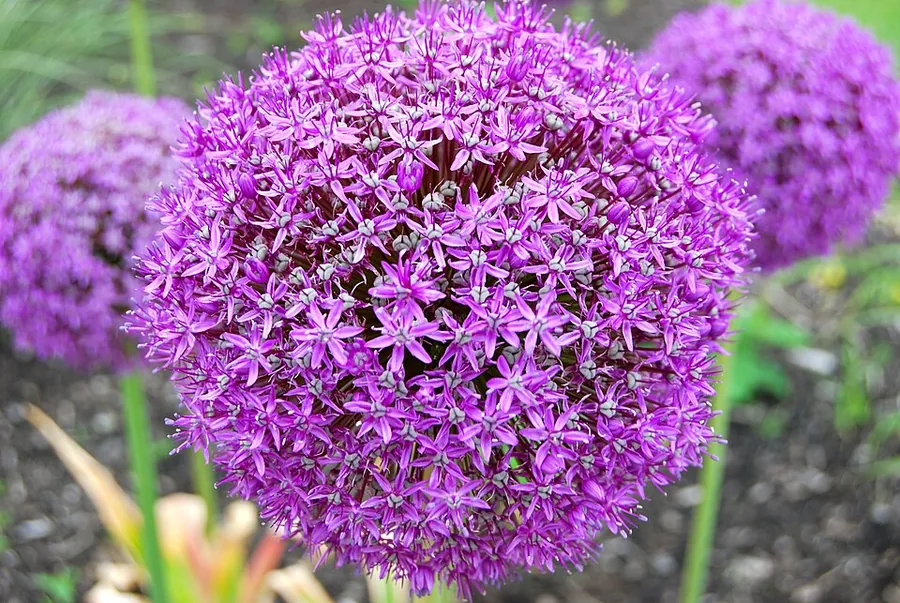
So what's the big deal with giant ornamental onion? It's all about those huge purple flower balls that pop up on bare stems in early summer. Sure, it's cousins with the onion and garlic in your kitchen, but nobody's growing this one to eat. It's here to put on a flower show, and the globes climb so high they often look you right in the eye, way above whatever's planted around them.
Here's the nice part: it's an easy, tough bulb that just keeps coming back, even after winters as brutal as -29°F (-34°C). You pop the dormant bulbs in during fall, they shoot up tall scapes in late spring, and the globes hang onto their color for two to three weeks before the leaves fade off. Once it's done blooming, it kind of bows out and lets the rest of the bed shine, so it's not asking much of you.
There's one thing you can't skip, though. Every bit of this plant is toxic to cats, dogs, horses, and livestock, the same way a chewed onion would be, so put it somewhere grazing animals can't get at it. Do that, and you've got a real eye-catcher that's about as low-maintenance as a sunny bed gets.
Care
The short version: full sun and soil that drains well, bulbs planted deep in fall, a bit of steady moisture while it's growing, and a stake for those tall stems if your spot catches the wind.
Light
Give giant allium full sun and you'll get the sturdiest, best-looking flowers. It'll put up with a little afternoon shade, sure, but pile on too much and you're left with weak, leaning stems and not many blooms.
Water
Keep the soil evenly moist while it's growing, then just let it coast through a dry summer once the leaves die back. A drink every 7 to 10 days does it, and whatever you do, don't let the bulbs sit in soggy ground, because that's a fast way to rot them.
Soil
It's not fussy about soil as long as it's well-drained, so loam, sand, or even clay all work, provided water actually moves through. And the pH? Anywhere from 5.5 to 8.0 is fine, which covers just about any garden bed.
Temperature
This is one cold-hardy bulb, happy through winters down to -29°F (-34°C) and summer heat up to 86°F (30°C). Funny enough, it actually wants that cold winter, because the chill is what helps it set good flowers.
Humidity
No need to fuss over humidity, since regular outdoor air suits it just fine. What really counts is drainage and airflow, because damp, stuffy spots are exactly what bring on bulb rot.
Feeding
Mix a balanced or low-nitrogen bulb fertilizer into the soil when you plant in fall, then give it another feed come early spring. Go light on nitrogen, though, or you'll end up with floppy leaves instead of flowers.
Pruning
Snip off the spent flower scapes once they're done, but leave the leaves to yellow and fade on their own, since they're busy feeding next year's bulb. And if you're in a windy spot, get those tall stems staked before they tip over.
Repotting
Lift and divide the clumps every 3 to 4 years in fall, right around when you notice the flowers getting fewer or smaller. Crowded, packed-in bulbs are basically telling you it's time to split them up.
Size & spacing
These guys hit 3 to 6 feet (90 to 183 cm), so they belong toward the back of the border. Set the bulbs 9 to 12 inches apart and 5 to 8 inches down, giving each clump some elbow room to fill out.
When to plant
Giant allium pretty much follows a fall-to-summer routine. You get the bulbs in during autumn so they can root before things freeze up, then winter and spring pass, and the flower globes finally open in June and July for a week or two.
Northern hemisphere
Southern hemisphere
Typical months for a temperate climate: start earlier in warm zones, later where spring frosts linger.
- Plant: Plant bulbs in fall about 5-8 inches deep and 9-12 inches apart
- Harvest: Late spring to early summer (June-July), blooms lasting 2-3 weeks
Hardiness
USDA hardiness zones: 4–8
Temperature: down to -34°C
Troubleshooting
Most of what goes wrong with allium happens either down at the bulb or on a windy day. Wet soil can rot the bulbs, little mites can chew them up, and tall stems? They'll flop if nothing's holding them. Spot your problem below and jump on it early, before it works through the whole patch.
Soft, mushy bulbs and plants that flop over
When the soil stays wet and won't drain, you get bulb rot, and in a really soggy corner a black rot fungus can step in and finish things off. Dig up a bulb and it'll feel soft and smell awful. So pull the rotted ones and toss them, back off the watering, and replant the firm ones somewhere water can actually escape.
Fix:
- Remove and discard affected bulbs
- Improve soil drainage and reduce watering
- Replant healthy bulbs in well-drained amended soil
Twisted, stunted growth from pitted bulbs
Bulb mites dig into the scales and feed there, and that's what leaves the new growth all warped and the bulb scarred up. Take a good look at any bulb you're unsure about for those tiny mites and their chew marks. Anything badly chewed up? Toss it, plant only the firm clean ones, and switch up where you grow them.
Fix:
- Discard heavily infested bulbs
- Plant only firm, healthy, mite-free bulbs
- Practice crop rotation and good sanitation
Tall stems leaning over or snapping
Those big globes ride on long scapes, so one gusty day can bend or snap them, usually right when the flowers are heaviest. The cause? Strong wind on stems with nothing holding them up. Tuck the plant into a sheltered spot and get a stake in before it blooms.
Fix:
- Stake tall stems for support
- Site plantings in locations sheltered from strong winds
Toxicity
Easiest thing to remember is that animals just shouldn't be eating any of this. Bulbs, leaves, flowers, they've all got the organosulfur compounds that make onions and garlic risky for pets, and those can wreck red blood cells and bring on hemolytic anemia. Cats get hit the hardest, but dogs, horses, and grazing livestock are all in real danger too, so plant it somewhere they can't reach.
Toxic to
Cats · Dogs · Horses · Rabbits · Livestock · Birds · People
Cats Severe
Cats have it the worst, no contest. Even one little nibble can set off vomiting and start tearing down their red blood cells, and you'll spot it as weakness, a racing heart, panting, and dark urine.
Dogs Severe
If a dog chews on any part, it might vomit and then go weak and listless as the red blood cells break down. Keep an eye out for pale gums, fast breathing, and discolored urine, and don't wait around to get to the vet.
Horses Severe
Horses get the same red blood cell damage if they graze on the leaves or bulbs, and it leaves them weak and dull. The anemia can sneak up from nibbling over and over, so it's not just one big meal that does it.
Rabbits Toxic
Those same onion-family compounds are toxic to rabbits, so keep the whole plant well out of their way. There's no safe amount to hand them, period.
Livestock Toxic
Cattle, sheep, and goats can wind up with hemolytic anemia from eating alliums, whether it's fresh in the field or dried in their hay. Fence them off from the plantings and clear away any trimmings they could get to.
Birds Toxic
Birds react to onion-family toxins too, so chickens and pet birds shouldn't ever get near the bulbs, leaves, or flowers.
People Caution
This is an ornamental onion grown for flowers, not something for the kitchen, so it's not meant to be eaten. Handling it's no problem, just wash your hands after and keep curious kids away from the bulbs.
Keep all parts, including bulbs, foliage, and flowers, out of reach of pets and livestock. Store bulbs securely and clean up trimmings; wash hands after handling.
Helpline numbers

United States
ASPCA Animal Poison Control: (888) 426-4435 (fee applies)
Poison Control: (800) 222-1222



Canada
Poison Centres: 1-844-764-7669
Varieties
A few big-flowered alliums get sold under the giant-onion name, and there are some close relatives that fill in for it too. Here are the ones worth knowing by name.
Globemaster
If you want the real showstopper, this is the hybrid, with dense violet globes of 8 to 10 inches sitting up on strong scapes.
Allium hollandicum (aflatunense)
It's a related ornamental onion with smaller rose-purple umbels, and it's often sold as a cheaper stand-in for the true giant allium.
Allium cristophii (Star of Persia)
This one's a shorter relative, and its wide, open umbels open up into shiny pink-violet stars.
Companions
Plant near
Roses: Tall allium scapes rise through and complement roses and other border plants while filling early-summer gaps.
Peonies: Allium bloom coincides with and extends color in the perennial border alongside peonies.
How to propagate
Want more giant allium? It's an easy plant to multiply, whether you grab fresh bulbs or just divide what's already growing. Most of it happens in fall.
Bulbs & cormsEasy
Fall · One growing season to bloom
The simplest way to kick things off is with dormant bulbs in fall. Just set them 5 to 8 inches deep and 9 to 12 inches apart, and you'll see their first flowers the very next growing season.
Offsets & pupsEasy
Fall · 1-2 seasons
Once they're settled, bulbs make little offset bulblets around their bases. Lift them in fall, snap the offsets off, and replant them to spread things out, though they'll need a season or two before they're big enough to bloom.
DivisionEasy
Fall · 1-2 seasons
Every few years, dig up a crowded clump in fall and pull it apart to keep the bulbs vigorous. Each piece settles back in over a season or two and blooms again whenever it's good and ready.
SeedModerate
Fall to spring · Several years
Alliums self-seed all on their own, and you can sow them anytime from fall through spring if you'd like. It's the slow road, though, since seed-grown plants need several years to bulk up before they'll flower.
Myths
Ornamental flowering alliums are just pretty and totally safe for pets, unlike the onions and garlic you cook with.
Truth is, ornamental alliums are in the exact same genus as onion and garlic, so they're carrying the same toxic organosulfur compounds. Every part, bulb to flower, can break down a pet's red blood cells. They're every bit as dangerous to cats, dogs, and horses as whatever's sitting in your spice rack.