Bulb · Amaryllidaceae
Red Spider Lily
Lycoris radiata
Pop the bulbs in with the neck above the soil, and those bare scapes will throw up fiery red blooms come early fall.
Partial shade
Every 7–14 days
USDA 6–10
12–24 in · 30–61 cm
Overview
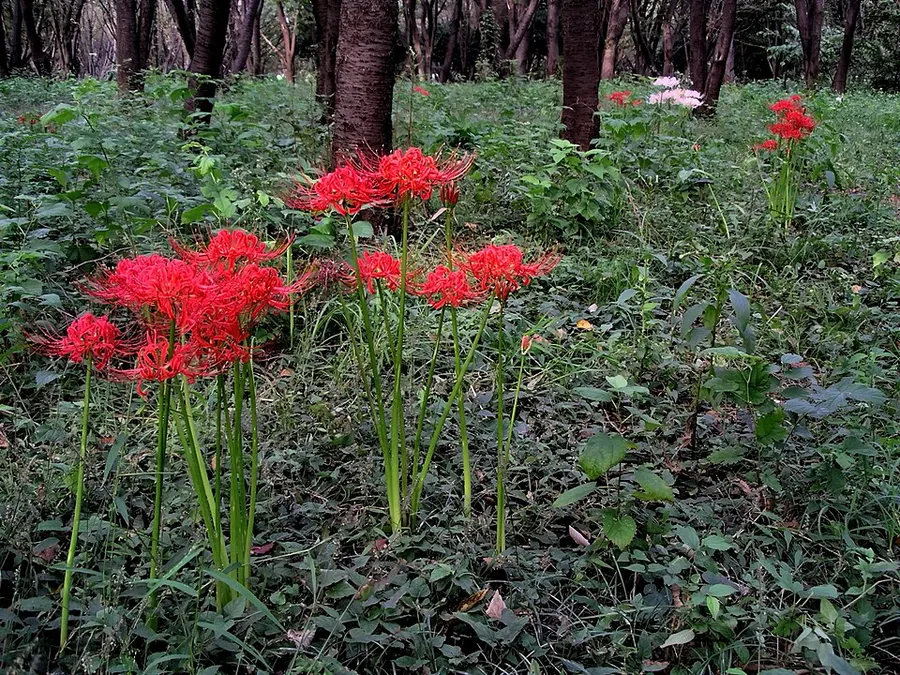
So what exactly is a red spider lily? It's a fall-flowering bulb in the amaryllis family, and it's famous for the bare stems that shoot up after the first cool rains and burst into clusters of scarlet, spidery flowers. The leaves do their own thing on a separate schedule, so by the time it blooms the foliage is already gone and the flowers seem to pop up out of empty ground.
Here's the fun part: this plant runs its calendar backwards compared to most garden flowers. Strappy green leaves turn up in fall and hang around all winter, then die back by late spring, and the bulb just naps through the summer heat. When late summer rolls toward fall, up come the flower scapes without a leaf anywhere, and that's how it picked up nicknames like naked lily and surprise lily.
It's hardy across roughly zones 6 to 10, and once the bulbs settle in they naturalize, coming back every year and slowly spreading into wider clumps. The one thing they're picky about? Drainage. Give them well-drained ground with the neck of the bulb sitting above the soil, and honestly they don't ask for much after that.
Care
The short version: plant the bulbs in fall with the neck exposed in rich, well-drained soil, give them partial shade to full sun, water them through the growing and blooming stretch, then back off and keep things dry while the bulb naps over summer.
Light
Partial shade is what it likes best, but it'll happily take full sun to partial sun too. Dappled light under some tall trees is perfect, and if a healthy clump suddenly quits flowering, deep shade is usually the thing to blame, so try moving it somewhere lighter.
Water
While the leaves and flowers are up and going, keep the soil at medium moisture and water about every 7 to 14 days once it dries out. As soon as summer dormancy kicks in, though, ease off and let the ground stay pretty dry, because soggy soil while it's resting is exactly what rots the bulbs.
Soil
Go with organically rich, well-drained loam or sand and it'll be content. It's not fussy about pH and takes anything from 6.0 to 8.0, but it really won't put up with waterlogged ground, so work in some grit or compost if your soil tends to stay heavy.
Temperature
It's a tough customer across a big temperature range, handling winter lows near -9°F (-23°C) and summer heat up to about 86°F (30°C). That covers most temperate gardens inside its zones, so once it's in the ground the weather barely bothers it.
Humidity
You don't have to think about humidity at all here, since regular outdoor air is plenty. Drainage matters way more than the air does, because the real risk to this bulb is wet soil, not whether the weather's dry or damp.
Feeding
Give it a balanced bulb fertilizer in fall and then again in spring, right while the leaves are busy building next year's flowers. A simple seasonal feed during that leafy stretch is really all it wants.
Pruning
There's hardly anything to cut, which is nice. Let the foliage die back on its own after it blooms so the bulb can recharge, and just tidy up the spent flower scapes and any withered leaves when they're done.
Repotting
Spider lilies would rather be left alone, and they flower best when they're settled in. Divide a clump only every 3 to 5 years, or sooner if the bulbs get crowded, the flowering starts dropping off, or you notice bulbs pushing up out of the soil.
Size & spacing
12–24 in (30–61 cm) tall
When to plant
This one keeps an upside-down schedule, but it's easy to follow. Plant in late summer to fall, let the leaves do their thing through winter and fade by spring, and then those bare flower scapes will surprise you in late summer or early fall.
Northern hemisphere
Southern hemisphere
Typical months for a temperate climate: start earlier in warm zones, later where spring frosts linger.
- Plant: Plant bulbs in late summer to fall with the bulb neck exposed above soil level
- Harvest: Late summer to early fall (August to September)
Hardiness
USDA hardiness zones: 6–10
Temperature: down to -23°C
Troubleshooting
Good news: almost every spider lily problem comes back to the bulb, either sitting too wet or planted at the wrong depth. Look over the signs below and you can usually sort it out in one digging. Just match what you're seeing and act before a whole clump gives up.
Soft, mushy bulbs that just won't sprout
This is bulb rot, and it almost always starts with wet ground, not some disease you can spray away. When bulbs sit in soggy soil through the summer nap, they go brown and smelly from the inside. So lift the clump, toss anything soft, and replant just the firm bulbs in well-drained soil with the neck left above the surface.
Fix:
- Lift affected bulbs and discard any that are soft or rotted
- Replant healthy firm bulbs in well-drained soil with the neck exposed
- Withhold water during the summer dormant period
Tunneled-out, hollow bulbs that barely grow
The troublemaker here is the narcissus bulb fly, and its larvae bore right into a bulb and eat out the middle. Dig up a suspect one and you'll usually find a single fat grub sitting in a soft, hollowed core. Get rid of any infested bulbs, replant only firm ones, and turn over the nearby soil so the pupae are exposed.
Fix:
- Lift and destroy infested bulbs
- Replant only firm, healthy bulbs
- Cultivate soil around plantings to expose pupae
Loads of leaves but barely any flowers
When the leaves look great but the flowers never show, the bulbs are usually planted too deep. These lilies want the top of the neck at or above the soil line, not tucked under. So replant them shallow, thin out any crowded clumps, and give a freshly moved planting a season or two to settle before you expect much of a show.
Fix:
- Replant bulbs with the top of the neck exposed above soil level
- Allow a few seasons for clumps to establish before expecting bloom
- Thin overcrowded clumps and site in full sun to partial shade
Toxicity
This is where it pays to be careful, though. Every part of the plant holds lycorine and related alkaloids, and the bulb is easily the most dangerous, so it isn't safe for cats, dogs, horses, rabbits, livestock, birds, or people. Pull on some gloves when you handle the bulbs and keep them well out of reach of pets and kids.
Toxic to
Cats · Dogs · Horses · Rabbits · Livestock · Birds · People
Cats Mild
A cat that nibbles any part will usually drool, throw up, and get diarrhea. The bulb's the real worry, though, because a big dose can bring on tremors or even convulsions.
Dogs Mild
Expect drooling, vomiting, and loose stools if a dog chews the leaves or, worse, digs up a bulb. Since the bulb holds the most alkaloid, a big mouthful can set off tremors or seizures.
Horses Toxic
That same lycorine in the leaves and bulbs really knocks a horse around, with heavy drooling, colicky belly pain, and diarrhea. So keep grazing animals well away from any planting.
Rabbits Toxic
These bulbs aren't any kind of treat for a rabbit, and even a little taste of leaf or bulb can leave it drooling, off its food, and dealing with a sore gut, so fence the plants off.
Livestock Toxic
Cattle, goats, and sheep that graze the leaves or dig up bulbs can drool, scour, and go weak from the alkaloids. Keep the herd off any ground where the bulbs are growing.
Birds Toxic
Birds aren't safe either, so a nosy parrot or a backyard hen pecking at any part risks vomiting and an upset gut. Don't let birds get to the plant or its bulbs.
People Caution
None of this plant is food, plain and simple. Swallowing the leaves or, especially, the bulb brings on nausea, vomiting, and diarrhea, so wash your hands after handling and keep curious kids well clear.
Wear gloves when handling and dividing bulbs and wash hands afterward; keep bulbs out of reach of pets and children.
Helpline numbers

United States
ASPCA Animal Poison Control: (888) 426-4435 (fee applies)
Poison Control: (800) 222-1222



Canada
Poison Centres: 1-844-764-7669
Varieties
Most folks only ever run into one form of the red spider lily, and that's fine. But there's a second one out there, and it acts pretty differently once seed comes into it.
Lycoris radiata var. radiata
This is the one you'll run into in gardens pretty much every time, a sterile triploid that hardly ever sets seed and just spreads by pumping out offset bulbs instead.
Lycoris radiata var. pumila
This smaller, fertile diploid actually sets viable seed, so it's the one breeders go for.
How to propagate
Want more spider lilies? The bulbs multiply on their own without much help, and splitting a crowded clump basically gives you free plants. Seed only works on certain forms, and it takes way more patience than most people have.
Offsets & pupsEasy
Early summer when foliage has died back and bulbs are dormant · One to a few growing seasons before reliable bloom
The easiest thing? Just let the bulbs handle it, since they naturalize on their own through offsets. In early summer, once the foliage has died back and the bulbs are dormant, lift a clump, twist off the offset bulbs, and replant each one with its neck exposed. Give them a season or a few to settle in before they really flower well.
DivisionEasy
Summer dormancy after foliage dies back · One to a few growing seasons
Once a clump gets crowded, lift and split it during the summer dormancy after the leaves have withered, then replant the pieces right away. And don't be thrown if flowering takes a break for a season or two while the divisions get comfortable again.
SeedDemanding
When ripe, on fertile diploid forms only · Several years to flowering
Seed's rarely worth the wait, honestly. The common garden triploid is sterile and almost never sets viable seed, so this only really works on the fertile diploid forms, and even then you're looking at several years of growing before you get that first flower.
Myths
The red spider lily is just another name for the surprise lily.
Not quite, since they're actually two different species. Lycoris radiata flowers red and can't take nearly as much cold, while Lycoris squamigera blooms pink-lilac and shrugs off much colder winters, so don't expect one to act like the other.
The plant's safe because pets usually leave it alone.
That's luck, not safety. Every part carries toxic lycorine alkaloids, and the bulb's the worst of the bunch, so a cat or dog that does take a bite can end up drooling, throwing up, and dealing with diarrhea. Best to keep it out of reach.