Bulb · Amaryllidaceae
Nerine
Nerine bowdenii
Leave the bulbs crowded and undisturbed in full sun, and nerines will light up the fall border in pink.
Full sun
Every 5–10 days
USDA 7–10
14–20 in · 36–51 cm
Overview
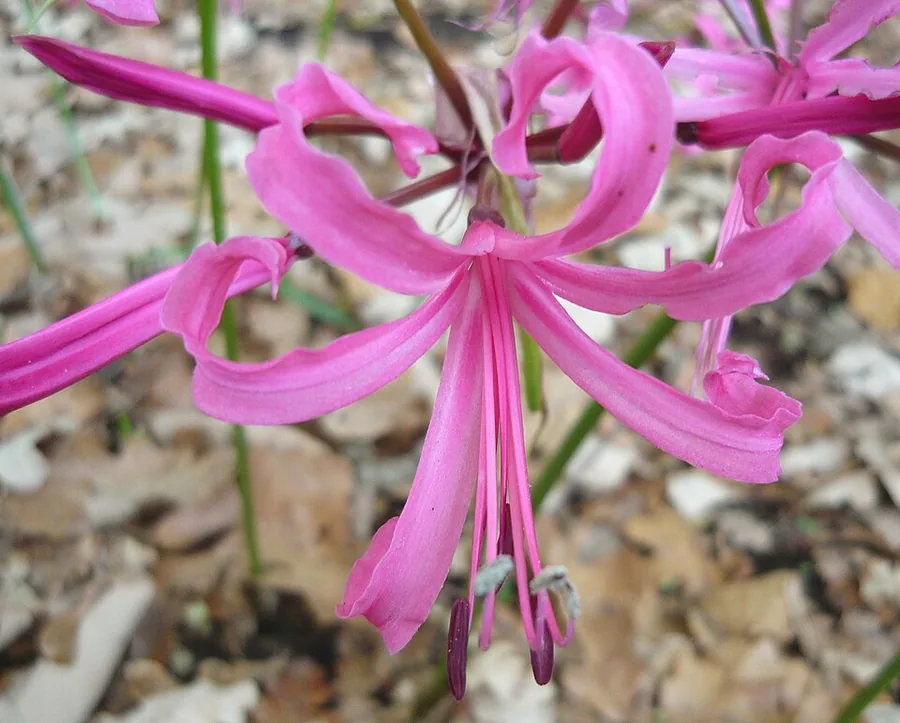
Here's the fun thing about nerines: they flower right when everything else is packing it in for the year. These South African bulbs push up bare stems in fall, and each one's topped with a loose cluster of pink, lily-like blooms with narrow petals that wave a little at the edges. The strappy leaves? They do their own thing, often showing up before or after the flowers instead of alongside them.
Nerine bowdenii is the tough one of the bunch. It'll handle cold down to about 25°F (-4°C) and it's happy in a sunny border anywhere from zones 7 through 10. It grows from a bulb that likes its neck sitting above the soil line rather than buried, and getting that little detail right makes a real difference to how well it flowers.
Once it's in the right spot, this plant barely asks for anything. Give it full sun, sharp drainage, and a clump it can crowd into, and then, honestly, just leave it alone. The one thing that trips people up is constant lifting and dividing, which basically trades away the flowers they were hoping for in the first place.
Care
The short version: full sun, sharp drainage, and a bulb set shallow with its neck above the soil. Water it through the growing season, keep it dry while it's dormant, and leave the clump crowded and undisturbed.
Light
Nerines want full sun if you want good flowers, though they'll put up with a bit of afternoon shade. All that sun through the growing season is what fills out the bulb and sets up next year's blooms, so don't stick them in some shady corner.
Water
Water freely while the leaves are up and growing, then let the bulbs dry out once they go dormant. They shrug off drought, sure, but they still want steady moisture during the growing season, roughly a drink every 5 to 10 days when it's dry.
Soil
Get them into rich, well-drained loam with plenty of organic matter mixed in. Sharp drainage is the big one here, because bulbs that sit in wet ground are the ones that end up rotting.
Temperature
Nerine bowdenii's the hardy one, taking cold down to about 25°F (-4°C) and heat up to roughly 86°F (30°C). Once it drops below 25°F (-4°C) the bulbs can get hurt, so mulch them or grow them in pots if your winters run colder.
Humidity
Regular outdoor humidity is totally fine, so there's no number to chase here. These are dry-country bulbs, and they care way more about good drainage than about how moist the air is.
Feeding
Give them a dilute balanced fertilizer while the leaves are actively growing, once or maybe twice over the season. Once the bulb's dormant, stop completely, since it isn't taking anything up anyway.
Pruning
Snip off the spent flower stalks after they bloom, then let the foliage go yellow and die back on its own. That tired old leaf is busy feeding next year's bulb, so don't be tempted to tidy it away early.
Repotting
Since these bulbs flower best when they're crowded, you can just leave them undisturbed for several years at a stretch. Only lift and replant when the bulbs start pushing up to the soil surface, or when flowering drops off after a long good run.
Size & spacing
The stems get to 14 to 20 inches (36 to 51 cm) tall, while the skinny foliage only spreads about 1 to 3 inches (3 to 8 cm) across. Plant the bulbs close together so they can crowd into the clumps they love.
When to plant
Nerines run on a fall clock. Pop the bulbs in during spring with the neck above the soil, keep them watered through the growing season, and the flower stems shoot up in fall, from September into November.
Northern hemisphere
Southern hemisphere
Typical months for a temperate climate: start earlier in warm zones, later where spring frosts linger.
- Sow: sow fresh seed when ripe; seedlings take 3-4 years to flower
- Plant: spring, with the bulb neck above the soil line
- Harvest: fall (September to November)
Hardiness
USDA hardiness zones: 7–10
Temperature: down to -18°C
Troubleshooting
Almost every nerine problem comes back to the bulb, whether it's been disturbed, kept too wet, or found by some pest. Find the match below, then step in while the bulb's still firm and healthy.
Bulbs feel soft, hollow, or mushy
If a bulb's gone soft or hollow, the usual culprit is narcissus bulb fly larvae, which burrow in and munch away the inside, or it's just rotted from sitting in soggy soil while dormant. Dig the bulbs up and have a look for grub tunnels and any mush. Bin whatever's tunneled or rotten, quit watering the second the bulb goes dormant, and give the good ones soil that drains a lot faster.
Fix:
- Discard infested or rotted bulbs
- Withhold water while bulbs are dormant
- Improve drainage of the growing medium
Loads of leaves, but where are the flowers?
So the leaves look great but there's nothing blooming? Nine times out of ten the bulb got lifted or split not long ago, and a division usually costs a year of flowers. The other likely reason is that the clump's still a bit too spacious, since nerines really only get going once the bulbs are crammed together. Just leave it be, keep it in full sun all season, and the flowers will come back around.
Fix:
- Leave clumps undisturbed and allow them to become crowded
- Site in full sun during active growth
- Avoid unnecessary division
White cottony fluff down in the leaf joints
See that white, waxy fluff wedged into the leaf axils and around the bulb neck? That's mealybugs, and every nerine is basically a magnet for them. Grab a cotton swab, dip it in rubbing alcohol, and wipe the clusters away, then follow up with insecticidal soap or horticultural oil to be sure. Keep that plant off on its own until it's cleared up.
Fix:
- Wipe off colonies with a cotton swab dipped in rubbing alcohol
- Treat with insecticidal soap or horticultural oil
- Isolate affected plants
Toxicity
Play it safe and treat the whole plant as poisonous. Just like its daffodil and amaryllis cousins, nerine's packed with lycorine and related alkaloids, and the bulb holds the most of all. Swallow any of it and you're looking at drooling, vomiting, and diarrhea, so keep the bulbs away from pets, livestock, and kids, and whatever you do, don't mix them up with onions in the kitchen.
Toxic to
Cats · Dogs · Horses · Rabbits · Livestock · Birds · People
Cats Toxic
If a cat chews any part, it'll usually start drooling, then throw up, with loose stools not far behind. The bulb's got the most lycorine in it, so a dug-up bulb is really the thing to watch.
Dogs Toxic
Dogs that dig up and chew the bulbs get it worst, with lots of drooling, vomiting, and diarrhea. And if a dog swallows a whole bulb? It can keep being sick for hours.
Horses Toxic
Those same alkaloids upset a horse's stomach too, so you'll see drooling, colicky discomfort, and diarrhea. Keep clippings and any lifted bulbs well away from the paddock.
Rabbits Toxic
Rabbits shouldn't get anywhere near the leaves or bulbs, which leave them drooling and with a really upset tummy. This just isn't a plant they can safely browse.
Livestock Toxic
Grazers like cattle, goats, and sheep can be poisoned by the foliage and bulbs, showing salivation, vomiting where they're able to, and scouring. So fence the bulbs off from anywhere the stock can wander.
Birds Toxic
The lycorine's no good for birds either, so keep pet and poultry birds away from the leaves and bulbs completely.
People Caution
No part of a nerine is meant to be eaten, and the bulb especially can bring on drooling, vomiting, and diarrhea if it's swallowed. Keep kids from mixing up the bulbs with onions, and wash your hands once you've handled them.
Keep bulbs and plants away from pets and children; the bulb is the most toxic part.
Helpline numbers

United States
ASPCA Animal Poison Control: (888) 426-4435 (fee applies)
Poison Control: (800) 222-1222



Canada
Poison Centres: 1-844-764-7669
Varieties
Most nerines you'll run into are pink, but a handful of named forms are worth knowing about for their color or size.
Alba
It's a white-flowered one, a nice change from all the usual pink nerines.
Mark Fenwick
It's a tough, vigorous pick that people love for its strong stems and rich pink flowers.
Pink Triumph
It puts out flowers that are noticeably bigger than the plain species.
How to propagate
Want more nerines? You can split off the little bulbs they make, or, if you've got the patience, raise them from seed.
Offsets & pupsEasy
After flowering or during dormancy · May delay blooming for a year after separation
The easiest way to get more nerines? Lift a crowded clump once it's finished flowering, or while it's dormant, and pull the offset bulbs off the parent. These bulbs really don't like being disturbed and want to stay crowded, so only split them when the clump's genuinely packed, and don't be surprised if the pieces sit out a season before they flower again.
DivisionModerate
After flowering or during dormancy · Often skips a year of bloom after division
You can split an overgrown clump after it blooms or while it's dormant, but go easy on it. The bulbs are happiest left alone, so a clump you've just divided often skips a year of bloom while it settles in, and then it's back to normal.
SeedDemanding
Sow fresh seed when ripe · 3-4 years until seedlings flower
Growing from seed takes real patience, no way around it. Sow the big, fleshy seeds while they're still fresh, since they don't keep, and settle in for a wait of 3 to 4 years before a seedling's big enough to flower.
Myths
Nerine bulbs must be divided regularly to keep them blooming.
Nope, it's actually the other way round. These bulbs hate being moved and bloom best when they're jammed together, so splitting them on a schedule tends to backfire and usually costs you a year of flowers. Only reach for the spade when a clump has genuinely outgrown its spot.