Ornamental · Scrophulariaceae
Diascia
Diascia barberae
The easygoing cool-season charmer that spills over container edges in coral and pink.
Full sun
Every 2–4 days
USDA 8–11
8–12 in · 20–30 cm
Overview
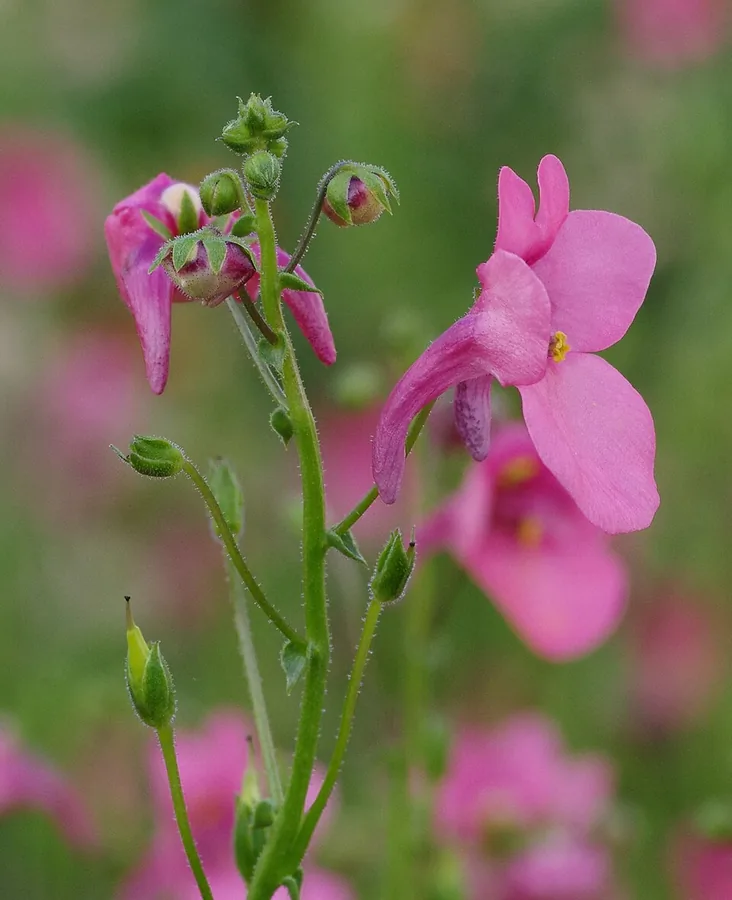
Diascia, often called twinspur, comes from South Africa and grows in a low, spreading habit that makes it a natural for the front of a border or tumbling over the edge of a pot. The small, spurred flowers come in coral, pink, rose, and orange, carried in loose sprays. Each little bloom has a pair of backward-pointing spurs, which is exactly where the twinspur name comes from.
Here's the thing to know: it's a cool-season bloomer. The flowers come on strongest in mild spring and fall, and the plant tends to slow down or pause when summer heat sets in. It's also not frost-tolerant, so timing matters if you want the most out of it.
Technically it's a tender perennial, but most gardeners treat it as an annual. It only makes it through winter outdoors in USDA zones 8 to 11. In colder spots you simply replant each spring, or root a few cuttings in fall to carry a favorite over.
Care
The short version: Give diascia full sun (a little afternoon shade is welcome where summers get hot), keep the soil evenly moist so it never dries out, and feed it monthly through the season. Pinch young plants to keep them bushy, deadhead as you go, and shear it back if heat stalls the blooms. It's an easy plant that asks for steady water more than anything.
Light
Diascia is happiest in full sun, though it'll take partial shade just fine. Where summers run hot, a bit of afternoon shade actually helps the plant cope. Just don't overdo the shade, because too little light thins out the blooms and leaves you with stretched, floppy stems.
Water
This is the part to stay on top of. Keep the soil evenly moist and never let it dry out, which matters most in pots and hanging baskets that lose water fast. Plan on watering every 2 to 4 days, and more often during hot spells. If the roots go dry, the plant simply stops flowering.
Soil
Diascia likes moderately fertile, organically rich soil that stays consistently moist but still drains well. It isn't fussy about pH, doing well anywhere from 6.0 to 8.0, which covers slightly acidic right through to alkaline ground.
Temperature
This plant handles a wide range, comfortable anywhere from 10°F to 90°F (-12°C to 32°C). Keep in mind it's a cool-season grower, so it really flowers best in milder weather and isn't frost-tolerant.
Humidity
There's no humidity target to chase here. Ordinary outdoor humidity suits diascia just fine. What does help is good airflow, since it keeps the foliage dry and makes the plant less appealing to slugs and snails.
Feeding
Feeding is easy. Through the growing season, give it a monthly dose of a balanced general-purpose fertilizer made for container and bedding plants. That steady, light feeding keeps the flowers coming.
Pruning
A little grooming goes a long way. Pinch young plants to encourage bushier growth, and deadhead spent flowers to keep the bloom going. When summer heat makes flowering taper off, shear the plant back and it'll often reward you with a fresh flush in fall.
Size & spacing
Diascia stays low, reaching about 8 to 12 inches (20 to 30 cm) tall and spreading 12 to 18 inches (30 to 46 cm) wide. With its moderate growth rate and spreading habit, that spread is worth keeping in mind when you're spacing plants or filling a container.
When to plant
Getting the timing right is mostly about working around frost, since diascia won't take a freeze. Start seeds indoors well ahead of spring, move plants out once the danger of frost has passed, and you'll enjoy flowers from spring right through to fall.
Northern hemisphere
Southern hemisphere
Typical months for a temperate climate: start earlier in warm zones, later where spring frosts linger.
- Sow: 6-8 weeks before the last spring frost; seed may also be sown outdoors 1-2 weeks before the last frost date
- Plant: After danger of frost has passed in spring
- Harvest: Spring through summer to fall (April to frost)
Hardiness
USDA hardiness zones: 8–11
Temperature: down to -12°C
Troubleshooting
Most of what goes wrong with diascia is cosmetic, not serious. A heat pause, a few hungry slugs, or some leggy growth are the usual suspects, and each one has a straightforward fix. Here's what to look for and how to sort it out.
Summer heat just hit pause on the flowers
When the weather turns hot, your diascia tends to take a breather and quits putting out blooms for a while. The good news? It's not sick. This is a cool-season plant doing exactly what it does in heat, and the foliage usually stays green and healthy the whole time. Give it a hard shear and steady moisture, and it'll often bounce back with a fresh round of flowers once things cool off in fall.
Fix:
- Shear the planting back to encourage a fresh flush of fall bloom
- Keep soil consistently moist during heat
Snails and slugs have been snacking
Those torn-up holes in the leaves and petals, plus the silvery slime trails, are a giveaway that snails and slugs are visiting. They tend to feed at night or right after rain, so you might not catch them in the act. Want to slow them down? Go out in the evening to hand-pick them, set out traps or baits, and clear away the damp debris where they like to hide.
Fix:
- Hand-pick snails and slugs in the evening
- Use traps or appropriate slug baits
Stretched-out stems that need a trim and more light
If your plant is looking stringy with big gaps between the leaves and barely any flowers, two things are usually behind it: not enough pinching and not enough sun. The stems reach for light and go floppy. Fixing it is pretty simple. Pinch young plants so they branch out, deadhead the spent blooms, and if it's in a pot, scoot it somewhere brighter.
Fix:
- Pinch young plants to promote branching
- Deadhead spent flowers regularly
- Move container plants to a sunnier location
Toxicity
Good news for pet owners and parents: diascia is non-toxic across the board. It isn't on the ASPCA toxic list, and there are no documented poisoning cases, so it's safe to grow wherever your animals and kids roam.
Safe for
People · Cats · Dogs · Horses · Rabbits · Livestock · Birds
Cats None
Cats are fine around diascia. It isn't on the ASPCA toxic list, and there aren't any reported poisoning cases. If a curious cat chews a bit, the worst that might happen is some mild, passing stomach upset from the roughage, which is true of most leafy plants, not anything in this one.
Dogs None
Dogs are safe too. Diascia doesn't show up on the toxic-plant lists, so a dog nibbling at it has nothing to worry about. At most you might see a little temporary tummy trouble from eating greenery, which clears up on its own.
Horses Safe
No concerns for horses here. This plant isn't known to be toxic, so it's safe to grow where horses might reach it.
Rabbits Safe
Rabbits can be around diascia without any problem. There's nothing harmful in it, so a nibbling bunny stays perfectly fine.
Livestock Safe
Livestock like goats, sheep, and cattle are in the clear. Diascia carries no known toxins, so grazing animals won't be harmed if they get into it.
Birds Safe
Birds have nothing to fear from this one. It's not toxic, so it's a safe plant to have around feathered visitors.
People Safe
People are safe around diascia as well. It isn't grown to be eaten, but if a child tastes a flower, no harm comes of it. There are no documented cases of it causing trouble.
Varieties
There's a nice range of named diascias to choose from, whether you're after a tougher garden performer, a different flower color, or something compact for baskets. Here are a few worth knowing.
Coral Canyon
A hardier selection that puts on sheets of coral-pink flowers and holds up better in the garden, so it's a good pick if you want tougher performance.
Flirtation Orange
A favorite for bedding and containers, this one swaps the usual pink for warm orange blooms, which makes for a nice change of pace.
Diamonte series
A compact, mounding group of hybrids bred for dense flowering, and they really shine in pots and hanging baskets.
Darla Rose
A vigorous grower picked for heavy bloom, showing off bright rose-pink flowers all season.
How to propagate
Want more diascia? You've got two easy routes: sowing seed or rooting stem cuttings. Both are beginner-friendly, and cuttings are especially handy if you want to keep a particular hybrid going from one year to the next.
SeedEasy
Start indoors 6-8 weeks before the last frost, or sow outdoors 1-2 weeks before the last frost date · Several weeks to germinate and establish before blooming the same season
Growing from seed is easy and rewarding. Start it indoors 6 to 8 weeks before your last frost, or sow it straight in the ground a week or two before that frost date. It takes a few weeks to sprout and settle in, and then you'll get flowers the same season.
Stem cuttingsEasy
Take softwood cuttings during the active growing season in spring or summer · Roots in roughly 2-4 weeks under warm, moist conditions
Taking cuttings is simple too. Snip softwood cuttings while the plant is actively growing in spring or summer, and they'll root in about 2 to 4 weeks if you keep them warm and moist. This is the best way to overwinter a named hybrid in a cold climate and keep it true to type.
Myths
Diascia is poisonous to cats and dogs, so you should keep it away from pets.
Not true at all. Diascia isn't on the ASPCA toxic list, it's considered pet-safe, and there are no documented poisoning cases. You can plant it freely around your animals.
Diascia is a hardy perennial everywhere and overwinters in any garden.
That one's a stretch. It only survives winter outdoors in USDA zones 8 to 11. Anywhere colder, you'll grow it as an annual, replanting each spring or rooting cuttings to carry one over.