Tree · Cupressaceae
Sawara False Cypress
Chamaecyparis pisifera
Hand it full sun and free-draining soil, and false cypress keeps its color looking good all year long.
Full sun
Every 7–14 days
USDA 4–8
20–30 ft · 6.1–9.1 m
Overview
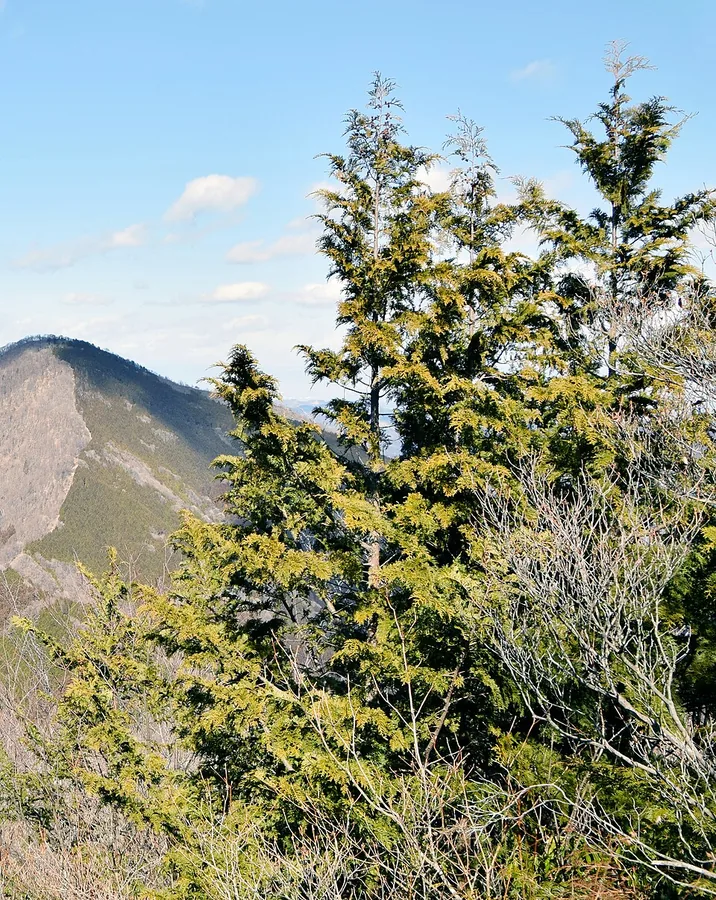
Sawara false cypress is a tough evergreen conifer out of Japan, and you grow it for that soft, feathery foliage rather than any kind of bloom. It's part of the cypress family and laughs off cold all the way down to -29°F (-34°C), which is why you'll see it in so many northern gardens across USDA zones 4 to 8. Left to its own devices the species grows into a big tree, but most folks reach for the smaller named forms instead.
The named cultivars are really where this plant shines. A few stay as low golden mounds, some climb into soft blue-green columns, and the threadleaf kinds drip down in weeping strands of yellow. With that kind of range, you can use it as a foundation shrub, a standout specimen, or a hit of winter color once everything else in the garden has gone bare.
Once it's settled in, it barely asks for anything. Give it sun, soil that drains, and a little cover from the harshest drying wind, and it keeps its year-round color with hardly any effort. The one thing that catches people out is pruning, because this conifer just won't regrow from bare wood.
Care
The short version: full sun to part shade, set into moist but well-drained soil that never sits soggy, with light pruning kept strictly to green growth and a balanced evergreen feed come spring.
Light
False cypress shows its best color in full sun, which is where the gold and blue forms keep their richest tones. It'll handle partial shade too, though when the light gets too thin the foliage opens up and those colors lose their punch.
Water
Keep that soil moist but never waterlogged, soaking it deeply while the plant gets established and through any dry stretch. Once it's settled it can shrug off a fair bit of drought, but it still wants sharp drainage, since sitting water is exactly what kicks off root rot.
Soil
Set it into moist, fertile, well-drained ground. It's not picky about chemistry and copes with anything from acidic to a touch alkaline, somewhere around a pH of 5.0 to 7.5, just as long as the water drains away freely.
Temperature
This is a tough, cold-hardy conifer that's happy anywhere from roughly -29°F to 86°F (-34°C to 30°C). It comes through brutal northern winters just fine, though sharp, dry wind can scorch the side that's left exposed.
Humidity
Plain old outdoor humidity is all it needs, so there's no target number to chase. What counts way more is air movement, because crowded, still, damp foliage is exactly where blight and mites get their start.
Feeding
Give it a light feed in spring using a balanced slow-release fertilizer built for evergreens. A single seasonal feeding does the trick, since this is a slow and steady grower that doesn't like being rushed.
Pruning
Keep your pruning light, and only shape it where green growth still is. The golden rule? Never cut into bare brown wood, since it has no dormant buds and won't refill. Tidying out dead interior branches as the plant ages keeps the whole thing looking neat.
Repotting
Container and dwarf forms like a fresh, roomier pot every 2 to 3 years. Roots winding around the pot, water shooting straight through, or growth that's clearly stalled are all signs it's time to size up.
Size & spacing
How big it gets is all about which form you choose. The species can stretch to 20 to 30 feet (6 to 9 m) tall and spread anywhere from 3 to 20 feet (90 cm to 6 m), so check that label and give each plant the elbow room its variety calls for.
When to plant
False cypress is a hardy conifer you plant straight into the ground, not something you start in a seed tray. Pop it in during spring or early fall, while the soil's still warm and moisture stays steady, so the roots have time to settle before summer heat or deep winter cold rolls in. There's no flower or harvest to wait around for, since it pulls its weight with year-round foliage.
Northern hemisphere
Southern hemisphere
Typical months for a temperate climate: start earlier in warm zones, later where spring frosts linger.
- Plant: spring or early fall
- Harvest: non-flowering; grown for evergreen foliage
Hardiness
USDA hardiness zones: 4–8
Temperature: down to -34°C
Troubleshooting
Most false cypress headaches come down to one of three things: soggy roots, dry wind, or a pruning cut gone wrong. Spot the early warning signs on the tips, in the foliage, or down in wet soil, and you can jump in before you lose a whole branch. Find what matches below, then act while it can still make a difference.
Thinning out and fading in wet ground?
If a plant keeps thinning and slumping in soggy soil, the culprit is nearly always root rot, frequently Phytophthora. Dig down and you'll feel dark, mushy roots where firm white ones should be. Once a plant's roots are that far gone, there's no bringing it back, so the move is to fix the drainage, ease off the water, and only replant somewhere that water actually runs off.
Fix:
- Improve drainage immediately and stop overwatering
- Remove severely affected plants
- Replant only in well-drained soil
Brown, dying tips at the ends of branches?
When the tips go brown and die back, you're usually looking at tip blight, a fungus that settles into young or stressed growth when the weather stays wet. Dry winter wind can do the same thing, except it tends to brown the side facing the sun. The fix is simple: snip the bad twigs off well below the damage, wipe your tools clean between cuts, and open the plant up to more air and a bit of wind protection.
Fix:
- Prune out and destroy blighted twigs well below symptoms, disinfecting tools between cuts
- Improve air circulation and avoid overhead watering
- Shelter plants from harsh drying winter wind
Dull, speckled foliage with a hint of fine webbing?
A faint webbing and that dusty, stippled look usually mean spider mites, which love a stressed, dusty plant. Hold a sheet of white paper under a branch, give it a tap, and you'll watch them scurry. Bagworms tip their hand differently, leaving little spindle-shaped bags dangling in the foliage. Just hose the mites off, pluck the bags by hand, and hit young bagworms with Bt once the crawlers show up in early summer.
Fix:
- Hose down foliage to dislodge mites
- Hand-pick and destroy bagworm bags
- Treat young bagworms with Bacillus thuringiensis (Bt) when crawlers are active in early summer
Bare brown wood that just won't green back up?
Trim a false cypress back into the bare brown wood in its middle and that spot is done for good, because the old wood simply has no dormant buds to send out new shoots. Keep in mind that some inner browning is just the plant aging, since shaded lower branches naturally fade with time. So stick to pruning green, leafy growth, and feel free to tidy out dead inner wood, just know it won't ever fill back in.
Fix:
- Prune only into green foliage-bearing growth
- Remove dead interior wood for appearance, accepting it will not refill
Toxicity
Got pets at home? Good news, because false cypress is not considered toxic. You won't find it on the ASPCA poison lists, and it's treated as safe around cats and dogs. Like with any plant, a pet that gulps down a load of foliage might feel a little queasy for a while, but there's no real poison lurking here.
Safe for
People · Cats · Dogs · Horses · Rabbits · Livestock · Birds
Cats None
You're fine keeping cats around it, since false cypress isn't on the ASPCA toxic list. If a cat goes to town on the foliage it might get a brief tummy ache, but that's true of plenty of garden plants.
Dogs None
Nothing to worry about with dogs. There's nothing toxic in the foliage, though a nosy pup that grabs a big mouthful could feel a little off for a bit.
Horses Safe
It's considered safe around horses, and the foliage has no toxic compounds on record.
Rabbits Safe
Rabbits can nibble nearby without trouble. It's not a known poison, so an odd bite isn't going to hurt them.
Livestock Safe
Cattle, goats, and sheep grazing close by have nothing real to fear from this conifer, which holds no toxins worth noting.
Birds Safe
Birds in the yard and wild ones alike do just fine around it, and that thick evergreen growth gives them good shelter instead of trouble.
People Safe
Nothing toxic here for people either, though it's not something you'd eat, and the clippings can feel a little resinous when you handle them.
An outdoor landscape conifer; foliage may cause mild stomach upset if large amounts are chewed, as with many plants, but it is not considered toxic.
Varieties
Hardly anyone bothers with the full-size species. Here are the named forms and close relatives you'll actually run into at the nursery.
'Gold Mop' / 'Golden Mop'
A favorite dwarf threadleaf type with stringy, mop-like foliage in a bright golden-yellow, sitting around 2 to 3 feet (60 to 90 cm) tall and wide at 10 years before easing up to roughly 5 feet (150 cm).
'Boulevard'
A soft, feathery moss form sporting blue-green to silvery juvenile foliage, reaching about 5 to 6 feet (150 to 180 cm) in 10 years and settling near 12 feet (3.7 m) when mature.
'Filifera Aurea'
A golden threadleaf form with weeping branches of thread-like yellow foliage, hitting 6 to 7 feet (180 to 215 cm) in 20 years and topping out around 20 feet (6 m) over time.
Hinoki cypress (Chamaecyparis obtusa)
A different cousin species you can spot by its flatter, fan-shaped sprays of fragrant scale foliage, nothing like the Sawara's stringy threads.
Atlantic white cedar (Chamaecyparis thyoides)
A North American relative that's right at home in wet, boggy spots, and quite separate from the Japanese Sawara false cypress.
How to propagate
How you go about multiplying false cypress really comes down to your goal. Cuttings give you an exact copy of a treasured gold or blue form, while seed hands you the plain species along with a mixed bag of seedlings.
Stem cuttingsModerate
Mid to late fall · Several weeks to months to root
Cuttings are how you copy those named gold and blue forms, since they won't come true from seed. Take them in mid to late fall and give it time, because they can need several weeks to months to push out roots.
SeedModerate
After cone ripening · Slow; seedlings variable
Want the plain species? You can sow it from seed after the cones ripen, just plan on slow, uneven results. Each seedling turns out a bit different, and none of them will hold a named cultivar's traits.
Myths
You can shear false cypress hard like a hedge and it will fill back in from the bare wood.
Just like most needled evergreens, false cypress has no dormant buds tucked away in its old brown wood. Cut down into that bare interior and the hole stays empty for keeps. So prune only into green growth and shape it gradually, a little at a time.
False cypress is poisonous to cats and dogs.
Chamaecyparis isn't anywhere on the ASPCA toxic-plant lists. It is regarded as non-toxic to cats and dogs, though any pet that chows down on a lot of plant matter might get a mild, short-lived stomach upset.