Tree · Cupressaceae
Japanese Cedar
Cryptomeria japonica
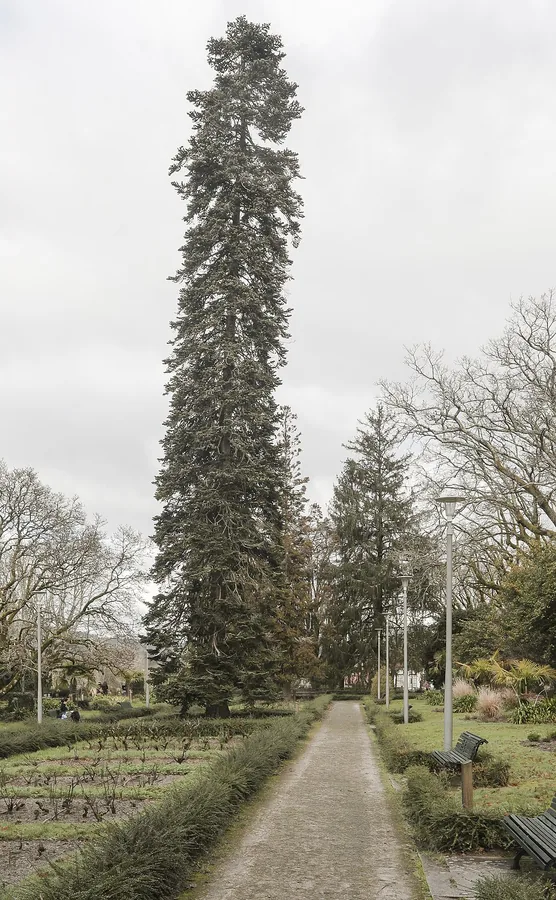
Give it rich, moist soil and a break from winter wind, and Japanese cedar grows into a towering evergreen spire.
Full sun
Every 7–14 days
USDA 5–9
50–70 ft · 15.2–21.3 m
Overview
Japanese cedar is the national tree of Japan, where they call it sugi and line it up in tall, stately rows around temple grounds. The name's a little misleading, though. It's actually part of the cypress and redwood family, not the true cedars, and it sits all by itself in its own genus. Out in the garden it comes across as a soft, feathery evergreen conifer, with awl-shaped needles spiraling around the shoots.
This tree really makes a statement. Let it do its thing and it climbs to 50 to 70 feet (15 to 21 m) with a broad pyramidal crown, and the reddish-brown bark peels off in long, shaggy strips that give the trunk loads of character. Cold isn't a problem either, since it takes it down to -20°F (-29°C), which puts it in USDA zones 5 to 9.
Most people go for one of the named cultivars instead of the wild form, and can you blame them? Some stay as neat little dwarf globes that fit a small bed, while the full-size ones grow into fast, dense screens. Either way, all it really asks for is steady moisture and a spot out of the worst wind, and after that it pretty much takes care of itself.
Care
The short version: full sun to light shade, in rich, moist, acidic, well-drained soil that doesn't dry out, and a planting spot that's tucked away from harsh, drying winter wind.
Light
Japanese cedar does best in full sun, where the canopy fills in dense and even. It'll take partial sun or light shade too, but a shadier spot leaves the growth a bit thinner and looser.
Water
Keep the soil consistently moist, especially while the tree's young, and don't let it dry out. Watering every 7 to 14 days works for most spots, and an established tree can handle a short dry spell just fine. What it really can't take, though, is a proper drought.
Soil
Go with rich, deep, moist, well-drained loam that leans acidic, ideally a pH of 5.0 to 6.5. You want soil that holds moisture but doesn't get waterlogged, so mix in some organic matter if your ground is heavy or thin.
Temperature
This is a seriously tough tree, hardy from -20°F to 100°F (-29°C to 38°C) across USDA zones 5 to 9. Summer heat and deep winter cold don't faze it much, though drying winter wind does more damage than the cold ever does.
Humidity
Average outdoor humidity is all it needs, so there's no number to keep track of. Steady soil moisture matters way more than whatever the air's doing.
Feeding
Feed in spring with a balanced or acid-forming slow-release fertilizer made for evergreens. Once a season is plenty for a healthy tree, and piling on more just gives you soft, weak growth, so why bother?
Pruning
Japanese cedar needs hardly any pruning. Clip out any dead, damaged, or winter-burned shoots in spring, and that's usually the whole job. It also shears really well, which is why it makes such a clean screen or hedge.
Repotting
Most Japanese cedars live in the ground and never need repotting. If you've got one in a container, repot rarely, and watch for roots circling the pot, water rushing straight through, or new growth that's stalled out as your cue.
Size & spacing
Plan for a tree that hits 50 to 70 feet (15 to 21 m) tall with a spread of 20 to 30 feet (6 to 9 m). Give it that much room from buildings and other trees, or if space is tight, just step down to a dwarf cultivar instead.
When to plant
Since Japanese cedar is an evergreen conifer, there's no sowing season to chase and nothing to harvest, so that takes the pressure off. Plant it in spring or early fall, while the soil's warm and moisture is easy to come by, and the roots get a nice long run of mild weather before they have to deal with heat or hard cold.
Northern hemisphere
Southern hemisphere
Typical months for a temperate climate: start earlier in warm zones, later where spring frosts linger.
- Plant: Spring or early fall
- Harvest: Non-flowering; grown for evergreen foliage and form (cones mature in fall)
Hardiness
USDA hardiness zones: 5–9
Temperature: down to -29°C
Troubleshooting
Japanese cedar is an easy, low-key tree, and the handful of problems it does hit tend to show up in the foliage. Most of them are just cosmetic and clear up on their own with the season. Match what you're seeing to the notes below before you decide whether to do anything.
Winter foliage going bronze or looking scorched
Nine times out of ten this is just winter bronzing, a normal color change that lots of cultivars run through before they green up again in spring. Ever notice it's worst on the side that catches the wind? That's because drying wind pulls moisture from the needles faster than the frozen roots can send it back up. Tuck the tree out of the harsh wind, send it into winter with moist soil, and snip off anything that stays brown once new growth kicks in.
Fix:
- Site plants where they are sheltered from harsh, drying winter winds
- Keep soil adequately moist going into winter
- Prune out shoots that fail to green up in spring
Spotty needles and a bit of twig dieback
Usually you're looking at leaf spot and leaf blight fungi, things like Cercospora and Pestalotiopsis, and they like to camp out on the lower inside branches where the air sits still and damp. They tend to show up when a tree's already stressed, so a plant that's fighting a bad spot or a dry spell is the one that catches it. Here's the reassuring part: it's almost always just cosmetic, so trim off the bad twigs, open up the canopy so air can move, and keep the tree healthy, and it'll be fine.
Fix:
- Prune out and dispose of affected twigs and foliage
- Improve air circulation and avoid overhead wetting of foliage
- Maintain plant vigor with proper siting, water, and nutrition
Toxicity
Good news if you've got pets: Japanese cedar is not toxic. It's not on any poison list, and your animals can share the yard with it, no problem. The only thing to keep an eye on is the foliage itself, since those needles are stiff and pretty sharp.
Safe for
People · Cats · Dogs · Horses · Rabbits · Livestock · Birds
Cats None
Cats can hang out around this tree without any worry, since it doesn't carry a known toxin. If one decides to chew a bit of foliage, you might see some drooling or a quick stomach upset, and that's about it, same as with any coarse plant.
Dogs None
Dogs are totally fine near Japanese cedar, which doesn't turn up on any poison list. Chew a fallen sprig and a pup might get a brief, mild bout of tummy trouble, nothing worse than that.
Horses Safe
Horses have nothing to worry about here, because the tree isn't toxic to them. And honestly, those stiff, awl-shaped needles are prickly enough that most horses give it a pass anyway.
Rabbits Safe
Rabbits aren't at any risk from this conifer, since there's no harmful compound on record. The prickly foliage isn't exactly tempting, so they rarely bother with it.
Livestock Safe
Cattle, goats, and sheep can graze right nearby with no poisoning risk at all. Those sharp, resinous needles make it a pretty unappealing snack, so they usually leave it be.
Birds Safe
Birds come to no harm from it, and plenty of them like to shelter in that thick evergreen cover. There's nothing toxic in the foliage or the cones for them to worry about.
People Safe
Japanese cedar is safe to plant and handle, though watch out, those pointed needles can prick bare skin. There's no edible part on it, so it's grown for shade and screening rather than anything you'd eat.
Foliage is harmless to handle, though needles are sharply pointed and awl-shaped.
Varieties
The straight species gets big, so most folks just pick a cultivar that fits their space. These are the ones you'll bump into most.
Yoshino
A vigorous, fast grower of about 30 to 40 feet whose blue-green foliage hangs onto its color all winter with hardly any bronzing.
Black Dragon
A dwarf with really dark green foliage on an upright, dense pyramid that's just a touch ragged around the edges.
Globosa Nana
A slow, rounded little dwarf shrub of about 2 to 4 feet whose bluish-green needles pick up a rusty-red tint once winter hits.
Sekkan-sugi
The one you grow for that creamy-yellow new growth that lights up the tips of the branches.
Radicans
A fast, narrow pyramid in rich blue-green that's a go-to when you want a screen.
How to propagate
You can grow Japanese cedar from seed, cuttings, or layering, and which one you pick really comes down to whether you want an exact copy of a named cultivar or just more trees.
SeedModerate
Sow in fall or spring after cold stratification · Several months to germinate; years to reach landscape size
Want to try it from seed? Give the seed a cold stratification, sow in fall or spring, and settle in for the long haul, because germination takes several months and the trees need years to reach landscape size. Just know the seedlings come out variable, so named cultivars won't breed true this way.
Stem cuttingsModerate
Semi-hardwood cuttings in late summer to fall · Several weeks to months to root
If you're after an exact copy of a named cultivar, cuttings are the way to go. Snip semi-hardwood cuttings from late summer into fall, dip them in rooting hormone, and keep them nice and humid while they root over the next few weeks to months.
LayeringModerate
Spring · One or more seasons
This one's easy, since the low branches will root wherever they rest on the ground. Just pin one down in spring, let it grow its own roots, and give it a season or more before you cut the new plant loose.
Myths
Japanese cedar is a true cedar.
The name's a bit of a trick, because this tree isn't related to the true cedars in the genus Cedrus at all. Cryptomeria gets its own genus over in the cypress and redwood family, Cupressaceae. So take the common name as a fun quirk, not a hint about its family.