Houseplant · Moraceae
Ficus Audrey
Ficus benghalensis
Give it bright indirect light and easy, steady watering, and this banyan fig turns into one laid-back, good-looking houseplant.
Bright indirect
65–80°F · 18–27°C
USDA 10–12
100 ft · 30.5 m
Overview
Ficus Audrey is the houseplant side of Ficus benghalensis, the banyan fig that happens to be the national tree of India. Indoors it keeps a neat upright shape, with a pale, almost chalky trunk and soft green leaves that show off deep veins. It's earned a name as an easy fig, way more forgiving and a lot less dramatic than that fussy fiddle-leaf it usually shares a shelf with.
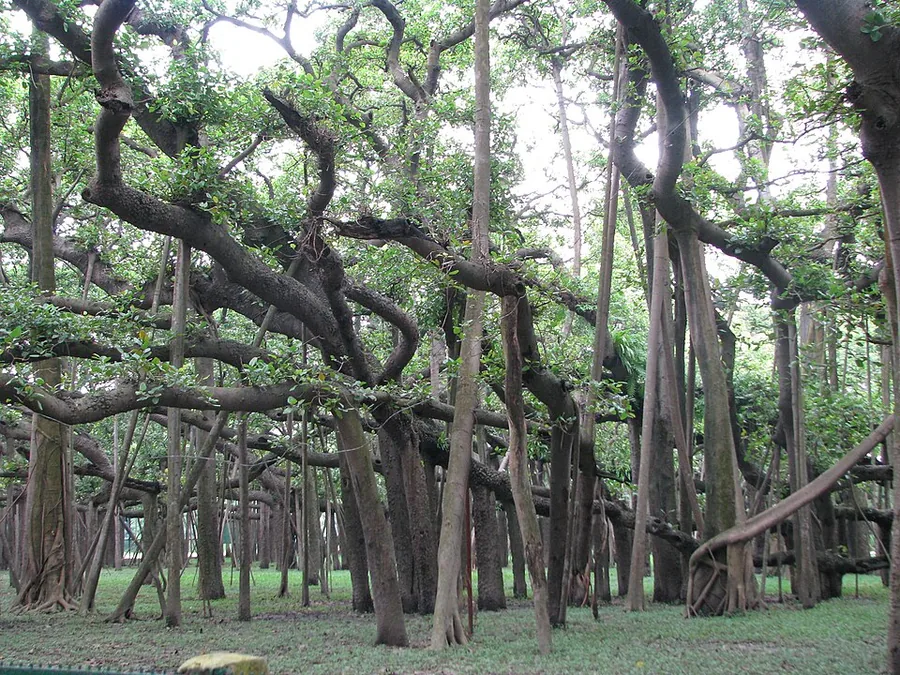
Now, let it grow wild somewhere frost-free and this exact same species turns into a giant. It kicks off life as an epiphyte sitting on another tree, then drops aerial roots that thicken into trunks until one plant becomes a little grove. Your potted Audrey, though? It'll never do any of that. Stuck in a container, it stays at roughly 1 to 2 feet (30 to 60 cm) and skips the aerial roots entirely.
What does it actually want? Consistency. Bright indirect light, a drink once the top of the soil dries, and a spot it can just stay in without getting shuffled around. Get that rhythm down and it'll thank you with steady new leaves. Get careless with the watering and it sulks, usually by dropping leaves.
Care
The short version: bright indirect light, water only once the top 2 to 3 inches (5 to 7.6 cm) of soil go dry, keep the air a little humid, and let it stay put in one spot instead of moving it around.
Light
Put it in bright, indirect light near a window where the sun won't hit the leaves straight on. It'll take a bit of direct sun or some shade just fine, but skimp on light and it goes sparse and leggy, with leaves that start to drop.
Water
Wait until the top 2 to 3 inches (5 to 7.6 cm) of soil feel dry, then water, let it drain, and pour off whatever pools in the saucer. Ease off in winter when growth slows down. Soggy roots? That's the quickest way to kill this thing.
Soil
Pot it in a well-drained potting mix, ideally one mixed with perlite so water runs through nice and easy. It's not picky about pH and handles anything from 6.0 to 8.0, so honestly the drainage matters way more than the chemistry.
Temperature
Regular room warmth is perfect, somewhere around 65°F to 80°F (18°C to 27°C). Just keep it clear of cold drafts and the hot, dry blast from heating and AC vents, since both of those will set off leaf drop.
Humidity
This fig likes the air on the humid side, around 50% to 80%. Dry indoor air, especially come winter, leaves the foliage cracking at the edges, so group your plants together or run a humidifier if your place runs dry.
Feeding
Feed it monthly through spring and summer with a liquid houseplant fertilizer, then quit completely over winter while it rests. Seeing pale new leaves? That's it telling you it could use a little nitrogen.
Pruning
It handles pruning just fine, so cut it back to shape it or keep its size in check whenever. The thing to watch is the irritant milky latex that weeps from every cut, so wear gloves and keep that sap off your skin and out of your eyes.
Repotting
Bump it up a pot size in late winter or early spring, and no need to rush, since it's happy sitting a little root-bound. Roots poking out the drainage holes, circling the rootball, or water rushing straight through are how it tells you it's time.
Size & spacing
As a houseplant Audrey holds at about 1 to 2 feet (30 to 60 cm) tall, which is nothing next to the roughly 100-foot (30 m) tree this species becomes in the wild. Just give it enough room for air to move around the leaves so it isn't crowding whatever's next to it.
Troubleshooting
Most Ficus Audrey trouble traces back to watering or some change the plant wasn't happy with, and the leaves are where it shows up first. Spot the early signs and you can sort things out before a couple of dropped leaves turn into a bare stem. Find what matches below, then act while it still does some good.
Wilting and yellowing with soft, mushy roots
This one's root rot, and it happens when the roots stay wet with nowhere to drain. Slide the plant out of the pot and look for brown, mushy roots with a sour smell. Trim off the dead ones, repot into a fresh, fast-draining mix, and from here on let the surface dry before you water and keep that saucer empty.
Fix:
- Reduce watering
- Repot into a well-drained mix and trim away rotted roots
- Ensure the pot drains freely and empty saucers
Leaves dropping all at once out of nowhere
When a fig drops its leaves, it's usually just reacting to something it didn't care for, like a soggy pot, a cold draft, or getting moved across the room. Overwatering is the usual suspect, so feel the soil before you do anything and wait until the top few centimeters dry out. Then? Park it in one bright, draft-free spot, quit relocating it, and the fresh growth comes back steady.
Fix:
- Stabilize conditions: keep in bright indirect light, away from heating/AC vents and cold drafts
- Water only when the top few cm of soil dry; never leave the pot in standing water
- Resume light feeding in the growing season if foliage is pale (nitrogen)
Speckled or sticky leaves with webbing or little bumps
Fine speckling, a sticky film, or tiny bumps on the stems? That usually means bugs have moved in, often spider mites, scale, or mealybugs, plus fungus gnats hanging around damp soil. Wipe the leaves down, rinse the critters off, and then treat with insecticidal soap or horticultural oil, repeating as the label says. Letting the soil surface dry between waterings sends the gnats packing.
Fix:
- Wash foliage and rinse off pests
- Treat with insecticidal soap or horticultural oil per label
- Let the soil surface dry to discourage fungus gnats
Brown and yellow spots showing up on the leaves
Spots on the foliage almost always come down to how the air and water move around the plant. Soft, spreading marks? That's stale air plus too much moisture. Dry, light-brown patches mean it got thirsty instead. So let some air move through, keep water off the leaves, and stick to a steady watering routine.
Fix:
- Improve air circulation and avoid wetting foliage
- Water consistently and discard excess water
Leaf edges going crispy and cracking
Dry indoor air is what's doing this, and it's worst in winter once the heat's running. Just bunch your plants together, run a humidifier, or set the pot on a pebble tray to bring the humidity up toward 50% to 80%. And keep it away from heating vents, because nothing dries out the leaves faster than that hot, blasting air.
Fix:
- Raise humidity (group plants, use a humidifier or pebble tray)
- Keep away from heating vents
Skin acting up after you handle cut stems
That milky latex sap carries ficin and psoralen, and it can leave your skin red and irritated wherever it lands. Since it shows up right after you prune or snap a stem, it's easy to figure out what happened. Wash the spot with soap and water right away, and just keep gloves handy any time you're cutting the plant or taking a cutting.
Fix:
- Wash skin with soap and water after contact
- Wear gloves when pruning or taking cuttings
Toxicity
This isn't a plant to eat or to leave where a chewing pet can reach it. The leaves and the milky sap carry ficin and psoralen, which irritate the mouth, stomach, and skin in cats, dogs, and people alike. The reaction's usually mild rather than dangerous, but no part of it is safe to nibble, so keep it away from pets and kids and wear gloves when you prune.
Toxic to
Cats · Dogs · Horses · Rabbits · Livestock · Birds · People
Cats Mild
If a cat chews on the leaves or sap, it'll usually drool and might throw up, with a bit of mouth and stomach irritation. It's real, but it's mild, and most cats are fine again once they leave the plant alone.
Dogs Mild
A dog that bites into a stem or leaf will probably drool and get an upset stomach, sometimes with some vomiting. And that same sap can redden the skin around the mouth where it touches.
Horses Mild
For a horse, the milky sap bothers the mouth and gut, so you'll see drooling and some digestive upset. If the latex gets on the skin, it can leave the muzzle sore too.
Rabbits Caution
The same ficin and psoralen that bug cats and dogs make these leaves a bad pick for a rabbit. Just keep the plant out of reach so there's no chance of a nibble.
Livestock Caution
Grazing animals that get into the foliage can end up with the same sore mouth and stomach the sap stirs up in other mammals. So fence it off wherever stock might browse.
Birds Caution
There's nothing safe to eat here, and with that irritant sap, a curious bird is much better off kept well away from the leaves and cut stems.
People Caution
No part of this plant is meant to be eaten, and the latex sap can irritate skin on contact, so wear gloves when you prune. And keep kids from chewing the leaves, which can leave the mouth sore.
The milky latex sap can irritate skin; wear gloves when pruning or taking cuttings
Helpline numbers

United States
ASPCA Animal Poison Control: (888) 426-4435 (fee applies)
Poison Control: (800) 222-1222



Canada
Poison Centres: 1-844-764-7669
Varieties
Ficus Audrey gets sold under one main name, but you might run into a close cousin at the plant shop. Here are the two worth telling apart.
'Audrey'
This is the compact houseplant version that's just sold as Ficus Audrey, staying around 1 to 2 feet (30 to 60 cm) with a pale, whitish trunk and deeply veined green leaves, and it's an easygoing one to grow.
Chandelier Happiness
This upright pick grows a touch taller, hitting roughly 2 to 4 feet, and it's got medium-green oval leaves.
How to propagate
Want more plants from an Audrey you already have? You can do it, though it takes a bit more patience than rooting some easy trailing plant. Either way you're cutting into stems that bleed irritant sap, so gloves really aren't optional here.
Air layeringModerate
Any season (genus-level, Clemson); NC State also lists air layering for F. benghalensis · Unknown
Air layering is the more dependable way to get a new plant, and the good news is figs take to it any time of year. You nick a section of stem, wrap it in damp moss until roots show up, then cut the rooted piece free. Just remember the cut tissue weeps that irritant latex, so keep gloves on the whole time.
Stem cuttingsModerate
Best taken in summer (genus-level, Clemson); NC State lists stem cuttings for the species · Unknown
Rooting a stem cutting works too, and summer's the best time to grab one while the plant's growing strong. Snip a healthy stem and pot it up to root. The cut end oozes milky latex that stings, though, so keep those gloves on while you work.
Myths
Word is that Ficus Audrey is totally fine to keep around cats and dogs, nothing poisonous about it.
Nope, it's not. The ASPCA flags the whole genus Ficus as toxic to cats, dogs, and horses thanks to its ficin and psoralen, and NC State calls this species poisonous to cats, dogs, and people through the leaves and sap. Keep it out of reach of pets and children, and if a leaf gets chewed, that's your cue to call the vet.
Loads of houseplants irritate through calcium oxalate, so this one must work the same way, right?
Easy thing to assume, but that's the wrong one. The irritation's coming from the milky latex sap, which carries a proteolytic enzyme called ficin plus psoralen, not the calcium oxalate crystals you'd find in something like pothos or dieffenbachia.
So this is just a little desktop plant, and those enormous banyans with hanging roots are something else entirely, right?
Believe it or not, it's the exact same plant, Ficus benghalensis, the national tree of India. Kept indoors as Audrey it holds around 1 to 2 feet and never grows aerial roots, but out in the wild? It's a strangling fig that starts out as an epiphyte, climbs to roughly 100 feet, and drops prop roots that thicken into trunks.
Sources
- Plants of the World Online, Royal Botanic Gardens Kew
- NC State Extension Gardener Plant Toolbox
- ASPCA Animal Poison Control ('Fig')
- UF/IFAS Center for Aquatic and Invasive Plants, University of Florida
- Clemson Cooperative Extension HGIC (Weeping Ficus)
- Missouri Botanical Garden Plant Finder (Ficus benjamina)