Houseplant · Moraceae
Fiddle-leaf Fig
Ficus lyrata
Hand it bright indirect light and one steady spot, and your fiddle-leaf fig pays you back with big, glossy leaves.
Bright indirect
USDA 10–12
2–10 ft · 0.6–3 m
Overview
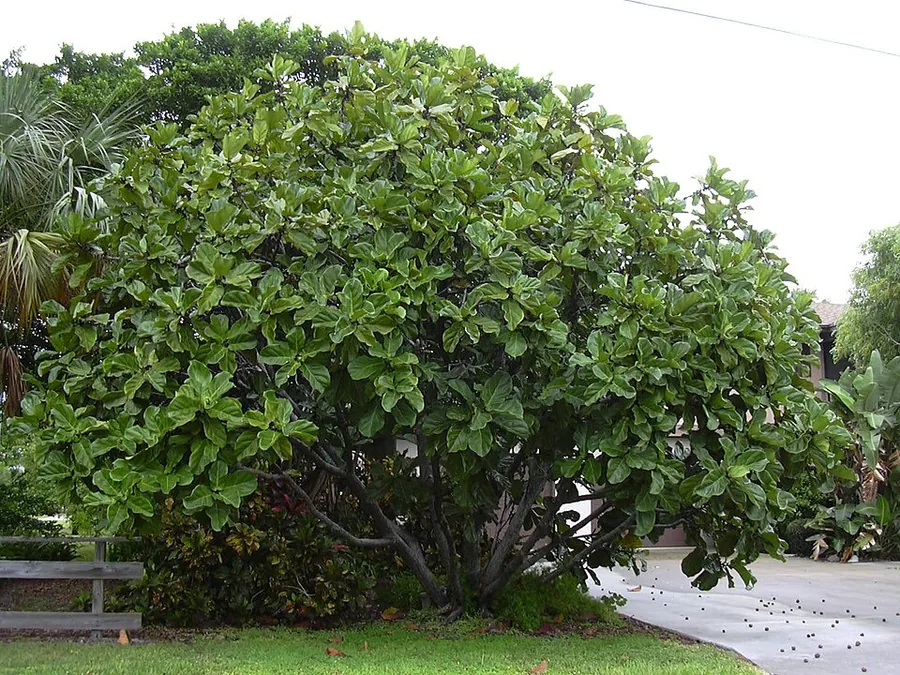
Want one plant that does all the talking in a room? That's why so many people land on the fiddle-leaf fig. It's part of the fig family and hails from the tropical forests of western and west-central Africa, where it actually grows up into a tree. Brought inside, it holds the line as a tall, upright specimen plant wearing wide, glossy, violin-shaped leaves.
People talk about it being a diva more than it really deserves. It isn't needy so much as set in its ways, and what it wants is consistency: the same bright corner, the same watering habit, and no surprise moves or cold drafts. Nail those, and it'll let the rest slide. Keep shuffling it around or swing the watering all over the place, though, and you'll hear about it through brown spots and dropped leaves.
Treat it right and it works its way up from a tabletop piece toward the ceiling across a handful of years, hitting 2 to 10 feet (60 cm to 3 m) under a roof. The catch with all that presence is the milky sap, which bothers skin and isn't safe around pets, so it deserves a perch up and away from cats, dogs, and kids.
Care
The short version: give it bright indirect light, a watering habit that lets the top few centimeters go dry first, a fast-draining acidic mix, and one warm, draft-free corner where it can plant itself and stay put.
Light
Set it in bright indirect light, ideally close to a window where the sun isn't slamming straight into the leaves. It'll cope with part shade, but blazing afternoon sun burns the foliage, so soften that light or back the plant off from the harshest of it.
Water
Hold off until the top few centimeters of soil go dry, and check with a finger about 2 inches down. It hates both extremes, so don't let the rootball bake dry or shrink away from the pot, and don't let it stew in water either. As fall and winter roll in, water less.
Soil
Pot it up in a fast-draining, loamy, acidic mix that keeps a bit of moisture without turning into a swamp. Shoot for a pH at or under 6.0, and stick with a container that has drainage holes so water can run right out the bottom.
Temperature
Keep things cozy, north of 55°F (12.8°C), and clear of chilly windows and drafts. Big temperature swings are a classic trigger for spotting and dropping leaves, so a steady indoor corner is what it likes best.
Humidity
Ordinary household air is plenty, so there's no humidity number to fuss over. Giving those wide leaves an occasional wipe beats misting anyway, since dust-free leaves soak up light better.
Feeding
Through spring and summer, feed it weekly with a watered-down liquid fertilizer at a 3-1-2 (N-P-K) ratio, stirred right into the watering. That bit of extra nitrogen fuels all its leafy growth. Once the growth winds down for the season, quit feeding.
Pruning
It handles a trim with no fuss, so go ahead and cut it to shape or hold its height whenever the mood strikes. Just wear gloves, since the milky sap weeping from the cuts is rough on skin.
Repotting
Bump it up a pot every 1 to 2 years once it's outgrown its home, though a slightly snug fit doesn't faze it. The signs to move it? Roots poking out the drainage holes, or soil that dries fast and shrinks back from the rim.
Size & spacing
24–120 in (61–305 cm) tall
Troubleshooting
Just about every fiddle-leaf fig hiccup turns up on the leaves, and most of it circles back to how you're watering or to something shifting around the plant. Catch the clues while they're fresh and you can deal with the root of it before it gets worse. Find what matches below, then go from there.
Brown blotches creeping over the foliage
When brown patches turn up, the cause is almost always too much water and the root rot that follows, not a dry plant. A chilly draft, a heat vent blowing nearby, or watering that lurches from drenched to parched can set it off as well. So before you top up the water again, dig into the soil, peek at the roots, shift the plant clear of any draft, and get yourself onto an even watering schedule.
Fix:
- Let the soil dry appropriately and confirm the pot drains freely
- Move the plant away from drafts, vents, and cold windows
- Re-establish a consistent watering routine; trim rotted roots if root rot is present
Leaves letting go and falling
Ever notice how a fiddle-leaf fig starts dropping leaves right after something shifts? Watering that keeps changing is the most likely reason, though a cold draft, a quick temperature dip, or even just sliding the pot to a fresh corner can knock a few off. Settle on one steady location, keep the watering even, and the plant calms right back down.
Fix:
- Keep watering consistent
- Avoid moving the plant once it is settled
- Protect from cold drafts and hot/dry air from vents
Bugs, webbing, or a sticky film on the leaves
Kept indoors, figs tend to attract the familiar sap-feeding crowd: scale, aphids, mealybugs, thrips, and spider mites, and that last one really thrives where the air is dry and the leaves are dusty. Flip a few leaves over and hunt for crawlers, thin webbing, or a tacky honeydew coating. Give the foliage a wipe and a rinse, hit it with insecticidal soap or horticultural oil, and park the plant away from your other greenery until you've got things in hand.
Fix:
- Wipe leaves and rinse foliage
- Treat with insecticidal soap or horticultural oil as directed
- Isolate the plant until the infestation is controlled
Sun-side leaves going pale and crispy
Washed-out, burnt-looking patches add up to leaf scorch, and that's just too much direct sun hitting the foliage. Here's the tell: the damage lands on whichever side faces the window, and it's roughest after a blast of afternoon light. Ease the plant back into bright indirect light, or block off that fiercest sun, and the leaves it pushes out next will come in clean.
Fix:
- Move to bright indirect light
- Shield from direct afternoon sun
Wide leaves turning flat and grayish with grime
All that broad surface area really pulls in dust, and once a layer settles, it cuts off the light the plant runs on and makes it harder for the leaves to breathe. The clue is a grayed-out, lifeless sheen. Just run a damp cloth over the tops and the undersides, and they'll snap right back to glossy.
Fix:
- Wipe the top and bottom of the leaves with a damp cloth or paper towel
Toxicity
Skip this one if you've got curious pets roaming at leaf height. Top to bottom, the plant runs with a milky sap full of the enzyme ficin, which stings the mouth and gut of cats, dogs, and the rest, kicking off drooling and vomiting whenever it gets chewed. That same sap nips at human skin, and nothing on the plant is edible, so glove up to handle it and keep it clear of animals and little ones.
Toxic to
Cats · Dogs · Horses · Rabbits · Livestock · Birds · People
Cats Toxic
Bite into a leaf and a cat ends up with a raw, stinging mouth, a lot of drooling, and usually some vomiting not long after. That milky sap can flare up the skin too, leaving it red wherever it touches.
Dogs Toxic
Once a dog chomps the leaves, count on a sore mouth, an upset stomach, heavy drooling, and vomiting. Any sap smeared on the muzzle or paws can leave those spots red and tender.
Horses Toxic
That same ficin-rich latex stings a horse's mouth and churns up its gut, so you'll see drooling and a queasy stomach. Best to keep the plant somewhere a horse can't reach.
Rabbits Toxic
No part of this fig is fair game for a rabbit. The stinging sap throws off both the mouth and the digestion, so the whole plant is a no.
Livestock Toxic
Goats, sheep, and other grazers can wind up with a sore mouth and a churned-up stomach from the latex. Nothing on the plant is worth that gamble for them.
Birds Toxic
That harsh sap is no good for pet birds, and even a tiny nibble can set one off. Keep them well clear of both the leaves and any cut stems.
People Caution
There's nothing here you'd want to eat, and the milky sap can leave skin red, itchy, and sore. Slip on gloves before you prune or handle cut stems, and rinse your hands when you're done.
The milky sap (latex) can irritate skin; wear gloves when pruning or handling cut stems
Helpline numbers

United States
ASPCA Animal Poison Control: (888) 426-4435 (fee applies)
Poison Control: (800) 222-1222



Canada
Poison Centres: 1-844-764-7669
Varieties
Most fiddle-leaf figs on the shelf are just the regular species, but every so often a named pick shows up, usually a smaller or variegated take. Here are the few worth keeping on your radar.
Bambino
This is the dwarf one, staying way more compact than the full species, so it's your go-to if you've only got a tabletop or a snug corner to fill.
Compacta
It caps out near 5 feet and stacks smaller leaves tightly together, so it reads as fuller and bushier next to the gangly species.
Little Sunshine
A small, variegated pick that growers love for staying petite while showing off patterned leaves.
Variegata
Its leaves come marbled in green and cream, and you hardly ever see it for sale, so grabbing one feels like a lucky catch.
How to propagate
Good news: you can spin up a brand-new fiddle-leaf fig straight from the one on your shelf, and a stem cutting is how it's done. All it really asks for is a little patience and a pair of gloves.
Stem cuttingsModerate
Spring through summer during active growth · Roots over several weeks under warm, humid conditions
Want more fiddle-leaf figs? Your best bet is a stem cutting, snipped in spring or summer while the plant's busy pushing out fresh growth. Keep that cutting somewhere warm and humid, and it'll root over several weeks. Just glove up first, because the milky sap really stings bare skin.
Myths
Fiddle-leaf figs are nearly impossible houseplants to keep alive.
The scary stories outpace what actually happens. Sure, it acts picky, but honestly, dependable light, watering that doesn't bounce around, and a single spot it can call home cover most of what it wants. Hand it those, and it grows along just fine without the meltdowns.
Brown spots on the leaves always mean the plant is thirsty.
Reaching for the watering can is usually the wrong instinct here. Way more often, brown spots trace back to too much water and rotting roots, or to cold drafts and bouncing temperatures, rather than a fig that's run dry. Feel the soil and look at where it's standing before you pour anything in.