Houseplant · Moraceae
Weeping Fig
Ficus benjamina
Find it one bright, steady spot it can call home, and this weeping fig turns into a graceful little indoor tree.
Bright indirect
65–85°F · 18–29°C
USDA 10–12
2–50 ft · 0.6–15.2 m
Overview
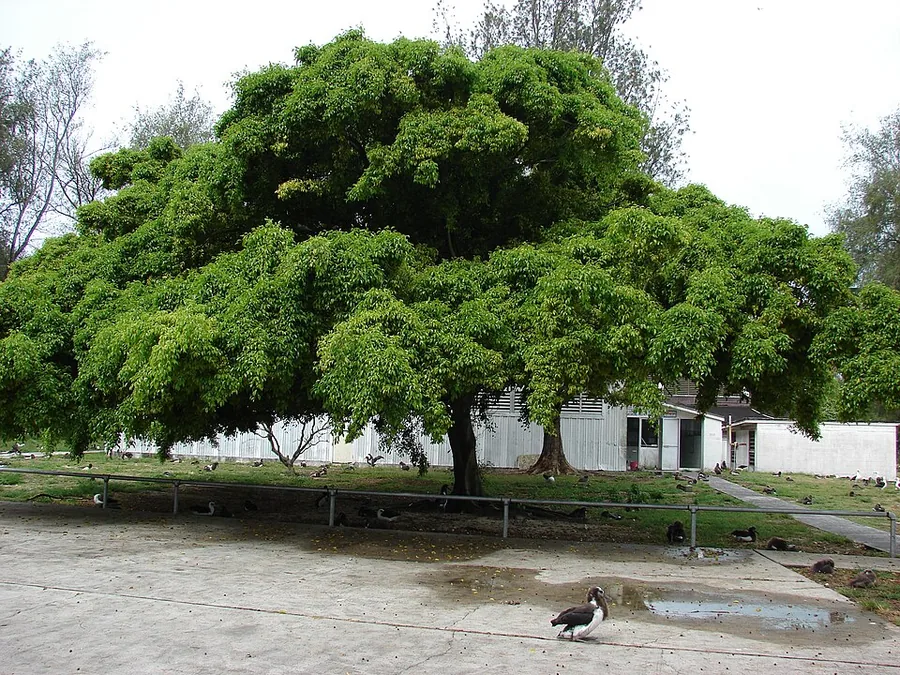
So what's the deal with the weeping fig? It's one of the go-to indoor trees, loved for its slim, drooping branches and small, shiny leaves. It's part of the fig family and comes from the tropics of Asia and northern Australia, which pretty much tells you what it's after at home: warmth, good light, and moisture that stays steady. Grown inside it usually keeps to a friendly 2 to 10 feet (60 cm to 3 m), nowhere near the giant it turns into outdoors where frost never hits.
Here's the thing everyone warns you about. Nudge it somewhere new, hit it with a draft, or switch up your watering, and it'll answer by letting its leaves go. That's not weakness, it just really doesn't like change. Find it a good spot, leave it be, and you'll get thick, weeping growth that sticks around for years.
Two things are worth a heads-up before you bring one home. That sap? It's a milky latex that can irritate skin and counts as a known allergen, and the plant is toxic to cats, dogs, and horses. Handle it carefully and keep it out of a pet's reach, and you've got an elegant houseplant that'll be around a long time.
Care
The short version: bright indirect light, a warm spot away from drafts, and even moisture that never sits soggy. Pick one home for it and leave it there, because if there's one thing it hates, it's being moved.
Light
Give it bright, indirect light and it'll grow best, ideally softened through a sheer curtain. It'll get by in partial shade, and the variegated ones handle a bit less, but stick it in a dim corner and you'll see thin growth and dropped leaves.
Water
Keep the soil evenly moist while it's growing, then let the top dry out a little between drinks over winter. Don't let the pot sit in water, ever. Both too much and too little kick off leaf drop, so being consistent matters way more than how much you pour.
Soil
A well-drained, soil-based mix is all it needs. It's not picky about pH either and takes anything from acidic to alkaline, somewhere around 6.0 to 8.0, as long as water runs through freely.
Temperature
Keep things steady at 65°F to 85°F (18°C to 29°C), with nights just a touch cooler than days. Cold drafts and sudden swings are what knock the leaves off, so keep it away from doorways and vents, and don't let it dip below about 55°F (13°C).
Humidity
It likes high humidity and gets grumpy in dry indoor air, usually by picking up spider mites. Cluster it with other plants, park it on a pebble tray, or run a humidifier through those dry heating months.
Feeding
Feed it monthly with a balanced liquid houseplant fertilizer through spring and summer. Then ease off in fall and winter when growth slows down, since a resting plant doesn't really need it.
Pruning
It only wants light pruning to keep its shape and size, and late autumn or winter is the time. Wear gloves, though, because those cut stems weep a milky latex that irritates skin and is a known allergen.
Repotting
Repot it rarely, since this fig honestly likes being a bit root-bound. Bump it up a size in late winter or early spring, whenever growth slows or the new leaves come in noticeably small.
Size & spacing
Indoors it mostly stays in the 2 to 10 foot (60 cm to 3 m) range, nothing like the 40-foot tree it becomes out in the wild. Leave it room for those arching branches, since it can reach several feet across once it's settled.
Troubleshooting
Almost everything that goes wrong with a weeping fig looks the same, dropped leaves, so the real question is what set it off. Was it moved? Caught a chill? Watered too much or too little, or left short on light? Find the match below, sort the cause, and give it a little time to bounce back.
A wave of leaves dropping after you move it
Don't stress, this is just shock leaf drop, the weeping fig's go-to reaction to pretty much any change. A new spot, a cold draft off a door or vent, hit-or-miss watering, or a fresh repot can all trigger it, and the leaves yellow and drop within days. Steady the light, warmth, and watering, keep it above 55°F (13°C), and it'll quit shedding and push new growth once it settles.
Fix:
- Move the plant to its new location gradually, in stages, rather than all at once
- Stabilize light, temperature, and watering and keep it away from drafts and heat/AC vents
- Keep it above ~55°F (13°C)
- Be patient - once conditions are adequate it stops dropping and pushes healthy new growth
Yellow leaves falling while the soil's still wet
If the soil stays soggy, you're probably looking at overwatering, and water left in the saucer only makes it worse. The roots can't breathe, the lower leaves go yellow, and off they come. Tip out the saucer, let the surface dry a bit before the next drink, and check that the pot drains freely.
Fix:
- Empty the saucer and never let the pot stand in water
- Allow the soil surface to dry slightly before the next watering
- Ensure the pot drains freely
Speckled, sticky, or webbed leaves
Something's sucking the sap, and in dry indoor air it's usually spider mites. Keep an eye out for fine webbing and speckling, sticky honeydew, hard little bumps from scale, or cottony fluff from mealybugs. Rinse the leaves, wipe off what you can see, treat with insecticidal soap or horticultural oil, and bump up the humidity so the mites don't come back.
Fix:
- Rinse foliage and wipe off visible pests
- Treat with insecticidal soap or horticultural oil, repeating as needed
- Raise humidity to discourage spider mites
Thin, stretchy growth that drops its inner leaves
Pale, reaching stems that shed their inner leaves usually just want more light, and sometimes a bit more food too. Move it, a step at a time, to a bright spot with indirect light. Feed it monthly through spring and summer with a balanced liquid fertilizer and it'll fill back out.
Fix:
- Move (gradually) to a bright, indirect-light location
- Feed monthly with a balanced liquid fertilizer during the growing season
Spotted leaves or twigs dying back
Every so often you'll spot clear marks, which point to leaf-spot disease, or a bit of twig dieback, though disease is pretty rare on indoor plants. Just pull the marked leaves and prune out the dead wood. A little more airflow, plus keeping water off the leaves, usually sorts it.
Fix:
- Remove affected leaves and prune out dead wood
- Improve air circulation and avoid wetting foliage
Toxicity
This one isn't pet-safe, so it's worth knowing the score. The milky sap holds ficin and psoralen, and the ASPCA lists the weeping fig as toxic to cats, dogs, and horses. That same latex can irritate skin and set off allergies in some folks, so keep it clear of pets and pop on gloves whenever you prune.
Toxic to
Cats · Dogs · Horses · Rabbits · Livestock · Birds · People
Cats Toxic
That milky sap carries ficin and psoralen, which is why the ASPCA calls it toxic to cats. A cat that chews the leaves can drool, paw at a sore mouth, and throw up.
Dogs Toxic
Dogs get the same deal. Expect drooling, an irritated mouth and skin, and a queasy stomach after a dog bites into a leaf or stem.
Horses Toxic
The ASPCA flags horses too. That irritant sap can leave the mouth sore and bring on drooling and a bit of digestive upset.
Rabbits Caution
There's no rabbit-specific info, but the same irritant sap is reason enough to keep it well out of reach, so don't let a rabbit nibble the leaves.
Livestock Caution
Grazing animals aren't usually hanging around indoors, but the ficin in the leaves makes it a bad bet, so keep it away from goats, sheep, and cattle.
Birds Caution
Pet birds can peck at low leaves, and the irritant latex just isn't worth the risk, so put the plant somewhere curious beaks can't reach.
People Caution
No part of this plant is for eating. The latex can irritate skin on contact and is a known respiratory and contact allergen for some people, so wear gloves when you prune and wash your hands after.
Cut stems and broken leaves exude a milky latex; the latex is a documented cause of contact reactions and IgE-mediated respiratory allergy (rhinitis/asthma) in sensitized people, with cross-reactivity to fig fruit and papain. Wear gloves when pruning and wash hands afterward
Helpline numbers

United States
ASPCA Animal Poison Control: (888) 426-4435 (fee applies)
Poison Control: (800) 222-1222



Canada
Poison Centres: 1-844-764-7669
Varieties
A few named types suit different corners and tastes, from splashy variegated leaves to tiny ones you can train as bonsai. Here are the ones you're most likely to bump into.
'Variegata'
This is the one you grow for its cream-and-green leaves, and like most variegated figs it puts up with a bit less light than the plain green kind.
'Danielle'
A compact, slow grower with deep green leaves that keeps its shape without asking much from you.
'Too Little'
A real dwarf that's right at home as a bonsai.
'Pandora'
A small grower that tops out around 6 feet (1.8 m) indoors, handy when the ceiling's a bit low.
How to propagate
Want more of these? You can grow new plants from a weeping fig, though it takes a bit more patience than your average easy houseplant. Stem cuttings work for small pieces, and air-layering is the reliable go-to for a big, leggy one.
Stem cuttingsModerate
Best taken in summer · Several weeks to root
Take your cuttings in summer if you want the best shot. The cut end weeps a milky latex, so glove up and let it stop bleeding before you pot the piece up. Then just give it several weeks to root.
Air layeringModerate
Can be done in any season · Several weeks to months to root before severing
Got a big or leggy plant? Air-layering's the reliable way to go, and you can start it any time of year. Roots form on the wrapped stem over several weeks to a few months, and only then do you cut it free from the parent.
Myths
A weeping fig that drops its leaves is dying and should be thrown out.
Dropped leaves are just how this plant handles change, not a goodbye. Give it steady light, warmth, and watering, and it'll stop shedding and push out fresh growth once it settles in.
The weeping fig is a harmless, non-toxic houseplant.
Nope, the ASPCA lists it as toxic to cats, dogs, and horses, since the sap carries ficin and psoralen. That milky latex is also a proven respiratory and contact allergen for people who get sensitized to it, so it's worth handling with care.
Sources
- Plants of the World Online, Royal Botanic Gardens Kew
- NC State Extension Gardener Plant Toolbox
- ASPCA Animal Poison Control
- Missouri Botanical Garden Plant Finder
- Missouri Botanical Garden - Gardening Help FAQ
- Clemson Cooperative Extension HGIC
- PubMed - Allergy (1998): Asthma caused by Ficus benjamina latex
- Atlas of Florida Plants, Institute for Systematic Botany, University of South Florida