Ornamental · Asteraceae
Common Sneezeweed
Helenium autumnale
Give it full sun and damp soil, cut it back in June, and sneezeweed sets the late border ablaze.
Full sun
Every 2–4 days
USDA 3–8
3–5 ft · 0.9–1.5 m
Overview
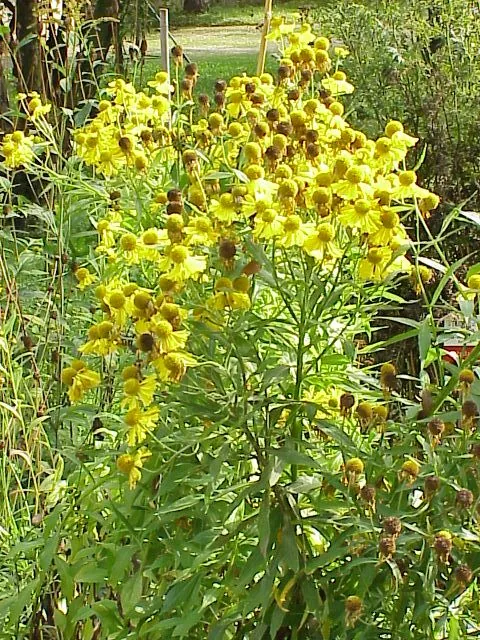
Sneezeweed really gets going just as summer's winding down, opening up daisy flowers in warm yellow, orange, bronze, and red. It's a North American native that grew up in wet meadows and streambanks, it's part of the aster family, and it's a favorite stop for late-season bees and butterflies. And that strange name? It's got nothing to do with allergies, which throws off just about everyone who runs into it.
What you've got here is a tall, clump-forming perennial that can hit 3 to 5 feet (91 to 152 cm) when it's happy. It's tough as anything through hard winters, hardy all the way down to zone 3, and it really only asks for one thing: soil that never dries out. Give it a damp, sunny spot and it'll come back bigger every single year.
The one thing worth planning around is how tall it gets. Leave it alone in rich ground and the stems shoot up thin and tip over after a storm. But a quick cutback in early June keeps it short, bushy, and standing on its own, and honestly, that one little chore is the difference between a neat clump and a floppy mess.
Care
The short version: full sun and soil that stays reliably moist, never dry. Cut the plant back by half in early June for sturdy stems, feed it lightly if at all, and divide the clump every few years.
Light
Sneezeweed's happiest in full sun, at least six hours a day, so it flowers well and stands up straight. It'll put up with a little light shade, but give it too much and the plant stretches, leans, and barely blooms.
Water
This one grew up in wet meadows, so keep the soil moist to wet and don't ever let it dry out. Water it every two to four days, and more often when it's hot or the ground's sandy and drains fast. Drought's really the one thing it just can't take.
Soil
Set it in average to rich soil that holds moisture, and yes, even heavy clay works, especially with plenty of organic matter mixed in. The only soil it turns its nose up at is dry ground, so a low, damp spot or the edge of a rain garden is perfect.
Temperature
Sneezeweed is seriously cold-hardy, coming through winters down to -40°F (-40°C) in zone 3, and it takes summer heat in stride as long as its roots stay wet. That whole range from -40°F to 100°F (-40°C to 38°C) is exactly why it does well across so much of the country.
Humidity
Outdoor humidity isn't really a problem on its own, so there's no number to chase. What actually matters is airflow, because muggy, still air around packed-in leaves is what gives mildew and rust their opening.
Feeding
Go light on feeding, or skip it. A small dose of balanced fertilizer or a bit of compost in spring is all it needs, and too much nitrogen backfires, pushing out weak, floppy growth that ends up needing a stake.
Pruning
The big job is that early June cutback, where you take the whole plant down by about half at least six weeks before it blooms, which pushes it to grow shorter, bushier, and sturdier. Deadhead the spent flowers as you go to keep more coming, and stake the tallest stems if they're still leaning.
Repotting
Sneezeweed lives in the ground, not a pot, but the clump still needs a refresh now and then. Divide it every three to four years in spring, since the middle tends to die out and go woody while the outer growth keeps chugging along.
Size & spacing
Figure on a clump around 3 to 5 feet (91 to 152 cm) tall and 2 to 3 feet (61 to 91 cm) wide once it's grown. Give each plant that much room so air can move through the stand and keep the leaves dry.
When to plant
Sneezeweed runs on a nice long season and doesn't mind the cool. Start seed indoors in late winter or pop divisions in after the last frost, give the stems their June trim, and the flowers will carry the border from late summer right into fall.
Northern hemisphere
Southern hemisphere
Typical months for a temperate climate: start earlier in warm zones, later where spring frosts linger.
- Sow: Late winter to early spring, about 6-8 weeks before last frost; seed benefits from cold stratification.
- Plant: After last spring frost when soil has warmed.
- Harvest: Late summer to fall (August to October).
Hardiness
USDA hardiness zones: 3–8
Temperature: down to -40°C
Troubleshooting
Most sneezeweed troubles boil down to just two things: foliage that stays too wet and stems that get too tall. Damp, crowded leaves are an open invitation to fungus, and rich soil plus a skipped trim leaves the whole thing flopping. Find your match below, then jump on it before it spreads.
Tall stems flopping over or snapping
Here's what's going on: sneezeweed gets tall and weak-stemmed when the soil's too rich or it's had too much nitrogen, and then one good storm knocks it flat. The trusty answer is the early June cutback, where you take the plant down by half so it branches lower and holds itself up. Prop up the tallest stems with a stake, and go easy on the fertilizer while you're at it.
Fix:
- Cut plants back by half in early June to encourage sturdier branching
- Stake or provide support for tall stems
- Reduce fertilizer, especially nitrogen
White powdery stuff on the leaves and stems
That chalky look is powdery mildew, and it shows up when plants are packed too tight and the air just sits there. So give the clumps room, thin them out, and let a breeze work through. Water down at the base instead of soaking the leaves, and pull off whatever's worst. Still spreading? A labeled fungicide will settle it.
Fix:
- Improve air circulation by thinning and spacing plants
- Remove and discard affected foliage
- Avoid overhead watering and water at the base
- Apply a labeled fungicide if severe
Dark spots turning up on the leaves
When leaves stay damp for too long, fungal leaf spot tends to move in. It starts as little brown or black flecks, sometimes with a yellow ring around them, and they spread out over time. The fix is easy enough: snip off the spotted leaves and toss them, keep water off the foliage, and rake up the fallen bits in fall so the fungus has nowhere to hide over winter.
Fix:
- Remove and destroy infected leaves
- Water at the base to keep foliage dry
- Improve spacing and airflow
- Apply a labeled fungicide if widespread
Orange bumps under the leaves
See raised orange, yellow, or brown bumps on the undersides? That's rust, and it loves damp, muggy air. Flip a leaf over and you'll usually find matching yellow flecks up top, too. Pick off those leaves the second you notice them, open things up so air can move, and keep the foliage dry when you water.
Fix:
- Remove affected leaves promptly
- Increase air circulation and reduce leaf wetness
- Apply a labeled fungicide if severe
Toxicity
Think of sneezeweed as one to look at, not to nibble, at least around animals and kids. Every part of it holds bitter sesquiterpene lactones like helenalin, which upset a pet's stomach and can make grazing livestock sick if they eat a lot. The sap bugs your skin too, so nothing on this plant is safe to eat, and gloves are a smart call when you're cutting it back.
Toxic to
Cats · Dogs · Horses · Rabbits · Livestock · Birds · People
Cats Toxic
Those bitter leaves are packed with helenalin, so they're no good for a cat to chew. A little taste usually leaves a cat drooling and skipping meals, and a bigger bite can bring on vomiting and a queasy, out-of-sorts belly.
Dogs Toxic
If a dog chews the leaves, that bitter sap gets it drooling and throwing up, and a sore stomach and low energy tend to tag along. Here's the upside, though: the taste is so awful that most dogs spit it right out before much goes down.
Horses Toxic
Horses can genuinely get hurt grazing on this one. The sesquiterpene lactones bring on drooling, colic-like belly pain, weakness, and a flat, gloomy mood, and it's the day-after-day grazing that does the real damage.
Rabbits Toxic
Just keep this away from the hutch and the run, full stop. That bitter, helenalin-heavy foliage can leave a rabbit drooling, off its food, and weak, so it should never end up in the forage pile.
Livestock Severe
Grazing animals, especially sheep, can develop chronic vomiting (spewing sickness), depression, weakness, coughing, and emaciation, which can be fatal if large amounts are eaten over days.
Birds Toxic
The toxin's in every part of the plant, so it's a hard no for poultry and pet birds. A bird that pecks at the bitter leaves or seed heads can end up drooling, dull, and turning its back on food.
People Caution
None of this plant is food, and the bitter foliage will turn your stomach if you eat it. The sap can redden and sting skin, too, so glove up when you cut it back and keep the kids from popping any of it in their mouths.
Wear gloves when handling or cutting back, as sap and foliage can irritate skin and mucous membranes. Keep pets and livestock from grazing the plant.
Helpline numbers

United States
ASPCA Animal Poison Control: (888) 426-4435 (fee applies)
Poison Control: (800) 222-1222



Canada
Poison Centres: 1-844-764-7669
Varieties
Growers have come up with shorter, sturdier sneezeweeds in richer colors than the wild kind, and these are the ones you'll spot most often at the nursery.
Mardi Gras
A compact one that keeps its orange, yellow, and red bicolor flowers going through a long stretch of late summer and fall.
Moerheim Beauty
An old favorite that's loved for its warm, copper-toned daisies in bronze-red.
Salud Embers
A compact, well-branched red-and-yellow type that stands up fine on its own without much staking.
Companions
Plant near
Asters: Share the same moist soil, full sun, and late-season bloom period for a coordinated fall display.
Joe-Pye weed: A native that thrives in the same moist meadow conditions and complements sneezeweed in rain gardens and borders.
Ornamental grasses: Provide support and contrasting texture for tall sneezeweed stems in naturalized plantings.
How to propagate
There are three ways to make more sneezeweed, and which one you go with really depends on whether you want plants fast, plants cheap, or exact copies of a named variety.
DivisionEasy
Spring, every 2-3 years · One growing season
Division's the easiest way to get more sneezeweed, and it keeps the old plants strong too. In spring, dig up a clump, pull it apart, and replant the good outer pieces, which settle in and fill out over just one growing season. Do it every couple of years and the centers won't die out on you.
SeedModerate
Late winter to early spring (sow indoors) or fall outdoors · Blooms typically in the second year from seed
Seed just needs a bit of patience. Press it onto the surface, since it wants light to sprout, and give it a cold spell first to wake it up, whether you're sowing indoors in late winter or outside in fall. Plants grown this way usually bloom in their second year, and named cultivars? They rarely come back true.
Stem cuttingsModerate
Late spring to early summer · Several weeks to root, established by end of season
If you want an exact copy of a named cultivar, cuttings are the way. Take basal shoots from fresh growth in late spring or early summer, and they'll root over a few weeks and be settled in by the end of the season.
Myths
Sneezeweed sets off hay fever and makes you sneeze from its pollen.
The name actually comes from an old trick of grinding the dried leaves into a snuff that got people sneezing, and it's got nothing to do with anything floating around in the air. Like most showy daisies, it counts on insects and its pollen is heavy and sticky. It is not a meaningful airborne allergen.