Bulb · Iridaceae
Reticulated Iris
Iris reticulata
Pop the tiny bulbs in the ground come fall and they'll open in icy blues and golds while winter's still hanging around.
Full sun
Every 7–14 days
USDA 5–9
4–6 in · 10–15 cm
Overview
Reticulated iris is one of the very first flowers to break up that late-winter gray, so it's a real treat when little else is happening. It grows from a small bulb wrapped in a netted coat, and that's actually where the name comes from, opening in early spring before most of the garden has even woken up. It only gets 4 to 6 inches tall, so it tucks easily into a rock garden, the front of a border, or a pot by the door.
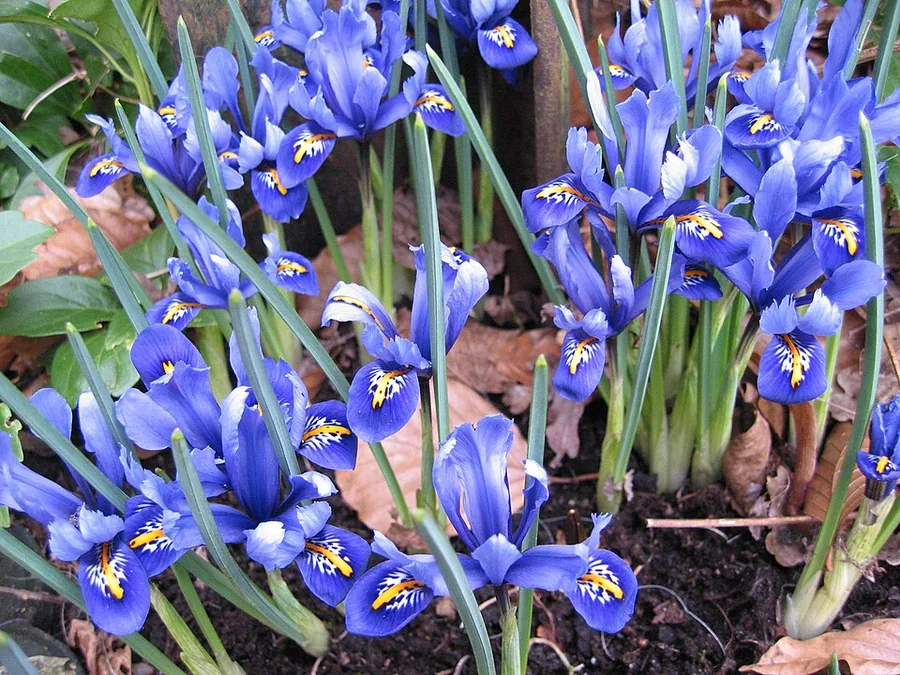
Want to know what it looks like? It's the classic iris shape, just shrunk down, in blues, purples, and pale icy shades, and it's often lit up by a streak of orange or gold on the falls. The flowers come up right alongside the thin, square leaves and hang around for a couple of weeks. Since each one's pretty small, a planting looks best in a nice generous drift rather than dotted here and there.
Care
The short version: plant the bulbs in fall in full sun and sharp-draining soil, water them through spring growth, then back right off and let them bake dry while they're resting in summer.
Light
Give this iris full sun and you'll get the best flowering, but it's fine in partial shade if that's what you've got. A bright, open spot has another perk too, since it helps the soil dry out in summer, which is exactly what the resting bulbs are after.
Water
Keep the soil moist through spring while it's growing and blooming, then ease way off. Once the leaves fade and the bulb settles in for its summer rest, let the ground go fairly dry so it can set next year's buds. And don't stress about a dry spell, because it shrugs off summer drought no problem.
Soil
Sharp drainage is the big one here, more than anything else. Plant it in average, well-drained soil anywhere from a pH of 6.1 to 7.8, and steer clear of any spot that stays soggy, because wet feet in summer are what rot the bulbs.
Temperature
These bulbs are seriously tough, hardy from about -20°F to 100°F (-29°C to 38°C), so a cold winter is nothing to worry about. In fact, they need that winter chill to flower well once spring rolls around.
Humidity
Regular outdoor air suits it just fine, so there's no humidity number to keep track of. What really matters for this one is dry summer soil, way more than whatever's going on in the air.
Feeding
Mix a low-nitrogen bulb fertilizer or bone meal into the soil when you plant in fall, then give it a light second feed in early spring. Go easy on the nitrogen, since too much just pushes leaves instead of flowers.
Pruning
Leave the foliage be after the flowers fade and let it die back on its own, because those green leaves are busy recharging the bulb for next year. Only snip off the leaves that have completely withered.
Repotting
These bulbs would rather just be left alone, and only need lifting when flowering starts dropping off, usually every few years. Divide them once the foliage has died back, splitting up the crowded clumps and the little bulblets.
Size & spacing
Each plant stays nice and small, around 4 to 6 inches (10 to 15 cm) tall and 3 to 5 inches (8 to 12 cm) across. Set the bulbs about 3 to 4 inches (8 to 10 cm) apart so the planting reads like a neat little drift.
When to plant
This iris runs on a simple fall-to-spring clock. Get the bulbs in the ground in autumn so they can root before the cold sets in, and then keep an eye out for flowers in March to early April, when the rest of the garden is still yawning awake.
Northern hemisphere
Southern hemisphere
Typical months for a temperate climate: start earlier in warm zones, later where spring frosts linger.
- Plant: Plant bulbs in fall, 3-4 inches (8-10 cm) deep and 3-4 inches apart
- Harvest: March to early April (early spring)
Hardiness
USDA hardiness zones: 5–9
Temperature: down to -29°C
Troubleshooting
Almost everything that goes sideways with this iris turns up in one of two spots, either down at the bulb or on the soft spring leaves. Once you know the handful of things that can happen, they're easy to nip in the bud. Just match up what you're seeing below and jump on it early.
Soft bulbs turning mushy at the bottom
When the soil stays wet through the summer rest, fusarium basal rot can move in, softening the bottom of the bulb and creeping up in brown or pinkish streaks. Cut a doubtful bulb open and you'll see the basal plate looking discolored and soft. There's no bringing an infected bulb back, so toss it, sort out the drainage, and start over with clean bulbs somewhere drier.
Fix:
- Discard affected bulbs
- Improve drainage and avoid summer irrigation
- Plant healthy bulbs in a new, well-drained site
A great first spring, then a no-show the next
Wondering why last year's stars didn't come back? That's a bulb going blind, and it's the letdown almost everyone hits with this iris. After it flowers, the bulb splits into little offsets, and each one needs a few years before it's big enough to bloom. So plant a bit deeper at 3 to 4 inches, keep the soil dry all summer, and drop in a few fresh bulbs each fall to keep things going.
Fix:
- Replant supplemental bulbs annually for consistent bloom
- Plant bulbs deeper (3-4 inches) to discourage splitting
- Lift and grow on small bulblets in a nursery bed until they reach flowering size
Chewed-up leaves and buds full of holes
See torn holes and shiny slime trails on the fresh spring growth? That's slugs and snails helping themselves. Head out with a flashlight after dark, or peek under any nearby debris, and you can just pick them off by hand. Tidy up the damp hiding spots near your bulbs and get the soil draining better, and they'll bother you a lot less.
Fix:
- Hand-pick slugs and snails
- Remove garden debris and mulch near plants
- Use iron-phosphate slug baits if needed
Toxicity
Best to keep the whole plant away from pets and people alike. Every part of it holds irritant compounds called irisin and terpenoids, and the bulb's the worst of all, so a chewed bulb brings on drooling, vomiting, and diarrhea. Wear gloves when you're handling them, and stash any spare bulbs somewhere pets and kids can't get to.
Toxic to
Cats · Dogs · Horses · Rabbits · Livestock · Birds · People
Cats Mild
If a cat chews on the bulbs or leaves, it'll usually drool, throw up its food, and then go quiet and lose interest in eating, with loose stools not far behind. Keep the closest eye on the bulb, because that's where the irisin and terpenoids are packed thickest.
Dogs Mild
A dog that digs up a bulb and gnaws it tends to drool a lot and vomit, and diarrhea and a tired, flat mood usually show up soon after. It's the diggers you've really got to watch, so both stored and planted bulbs need to be somewhere they can't reach.
Horses Mild
A horse that grazes any part of the plant can start drooling, get the runs, and seem a bit off its usual self. Just like with the smaller animals, the bulb's where the worst of the trouble comes from.
Rabbits Mild
Those same irritant compounds upset a rabbit's stomach too, so it's best to keep the plant and bulbs well out of reach. And because a rabbit's digestion stalls so easily, any drooling or messy stools is worth a quick call to the vet.
Livestock Mild
Cattle, goats, and sheep mostly steer clear of the bitter leaves, but a hungry one that has a nibble can drool and scour. Fence your stock away from the beds, and don't ever toss lifted bulbs out onto pasture.
Birds Caution
There's honestly not much solid info on iris and birds, so it's safest to treat it as a hazard and not a snack. Keep nosy pet birds away from cut stems and stored bulbs, just to be sure.
People Caution
No part of this iris is food, and since the bulb's the most toxic bit, eating it leads to stomach pain, nausea, and vomiting. Handling the bulbs can redden sensitive skin too, so pop on some gloves and keep kids from putting any part in their mouths.
Wear gloves when handling bulbs; sap can cause skin irritation/contact dermatitis in sensitive people. Store bulbs out of reach of pets.
Helpline numbers

United States
ASPCA Animal Poison Control: (888) 426-4435 (fee applies)
Poison Control: (800) 222-1222



Canada
Poison Centres: 1-844-764-7669
Varieties
A small handful of named picks covers most of what you'll actually see for sale, and each one leans toward its own shade of blue. Here are the ones worth knowing.
Harmony
You can spot it by its sky-blue to royal-blue flowers, each with a bright yellow-orange ridge down the falls.
Clairette
It teams pale blue standards with darker blue falls that are flecked with white.
Gordon
It shows off light blue flowers with a bold orange blotch sitting on each fall.
Katharine Hodgkin
This much-loved hybrid mixes icy pale blue and soft yellow, and it's laced all over with fine dark veining.
Companions
This iris looks best beside other early bulbs that flower at the same time and want the same sun and sharp drainage.
Plant near
Galanthus (snowdrops): Blooms at the same early-spring time and shares full sun, well-drained conditions for layered early color.
Crocus: Early-spring bulb with matching light and drainage needs; combines for naturalized rock-garden displays.
Chionodoxa (glory-of-the-snow): Early-blooming companion bulb that thrives in the same sunny, well-drained sites.
How to propagate
The easiest way to get more is honestly just to let the bulbs handle it, though you can also split up crowded clumps or take the slow road from seed.
Offsets & pupsEasy
After foliage dies back in late spring or early summer · Several years for bulblets to reach flowering size
This is really just the plant doing its own thing. Once the leaves have died back in late spring or early summer, lift the clump and you'll find the parent bulb has broken into small offsets, especially where it was sitting shallow. Pull those bulblets apart and replant them, but don't expect a rush, since each one can take several years to size up and flower, and most stay blind that first spring.
DivisionEasy
After foliage dies back, when flowering declines · 1-3 seasons
Got an old clump that's crowded and flowering less? Divide it. Wait for the leaves to wither, then lift the bulbs, gently pull them apart, and pop them back at the right depth and spacing. They'll settle in again over the next one to three seasons.
SeedModerate
Sow ripe seed in fall; requires cold stratification · Several years to flowering
Seed is the slow lane, but it's doable if you're patient. Sow ripe seed in fall and let the winter cold wake it up, then settle in for the long haul, because seedlings need several years to reach blooming size.
Myths
Reticulated iris bulbs come back strong every spring all on their own.
It sounds great, but most plantings really shine the first year and then trail off as the bulbs split into small bulblets that need several seasons to grow up. The easy answer? Tuck a few fresh bulbs in each fall to keep the bloom dependable, rather than banking on the first planting to repeat itself.
A dainty little ornamental iris can't hurt pets.
Size really has nothing to do with it here. Every iris is toxic to cats, dogs, and horses, and the bulb holds the most irritant compounds of the lot, so a chew brings on drooling, vomiting, and diarrhea.