Bulb · Iridaceae
Siberian Iris
Iris sibirica
Tough, cold-hardy, and just about fuss-free, Siberian iris takes a damp spot and hands back grassy leaves and late-spring blooms.
Full sun
Every 3–7 days
USDA 3–8
2–4 ft · 0.6–1.2 m
Overview
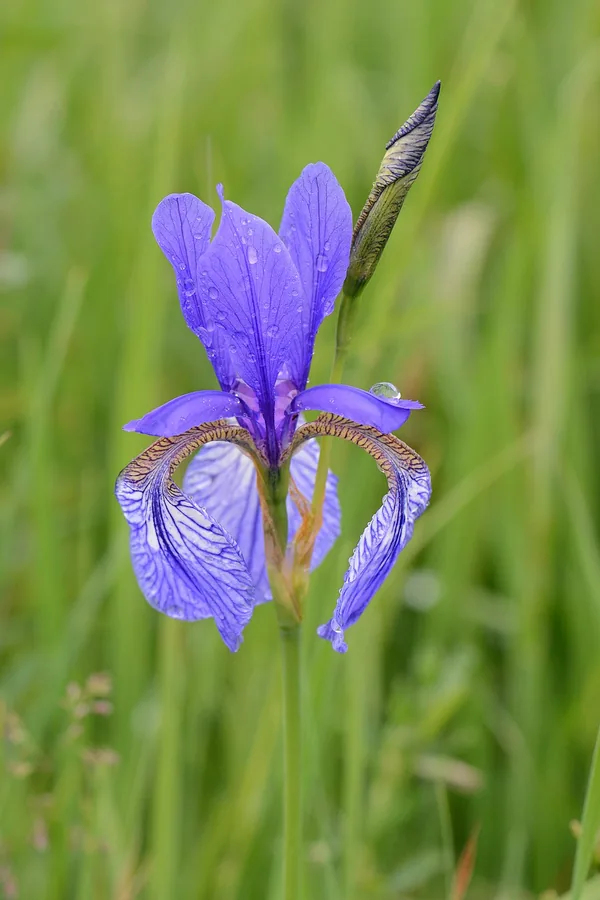
Think of it as the laid-back relative of the high-maintenance bearded iris. It grows in slim, clump-forming tufts of grassy leaves and pushes out light, airy blooms come late spring, and there's no chunky surface rhizome sitting there for borers to wreck. Once it's found its feet, it barely needs you.
Worried about a rough winter? Don't be. This one handles cold all the way down to -40°F (-40°C) and takes almost any spot in stride, whether that's a regular border or the wet fringe of a pond. It'll even sit happily in soggy, boggy ground where most other perennials would just rot, so that damp problem corner finally has an answer.
Hand it some sun and steady water and you'll get a solid, upright clump that holds its shape well past the last flower. The skinny leaves stay good all summer, so even with nothing in bloom, it still earns its spot in the bed.
Care
The short version: it likes full sun to part shade, damp soil all season long, and rich soil that drains fine but won't sulk in a boggy patch. Split the clump every 3 years or so and honestly, it pretty much runs itself.
Light
For the best flowers, give it full sun, though it'll manage in partial shade if that's what you've got. Aim for 6 hours or so of direct sun a day, because when light's short, the clump flops over and skips a lot of its blooms.
Water
It likes to stay damp, especially while it's growing hard, so keep the soil moist from the spring flush and hold it that way until a few weeks past bloom. Boggy ground? No problem, it's happy there, and once a clump's been in for a season or two, it can even shrug off a short dry spell.
Soil
Plant it in rich, moist, humusy soil that drains alright, but don't stress too much about it, because it'll happily sit in soil way soggier than other perennials would tolerate. Keep the pH between 6.0 and 7.0 and it's a happy plant.
Temperature
Cold really isn't an issue here. It's fine anywhere from -40°F to 86°F (-40°C to 30°C), so a savage winter up north or a warm summer both leave it totally unbothered.
Humidity
You don't need to worry about humidity at all, the regular outdoor air does the job. What actually matters is decent airflow, since foliage that's packed in and staying wet is what tends to invite a bit of rot.
Feeding
One feed in early spring is all it asks for. Give it a balanced general-purpose fertilizer or just spread some compost around as the new growth starts, and that'll keep the clump going all season.
Pruning
After the flowers are done, just clip off the old bloom stems to tidy things up. When you're dividing, or in late fall once the leaves have flopped and browned, cut them back to 6 to 8 inches.
Repotting
Every 3 years or so, dig up the clump and split it, or do it sooner if the middle's looking bare and you're getting fewer flowers. That empty center and thinning bloom? That's just the clump letting you know it's too crowded.
Size & spacing
A grown clump gets to about 2 to 4 feet (60 to 120 cm) tall and roughly 2.5 to 3 feet (76 to 91 cm) wide. Give it that space and the air can move around the fans, which it likes.
When to plant
The timing's easy to remember. In cold-winter areas you plant or split in spring, and down in the southeast fall works better. Flowers show up in May and June, and after that the leaves just carry the clump along until next year.
Northern hemisphere
Southern hemisphere
Typical months for a temperate climate: start earlier in warm zones, later where spring frosts linger.
- Plant: Spring in cooler-winter regions; fall in the southeast
- Harvest: May to June
Hardiness
USDA hardiness zones: 3–8
Temperature: down to -40°C
Troubleshooting
Good news: this iris doesn't cause much drama, way less than a bearded iris would. When something's off, it usually traces back to too much shade, a clump that's gotten crowded, or a stretch of soggy weather. Find your issue below and the fix is normally pretty simple.
Soft, smelly, rotten mush at the base
If the base has gone soft, slimy, and smelly, that's bacterial soft rot, though honestly Siberian iris hardly ever gets it the way bearded iris does. Cut out all the mushy bits and toss them, then work on the drainage and quit planting the crown so deep. Good drainage and healthy soil really are your best bet here.
Fix:
- Remove and destroy affected tissue
- Improve drainage and avoid burying the crown too deeply
Barely any flowers and leaves flopping over
Not many flowers and floppy, sprawling leaves? That's almost always down to not enough sun or a clump that's grown too dense. Get it into a spot with a solid 6 hours of direct sun, and if the middle's gone woody and bare, dig it up and pull it apart. Divide it every 3 years and you'll usually dodge the whole thing.
Fix:
- Relocate or thin surroundings to provide full sun
- Divide the clump and replant healthy fans with at least two fans each
Chewed-up, ragged leaf edges
Seeing ragged edges and shiny slime trails? That'll be slugs and snails having a midnight snack. It's really just a cosmetic thing, so head out after dark and pick them off, then clear away the damp junk they like to hide in. Keep things drier near the clump and they'll wander off.
Fix:
- Hand-pick slugs and snails
- Reduce moist hiding spots near plants
Toxicity
Here's the thing: this is a plant for the flower bed, not the dinner plate, so treat it that way around your animals. Every bit of it carries irisin and terpenoids, and the rhizome's got the most, so a curious pet that takes a bite can wind up drooly and unwell. And when you're cutting up the roots, pop on gloves, because that sap can leave your skin a bit sore.
Toxic to
Cats · Dogs · Horses · Rabbits · Livestock · Birds · People
Cats Mild
A cat that chews on it will usually start drooling and being sick, then go quiet and turn its nose up at food. The rhizome's the strong part, so a cat that digs and gnaws at the roots gets hit hardest.
Dogs Mild
Keep an eye out for heavy drooling and a queasy stomach, often with some diarrhea and a droopy, tired mood. Dogs that dig up and chew the roots are the ones that react the most.
Horses Mild
A horse that grazes on it can drool, get an upset belly, and pass loose droppings. Most horses won't bother with it, but it's still best to keep iris somewhere they can't reach.
Rabbits Toxic
Those same irisin and terpenoids that give cats and dogs grief are just as much trouble for rabbits, so keep it nowhere near a hutch or run.
Livestock Toxic
Cattle, goats, and sheep can end up drooling with an upset gut if they eat the leaves or roots, so fence the iris off from anywhere they graze.
Birds Toxic
Birds face the same danger from the toxins, so keep backyard chickens and pet birds from nibbling the leaves or roots.
People Caution
None of this plant is food, and since the rhizome's the most toxic bit, it's worth keeping nosy kids away from it. Handling the cut roots can leave your skin irritated too, which is exactly why gloves come in handy when you're splitting a clump.
Wear gloves when dividing or handling, as the sap can cause skin irritation.
Helpline numbers

United States
ASPCA Animal Poison Control: (888) 426-4435 (fee applies)
Poison Control: (800) 222-1222



Canada
Poison Centres: 1-844-764-7669
Varieties
Siberian iris comes in loads of colors and sizes, everything from big purples to little whites. These few cultivars are the ones worth knowing first.
Caesar's Brother
This one's a tough old favorite, sending up stiff stems of deep purple to about 3 feet, and it's even snagged a Plant of Merit.
Butter and Sugar
A fun bicolor, this one sets soft yellow falls under crisp white standards on the very same bloom.
White Swirl
Clean and pure white, it's perfect for brightening up a dim, shady spot in the garden.
Baby Sister
A little compact type that only gets to around 1 to 1.5 feet, so it fits nicely along the front edge of a bed or in a small garden.
How to propagate
Want more plants? There are two ways to go: divide up a clump or start from seed. Division's the quicker one, and it's the only way you'll keep a cultivar true to its name, so it's usually where folks start.
DivisionEasy
Late summer or early spring (after bloom) · 6 to 8 weeks to root; may take more than one season to bloom
Dividing is the easy, reliable way to get more of it, and it doesn't mind rough handling the way bearded iris does. Do it in late summer or early spring once it's finished blooming: trim the leaves down to 6 to 8 inches, cut the clump apart with a sharp blade so each one hangs on to at least two fans, then plant those pieces under 1 to 2 inches of soil and keep them damp. They'll root in around 6 to 8 weeks, though a fresh piece might sit tight a whole season before you see flowers.
SeedModerate
Sow when ripe · Several seasons to reach blooming size
Seed is the slow route, and it's really only worth it for the wild species, since hybrids won't come out true. Sow it the moment it's ripe and settle in for a wait, because a seed-grown plant takes several seasons before it's big enough to bloom.
Myths
Siberian iris takes the same constant dividing and borer spraying as bearded iris.
Nope, it's a totally different plant. Siberian iris grows in tidy little clumps, has no fat rhizome sitting up top for borers to burrow into, and just doesn't get the soft rot that bugs the bearded ones. You really only need to split it about every 3 years, and in between it stays just about pest-free.
Iris won't hurt your pets.
Not true, unfortunately. Iris is toxic to cats, dogs, and horses, and the rhizome's where most of it sits. A pet that chews on the plant can end up drooling and throwing up, and you'll often see diarrhea too, plus a dull, draggy mood, so it's smart to keep it out of reach.