Ornamental · Verbenaceae
Lantana
Lantana camara
Give it full sun and lean soil and lantana blooms hot all summer, but keep in mind every part of it is poisonous.
Full sun
Every 5–10 days
39–48°F · 4–9°C
USDA 7–11
Overview
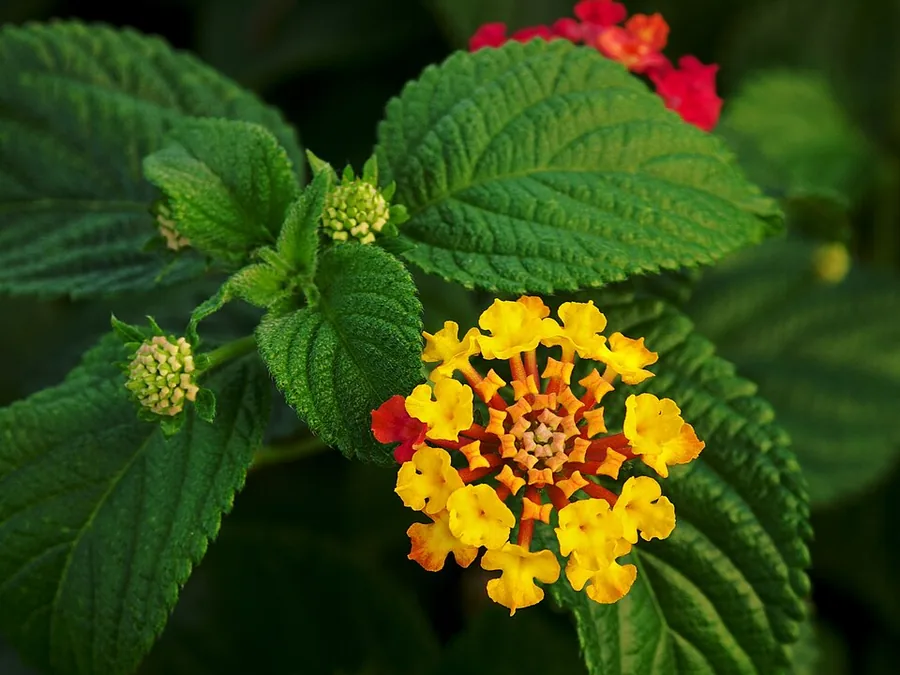
Lantana's a tough, fast-growing shrub in the verbena family, and it's a favorite for those packed clusters of little flowers that often switch color as they age. It keeps butterflies and hummingbirds coming all season, and once it's settled in, it barely notices heat, drought, or lousy soil. In zones 7 to 11 it'll live on as a woody perennial, while gardeners in colder spots just grow it as a summer annual.
It's about as easy as a plant gets, and honestly that's part of the trouble. Every part of it is toxic, especially the unripe green berries, and where winters stay frost-free it spreads so freely it's flagged as invasive. So plant it somewhere pets, livestock, and kids can't get at the berries.
You'll get flowers from midsummer until the first frost, in oranges, yellows, pinks, reds, and bicolors, depending on which one you pick. Some stay low and spreading while others grow upright, so there's a shape for a border, a container, or that hot, dry slope where nothing else wants to grow.
Care
The short version: put lantana in full sun and well-drained soil, water it moderately and let it dry out between drinks, feed it lightly, and shear it now and then to keep it bushy and blooming.
Light
Lantana wants full sun, 6 or more hours a day, if you want it to flower well. Give it much less and you'll get a leafy plant that barely blooms, so tuck it into the brightest, hottest spot you've got.
Water
Water it moderately and let the top half of the soil dry out between drinks, so about every 5 to 10 days. Once it's established, lantana laughs off drought, and honestly soggy ground does way more damage than a dry spell ever will.
Soil
It's not picky about soil at all, growing happily in clay, loam, or sand, even poor stuff, as long as it drains well. Any pH from 6.0 to 8.0 works just fine.
Temperature
Lantana's a warm-climate plant that doesn't take cold well, hardy only in zones 7 to 11. It'll ride out short dips to about 39°F to 48°F (4°C to 9°C), but frost knocks back the top growth, which is why folks in cold winters grow it as an annual.
Humidity
Regular outdoor humidity is all it needs, so there's no number to chase here. What matters more is good airflow, especially with plants bunched up together over winter, where pests love to build up.
Feeding
Feed it monthly through the growing season with a balanced fertilizer. Go easy on the nitrogen, though, because too much just pushes leaves instead of the flowers you're actually after.
Pruning
Pinch or shear it through the season to keep it bushy and loaded with bloom. On plants you carry over as perennials, cut them back hard in late winter or early spring to kick off fresh growth.
Size & spacing
Depending on the variety, lantana runs 1 to 6 feet (30 to 183 cm) tall and spreads 3 to 5 feet (91 to 152 cm) wide. Give each plant enough room to fill out and let some air move through it.
When to plant
Lantana's all about warmth, and it packs it in at the first frost. Start seed indoors 6 to 8 weeks before the last spring frost, get plants outside once the cold's done and the soil's warmed up, and you'll have flowers from midsummer right until frost ends things.
Northern hemisphere
Southern hemisphere
Typical months for a temperate climate: start earlier in warm zones, later where spring frosts linger.
- Sow: 6 to 8 weeks before last spring frost
- Plant: After all danger of frost has passed and soil has warmed in spring
- Harvest: Midsummer until first frost
Hardiness
USDA hardiness zones: 7–11
Temperature: down to -18°C
Troubleshooting
Out in the garden, lantana's pretty carefree most of the time, and the few problems that do pop up usually show on plants kept inside over winter. Find what matches what you're seeing below, and jump on it early before a small pest or a bloom slump digs in.
Gummy leaves and a swarm of little white bugs
That sticky film and little swarm are a giveaway for whitefly, and they love plants that spend winter indoors. Just hose the leaves down hard first, then hit the undersides with insecticidal soap or horticultural oil so the young ones can't hang on. And since crowded, still air is what lets them settle in, giving overwintering plants some breathing room keeps them from coming back.
Fix:
- Rinse foliage with a strong stream of water
- Apply insecticidal soap or horticultural oil to leaf undersides
- Improve air circulation around overwintering plants
Speckly, bronze-tinged leaves and a bit of webbing
Seeing tiny speckles and a bit of webbing? That's usually spider mites, and they really take off in hot, dry air and on plants kept inside for winter. Want to be sure? Tap a leaf over a piece of white paper and watch for little moving dots. Blast them off with water, treat with insecticidal soap or horticultural oil, and bump up the humidity so they don't bounce back.
Fix:
- Spray foliage with water to dislodge mites
- Apply insecticidal soap or horticultural oil
- Raise humidity around overwintered plants
Plenty of leaves but hardly any flowers
Lots of leaves and barely a bloom in sight? Nine times out of ten it's too little sun or too much nitrogen at work. Get it into 6 or more hours of direct sun and swap over to a balanced feed. Then pinch off the old, faded flower heads and you'll see a fresh wave of color come through.
Fix:
- Move or site plant in full sun
- Reduce nitrogen and use a balanced fertilizer
- Deadhead spent blooms to encourage reflowering
Toxicity
There's no sugarcoating this one, it's genuinely dangerous. Lantana carries liver-damaging compounds called lantadenes all through it, and the unripe green berries hold the heaviest dose. It poisons cats, dogs, horses, livestock, and people alike, so keep every part of it well away from animals and kids.
Toxic to
Cats · Dogs · Horses · Rabbits · Livestock · Birds · People
Cats Severe
If a cat chews on any bit of this plant, it can start throwing up, get the runs, turn weak and dull, and struggle to breathe. The lantadenes go after the liver, so don't wait around, even a tiny nibble is worth a call to the vet.
Dogs Severe
Dogs will often gulp down those green berries, which happen to be the worst part of all. Keep an eye out for vomiting, diarrhea, weakness, and heavy breathing, because things can slide into liver failure from there.
Horses Severe
In a horse the toxin brings on dullness, weakness, and a sour stomach, and then it moves on to liver damage and jaundice. As the liver gives out, skin in the sun can blister from photosensitization, and the worst cases don't pull through.
Rabbits Severe
Rabbits don't get a free pass here either. The same liver-wrecking lantadenes apply to them, so a rabbit that grazes on it can end up with an upset gut and liver damage. Keep the plant well out of their reach.
Livestock Severe
For grazing animals this is one of the nastiest things they can eat. Cattle, sheep, and goats get constipated first, then jaundiced, with liver damage and a puffy, sun-sensitive muzzle and eyelids. It kills them often, so keep it fenced off.
Birds Caution
Those bright berries catch a bird's eye, and the green unripe ones pack the most toxin. Sure, some birds move ripe seed around just fine, but it's smartest to treat the plant as off-limits around pet and backyard birds.
People Caution
It's the unripe green berries that cause the real trouble, and kids have been poisoned eating them, with vomiting, diarrhea, and liver effects. Handling the leaves can irritate skin too, so pop on gloves and keep those berries away from curious little ones.
All parts are toxic; the immature green berries are the most toxic part. Keep plants away from pets, children, and grazing animals, and wear gloves as foliage can irritate skin.
Helpline numbers

United States
ASPCA Animal Poison Control: (888) 426-4435 (fee applies)
Poison Control: (800) 222-1222



Canada
Poison Centres: 1-844-764-7669
Varieties
There are dozens of named lantana selections out there, mostly chosen for flower color, cold tolerance, or how little they spread. These are the few you'll run into most.
Miss Huff
Gardening somewhere chilly? This orange-and-yellow one hangs on down to USDA zone 7b and handles phytophthora better than most.
Ham and Eggs
This pink-and-yellow bloomer takes Piedmont frost in stride and comes back hardy to about zone 7b.
New Gold
A low, spreading pick that's smothered in golden-yellow flowers and can sprawl to roughly 6 feet wide.
Bloomify Red
A nearly sterile one from UF/IFAS that barely sets seed, so it won't spread the way the wild type does.
How to propagate
Lantana's a cinch to make more of, and taking cuttings is your surest bet for keeping a named variety true to type.
Stem cuttingsEasy
Take softwood cuttings in late spring or summer during active growth · Roots typically form in about 2 to 4 weeks
Want more lantana? Cuttings make it easy. Take softwood cuttings in late spring or summer while it's growing fast, and they'll root in about 2 to 4 weeks. You can grow it from seed or division too, but here's the catch: only cuttings keep a named cultivar exactly like the parent.
Myths
It's only the blossoms that are poisonous, so no matter the color, lantana is safe.
Nope, the whole plant's poisonous, and the unripe green berries carry the biggest dose of all. The flower color has nothing to do with how risky it is, so give every one of them the same careful treatment.
Lantana's really just a safe little tropical bedding flower.
Not quite, it's really a tender perennial that's slipped out of gardens all over the world. In warm places it's a Category 1 invasive in Florida and a noxious weed elsewhere, packing into dense thickets that shove native plants aside.