Ornamental · Boraginaceae
Lungwort
Pulmonaria saccharata
Give it cool shade and steady moisture and lungwort brightens up your dim corners with early spotted leaves and pink-to-blue flowers.
Partial shade
Every 7 days
USDA 3–9
10–18 in · 25–46 cm
Overview
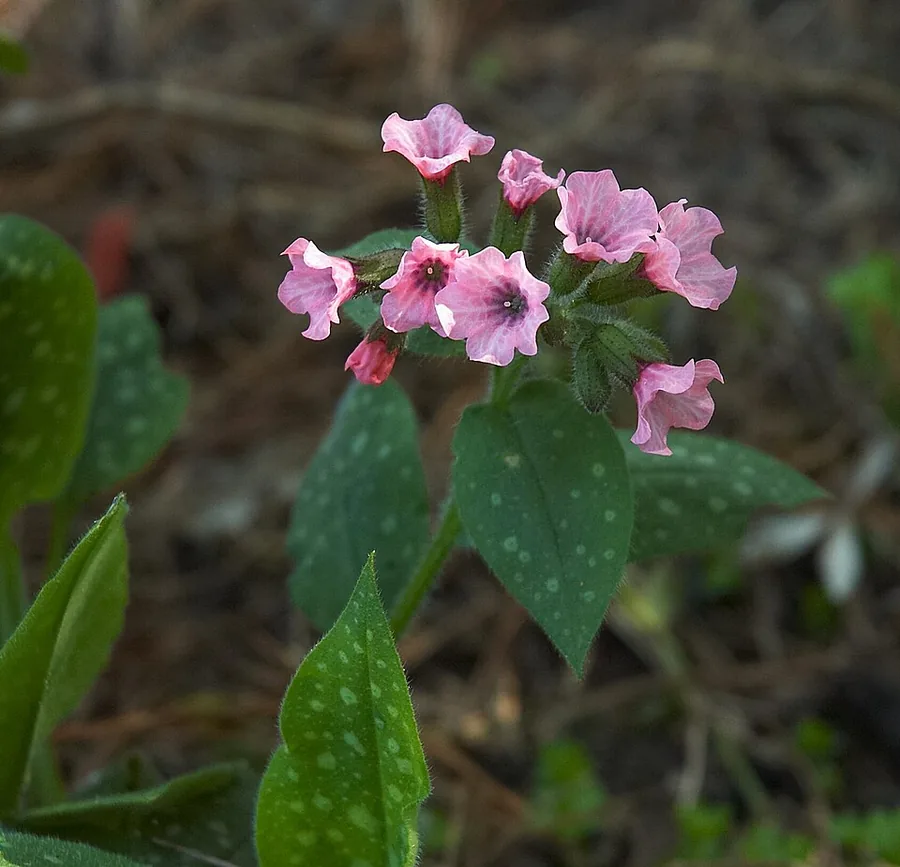
Lungwort is a low, clumping perennial you'll grow for two things at once: its silver-spotted leaves and its early flowers that open pink and then turn blue on the very same stem. It's part of the borage family, and it got its odd name from old herbalists who figured the speckled leaves looked like diseased lungs. The spots are just part of the foliage, but the name hung around anyway.
Here's the thing, it's a real shade plant. It actually comes alive in the dim spots under trees and along the north side of a wall, right where most flowers would sulk, and it blooms in late winter to spring while the rest of the garden's still waking up. Those early flowers feed the first bees, and the marked leaves keep the show going long after the blooms are gone.
And once it's settled in? It barely asks for anything. Keep the soil cool and evenly moist in real shade and it'll spread into a slow, tidy ground cover on its own. The one thing it won't put up with is hot, dry sun, which scorches the leaves and sends the plant into a sulky dormancy.
Care
The short version: put lungwort in part to full shade, keep the soil cool, rich, and evenly moist, give it a light feed each season, and divide the clumps in fall once they start to crowd.
Light
Lungwort wants part to full shade, the deep, cool kind you find under trees or on a building's north side. It's happy in full shade and still flowers, but real sun scorches the leaves and pushes it into early dormancy, so lean shady.
Water
Keep the soil cool and evenly moist but never waterlogged, and water about once a week through dry spells. Don't let it dry out, or the leaves wilt and the plant goes dormant to look after itself.
Soil
Give it cool, humus-rich ground that holds moisture but still drains. Work in plenty of compost or leaf mold, since that's basically the kind of soil it'd find on a woodland floor.
Humidity
Average
Feeding
A slow-release all-purpose fertilizer once a season is really all it needs. Put it down during the growing season and let that rich, organic soil handle the rest.
Pruning
Just pull off the older, tattered, or mildewed leaves as they turn up over the year. Cutting the foliage back once the flowers fade brings on a fresh, clean flush of leaves for summer.
Size & spacing
Plants stay low at 10 to 18 inches (25 to 46 cm) tall and spread wider than they are high, reaching 18 to 24 inches (46 to 61 cm) across. Give each one that much room and it'll knit into a slow ground cover.
When to plant
Lungwort's happiest on the cool end of the year, so there's no rush. Set new plants out in spring or fall into a shaded bed, and the flowers open in late winter to spring, pink at first and turning blue, well before most perennials even stir.
Northern hemisphere
Southern hemisphere
Typical months for a temperate climate: start earlier in warm zones, later where spring frosts linger.
- Sow: Seldom grown from seed; if used, sow seed in early spring.
- Plant: Spring or fall in a shaded site.
- Harvest: Blooms late winter to spring (April to May), flowers opening pink and maturing to blue.
Hardiness
USDA hardiness zones: 3–9
Temperature: down to -40°C
Troubleshooting
Give lungwort the right spot and it stays healthy, so most trouble traces right back to too much sun or the wrong soil moisture. Just read the leaves and crown for the early signs below. Fix the site, and the plant usually sorts itself out.
A mushy crown and roots as the whole plant folds
When the soil stays soggy and won't drain, crown and root rot moves in and the roots go dark and mushy. The fix is to work organic matter in so the ground opens up, and to keep the plant out of any low spot where water pools. From there, lift the crowns that still look healthy, split them, and pop them back into soil that actually drains.
Fix:
- Improve drainage with organic matter
- Avoid waterlogged sites
- Divide and replant healthy crowns in well-drained soil
Brown leaf edges and a droop in the afternoon heat
This one's leaf scorch, which comes from too much sun plus dry soil, and you'll often catch the leaves flopping in the midday heat. Move it into part to full shade, keep the soil evenly moist, and lay down some mulch to hold water and cool the roots. Remember, lungwort's really a shade plant, so the right spot takes care of most of it.
Fix:
- Move or transplant to part to full shade
- Water to keep soil evenly moist
- Mulch to keep roots cool and reduce moisture loss
That white dusty coating showing up on the leaves
That's powdery mildew, and it tends to show up when the soil's gone dry and the air isn't moving through crowded leaves. Pull off the worst leaves, open the clump up a bit so air can get through, and keep the soil evenly moist. Want the quickest reset? Cut it back hard and clean new growth takes over.
Fix:
- Remove and discard affected leaves
- Improve air circulation and keep soil evenly moist
- Cut back foliage to promote clean new growth
Chewed-up holes with slimy trails on the leaves
Those holes and shiny trails? That's slugs and snails working overnight, and they really pick up after wet weather. Head out at dusk and pick them off by hand, then clear away the leaf litter where they like to hide during the day. If they keep coming back, a bait or a barrier will take the pressure off.
Fix:
- Hand-pick slugs in the evening
- Remove leaf litter and debris that shelter them
- Use slug baits or barriers if damage is heavy
Toxicity
Good news if you've got pets or kids: lungwort is not toxic. The ASPCA doesn't list Pulmonaria as poisonous to cats or dogs, and there aren't any reports of harm to other animals or people. So a curious nibble is really nothing to worry about.
Safe for
People · Cats · Dogs · Horses · Rabbits · Livestock · Birds
Cats None
Cats are totally fine around it, since there aren't any toxic compounds to worry about if one takes a nibble.
Dogs None
Dogs can brush past it or chew a leaf and be just fine, and the ASPCA doesn't list it as poisonous.
Horses Safe
Horses have nothing to worry about here, because the plant just doesn't carry anything that would bother a grazer that size.
Rabbits Safe
Rabbits can wander right through and be fine, though those fuzzy leaves usually put them off before they even try.
Livestock Safe
Cattle, goats, and sheep are all okay near it, and there aren't any reports of the foliage poisoning them.
Birds Safe
Backyard birds don't face any danger from the leaves or the flowers.
People Safe
People are safe growing and handling it too, so kids helping out in the garden are in the clear.
Varieties
Lungwort's grown as much for its leaves as its flowers, and the named cultivars below mostly sort out by how silvered the foliage is and what color the blooms end up.
Mrs. Moon
This is the old classic, with heavily silver-spotted leaves and pink buds that open up to soft blue flowers.
Raspberry Splash
It grows more upright, and it pairs silver-spotted leaves with flowers in raspberry-pink to violet.
Spot On
It's a vigorous silver-spotted pick that carries coral-pink blooms which fade toward blue as they age.
How to propagate
Lungwort multiplies without much effort, and dividing a settled clump is way more reliable than messing around with seed.
DivisionEasy
Fall, when clumps become overcrowded · One growing season
Dividing is the easy, no-fuss way to get more lungwort, and it works almost every time. Once a clump has crowded itself in fall, lift it, split the crown into pieces, and trim off the older leaves as you replant. Each piece just needs a single growing season to settle in.
SeedModerate
Early spring · Seedlings reach blooming size in about a year
Seed's the slower way to go, and since the named cultivars won't come true, the seedlings hardly ever look like the parent. Still want to try? Sow in early spring, and give the young plants about a year to reach blooming size.
Myths
The spotted leaves mean lungwort cures lung disease.
Way back, the doctrine of signatures read those leaf spots as a sign the plant could heal the lungs, but honestly, the spots are just a natural foliage pattern. So the name and the herbal lore both come from that resemblance, not from any proven effect on the lungs.
Lungwort spreads fast and turns invasive.
Not really, it creeps along slowly on its roots and never runs wild like an actual invasive plant would. And if a clump ever gets too wide? You just dig it up and split it.