Ornamental · Boraginaceae
Lacy Phacelia
Phacelia tanacetifolia
Sow it once and the bees show up in force, a haze of lavender-blue buzzing away all summer.
Full sun
Every 5–10 days
42–56 days
USDA 3–10
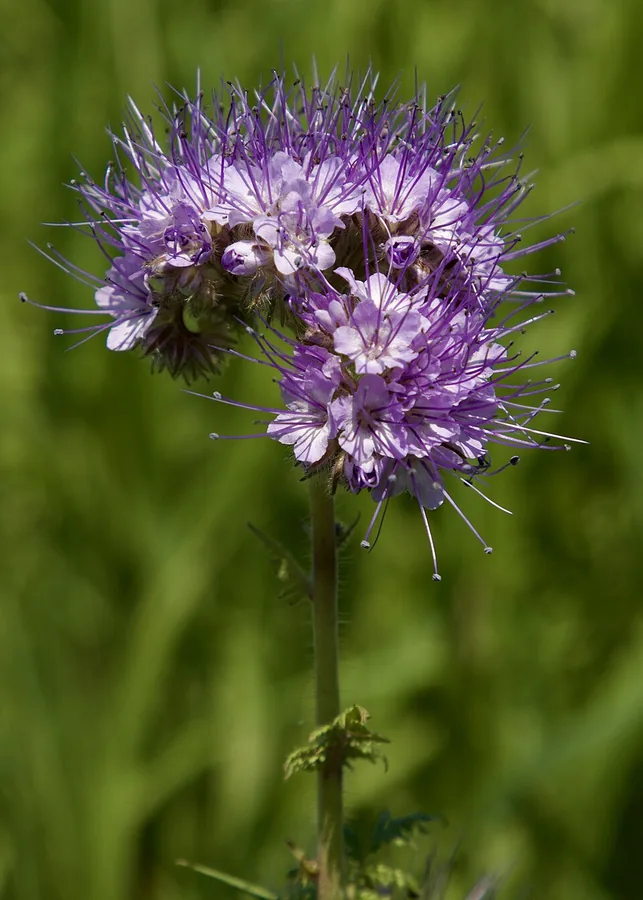
Overview
Lacy phacelia is a quick, laid-back annual from California and the western states, and it gets its name from those fine, fern-like leaves and the coiled sprays of lavender-blue bells that uncurl just like a fiddlehead. It's actually in the borage family, not the daisies, even though the tansy-ish foliage fools a lot of gardeners. And for something this easy to grow, it really does pull its weight.
So what's the big draw? It's how much the bees adore it. Honey bees, native bees, hoverflies, and parasitic wasps all work the flowers, which is exactly why you'll see it in cover-crop and pollinator mixes way more than in tidy flower borders. Gardeners grow it as a green manure too, because it scavenges loose soil nitrogen and smothers weeds while it grows.
Just think of it as a fast annual that blooms a few weeks after sowing and only lives one season. Sow it in spring or fall, give it sun and soil that drains well, and stagger a few sowings if you want the bloom to last. Let it run to seed, though, and it'll show up on its own next year, whether you asked it to or not.
Care
The short version: give phacelia full sun and well-drained soil, water it just until it's settled in and then pretty much leave it alone, sow in succession for a long bloom, and cut it back before it seeds.
Light
Give phacelia full sun and you'll get the fullest bloom and the biggest crowd of bees. It'll put up with partial sun or light shade, sure, but the flowering thins out in shade and the plants tend to stretch and flop over.
Water
Water the young seedlings until they've got a grip, then you can back right off, because phacelia is drought tolerant once it's established and gets by on 7 to 18 inches of rain or watering a year. Let the top half of the soil dry out between drinks, and whatever you do, don't leave it sitting in wet ground.
Soil
It's happy in well-drained sandy, gravelly, or loamy soil and shrugs off the poor, dry ground that would knock out fussier plants. The pH range is nice and wide, anywhere from 6.4 to 8.5, so most garden soil suits it fine as long as it drains.
Temperature
Phacelia handles a big range, from about 18°F to 95°F (-8°C to 35°C), and the young plants can take a light frost no problem. A hard freeze down near the low end will kill the foliage outright, which is why it works better as a spring or fall plant than a winter one.
Humidity
Regular outdoor humidity is all it wants, so there's no number to chase here. What matters more is good airflow, since crowded, still plantings are exactly where aphids and rot like to move in.
Feeding
You can skip the fertilizer unless your soil's really poor. As a cover crop phacelia scavenges the nitrogen that's already in the ground instead of needing more, and piling on extra just gives you soft, aphid-friendly foliage.
Pruning
There's no real pruning to bother with. Deadhead the spent flower clusters to keep the bloom coming and to slow down self-seeding, and if you're growing it as a cover crop, mow or till the whole stand at flowering before it sets seed.
Repotting
none
Size & spacing
Plants get to about 1 to 3 feet (30 to 91 cm) tall with a spread of roughly 8 to 18 inches (20 to 45 cm). Sow them thick as a cover crop and they knit together and crowd out weeds, but sow thinner and each plant gets more room and better airflow.
When to plant
Phacelia's on a short clock, so there's no dawdling. Direct sow it in early spring once you can work the soil, or in fall where winters stay mild, and it'll bloom about 6 to 8 weeks later. Stagger the sowings every couple of weeks to keep the color rolling, and just remember a hard frost is what ends the stand.
Northern hemisphere
Southern hemisphere
Typical months for a temperate climate: start earlier in warm zones, later where spring frosts linger.
- Sow: Generally direct-sown; if starting indoors, sow 4 to 6 weeks before last frost in darkness (light inhibits germination)
- Plant: Direct sow in early spring when soil is workable, or in fall in mild-winter climates; sow seed about 0.25 inch deep when soil temperatures are below 68 degrees F
- Harvest: Late spring through summer; blooms roughly 6 to 8 weeks after sowing over a long period
Hardiness
USDA hardiness zones: 3–10
Temperature: down to -40°C
Troubleshooting
Phacelia hardly ever gives you real grief, and when something does go sideways, it usually comes back to wet soil or how keen it is to reseed. Match what you're seeing to the notes below and jump on it early. Catch a little problem now and it won't get the chance to spread.
Baby seedlings turning up where nothing got planted
So where do all those seedlings come from? Once the little coiled seed heads dry out and split, phacelia drops its own seed everywhere, and it sprouts in a rush after the next rain. The trick is all in the timing. Mow, till, or pull the patch while it's in full bloom before that seed ripens, and snip off the finished clusters so they don't get the chance.
Fix:
- Mow, till, or pull plants at flowering before seed matures
- Deadhead spent flower clusters before they dry and shatter
- Hand-pull or hoe volunteer seedlings while young
Droopy yellow plants and dark rotted roots in wet dirt
Phacelia really can't stand having wet feet, and soggy ground brings on root rot that leaves the roots soft and dark and rots the crown right at the soil line. And once a plant's flopped over, there's no bringing it back, so pull it and sort out the drainage. Get it into sandy, gravelly, or loamy soil and keep it away from those low spots that never seem to dry out.
Fix:
- Improve drainage and stop overwatering
- Remove and discard collapsed plants
Flowers fizzling out sooner than expected
Nothing's gone wrong here, honestly, it's just how the plant rolls. Phacelia is a short-lived annual, so each sowing only gives you a few weeks of flowers, and that soft foliage turns black once a hard frost dips near 18°F (-8°C). Want the color to keep going? Sow a fresh patch every 2 to 4 weeks, and once the cold's out of the way, just start over.
Fix:
- Make successive (succession) sowings every 2 to 4 weeks to extend continuous bloom
- Replace winterkilled plantings with a new sowing once frost danger passes
Tiny soft bugs bunched up on sticky stems
Those little bugs? They're aphids, and they love to pile onto soft or stressed new growth, leaving a sticky mess behind as they feed. A good blast from the hose knocks them right off, and honestly, a few of them aren't worth fussing over. Here's the nice part: phacelia brings in hoverflies, lacewings, and parasitic wasps that mop up the aphids for you.
Fix:
- Spray off colonies with a strong jet of water
- Tolerate light infestations, as phacelia attracts predatory and parasitic beneficial insects that help control aphids
Toxicity
Phacelia is safe company out in the garden, non-toxic to pets, livestock, and people across the board, with no poison in any part of it. The one thing worth knowing? That hairy foliage can leave an itchy rash on folks who handle it and react, so glove up before you pull or mow a stand.
Safe for
People · Cats · Dogs · Horses · Rabbits · Livestock · Birds
Cats None
The cat's totally fine around this one. If it nibbles a leaf, no big deal, because there's nothing in phacelia that upsets cats.
Dogs None
Dogs are good here too. They can wander through it or chew a leaf without any trouble, and you won't find phacelia on the poison-control lists.
Horses Safe
Horses can graze on phacelia and come away just fine, since there's nothing toxic in it for them.
Rabbits Safe
Rabbits? They can munch the leaves all they like, because there aren't any harmful compounds to worry about.
Livestock Safe
Cattle, goats, and sheep do great with phacelia, and it's actually grown right in their pasture cover-crop mixes.
Birds Safe
Birds have nothing to worry about. Plenty stop by for the seed heads, and there's no poisoning risk at all.
People Safe
You won't get poisoned by any of it. The only thing to keep in mind is the foliage, because those glandular hairs can leave an itchy rash if your skin's sensitive, so grab gloves before you handle or mow it.
Phacelia foliage bears glandular hairs and contains skin-sensitizing compounds (geranylhydroquinone and related substances). Some people develop allergic contact dermatitis (an itchy skin rash) from handling the leaves. Wear gloves when handling or terminating the plants if you are sensitive, and supervise children who handle the foliage.
Varieties
Most of the seed sold as phacelia is the everyday lacy type, but there's a close cousin that turns up in wildflower plantings now and then. These two are the ones worth learning to tell apart.
Lacy phacelia (Phacelia tanacetifolia)
This is the everyday cover-crop and bee-garden type you'll bump into most, and it's easy to spot thanks to its finely cut fern-like gray-green leaves and those coiled, one-sided sprays of lavender-blue bells with long stamens poking well past the petals.
California bluebell (Phacelia campanularia)
This is a close ornamental cousin that's grown for its deep gentian-blue bells, and it stays lower and bushier than lacy phacelia, so it's loved as a desert wildflower instead of a cover crop.
How to propagate
Phacelia only grows from seed, and lucky for you, it does that with no fuss at all, whether it's from a packet you sow or the seed a standing patch scatters on its own.
SeedEasy
Direct sow in early spring, or in fall in mild-winter climates; make successive sowings to extend bloom · Germinates in about 15 to 30 days; flowers roughly 6 to 8 weeks after sowing
Phacelia is dead easy from seed, and it's happiest sown right where you want it to grow. Just tuck the seed about a quarter inch deep once the soil's cooled below 68°F (20°C), because light and warmth above that will slow things down. You'll see sprouts in 15 to 30 days and flowers about 6 to 8 weeks after sowing, and once a patch gets going, it'll cheerfully reseed itself.
Myths
Names like scorpionweed and fiddleneck mean phacelia is a dangerous garden plant.
Don't let the scary names throw you. They're just describing the coiled, scorpion-tail shape of the flower clusters, and that's it, there's no danger hiding in there. Phacelia is honestly one of the best bee and beneficial-insect plants you can grow, and it's non-toxic to pets and people. The only real thing to watch is a bit of skin irritation from the hairy leaves if you happen to be sensitive.
Phacelia fixes nitrogen like clover or vetch.
It's an easy mix-up, but nope. Phacelia is part of the borage and waterleaf family, not the legumes, so it doesn't add any new nitrogen to your soil. What it actually does as a cover crop is grab the nitrogen that's already down there and hold onto it, then give it back as it breaks down.