Vegetable · Brassicaceae
Mizuna
Brassica rapa var. nipposinica
Sow it in cool weather, keep it watered, and cut it often, and mizuna keeps feeding you for weeks.
Full sun
Every 2–4 days
39–75°F · 4–24°C
20–45 days
Overview
Mizuna is a Japanese mustard green with feathery, deeply cut leaves and a mild peppery taste that sits somewhere between arugula and a young mustard leaf. It's in the cabbage family, and it's quick, going from seed to a first cutting in about three weeks. You can eat it raw in a salad or toss it into stir-fries and soups right at the end of cooking.
So what's the appeal? Mostly that it's so forgiving. It's a cool-season green that takes light frost without a fuss, bounces back after each cutting, and doesn't ask for much beyond steady moisture. Heat is really its only weak spot, since hot, long days push it to flower and turn the leaves bitter.
Grow it as a cut-and-come-again green and one sowing keeps going for weeks, which is a pretty good deal. Sow in early spring and again in late summer, pick the outer leaves whenever you want them, and the plant just keeps pushing fresh growth from the center.
Care
The short version: give mizuna full sun to part shade in cool weather, keep the soil evenly moist, plant it in rich, well-drained ground, and cut the leaves often so fresh ones keep coming.
Light
Mizuna's happiest in full sun, around 6 or more hours a day, but it'll take partial shade without complaining. And when it gets warm, that bit of afternoon shade actually helps, since it slows down the bolting that heat kicks off.
Water
Keep the soil evenly moist and the leaves come in fast and tender. It'll scrape by on leaner soil and less water, but the flavor and quality drop off, so plan to water every 2 to 4 days. That steady moisture is what keeps the greens mild instead of turning sharp.
Soil
Go with well-drained ground that's rich in organic matter and work in plenty of compost. A pH between 6.0 and 7.0 suits it nicely, and that covers most garden soils anyway, so it's not something to stress about.
Temperature
Mizuna's a cool-weather grower, happiest from about 39°F to 75°F (4°C to 24°C). It shrugs off light frost at the low end, while heat up near the top nudges it to flower and go bitter.
Humidity
Regular humidity, somewhere around 40% to 70%, is all it wants, so there's no number to chase outdoors. Good airflow matters way more than the reading, since crowded, damp leaves are what bring on pests and rot.
Feeding
Mix aged compost or a balanced, nitrogen-rich feed into the bed before you sow, then feed monthly through the growing season. The nitrogen is what drives all that leafy growth, but don't overdo it, since soft, overfed growth is basically an invitation to aphids.
Pruning
Here, harvesting is the pruning. Cut the leaves about 2 inches (5 cm) above the crown or pick the outer ones one at a time, and it'll regrow for cutting after cutting. That cut-and-come-again habit is what keeps a single sowing going for weeks.
Size & spacing
These stay pretty small, reaching 8 to 18 inches (20 to 45 cm) tall and about as wide. Give each one room for that 10 to 18 inch (25 to 45 cm) spread so air can move through and the leaves stay clean.
When to plant
Mizuna's a cool-weather plant, so it's happiest at the ends of the year rather than the middle of summer. Sow it in early spring as soon as you can get into the soil, then sow again in late summer for a fall crop. It handles light frost too, so the season keeps going well past those first chilly nights.
Northern hemisphere
Southern hemisphere
Typical months for a temperate climate: start earlier in warm zones, later where spring frosts linger.
- Sow: 4-6 weeks before last spring frost, or direct sow
- Plant: early spring and again in late summer; cool-season and frost-tolerant
- Harvest: baby leaves about 21 days, full leaves about 40 days; cut-and-come-again
Hardiness
USDA hardiness zones: 4–9
Temperature: down to -34°C
Troubleshooting
Most of what goes wrong with mizuna comes down to a few brassica pests and the heat that makes it bolt. Catch the early signs on the leaves and you can usually stop things before they get bad. Just match what you're seeing below and act while it still does some good.
Seedlings wilting and keeling over
If a seedling wilts and the soil isn't even dry, pull one up and take a look at the roots. White grubs and little tunnels mean cabbage maggot. Yank out and toss the plants that are already hit, and pop row covers on to keep the egg-laying flies away. It also helps to rotate your brassicas and skip beds you just worked manure into, because that's exactly what draws the flies in.
Fix:
- Remove and destroy affected plants
- Use row covers to exclude egg-laying flies
Plants stretching up and leaves going bitter
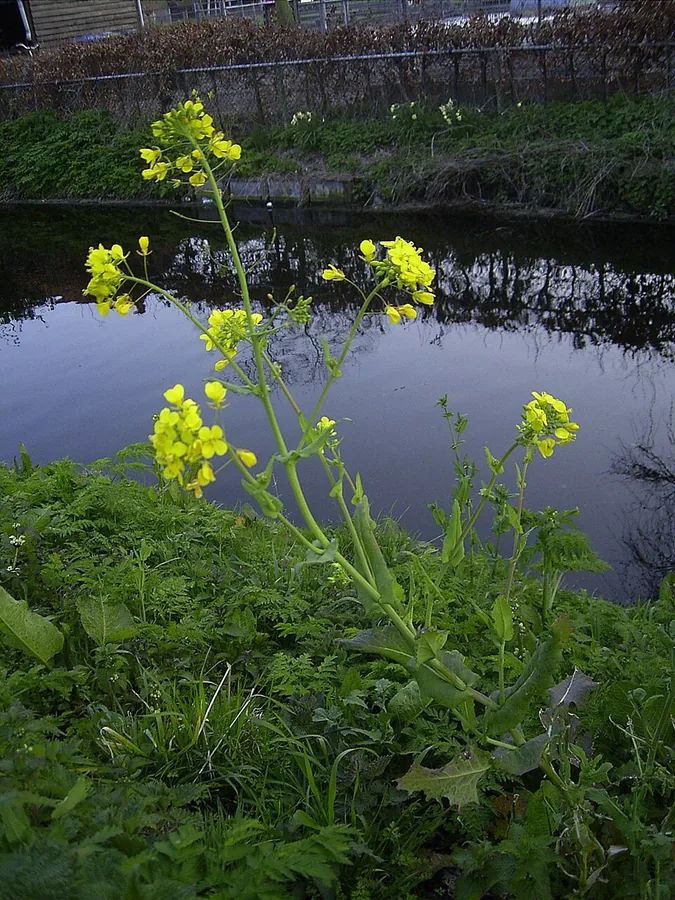
When it gets warm and the days run long, mizuna wants to bolt, which means it shoots up a flower stalk and the leaves go bitter on you. Once things climb toward 90°F (32°C) the window's basically closed, so grab your harvest while it still tastes good. Then sow a fresh batch in late summer for fall, and give the plants a bit of afternoon shade whenever a warm stretch shows up.
Fix:
- Harvest promptly before flavor declines
- Resow in late summer for a fall crop
Tiny holes speckling the young leaves
Those little pinholes all over the young leaves? That's flea beetles, tiny dark bugs that hop away the second you get close, and they go after seedlings the hardest. The easy fix is a floating row cover thrown over the bed right when you sow, so the beetles can't get in. And if a brassica bed gave you grief last year, it's worth putting the new plants somewhere else.
Fix:
- Cover plantings with floating row cover at sowing
- Relocate plantings away from previously infested brassica beds
Sticky little bugs bunched on the new growth
See green or gray clumps under the leaves and on the tips, with everything feeling kind of sticky? Those are aphids, and they're not hard to deal with. A good blast of water knocks most of them off, and insecticidal soap handles any that wander back. Ease up on the nitrogen too, since the soft new growth they love just isn't as tempting without it.
Fix:
- Rinse plants with a strong jet of water
- Apply insecticidal soap to affected foliage
Toxicity
Mizuna's a food crop and safe all around, grown for the table and easy on cats, dogs, and the rest of the animals on the farm. No part of it is toxic, so there's nothing you have to keep out of reach. The one little caveat is the goitrogens that run through the whole cabbage family, and those only really matter if livestock graze brassicas hard for a long stretch.
Safe for
People · Cats · Dogs · Horses · Rabbits · Livestock · Birds
Cats None
Cats are totally fine around it. A nibble of the peppery leaves won't hurt them, though a big pile of any greens could upset a tummy for a bit.
Dogs None
Nothing toxic here, so dogs are welcome to hang around the plants. A little plain leaf now and then is a perfectly fine treat.
Horses Safe
Horses can munch mizuna no problem. It's a mustard, though, so it's better as a little extra than as a big part of what they eat.
Rabbits Safe
Rabbits love the tender leaves, and it's a good green for them. Just bring it in slowly, the same way you'd start any new fresh food.
Livestock Mild
Cattle, goats, and sheep can eat mizuna just fine. It's only heavy, nonstop grazing on brassicas that risks the goitrogen stuff the family's known for, so mix it in with other pasture.
Birds Safe
Backyard hens and other birds can peck at the leaves, no worries there. The greens are a nice bit of variety in their feed.
People Safe
Mizuna's grown to be eaten, whether that's raw in a salad or wilted into something warm. For healthy folks, there's nothing to steer clear of.
Like other brassicas it contains glucosinolate goitrogens, which are mainly a concern for heavily grazed livestock rather than household pets.
Varieties
There are only a couple of common kinds of mizuna, and honestly the choice mostly comes down to color. Both grow and taste pretty much the same, so you can't really go wrong.
Mizuna (green)
This is the usual green one, with feathery, deeply notched leaves on thin white stems and a taste that's just gently peppery.
Red Kingdom / purple mizuna
Want a little color? The burgundy-tinged type with purple stems is the one people grow to jazz up a salad mix.
How to propagate
Mizuna grows from seed and that's it, and it's honestly one of the easiest greens to get going. Sow it straight into the ground and you're only a few weeks from your first cutting.
SeedEasy
Direct sow in early spring and again in late summer; succession sow for continuous harvest · Germinates in about 4-8 days at 55-75°F; baby leaves ready in roughly 21 days
Mizuna is just about always grown from seed sown right where it'll live, so there's no fussing with transplants. Drop it 1/4 to 1/2 inch deep into cool, moist soil and it'll be up in about 4 to 8 days, with baby leaves ready to cut in roughly 21 days. Sow a fresh row every couple of weeks, grow it cut-and-come-again, and you've got greens on tap.
Myths
Mizuna is a hot, sharp mustard you've got to cook before eating.
Nope, it's actually pretty mild, just a soft peppery edge instead of a real kick. Raw in a salad is where it's happiest, and sure, it braises nicely too, so cooking's totally up to you and never a must.
Mizuna is a warm-season green that needs summer heat to do its thing.
Not quite, it's a cool-season crop that laughs off light frost and takes its time bolting. Spring and fall are its sweet spots, and summer heat is actually what pushes it to flower and turn bitter.