Ornamental · Asteraceae
New England Aster
Symphyotrichum novae-angliae
Give it full sun and one summer pinch, and the New England aster will light up your fall garden right when everything else is calling it a year.
Full sun
USDA 4–8
3–7 ft · 0.9–2.1 m
Overview
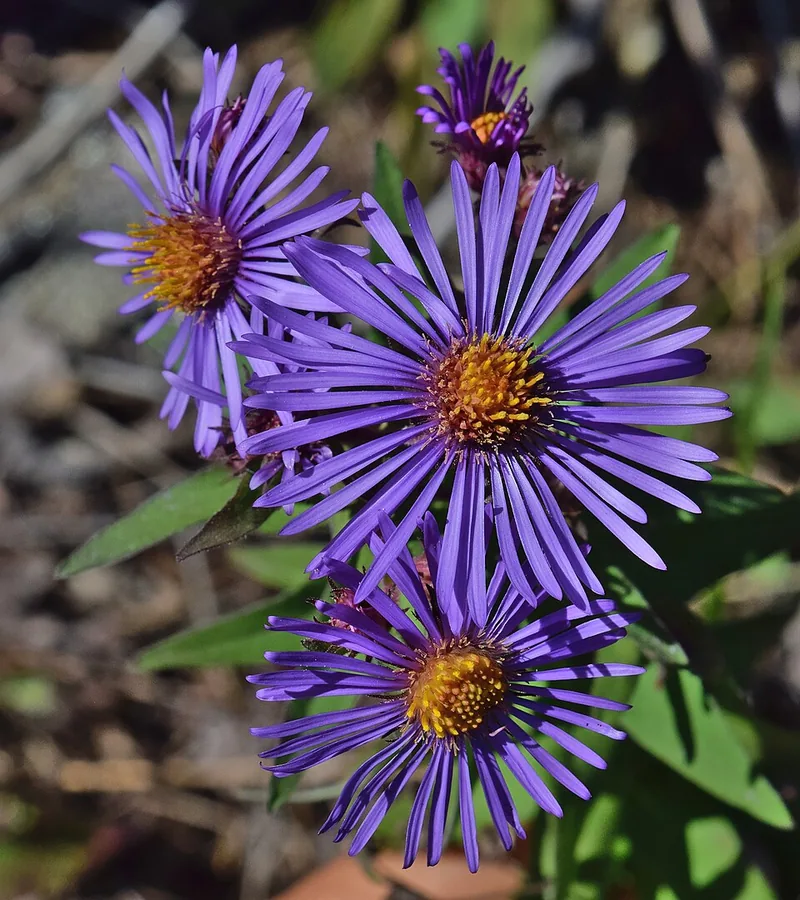
Here's the thing about the New England aster: it saves its best for last. While the rest of the garden is winding down for the year, it kicks off with purple, pink, and ruby daisies from late summer straight through fall. It's in the same family as sunflowers and daisies, and out in the wild? It turns whole roadsides and damp meadows violet come September.
This is a big, fast grower, so it likes a little room to stretch. The stems climb from 3 to 7 feet (90 to 210 cm) and the clump keeps widening year after year, which is why the back of the border in rich, moist soil is the spot for it. It laughs off cold down to zone 4, and it handles heavy clay better than just about any perennial you'll grow.
But the real reason to plant it is the timing. Those flowers open up right as monarchs are heading south and bumble bee queens are bulking up for winter, so it turns into one of the most important late-season nectar sources a garden can have. Plant it once, pinch it in summer, and it comes back a little stronger every year.
Care
The short version: full sun, rich soil that stays moist but drains well, and a few pinches before mid-July so the tall stems don't flop. It blooms in fall and feeds the pollinators when almost nothing else is around to.
Light
Give it full sun and you'll get the most flowers and the sturdiest stems. It'll take a bit of afternoon shade, sure, but too much shade and it stretches up tall, tips over, and flowers way less.
Water
Keep the soil steadily moist, especially when things dry out, or the lower leaves start dropping and browning. It loves rich, damp ground and even puts up with clay, which is perfect for a rain garden, but you'll still want good drainage so aster wilt doesn't move in.
Soil
Plant it in rich, fertile soil loaded with organic matter, anywhere from good loam to heavy clay. The one thing it won't put up with is sitting in water, so pick a spot that drains even while it stays moist.
Temperature
This is one tough, cold-hardy plant that handles -29°F to 95°F (-34°C to 35°C) and does great in zones 4 through 8. It dies back to the ground every winter and comes back on its own in spring, so don't panic when it disappears.
Humidity
Regular outdoor humidity is totally fine, so there's no number to fuss over. What really matters? Air movement, because still, damp air hanging around crowded stems is exactly what powdery mildew wants.
Feeding
It barely needs feeding at all. A light dose of balanced or compost-based fertilizer during the growing season does the job. Just go easy on the nitrogen, because too much only gives you floppy stems that fall over.
Pruning
Pinch the stems back a few times before mid-July to keep the plant shorter, bushier, and less likely to need staking. Once frost blackens the leaves, just cut the whole thing right down to the ground.
Size & spacing
The stems get 3 to 7 feet (90 to 210 cm) tall, and each clump spreads out 24 to 35 inches (60 to 90 cm) wide. Give it that full width so air can move through, which keeps the mildew from getting a foothold.
When to plant
This aster works on a fall schedule, so plan around that. Pop plants in the ground in spring once the last frost's gone, or in early fall, keep pinching through early summer so they stay stocky, and the flowers show up from late August into October.
Northern hemisphere
Southern hemisphere
Typical months for a temperate climate: start earlier in warm zones, later where spring frosts linger.
- Sow: Late winter to early spring; seed germinates more reliably after cold stratification
- Plant: Spring after last frost, or fall
- Harvest: August to October
Hardiness
USDA hardiness zones: 4–8
Temperature: down to -34°C
Troubleshooting
Most of the trouble you'll run into with asters comes down to two things: damp, crowded conditions, or stems that got too tall to hold themselves up. The good news? The early warning signs are easy to spot on the leaves and stems, so you've got time to jump in. Find the one that matches what you're seeing below, then deal with it while it still helps.
Stems going yellow, wilting, and folding from the bottom up
This one's more serious. It's aster wilt, a fungus that lives in the soil and really goes to town in soggy, heavy clay that won't drain. Here's the hard part: once a plant catches it, there's no saving it, so dig it up and get rid of it. Then sort out the drainage and put your next asters somewhere else, and you should be in the clear.
Fix:
- Remove and destroy severely affected plants
- Improve soil drainage
- Avoid replanting asters in the same spot
That chalky white dust creeping over the leaves
What you're looking at is powdery mildew, a fungus that moves in when plants are packed tight and the air just sits there, and it's usually at its worst late in summer. So what helps? Pick off the dusted leaves, toss them, and stop splashing water over the top. Give the plants some breathing room and a pinch, and the moving air keeps the mildew from settling in.
Fix:
- Improve spacing and air circulation
- Remove and discard affected foliage
- Avoid overhead watering
Tall stems tipping, splaying, or snapping
Give this aster rich soil or a bit of shade and it'll shoot right past 90 cm (35 inches), and those lanky stems tend to lean or split open after a downpour. The easy fix? Pinch it back before mid-July so it stays shorter and stockier. If a plant still gets tall on you, stake it early, or just grab a compact cultivar that holds itself up and skip the whole thing.
Fix:
- Stake or support taller plants
- Pinch back stems before mid-July to reduce height
Toxicity
Good news if you've got pets or little ones running around. The New England aster is not toxic to cats, dogs, horses, or people, and the ASPCA lists asters as safe. If a pet eats a big mouthful it might get a mild, passing stomach upset, but there's nothing poisonous to stress about.
Safe for
People · Cats · Dogs · Horses · Rabbits · Livestock · Birds
Cats None
Cats are fine around it. If one takes a nibble, you might see a bit of drool or a quick upset tummy, the sort of thing any plant can do, but there's nothing poisonous in the aster itself.
Dogs None
Dogs are safe here too. Say one chews a few flowers or leaves, and the worst that'll probably happen is a short spell of mild stomach upset, nothing scarier than that.
Horses None
Horses can hang out near it no problem. There's nothing in the plant that poisons them, so if one grabs a stray mouthful, it's really not worth worrying about.
Rabbits Safe
Rabbits can munch the leaves without any trouble. Asters keep showing up on the lists of plants that garden and wild rabbits happily eat.
Livestock Safe
Cattle, goats, and sheep can graze it with nothing to fear. The plant just doesn't carry anything that'd hurt them.
Birds Safe
Birds are totally safe around it, and they actually love it. Plenty of them work the seed heads through fall and winter, and those late flowers pull in the bugs they're after.
People Safe
It's not poisonous to people either. It's grown to look pretty in the garden, not to eat, so there's no reason to snack on it, but handling it won't do you any harm.
Varieties
Most folks go for a named cultivar bred for nicer color or a tidier shape, and honestly, why not? These three are the ones worth knowing.
Purple Dome
Want something you don't have to fuss over? This compact, mounding one caps out around 2 feet of deep purple bloom and stands up on its own, no pinching or staking needed.
September Ruby (Septemberrubin)
This one's taller, with big ruby-red flowers set off by bright yellow centers.
Andenken an Alma Potschke
It's a strong, showy grower that covers itself in bright rose-pink to salmon flowers.
How to propagate
Making more New England aster is easy, whether you split up a clump you've already got going or start over with seed.
DivisionEasy
Spring or early fall, every 2 to 3 years · One growing season
Dividing is hands down the most reliable way to keep these asters going. Just dig up the clumps and split them every 2 to 3 years in spring or early fall, and each piece will settle in over a single growing season. It also perks up plants that are getting tired, keeps them from spreading too far, and gets rid of that bare, dead patch that opens up in the middle of older clumps.
SeedEasy
Sow in late winter to spring; may self-seed in the garden · Blooms typically the second year from seed
You can also grow it from seed sown in late winter to spring, and giving the seed a cold spell first really bumps up how well it sprouts. Just don't expect flowers right away, since seedlings usually hold off until their second year to bloom. Plants like to self-sow around the garden too, though the babies can turn out a little different from the parent.
Myths
New England aster is toxic to cats and dogs like many fall flowers.
Not to worry, because the ASPCA has asters down as non-toxic to cats, dogs, and horses. If a pet wolfs down a big mouthful it might get a mild, passing tummy upset, but nothing in the plant is actually poisonous.
This aster blooms all summer long.
Nope, it holds out and saves the show for the end of the season, flowering from around August into October. And honestly, that late timing is what makes it such a gem, because it feeds pollinators when there's barely anything else still blooming.