Ornamental · Asteraceae
Oxeye Daisy
Leucanthemum vulgare
Give it sun and lean, well-drained soil and the oxeye daisy blooms for months, then just keeps on spreading.
Full sun
Every 7–14 days
USDA 3–8
1–3 ft · 0.3–0.9 m
Overview
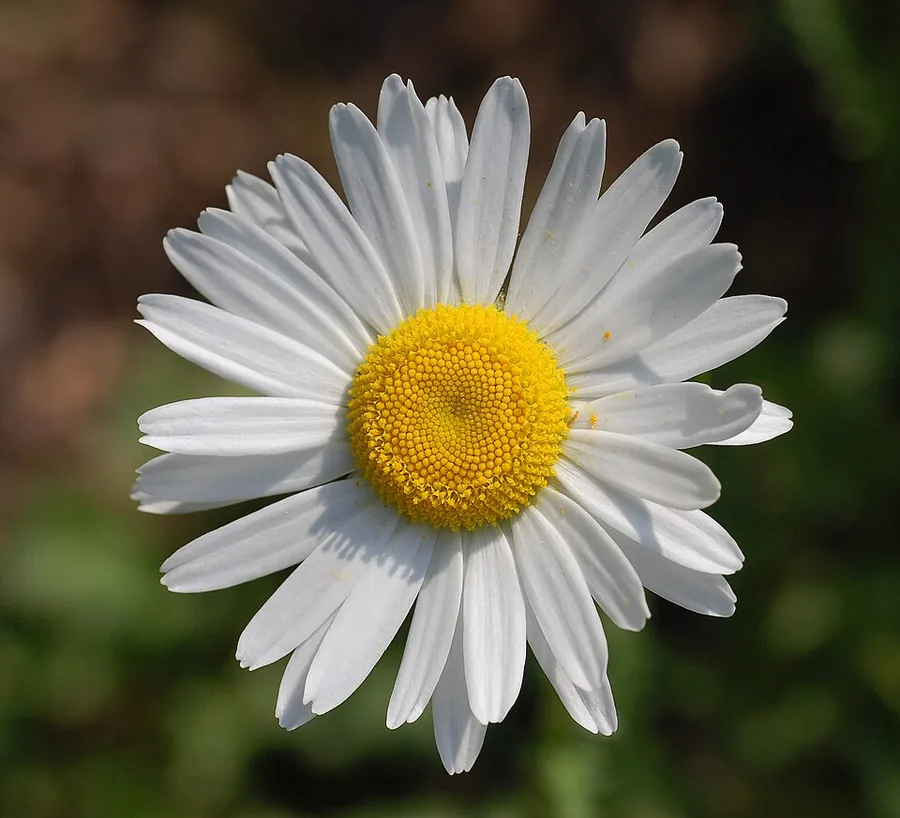
You've almost certainly seen the oxeye daisy already, since it's the classic white daisy dotting summer roadsides and meadows, with white rays circling a sunny yellow eye. It's in the daisy family, and it came over from Europe and Asia a long time ago, settling into cool temperate regions ever since. It's a tough one too, shrugging off poor soil and cold that would do in a fussier perennial.
It's honestly one of the easiest plants you can grow, and that's exactly where the trouble starts. Leave it be and it spreads by both creeping rhizomes and loads of seed, so a single plant can take over a patch of ground in just a couple of seasons. That's why a lot of the western US, plus states like Minnesota, treat it as an invasive or noxious weed, so it's worth a quick check of your local rules before you plant.
In a spot where you can keep tabs on it, though, it more than pulls its weight with months of flowers and hardly any work. Give it full sun and ground that drains well, snip off the faded blooms to get more, and just keep an eye on where it's headed. Worried about spread? The sterile cultivar is the safer bet.
Care
The short version: full sun and average, well-drained soil that stays on the dry side. Water it while it's getting established, skip the fertilizer if your ground's halfway decent, and deadhead through the season to keep the flowers coming.
Light
Give it full sun and you'll get the most flowers and the sturdiest stems. It'll take a bit of afternoon shade just fine, but pile on too much shade and the plants stretch, flop over, and bloom less.
Water
Once it's rooted in, the oxeye daisy is drought tolerant and likes its soil on the dry to medium side. Water a new plant every 7 to 14 days while it's settling, then mostly just let the weather handle it, because soggy ground is asking for rot.
Soil
Average, well-drained soil is what it likes best, and it'll even put up with poor, lean ground that stumps other perennials. A slightly acidic to neutral pH of 6.5 to 7.0 hits the sweet spot, but honestly drainage matters way more than the exact number.
Temperature
This is a cold-hardy perennial that shrugs off a range from about -40°F to 90°F (-40°C to 32°C). The deep winter cold of zones 3 to 8 doesn't bother it, and it comes right back from the base every spring.
Humidity
Regular outdoor humidity is a non-issue, so there's no number to chase here. What matters more is air movement, because still, damp air around crowded clumps is what kicks off leaf spot.
Feeding
In decent soil the oxeye daisy needs no feeding at all, and rich ground just makes it floppy and even more eager to spread. If your soil's really poor, one light, balanced feed during the growing season is all it needs.
Pruning
Deadhead the spent flowers through the season to bring on fresh blooms and, just as handy, to slow down all that self-seeding. Once flowering's winding down, cut the stems back to the low basal leaves to neaten up the clump.
Size & spacing
Plants get to 1 to 3 feet (30 to 91 cm) tall with a spread of 12 to 24 inches (30 to 61 cm), so give each one some room. Crowded clumps trap damp air and invite leaf spot, and a little breathing space goes a long way.
When to plant
The oxeye daisy is hardy in zones 3 to 8 and takes hard cold like it's nothing. Start seed indoors 6 to 8 weeks before your last frost, put plants out once the soil warms up in spring, and you'll get white daisies from May through August.
Northern hemisphere
Southern hemisphere
Typical months for a temperate climate: start earlier in warm zones, later where spring frosts linger.
- Sow: 6 to 8 weeks before last spring frost
- Plant: After last spring frost once soil has warmed
- Harvest: Blooms May through August
Hardiness
USDA hardiness zones: 3–8
Temperature: down to -40°C
Troubleshooting
This is a tough plant, so it doesn't run into much trouble, and what does show up almost always comes from wet, crowded conditions. Usually it's just a fungus or a few sap-feeding bugs. Find what matches below and jump on it early, while it still does some good.
Whole plant drooping and going yellow while it stops growing
When a plant wilts all over, yellows, and just quits growing, that's usually verticillium wilt. It's a fungus in the soil that clogs the stem from the inside and creeps up from the bottom leaves. Here's the hard part: once it's in, there's no fixing it, so pull those plants and get rid of them. Then sort out the drainage and don't put susceptible plants back in the same spot.
Fix:
- Remove and destroy affected plants
- Avoid replanting susceptible species in the same soil
- Improve drainage
Plant flopping over with rot down at the base
Soft, mushy stems right at the soil line? That's stem rot or southern blight, and it settles in when the ground is warm, wet, and slow to drain. Get the sick plants out and toss them before it spreads to the rest. After that, fix the drainage and pull the mulch back off the crown so the base can actually dry out.
Fix:
- Remove and discard infected plants
- Improve drainage and reduce moisture at crown
Brown or black spots popping up on the leaves
Seeing dark spots on the leaves? That's fungal leaf spot, and it loves humid, crowded plantings and really takes off after a wet spell. The fix is easy enough: pull off the spotted leaves and open the clump up by thinning or dividing it so air can get through. And try to water down at the base instead of over the top, since wet leaves are what it's after.
Fix:
- Remove affected foliage
- Improve air circulation by thinning or dividing clumps
- Avoid overhead watering
Warped new shoots with bugs bunched up on stems and buds
If the new shoots come in all twisted and there are little bugs huddled on the stems, you've got sap feeders like aphids, mites, or leaf miners, and those squiggly lines on the leaves are the miners at work. Good news is a strong spray of water usually knocks most of them right off. If they keep coming back, then reach for insecticidal soap, and let the ladybugs and other good bugs handle the rest.
Fix:
- Spray off with water
- Apply insecticidal soap if persistent
Toxicity
Think of the oxeye daisy as more of a mild irritant than any real poison. The leaves and flowers hold sesquiterpene lactones that can give a pet a sour stomach and leave sensitive skin itchy, but a stray nibble hardly ever does real damage. Just keep pets from grazing on it, and pop on gloves if your skin tends to react.
Toxic to
Cats · Dogs · Horses · Rabbits · Livestock · Birds · People
Cats Mild
If a cat chews on the leaves or flowers, you might catch some drooling, a little vomiting, or loose stools, and the sap can leave its skin itchy too. It's usually pretty mild though, and it clears up on its own once the plant's out of reach.
Dogs Mild
Dogs pretty much go through the same thing: drooling, an upset tummy, and every so often a wobbly, tipsy-looking walk after a big mouthful. Most of the time it stays mild, but if your dog got into a lot of it, go ahead and call the vet.
Horses Mild
Those sesquiterpene lactones in the leaves can hand a horse a sour stomach and some mild, colic-ish discomfort. Luckily horses tend to walk right past the bitter stuff on their own, unless there's not much else around to eat.
Rabbits Caution
It's best to keep this one off a rabbit's plate, since the daisy compounds can throw off that touchy little gut. One accidental nibble usually isn't a big deal, but there's really no reason to hand it over on purpose.
Livestock Caution
Cattle, sheep, and goats mostly just graze around the bitter leaves, so you don't see actual poisoning very often. The real headache is how it muscles out better pasture, way more than the mild upset it might cause.
Birds Caution
There isn't much sign it does birds any serious harm, but since it's got those same irritant compounds, it's smart to keep pet birds from nibbling at the leaves and flowers anyway.
People Caution
Handling the leaves and flowers can leave sensitive skin red and itchy with a contact rash, so gloves aren't a bad idea. It isn't grown to eat, so just keep it away from little kids who might want to taste it.
Contact with leaves and flowers can cause mild contact dermatitis in sensitive individuals.
Helpline numbers

United States
ASPCA Animal Poison Control: (888) 426-4435 (fee applies)
Poison Control: (800) 222-1222



Canada
Poison Centres: 1-844-764-7669
Varieties
Only a couple of forms really show up in gardens, and honestly the choice comes down to one thing: do you want it to spread or not?
May Queen ('Maikonigin')
This one's a neat, upright pick that gets to around 2 feet (60 cm) with big single white daisies, and since it's reportedly sterile and only grown from divisions, it stays right where you plant it.
Leucanthemum vulgare (species)
The wild one has those classic 1.5 to 2 inch (4 to 5 cm) white-rayed flowers around a yellow eye, but it doesn't stay put, spreading fast by both rhizomes and seed.
How to propagate
The oxeye daisy multiplies almost too easily, from both seed and division, which is great in a wild corner and kind of a pain anywhere you'd rather it stay put.
SeedEasy
Sow in spring after frost or start indoors 6 to 8 weeks before last frost · Germinates in 1 to 3 weeks; blooms by second season
Seed is the way most people go, and it couldn't be much simpler. Sow it outside once the frost is done, or get a jump on it indoors 6 to 8 weeks early, and it'll sprout in 1 to 3 weeks and then flower in its second season. Just know it self-seeds like crazy, and its seed can stay alive in the soil for decades, which is a big reason it turns invasive.
DivisionEasy
Spring or early fall, every 2 to 3 years · Reestablishes within one season
Every 2 to 3 years, dig up the clumps in spring or early fall and pull them apart to keep them going strong, and the pieces settle back in within one season. Here's the catch though: even a little scrap of rhizome left in the ground will grow back, so dig out the leftovers if you want to keep it from wandering.
Myths
The oxeye daisy is just the garden Shasta daisy by another name, so it's fine to plant anywhere.
Nope, they're two different plants. The oxeye daisy runs by rhizomes and seed and is listed as an invasive or noxious weed all over the place, while the Shasta daisy forms a clump and stays where you put it. So it's worth figuring out which one you've actually got before you plant it.
Daisies are totally safe and can't hurt pets.
Not quite. Plants in the daisy family carry sesquiterpene lactones and pyrethrins that can bring on mild vomiting, drooling, loose stools, and skin irritation in cats and dogs. It's usually mild, sure, but it's real, so it's best to keep pets from grazing on it.