Shrub · Malvaceae
Rose of Sharon
Hibiscus syriacus
Hand it full sun and a bit of elbow room, and this easy shrub keeps the color coming from midsummer right into fall.
Full sun
Every 7–14 days
USDA 5–9
8–12 ft · 2.4–3.7 m
Overview
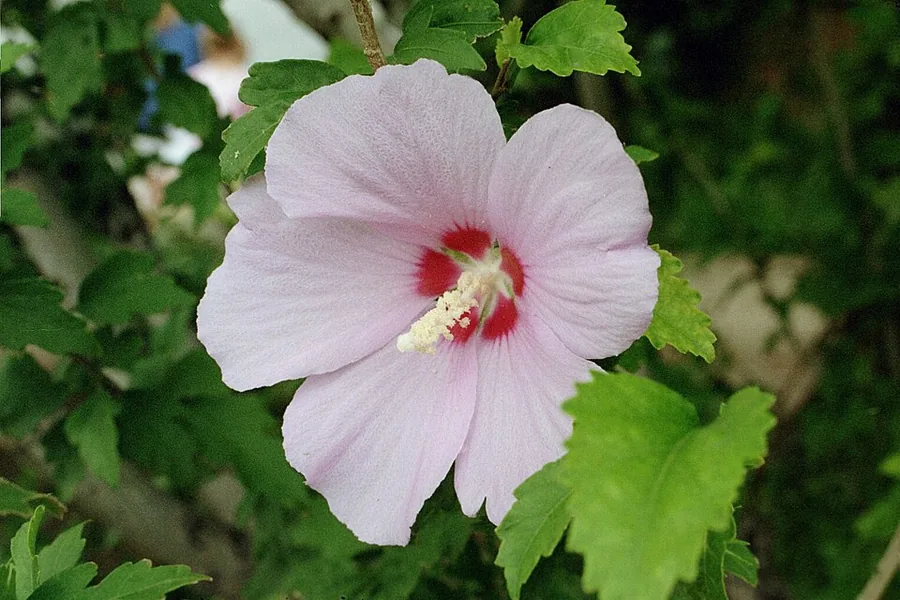
So the garden starts winding down in late summer, and that's exactly when Rose of Sharon shows up to the party. It's an upright deciduous shrub in the mallow family, and it just keeps opening those hibiscus-shaped flowers, one after another, from June all the way into October. Want a color? There's white, pink, lavender, and even a violet-blue you hardly see anywhere else, and most of them have a neat contrasting eye right at the throat.
Here's the thing that makes it so easy to love: it's really hard to bother. Once it's rooted in, it takes heat, humidity, drought, and even lousy soil without complaint, and it laughs off winters down to -20°F (-29°C). It grows fast, too, reaching 8 to 12 feet (2.4 to 3.7 m), so it's handy whether you need a quick screen or something big at the back of the bed.
The one catch? It loves to self-seed, enough that a few states have it flagged as invasive. But that's easy to work around. If you'd rather not deal with random seedlings popping up, just grab a sterile cultivar like Diana and you get all that long bloom without the spread.
Care
The short version: stick it in full sun with well-drained soil, keep it watered through the first season or two while it settles in, then cut it back in late winter and let it do its late-summer thing.
Light
Give it full sun if you want the most flowers, though it'll happily take partial sun or a little afternoon shade too. The rule's pretty simple: more sun means more blooms, so a bright, open spot really pays off all summer.
Water
When it's young, water it regularly and give it a good deep soak instead of quick little sips, so the roots learn to reach down. After a season or two, once it's settled, it turns pretty drought tolerant and gets by on medium moisture and whatever rain comes along, except when things get really dry.
Soil
It's honestly not fussy about soil and will grow in average, well-drained ground at just about any pH. Poor spots? It'll deal. What it won't put up with is soggy feet, so decent drainage is the one thing to get right.
Temperature
This one's tough as nails and handles a huge range, roughly -20°F to 100°F (-29°C to 38°C). Summer heat and humidity don't faze it, and it comes through hard winters just fine without any coddling.
Humidity
You don't need to think about humidity at all, since regular outdoor air suits it perfectly. What actually matters is air movement, because crowded, still air is what invites those leaf spots and rusts it can otherwise dodge.
Feeding
In halfway decent soil it barely needs feeding, so don't go overboard. A single hit of balanced general-purpose fertilizer in spring does the trick, and piling on nitrogen just gives you soft growth that aphids can't resist.
Pruning
Since it flowers on new wood, you'll want to prune in late winter or early spring before it starts growing. Cut the stems back hard, down to 2 or 3 buds, and you'll trade a few blooms for ones that are noticeably bigger, plus you tidy up the shape at the same time.
Repotting
In a pot, it rarely needs moving on. Only bump it up to something bigger when you spot roots circling or poking out the drainage holes, water running straight through, or growth that's clearly stalled.
Size & spacing
Give it space, because it grows fast and gets to 8 to 12 feet (2.4 to 3.7 m) tall with a 6 to 10 feet (1.8 to 3 m) spread. Leave it that much room and air can move through the branches, which keeps the leaves dry and keeps trouble away.
When to plant
Rose of Sharon is a bit of a late starter, and that's fine. It leafs out late in spring and saves the show for June through October. Plant it out in spring once the frost is gone, or go for early fall instead, and just remember to do the pruning in late winter before the buds get going.
Northern hemisphere
Southern hemisphere
Typical months for a temperate climate: start earlier in warm zones, later where spring frosts linger.
- Sow: late winter to early spring (8-10 weeks before last frost)
- Plant: spring after last frost, or early fall
- Harvest: June to October (mid to late summer)
Hardiness
USDA hardiness zones: 5–9
Temperature: down to -29°C
Troubleshooting
Good news up front: this shrub barely gives you any trouble, and what does come up is usually just cosmetic. Most of it shows on the leaves and buds first, so a quick glance over the plant now and then in summer is all you really need to catch things early.
Leaves nibbled into lace all summer
If the leaves look like lace, that's Japanese beetles at work, and they show up in little gangs on warm days, munching the soft bits between the veins. The easiest fix? Pick them off by hand early in the morning and plop them into soapy water. And skip those pheromone traps, because they pull in way more beetles than they ever catch.
Fix:
- Hand-pick beetles in early morning and drop into soapy water
- Avoid pheromone traps that attract more beetles
- Treat heavy infestations with an appropriately labeled insecticide following directions
New shoots curling up and feeling sticky
Sticky, curled-up new shoots usually mean aphids, and sometimes whiteflies, piling onto the tender growth and leaving behind that sticky honeydew that can go black with sooty mold. Just hit them with a strong blast of water, then follow up with insecticidal soap on whatever hangs on. Give it time and lady beetles and other good bugs will usually clean up the rest.
Fix:
- Dislodge aphids with a strong spray of water
- Apply insecticidal soap or horticultural oil to affected growth
- Encourage natural predators such as lady beetles
Buds going yellow and falling before they open
When buds yellow and drop before they ever open, that's bud drop, and it's almost always about a dry spell or uneven watering rather than any disease. The plant's perfectly fine, it just lets buds go when the roots keep flipping between wet and dry. Keep the soil evenly moist through bud set and the hot stretch, toss down some mulch to hold that moisture, and it settles down.
Fix:
- Maintain even soil moisture, especially during bud set and hot weather
- Mulch to conserve moisture and buffer soil temperature
- Avoid letting the root zone dry out completely while flowering
Spotty, blotchy leaves with the occasional bad stem
A few fungal leaf spots, blights, and rusts can show up on the leaves, and once in a while canker fungi sink a lesion into a stem. Wet weather and crowded, stuffy air make all of it worse, so airflow is really the answer. Pull off the marked leaves, prune out any cankered wood, and open the plant up so the breeze gets through and the foliage dries fast.
Fix:
- Remove and dispose of affected leaves and prune out cankered stems
- Improve air circulation and avoid overhead watering
- Apply a labeled fungicide only if problems are severe
Toxicity
Got pets or little ones roaming the yard? You're totally fine here. Rose of Sharon is non-toxic all around, with the ASPCA calling it safe for cats, dogs, and horses, and the flowers are even edible for people. So go ahead and plant it wherever you like.
Safe for
People · Cats · Dogs · Horses · Rabbits · Livestock · Birds
Cats None
Cats are totally safe with it. If one nibbles a leaf or flower, the most it'll get is a quick upset stomach from the roughage, and that's all.
Dogs None
The ASPCA calls it non-toxic to dogs, so a curious chew is really nothing to stress about.
Horses None
Horses are fine too, and grazing on a few leaves here and there doesn't carry any special risk.
Rabbits Safe
Rabbits can nibble the foliage no problem, though it's smart to ease into any new food a bit at a time.
Livestock Safe
There's nothing here to worry cattle, goats, or sheep that wander past a planting.
Birds Safe
Backyard and wild birds are all good around it, and plenty of them stop by the flowers for a bit of nectar.
People Safe
People are safe as well, and the flowers are actually edible, nice raw in a salad or steeped into tea.
No special handling precautions for toxicity; as with any plant, ingestion of large amounts of plant material may cause mild, transient stomach upset.
Varieties
One shrub, and yet so many looks to pick from, everything from clean single flowers to soft, ruffled doubles. Here are the named ones you're most likely to come across.
Diana
Diana's got pure white single flowers that stay open into the evening, and since it's a sterile triploid, it barely sets any seed.
Blue Bird (Oiseau Bleu)
Blue Bird, which you'll also see as Oiseau Bleu, really pops with big single flowers in a true violet-blue, each one with a red eye in the middle.
Minerva
Minerva blooms in a soft lavender-pink with a reddish-purple eye down in the throat.
Aphrodite
Aphrodite brings dark pink single flowers with a deep red center.
Red Heart
Red Heart keeps it crisp with white petals wrapped around a bold red center.
Lavender Chiffon
Lavender Chiffon opens up lavender semi-double, anemone-form flowers with an extra ruffle of petals inside.
How to propagate
Want more of these? There's a few ways to go about it, and the method you pick decides whether the new plant looks like the parent. Cuttings and layering keep the flower color spot on, while seed is more of a fun gamble.
Stem cuttingsEasy
Softwood cuttings in late spring to summer; hardwood cuttings in late fall to winter · Several weeks to root; transplantable the following season
Cuttings are your safest bet if you want an exact copy, since they hang onto the parent's flower color. Take softwood cuttings in late spring or summer, or hardwood ones from late fall into winter, and they'll root over a few weeks. Grow them along and they're ready to move the next season.
SeedEasy
Sow late winter to early spring; the species also self-seeds outdoors · Germinates in a few weeks; flowers in 2-3 years
Seed is easy, sure, but it's slow and the seedlings hardly ever match the parent's color. Sow it from late winter to early spring and it sprouts in a few weeks, but you're waiting 2 to 3 years for flowers. Heads up, though: it self-seeds all over outdoors, sometimes more than you'd like.
LayeringEasy
Spring to summer · One growing season to root before separating
Layering is about as hands-off as it gets. Bend a low branch down to the soil in spring or summer, pin it there, and it grows its own roots over one season before you cut it loose as its own plant.
Myths
Rose of Sharon is bad news for dogs and cats.
Nope, you can relax on that one. The ASPCA lists Hibiscus syriacus as non-toxic to dogs, cats, and horses, so a pet nibbling a leaf or flower isn't in any danger, and the flowers are actually edible for people. Worst case, someone gets a little tummy upset from eating a big pile of any plant, and that's it.
Prune Rose of Sharon in summer or fall and you'll get more flowers.
It's actually the opposite, believe it or not. It blooms on new wood, the growth from the current season, so cutting in summer or fall snips off the very stems that were about to flower. Prune in late winter or early spring before it starts growing, and if you cut back to 2 or 3 buds you'll get fewer flowers but bigger ones.