Ornamental · Crassulaceae
Sedum
Sedum
Hand it some sun and soil that drains, and this laid-back stonecrop pretty much takes it from there.
Full sun
50–77°F · 10–25°C
USDA 3–9
4–24 in · 10–60 cm
Overview
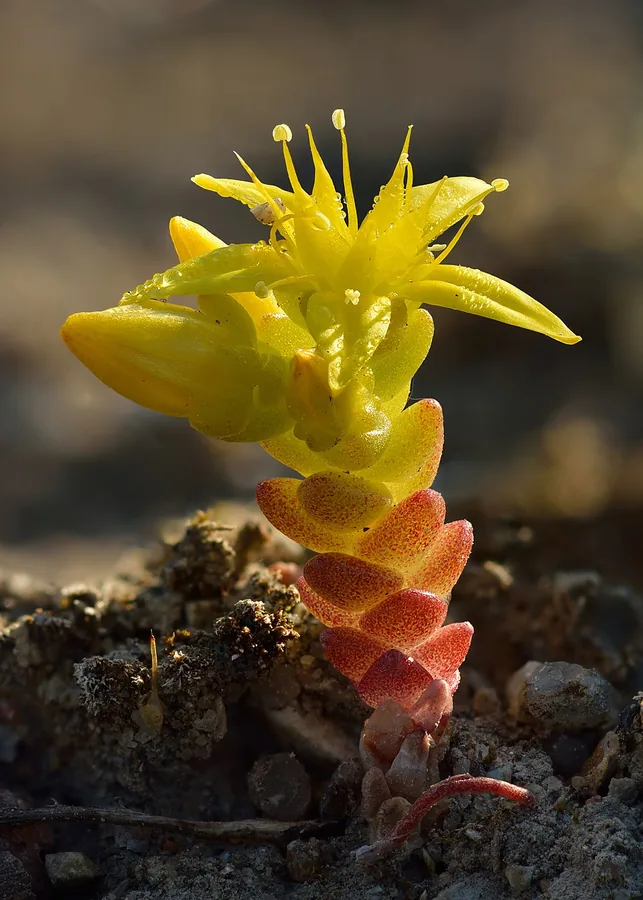
So what's the deal with sedum? It's a stonecrop, a tough little succulent that doesn't ask for much. It's part of the Crassulaceae family, and it keeps water stashed in its fat leaves and stems, which is how it rides out dry spells that would wilt fussier plants. The genus is hardy across zones 3 to 9, so there's a spot for it just about anywhere, whether that's a pot on the sill or a planting up on the roof.
Here's the fun part: what a sedum looks like really depends on which one you've got. Some grow upright into neat little clumps and send up flower heads toward the end of summer. Others just creep along the ground, rooting as they go, which is why you'll spot them in rock gardens and squeezed between paving stones. Height-wise, they land anywhere from 4 to 24 inches (10 to 60 cm).
If there's one thing sedum can't stand, it's soggy roots. Pop it in gritty, fast-draining soil with plenty of sun and it'll basically look after itself. But cram it into heavy, wet ground? The stems turn soft and mushy, and that's far and away the top reason these plants give up. Nail the drainage and you're golden.
Care
The short version: sedum wants full sun and gritty soil that drains fast, and it only needs a drink once everything's dried out completely. Feed it a little while it's growing, pinch back any stems that get stretchy, and don't let it sit in water. That's really it.
Light
Sedum's happiest in full sun, a few hours a day ideally, which keeps it compact and nicely colored. Can't manage that? Partial sun or a bright indirect spot indoors works too, though anything dimmer and the stems start to stretch and flop.
Water
Give it a proper soak, then just leave it until the soil's dried out completely before the next one. Those chubby leaves hold a backup supply, so a skipped watering barely fazes it, but a soggy pot is another story. Standing water is the quick road to rot.
Soil
Go with a gritty, well-drained mix that lets water run right through. A pH between 6.0 and 7.0 is fine, but honestly? The drainage matters way more than the exact number. Just keep it out of heavy, water-logging soil.
Temperature
Sedum's comfortable anywhere from 50°F to 77°F (10°C to 25°C), so normal room conditions suit it fine. The hardy types don't mind winter outdoors in zones 3 through 9, and indoor plants are perfectly happy at everyday temperatures.
Humidity
Dry air? No problem at all, which makes sedum a breeze for centrally heated rooms. There's no humidity number to fuss over here. If anything, damp, stuffy air is what you want to avoid, so let it breathe.
Feeding
Keep it light. Feed from spring through summer while it's actively growing, about once a month, using a balanced water-soluble fertilizer knocked down to half strength. Pile on too much and you'll get soft growth that rots and pulls in pests, so easy does it.
Pruning
Once the flowers are done, snip off the old stalks to tidy things up. Pinch back any stems that have gotten leggy so it stays compact, and cut out soft, rotted growth as soon as you notice it. Nothing complicated.
Repotting
Repot sedum every 2 to 3 years, or sooner if the roots have packed the pot and the soil's drying out way faster than it used to. If new growth has slowed right down, that's another hint it's ready to move up.
Size & spacing
Depending on the type, these run 4 to 24 inches (10 to 60 cm) tall and spread out to around 12 to 24 inches (30 to 60 cm). Give the creeping ones space to fill in, and leave the clumping ones a bit of elbow room so air can move through.
When to plant
Good news: there's no seed-starting schedule to stress about, since sedum is a hardy perennial that shows up again every year. Just plant or divide it in spring while it's pushing new growth, and the flowers roll in from summer into fall, give or take, depending on which sedum you're growing.
Northern hemisphere
Southern hemisphere
Typical months for a temperate climate: start earlier in warm zones, later where spring frosts linger.
- Harvest: Summer to fall depending on species
Hardiness
USDA hardiness zones: 3–9
Temperature: down to -40°C
Troubleshooting
When something's off with a sedum, it usually comes down to water or light, and the stems tend to show it first. Catch it early and you can almost always sort out the cause before things go south. Find your symptom below and take it from there.
Soft, squishy stems and a plant that's flopping over
Soft, mushy stems that are darkening? That's rot, and nine times out of ten it traces back to overwatering or soil that stays soggy. Don't stress. Trim it back to solid, healthy growth, let the cut pieces dry and callus over, then root them again in dry, gritty mix while you hold off the water. A pot with drainage holes and soil that fully dries between drinks keeps it from coming back.
Fix:
- Cut away all soft, rotted tissue back to firm healthy growth
- Allow healthy cuttings to callus and re-root in dry, gritty mix
- Withhold water until new roots form
Fuzzy white specks tucked into the leaf joints
See those cottony white blobs with a sticky film around them? Those are mealybugs, and they'll slowly wear the plant down. Touch each one with a cotton bud dipped in 70 percent isopropyl alcohol, then keep checking back every few days until they're gone for good. It's smart to keep this plant off on its own for a bit so they don't hop over to your other succulents.
Fix:
- Dab insects with a cotton swab dipped in 70 percent isopropyl alcohol
- Repeat treatment every few days until clear
- Isolate the plant from other succulents
Stretched-out, pale stems leaning at the window
Stems getting long and pale and leaning toward the window? That's just etiolation, sedum reaching for more sun than it's getting. The growth stretches, the leaves space out, and the color drains away, but it's an easy fix. Shift it to a brighter spot with a good stretch of direct sunshine each day, then trim those long tips so it bushes out again. And the bits you snip off root easily, so you get free plants out of it.
Fix:
- Move the plant to a brighter location with several hours of direct sun
- Pinch or cut back stretched stems to encourage compact regrowth
- Use the trimmed tips as cuttings
Toxicity
Got pets? You can relax. Sedum doesn't carry anything that would hurt cats, dogs, horses, or other animals, and the ASPCA even lists the popular burro's tail as non-toxic. Sure, a curious nibble might cause a little stomach upset, but that's true of pretty much any plant that isn't food. Nothing to lose sleep over.
Safe for
People · Cats · Dogs · Horses · Rabbits · Livestock · Birds
Cats None
Totally fine for cats. If yours takes a curious bite, the most you'll get is a bit of drool or a quick tummy upset, same as any plant that isn't really food.
Dogs None
No worries with dogs either. Worst case, a mouthful gives them a short bout of tummy trouble, and even that doesn't happen much.
Horses None
Horses are fine around it too. There's nothing in stonecrop that'll do a grazing horse any harm.
Rabbits None
Rabbits? No problem. Those fat leaves don't hold any toxins, though sedum's really a houseplant, not something to add to a rabbit's regular menu.
Livestock None
Livestock are safe around it. Cows, goats, and sheep can hang out near a planting no problem, since stonecrops aren't on the list of pasture plants that poison animals.
Birds None
Birds are in the clear too, whether they're pets or just visiting the yard. Nothing in sedum is toxic to them.
People None
Safe for people to handle, and a handful of stonecrops are even edible in tiny amounts. Still, this one earns its spot as something to look at, not something to cook with.
Varieties
There are hundreds of sedums out there, everything from upright clumps to flat little ground mats. So where to start? These three pop up the most and give a good feel for the range.
Sedum spectabile / 'Autumn Joy'
The upright border classic, with fleshy stems and big flat clusters of pink flowers that fade to a rusty tone come fall.
Sedum acre
Goldmoss stonecrop, a low creeper covered in tiny yellow-green leaves with a frothy topping of yellow flowers.
Sedum spurium
A low, spreading type with rounded, scalloped leaves that's right at home in rock gardens and on green roofs.
How to propagate
Want more sedum? It could hardly be easier. A single leaf that falls off will often root all by itself, so one plant can turn into a whole bunch without much effort at all.
Stem cuttingsEasy
Spring through summer during active growth · 2 to 3 weeks to root
Take your cuttings while it's growing through spring and summer. Give the cut ends a day or so to dry and callus, then pop them into gritty mix kept just barely damp. You'll see roots in about 2 to 3 weeks.
Leaf cuttingsEasy
Spring through summer · 3 to 6 weeks to form plantlets
All through spring and summer, you can start a whole new plant from just one leaf. Set the leaf on dry, gritty mix and wait, and little rooted rosettes will pop up at the base in around 3 to 6 weeks.
DivisionEasy
Early spring · 2 to 4 weeks to settle
For the clumping border kinds, division does the trick. In early spring, dig up the plant, break it into rooted chunks, and replant each one as deep as it sat before. Give it 2 to 4 weeks to settle in.
Myths
A succulent like sedum runs on pure neglect and won't ever need watering.
Sedum shrugs off dry spells, sure, but it still likes a real soak every so often while it's growing. The bigger danger is actually the opposite. It's overwatering, not the odd dry patch, that does sedum in.