Ornamental · Crassulaceae
Stonecrop
Sedum
Give it plenty of sun and quick-draining soil, then pretty much leave stonecrop to its own devices.
Full sun
Every 10–21 days
60–90 days
USDA 3–9
Overview
Got a rough patch where nothing wants to grow? That's stonecrop's kind of place. These low, fleshy succulents keep water tucked inside their leaves, so heat, drought, and thin rocky soil don't really bother them. Most of them creep out into mats that grow together into a living carpet, which is why they're a favorite for rock gardens, gravel, green roofs, and those dry gaps between paving stones.
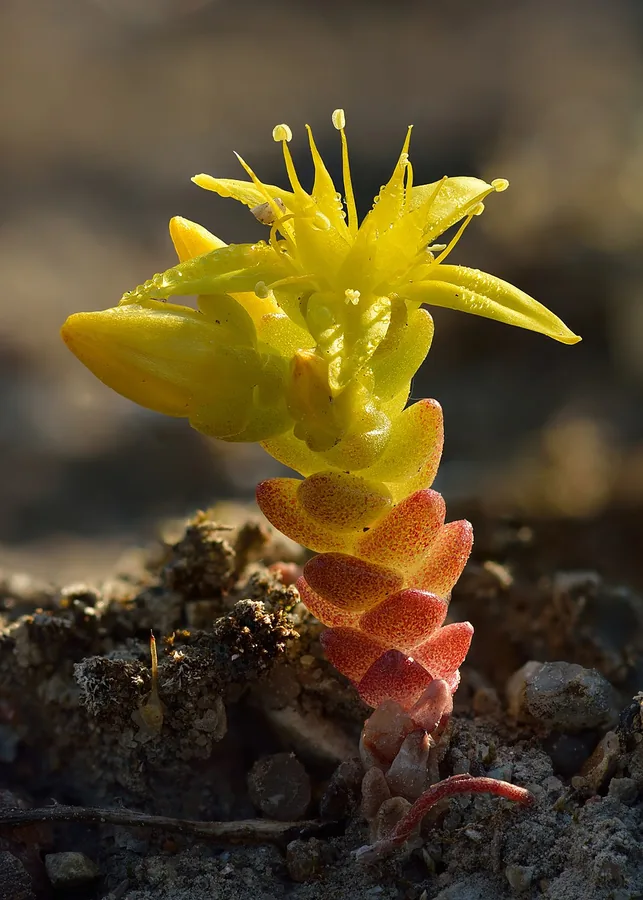
And there's a lot to choose from, since the looks really vary. Some go gold or chartreuse, others turn a deep bronzy-red, and quite a few color up even more once it gets cold. In summer you'll get star-shaped flowers in yellow, white, pink, or red that bees and butterflies love, and after those fade the leaves keep things interesting all year. They're seriously tough too, with the hardiest ones taking winters all the way down to -40°F (-40°C).
Here's the funny thing: the one way to mess this up is to be too nice to it. Rich soil and regular watering just make it floppy and leggy, and soggy roots will rot it right out. So keep it lean and dry, give it the sunniest spot you've got, and honestly the trickiest part is remembering to leave it alone.
Care
The short version: full sun, lean and gritty soil that drains fast, and water only once it's bone dry down there. No need to feed it, so you can mostly just let it do its thing.
Light
Stonecrop wants full sun, and honestly the more the better. It'll cope with partial sun or a bit of light shade, but stick it in real shade and the stems get stretchy and floppy while the gold and red types just fade back to plain green.
Water
It's a succulent, so let the soil go completely dry, then water well and back off. Once it's settled in, it often gets by on rain alone and only needs a drink every 10 to 21 days in a long dry spell. And whatever you do, don't overwater, because that's what kills stonecrop more than anything else.
Soil
Go for lean, gritty soil that drains sharply, the sandier and rockier the better. A pH between 6.0 and 7.5 is fine, and it'll shrug off poor ground that would flatten pickier plants. What it really can't deal with is heavy soil that stays wet around the roots.
Temperature
This one handles a wild range, from -40°F to 100°F (-40°C to 38°C), which is how the hardy types get through such rough winters. Drainage matters even more than the cold, though, since wet soil in winter is the real problem.
Humidity
Dry air? No problem at all, so there's no humidity target to fuss over. What you do want to avoid is damp, stagnant air, which invites rot and gives slugs a place to hang out.
Feeding
Feed it a little, or just don't bother. Stonecrop likes to grow lean, and too much food makes it floppy and leggy, so one light dose of balanced fertilizer in spring is really the most it'll ever want.
Pruning
Trim back any leggy or flopped stems to neaten up the mat and get denser growth, and just pinch in the runners that wander off. Once the flowers are done, snip off those spent flower stems.
Repotting
If it's in a pot, repot it every 2 to 3 years, or sooner if the mat crowds the container, dies out in the middle, or drains almost the second you water it. Fresh gritty, fast-draining mix each time and you're set.
Size & spacing
Most creeping stonecrops stay pretty low, only about 2 to 6 inches (5 to 15 cm) tall, but each one spreads 12 to 24 inches (30 to 60 cm) across into a wide mat. Give them room for that spread and they'll grow together into solid cover.
When to plant
Stonecrop does its thing across zones 3 to 9, so odds are it'll be happy where you are. Wait for the last frost to pass in spring, then plant any time up through early fall. Those little star-shaped flowers show up over summer, somewhere between June and August.
Northern hemisphere
Southern hemisphere
Typical months for a temperate climate: start earlier in warm zones, later where spring frosts linger.
- Sow: Late winter to early spring (8-10 weeks before last frost); most types are grown from cuttings or division rather than seed
- Plant: Spring after last frost through early fall
- Harvest: Summer (June to August); star-shaped yellow, white, pink, or red flowers attract pollinators
Hardiness
USDA hardiness zones: 3–9
Temperature: down to -40°C
Troubleshooting
The good news? Stonecrop barely runs into problems, and when it does it's nearly always too much water or not enough sun. The stems and roots usually tip you off early, so a quick look tells you what's up. Find your symptom below and sort it out before any rot gets going.
Soft black stems caving in from the middle
This is root and stem rot, and it's what does in more sedums than anything else. It's not some disease you can spray away, it just comes from too much water sitting in heavy or badly drained soil. So stop watering, cut out every soft, mushy stem, and re-root the firm bits in fresh gritty mix somewhere raised and sharply drained.
Fix:
- Stop watering and let the soil dry out completely
- Cut away all soft, rotted stems and roots and discard them
- Re-root healthy firm cuttings in fresh gritty, fast-draining mix
- Replant in a raised, lean, sharply drained site or amend heavy soil with coarse sand and grit
Stretched, floppy stems fading back to green
Almost every time, this is just not enough sun, maybe with soil that's a bit too rich or too wet pushing soft growth. Move it into full sun, shear those leggy stems back hard so it fills in denser, and go easy on the water and food. Gold and red forms only keep their color if you give them the strongest light you can.
Fix:
- Move or transplant to a full-sun location
- Shear back leggy stems to force denser, more compact regrowth
- Stop fertilizing and grow in leaner, grittier soil
- Reduce watering
Chewed, ragged leaves with the odd slime trail
If the damage shows up overnight with shiny slime trails, that's slugs and snails munching the fleshy growth. But if you spot little bumps, white cottony bits, or clusters of soft insects on the stems instead, you're dealing with scale, mealybugs, or aphids. Pick the slugs off after dark, hit the rest with insecticidal soap or a strong blast of water, and clear out the damp, shady debris where they like to hide.
Fix:
- Hand-pick slugs and snails or use slug bait/traps
- Wipe off or spray scale, mealybugs, and aphids with insecticidal soap or a strong water jet
- Improve airflow and avoid overly damp, shaded conditions that favor slugs
Toxicity
If you've got pets or kids around, you can breathe easy, because stonecrop is non-toxic. The ASPCA has it down as safe for cats and dogs, and it's no real danger to other animals or children either. The only tiny catch? A few species have sap that can leave a mild itch on sensitive skin.
Safe for
People · Cats · Dogs · Horses · Rabbits · Livestock · Birds
Cats None
Cats are totally fine around stonecrop, and it's not on the ASPCA toxic list. If a curious one chews a leaf, the worst you'll see is a mildly upset tummy, the same as with any plant that isn't part of its usual diet.
Dogs None
Dogs are no worry here either. A nibble might bring on a little drooling or a loose stomach, but that clears up on its own.
Horses Safe
There aren't any reports of stonecrop poisoning horses, and it's not flagged as a pasture hazard. If a horse grazes a bit of the foliage, it'll be just fine.
Rabbits Safe
Rabbits can nibble the fleshy leaves no problem. Like with any new green, though, ease it in slowly so a big sudden helping doesn't upset their stomach.
Livestock Safe
Cattle, goats, and sheep won't be poisoned by stonecrop, and honestly most of them ignore it anyway and go for tastier stuff.
Birds Safe
It's no toxic risk to backyard or pet birds, and chickens might peck at the low mats now and then without any trouble.
People Safe
Stonecrop is safe to grow and handle with kids around. The sap of a few species can leave a mild itch on sensitive skin, so just wash your hands after a long stretch of trimming or planting.
Generally safe to handle, but the sap of a few sedum species may cause mild skin irritation in sensitive people; wash hands after extensive handling.
Varieties
Stonecrop covers a big range of colors and shapes, from spiky gold to low red mats. These are the ones you'll bump into most.
Sedum rupestre 'Angelina'
A tough creeping groundcover with spiky gold-to-chartreuse needles that flush reddish-orange when fall and winter turn cold, plus yellow flowers in summer.
Sedum spurium 'Dragon's Blood'
A low two-row stonecrop that spreads into bronzy-red foliage and puts out deep red star-shaped flowers in summer.
Sedum album
An evergreen mat former with small, fleshy green leaves and white summer flowers, and it's the one the ASPCA actually names as non-toxic Stonecrop.
Sedum acre
Gold moss stonecrop, with tiny leaves and bright yellow flowers, that self-seeds so freely it can spread fast enough to get weedy.
Upright border sedums (now Hylotelephium, e.g. 'Autumn Joy')
A separate bunch of taller, clump-forming border perennials that got moved into Hylotelephium, and they stand upright instead of creeping into low mats.
Companions
Stonecrop pairs best with other sun-loving, drought-tough plants that want the same lean, dry, gritty soil, and worst with anything that needs rich, wet ground and shade.
Plant near
Sempervivum (hens and chicks): Another sun-loving, drought-tolerant succulent with the same lean, well-drained soil needs for rock gardens and green roofs.
Creeping thyme: Low, sun-loving, drought-tolerant mat former that shares the same gritty, well-drained, dry conditions between pavers and on slopes.
Keep apart
Moisture-loving shade plants: Plants needing rich, consistently moist soil and shade require conditions (wet soil) that rot sedum and shade that makes it leggy.
How to propagate
Want more stonecrop? Easy. A snapped-off stem or even a dropped leaf will often root all by itself, so one plant turns into a whole bunch before you know it.
Stem cuttingsEasy
Spring to summer · 2 to 4 weeks to root
This is the easiest way, and it's what most gardeners do. Snip a stem in spring or summer, let the cut end dry and callus for a day, then just push it into gritty mix or lay it on the soil, and it'll root at the nodes in 2 to 4 weeks.
DivisionEasy
Spring or early fall · A few weeks to a season
Dig up an established mat in spring or early fall, pull or cut it into chunks, and replant the pieces wherever you want them. Each division takes a few weeks to a full season to settle in.
Leaf cuttingsEasy
Spring to summer · 3 to 6 weeks
Pull off a healthy leaf with a little bit of stem still attached, then lay it on gritty mix during the spring or summer growth. New roots show up over 3 to 6 weeks.
SeedModerate
Late winter to spring · Several weeks to germinate
Species sedums grow from seed sown in late winter or spring, and that takes several weeks to germinate. Named cultivars won't come true from seed, though, so stick with cuttings or division if you want to keep their color and shape.
Myths
Sedums need rich soil and lots of watering to do well.
Nope, it's the other way round. These are succulents built for hard, dry ground, so what they really want is lean, gritty soil with sharp drainage and hardly any water. Give them rich earth and a regular drink instead and you'll just get floppy, leggy growth and fatal root and stem rot.