Vegetable · Amaryllidaceae
Shallot
Allium cepa Aggregatum Group
Pop one bulb in the ground and it'll turn into a whole cluster, all on its own, year after year.
Full sun
Every 3–7 days
90–120 days
USDA 4–10
Overview
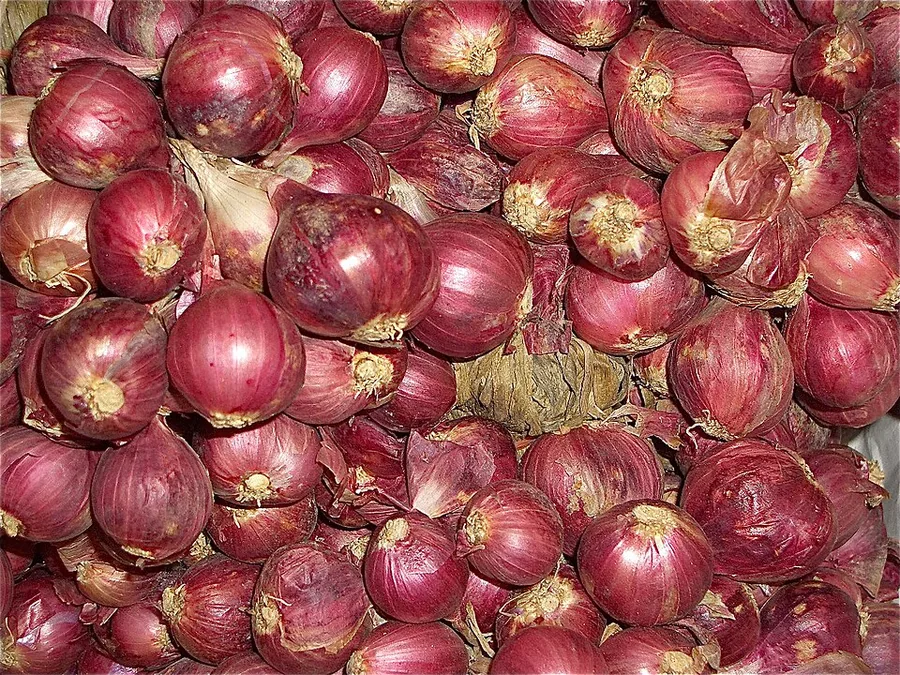
So what's a shallot, really? It's the onion's mellower, sweeter relative, with a soft garlicky taste that's a favorite for sauces and dressings. It lives in the Aggregatum Group of Allium cepa, the same species as the onion, but it does its own thing underground. Plant one bulb and it quietly divides into a little cluster, so you tuck in a single set and dig up a small handful later.
Here's the good news: shallots are just about the easiest thing you can grow. They want full sun, nice loose soil with some richness to it, and steady water while the leaves are coming on, then a dry patch at the end to wrap up the bulbs. Most folks just save their best bulbs and replant them the next year, though if you'd rather, a handful of newer varieties will grow from seed too.
The whole thing runs on a nice, slow clock, which is kind of relaxing. You get the bulbs in during early spring or fall, let them fatten up over the warm months, and dig them up in summer once the tops turn yellow and tip over. Cure and store them right and they'll last for months, and honestly that's a big part of why cooks have always kept them around.
Care
The short version: shallots like full sun and loose, rich soil, want about an inch of water a week while the leaves grow, and then you back off the water as the tops go yellow, letting the bulbs firm up and cure.
Light
Shallots really want full sun, something like six hours or more of direct light a day. Can they handle partial sun? Sure, but the bulbs come out smaller and the plants take their time getting there.
Water
While the leaves are growing, keep the soil evenly moist, roughly an inch of water a week, because those shallow roots dry out in no time. Once the leaves start to yellow and lie down, ease off and then stop watering, which gives the bulbs the dry stretch they need to firm up for storage.
Soil
Give them loose, rich, well-drained loam with a good bit of compost worked in. They're happiest at a pH somewhere between 6.0 and 6.8, and if your soil's heavy and wet, a raised bed stops the roots from sitting in a puddle.
Temperature
These are tough plants, happy anywhere from about 32°F to 86°F (0°C to 30°C). A chilly start can make them bolt, and once real summer heat rolls in, that's their signal to finish up and cure.
Humidity
Outdoor humidity? Not something to worry about, so there's no number to hit. What matters is airflow, because damp, crowded leaves are exactly what downy mildew loves.
Feeding
Feed them once a month with a balanced or nitrogen-forward fertilizer while the leaves are filling out, tucking it in next to the row. Once bulbing kicks in, lay off the nitrogen, or you'll get big leafy tops and not much bulb.
Pruning
There's basically no pruning to bother with. Just snap off any flower stalks the second they pop up, so all that energy goes into the bulbs and not into seed.
Repotting
Not applicable; grown as a bed or container crop replanted each season from saved sets
Size & spacing
Each plant is slim and stands upright, reaching about 12 to 24 inches (30 to 60 cm) tall. One clump only takes up 4 to 6 inches (10 to 15 cm) across, so give it that much elbow room and the bulbs can swell without bumping into each other.
When to plant
Shallots take their sweet time, and that's fine. Get the sets in during early spring as soon as the soil's workable, or plant in fall if your winters are on the mild side, then just let them do their thing through the warm season and dig them up in summer once the leaves turn yellow and tip over.
Northern hemisphere
Southern hemisphere
Typical months for a temperate climate: start earlier in warm zones, later where spring frosts linger.
- Sow: late winter, 8-10 weeks before last frost (seed-grown shallots only)
- Plant: early spring as soon as soil is workable, or fall in mild-winter regions
- Harvest: summer, when tops yellow and fall over
Hardiness
USDA hardiness zones: 4–10
Temperature: down to -34°C
Troubleshooting
Don't stress about this list. Most shallot trouble shows up in the leaves or the bulbs, and it usually comes back to the weather, how much you're watering, or plants sitting too close together. Catch it early and you can usually fix it before a whole row goes. Find what looks like your plant below, then jump on it while it still helps.
Mushy, rotting bulbs and plants keeling over
Soggy, badly drained soil is what brings on basal rot and bacterial soft rot, which rot the bulb from the base up. Once a bulb's infected, it's a goner, so dig those plants out and bin them instead of composting. Sort out the drainage, go with raised beds where things stay wet, and cure your harvest somewhere warm and airy before you store it.
Fix:
- Remove and discard affected bulbs (do not compost)
- Improve drainage or move to raised beds
- Cure harvested bulbs in a warm, dry, airy spot before storage
Silvery streaks and little white flecks on the leaves
Those marks are down to onion thrips, teeny insects that scrape at the leaves and tuck themselves into the folds. When it's hot and dry, their numbers really take off, so knock them down with a strong spray of water and hit the leaf bases with insecticidal soap or spinosad. Keep the plants watered and happy and you've won most of the fight.
Fix:
- Knock thrips back with strong sprays of water
- Apply insecticidal soap or spinosad per label, targeting leaf bases
- Keep plants well watered to reduce stress
Fuzzy grayish patches and leaf tips that die back
When the weather turns cool and damp, that's when downy mildew shows up, laying a violet-gray fuzz over yellowing spots on the leaves. Pull off and toss the worst leaves, start watering at the base early in the day, and give the plants more room so the leaves dry out fast. If it's really coming on strong, a labeled fungicide sprayed before it spreads will keep it in check.
Fix:
- Remove and destroy infected leaves and badly affected plants
- Switch to drip irrigation or water early in the day
- Apply a labeled fungicide preventively if disease pressure is high
Flower stalks too early and puny, split bulbs
If your shallots shoot up flower stalks before they should, they're bolting, usually because of a cold snap or big temperature swings after planting. Big oversized sets tend to do it more, too. Snap those stalks off as soon as you see them, then use the bolted bulbs up fast since they won't store.
Fix:
- Snap off flower stalks as soon as they appear
- Use bolted plants fresh promptly, as their bulbs store poorly
Toxicity
Good to know: shallots are totally fine for people, but they're a real problem for animals. Since they're an Allium, every part has organosulfur compounds that hurt red blood cells and can cause hemolytic anemia in cats, dogs, horses, and livestock, and cats have it the worst. Cooking or drying doesn't fix it either, so keep the bulbs, tops, and any leftover cooking away from your pets.
Toxic to
Cats · Dogs · Horses · Rabbits · Livestock · Birds
Safe for
People
Cats Severe
Cats get hit the hardest, and sometimes it only takes a little taste. Keep an eye out for throwing up, weakness, pale gums, fast breathing, and pee that goes red or brown as their red blood cells break down.
Dogs Moderate
A dog that gnaws on bulbs, tops, or kitchen scraps might drool, throw up, and go off its food, with a sore belly and weakness coming next. Big or repeated helpings can turn into serious hemolytic anemia.
Horses Toxic
Horses react to those same organosulfur compounds, so any shallot they graze or get fed can wreck their red blood cells. You'll see them go dull and weak, with dark urine as the anemia sets in.
Rabbits Toxic
Don't ever give a rabbit shallot, in any form. The bulbs and green tops have the same blood toxins and can leave a bunny weak, off its food, and anemic.
Livestock Toxic
Cattle, sheep, and goats can all get sick from eating shallot tops, bulbs, or the cull pile. It damages their blood and shows up as weakness, pale gums, and off-color urine.
Birds Toxic
Keep shallot well away from chickens and pet birds. Their red blood cells are just as vulnerable, and even a little can be a big problem.
People Safe
For people, no worries at all: shallots are a kitchen staple and totally safe raw or cooked. The toxin's only an animal thing, so the real risk is slipping scraps or trimmings to a pet.
Plants pose no contact hazard to people; risk is from pets ingesting bulbs, tops, scraps, or cooked dishes containing shallot. Store harvested and curing bulbs out of reach of pets.
Helpline numbers

United States
ASPCA Animal Poison Control: (888) 426-4435 (fee applies)

United Kingdom
Animal PoisonLine: 01202 509000 (fee applies)

Australia
Animal Poisons Helpline: 1300 869 738
Varieties
There are a few shallots worth knowing, everything from gray-skinned French classics to round hybrids you can start from seed. Here are the ones that come up most.
French Gray (Griselle)
French Gray, sometimes called Griselle, is a gray-skinned old French shallot people love for its deep, refined flavor, and it's occasionally treated as its own thing apart from regular shallots.
Dutch Yellow
Dutch Yellow is a dependable yellow-skinned multiplier that gives you loads of bulbs in a cluster and keeps really well into the off-season.
Zebrune
Zebrune is a long, seed-grown 'banana' shallot with pretty copper-pink skin and one torpedo-shaped bulb instead of a cluster.
Ambition
Ambition is a seed-grown hybrid that makes round, reddish-bronze bulbs and hangs onto them in storage for ages.
Companions
Shallots get along with most beds, helping to throw pests off the scent near carrots and brassicas, but they hold back the legumes, so keep beans and peas in their own ground.
Plant near
carrots: Alliums interplanted with carrots are traditionally used to help confuse carrot pests, and the crops share bed conditions without competing heavily.
brassicas: Cabbage-family crops pair well with alliums, whose scent may help deter some brassica pests.
lettuce: Shallow-rooted, quick lettuce fits between upright shallot rows without competing for space or light.
Keep apart
beans and peas: Legume growth is reported to be inhibited when planted near alliums, so beds are kept separate.
How to propagate
You've basically got two options here. Replant saved bulbs, which is what most people do, or start from seed if you want a cleaner crop and one bigger bulb per plant.
Bulbs & cormsEasy
Early spring or fall planting of individual sets/cloves, pointed end up, just below the soil surface · Sprouts in 1-2 weeks; each set multiplies into a cluster of 4-12 bulbs in roughly 90-120 days
This is how most people grow shallots, and it's about as simple as it gets. Poke each set into the soil pointed end up, just under the surface, in early spring or fall, and in a week or two it sprouts, then splits into a cluster of 4 to 12 bulbs over the next 90 to 120 days. When you harvest, hang onto your firmest, healthiest bulbs, because those become next year's planting stock.
SeedModerate
Sow indoors in late winter 8-10 weeks before last frost, or direct-sow in early spring · Transplant-ready in about 8-10 weeks; bulbs mature in one long season (100-120+ days)
Growing from seed takes a bit more patience, but it skips the diseases that tag along on saved sets. You sow indoors in late winter, about 8 to 10 weeks before your last frost, and the plants are ready to go outside once they're 8 to 10 weeks old. They usually make one bigger bulb over a single long season of 100 to 120 days or more, and varieties like Zebrune and Ambition are made for this.
Myths
Shallots are basically just little onions that grow and act like any other bulb onion.
Shallots are in the Aggregatum Group of Allium cepa, and each bulb you plant breaks up into a whole cluster instead of bulking up into one big onion. That one thing changes how you space them, how you harvest, and how you save your own bulbs for next time.
Cooking or drying shallots makes them okay for cats and dogs.
Nope. Heat and drying don't touch the organosulfur toxins, so they're just as nasty in cooked, dried, and powdered shallot. Any form of shallot, onion, or garlic can set off Heinz-body hemolytic anemia in pets.