Herb · Asteraceae
Stevia
Stevia rebaudiana
It's a no-calorie sweetener you can pick and chew straight from the plant.
Full sun
Every 2–4 days
50–90°F · 10–32°C
90–110 days
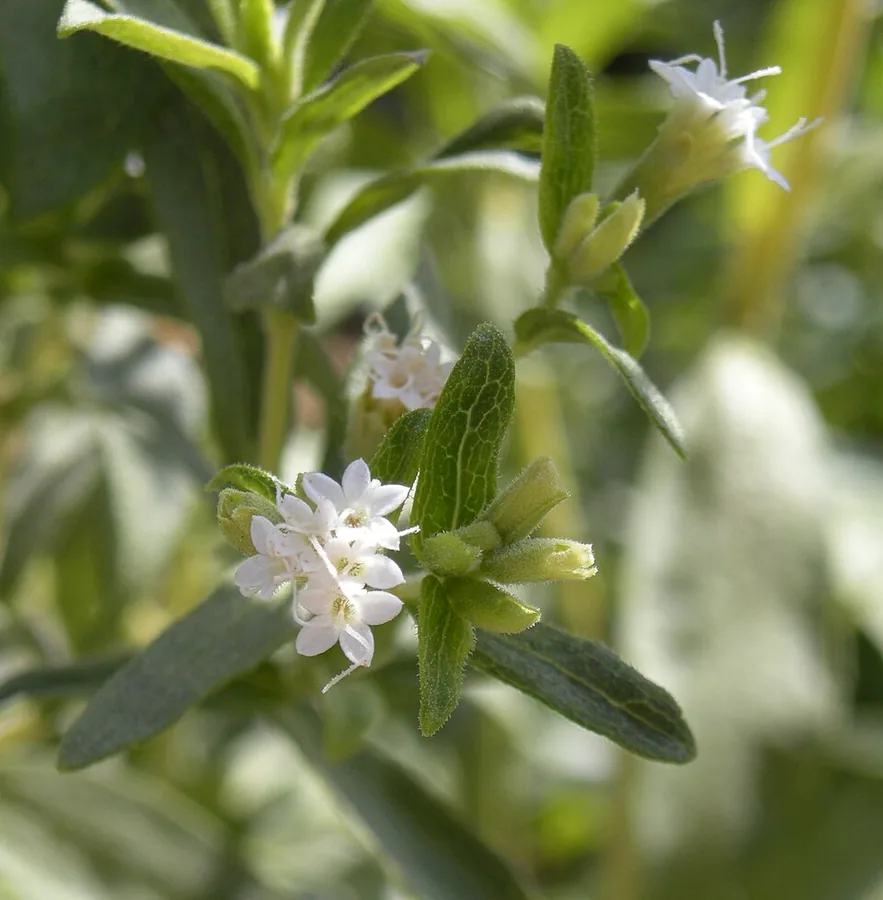
Overview
So what's stevia? It's a tender little herb from the Paraguayan highlands, and folks there have been sweetening food and drink with its leaves for generations. Those leaves are packed with steviol glycosides, which taste way sweeter than sugar but bring zero calories. Pop a fresh one in your mouth and you'll taste it right off the bat.
In the garden it stays nice and compact, only about 18 to 30 inches (45 to 75 cm) tall, so it won't take over. It's a perennial where winters are mild, but everywhere else it's frost-tender, which just means you either treat it like a warm-season annual or scoot a potted one indoors before the cold hits. Short on ground space? It's just as content in a pot on the balcony.
Here's the thing though: it needs a bit of upkeep to stay sweet. Just keep nipping the tips so it fills out nice and full, and snip off any flower buds you spot, because once it blooms the leaves aren't nearly as sweet. Stay on top of that and a single plant will hand you sweet leaves the whole summer through.
Care
The short version: stevia likes full sun and steady moisture in soil that drains well, and if you keep pinching off the flower buds and tips, the leaves stay sweet and keep on coming.
Light
Stevia loves full sun, so aim for six or more hours a day and you'll get thick, sweet leaves. A bit of afternoon shade is fine if your summers are brutal, but skimp on light and it'll go all thin and stretched out on you.
Water
Since its roots stay shallow and lose water quickly, keep the soil evenly moist, just not soggy. Watering every 2 to 4 days usually does the trick, though you'll go more often when it's hot or potted up. A layer of mulch helps hold that moisture in, too.
Soil
Give it a well-drained loam rich in organic matter and it'll be happy, since that feeds the roots while letting extra water run off. It's not fussy about pH either, anywhere from 6.0 to 7.5 works, so your regular garden soil is probably good to go.
Temperature
Stevia's happiest somewhere around 50°F to 90°F (10°C to 32°C). It's tender once things turn cold, and a freeze will do it in, so bring any potted plants inside before the first real cold shows up.
Humidity
Regular household humidity, say 40% to 70%, keeps stevia perfectly happy, and that covers pretty much any spot indoors or out. Don't sweat the exact number, though. What really matters is airflow, because leaves that get crowded and damp are what pull in pests and rot.
Feeding
Once a month through spring and summer, give it a balanced, low-nitrogen organic feed. Why go easy on the nitrogen? Because too much of it just pushes leafy growth and quietly steals the sweetness you're growing the plant for in the first place.
Pruning
Don't be shy about pinching, it's genuinely good for the plant. Nipping the tips over and over gives you a bushy, well-branched shape, and pulling off flower buds as soon as they show keeps the leaves at their sweetest, since flavor and fresh growth both fade once it starts to bloom.
Repotting
Plan on a repot once a year, or any time you're bringing it in for winter, and just bump it up to a slightly bigger pot with fresh soil. Keep an eye out for roots winding around the pot, growth that's slowing down, or a mix that goes bone dry almost the second you finish watering.
Size & spacing
Grown out, these plants hit about 18 to 30 inches (45 to 75 cm) tall and 12 to 24 inches (30 to 60 cm) across. Give each one roughly that much space and air can move around them, which keeps the leaves dry and the plant healthy.
When to plant
Stevia's all about warmth and really can't handle frost, so timing is everything. Get your seeds or cuttings started inside in late winter, then hold off on moving plants outdoors until the cold's totally gone and the soil's warmed up. After that? You can pick leaves all summer, right up until frost.
Northern hemisphere
Southern hemisphere
Typical months for a temperate climate: start earlier in warm zones, later where spring frosts linger.
- Sow: 8-10 weeks before the last spring frost
- Plant: after all danger of frost has passed and soil has warmed to at least 50°F (10°C)
- Harvest: Harvest leaves through summer; pinch flowers as leaves are sweetest before bloom. Main leaf harvest before flowering in late summer/early fall.
Hardiness
USDA hardiness zones: 9–11
Temperature: down to -7°C
Troubleshooting
Most stevia hiccups turn up on the leaves, and it's usually pests, soggy roots, or the plant getting ready to bloom. Catch it early and you can sort things out before your harvest takes a hit. Just find whatever matches what you're seeing and jump on it.
Wilting even when the soil's totally wet
It sounds odd, but if your plant's wilting while the soil is soaked, it's very likely root rot from waterlogged ground. Once the roots go brown and mushy, they're done for. So ease off the water right away, sort out the drainage or repot into something that drains fast, and never leave a pot parked in a full saucer.
Fix:
- Reduce watering immediately
- Improve soil drainage or repot into well-drained mix
- Remove and discard severely affected plants
Leaves suddenly black and floppy after a cold snap
Stevia is frost-tender, so one cold night can turn the whole plant black and floppy just like that. Best move? Get your pots inside before the cold rolls in. If frost already got to it, trim off the damaged bits and keep it going indoors over winter.
Fix:
- Move container plants indoors before frost
- Cut back damaged growth and overwinter the plant indoors
Curled, sticky leaves with little bugs underneath
If the leaves are curling and feel sticky, you've probably got aphids or whiteflies, little sap-suckers that hang out under the leaves and leave a film of honeydew behind. Blast them off with a good jet of water first, then follow up with insecticidal soap when they keep showing up. Any leaf that's totally covered? Just pull it.
Fix:
- Spray plants with a strong jet of water to dislodge insects
- Apply insecticidal soap to affected foliage
- Remove and destroy heavily infested leaves
Chewed-up holes in the leaves near the ground
Those ragged holes are usually slugs or snails doing their thing overnight and whenever it's wet, and they leave shiny trails across the leaves and soil as a giveaway. Head out after dark with a flashlight and pick them off. Clearing off any nearby mulch and junk helps too, since it takes away their daytime hiding spot.
Fix:
- Hand-pick slugs in the evening
- Remove debris and mulch that harbor them
- Use slug traps or barriers around plants
Leaves going less sweet once buds pop up
Nothing's broken here, your plant's just starting to flower, and when that happens it channels its energy into blooms while the leaves slow down and lose some sweetness. Pinch those buds off as soon as you catch them at the tips. And for the sweetest stuff, grab your main harvest before it blooms at all.
Fix:
- Pinch out flower buds as they form
- Harvest leaves before full bloom
Toxicity
Good news on the safety front: stevia is about as harmless as plants get. The leaf is an edible, no-calorie sweetener people cook with all over the world, and nothing on it is going to poison the cat, the dog, or anyone else in the house. So if a curious pet grabs a nibble, there's no need to stress.
Safe for
People · Cats · Dogs · Horses · Rabbits · Livestock · Birds
Cats None
Cats are totally fine around stevia, it's not even on the ASPCA toxic list. A little nibble won't do a thing, though if a cat somehow scarfs a whole pile of leaves, it might end up with a quick, passing tummy ache.
Dogs None
Dogs don't have a thing to stress over here. The leaves have no toxin in them, and the worst you'd get from a greedy mouthful is a little short-lived gas or a soft stool.
Horses Safe
Horses are in no danger at all. A stray sprig here and there won't bother them one bit, since it's the very sweetener folks stir into their coffee.
Rabbits Safe
Rabbits do just fine with stevia. A sweet leaf is a nice little treat now and then, just don't overdo it, so hay and fresh greens still make up most of their meals.
Livestock Safe
Goats, sheep, and cattle? They can munch stevia no problem. It's raised as an edible crop, after all, so there's nothing in those leaves that'll bother a grazing animal.
Birds Safe
Backyard chickens and pet birds can peck away at the leaves, no worries there. Nothing in them is toxic, it's just a strangely sweet mouthful of green.
People Safe
And people grow stevia for exactly one reason: to eat it. The leaves double as a no-calorie sweetener you can eat fresh or dried, and they're safe for everyone under your roof.
Leaves are edible and used as a natural sweetener; no special handling precautions are required.
Varieties
Most of the time stevia's just sold as, well, stevia. But if you poke around a little, a couple of named types are worth grabbing for extra-sweet leaves or better luck in a pot.
Sweet Sugar Leaf
This one's a popular pick, and people grow it for those super-sweet leaves that come from its high steviol glycoside content.
Candy
A neat, productive little cultivar that was made for pot life, staying compact but still giving you loads of sweet leaves.
How to propagate
You've got two ways to make more, and honestly they're not in the same league. Seed is slow and kind of flaky, but cuttings take off fast and hand you a dead-on match of a parent you already grow.
SeedDemanding
Start indoors 8-10 weeks before the last spring frost · Germination in 1-3 weeks, but often poor and erratic
Starting from seed? That's the tricky path. Sow it indoors early, a good 8 to 10 weeks ahead of your last frost, but brace yourself, because the seed doesn't keep well and comes up all uneven over 1 to 3 weeks. So many just don't sprout that most people skip seed and go with cuttings.
Stem cuttingsModerate
Spring through summer from healthy non-flowering shoots · Roots in 2-4 weeks
Cuttings are the easy, dependable way to go. Anytime from spring through summer, snip a softwood tip off a healthy, non-flowering shoot, stick it in some moist media, and it'll root up in around 2 to 4 weeks into a plant that's identical to the one you took it from.
Myths
People say stevia leaves taste bitter fresh off the plant.
Not true at all, actually. Bite into a fresh leaf and you get clean, punchy sweetness with zero bitterness. It's at its sweetest before it flowers, so grab your main harvest before those buds ever open.
Stevia's a tough perennial that'll survive winter outside.
Well, sort of. It really is a perennial where it stays warm, but it's also frost-tender and gives up the moment it freezes. So in colder spots, most people just raise it as an annual or move a potted one inside to get it through the winter.