Herb · Asteraceae
Common Tansy
Tanacetum vulgare
A tough golden-flowered herb that gets by on almost nothing and wanders if nobody's watching.
Full sun
Every 7–14 days
50–86°F · 10–30°C
USDA 3–8
Overview
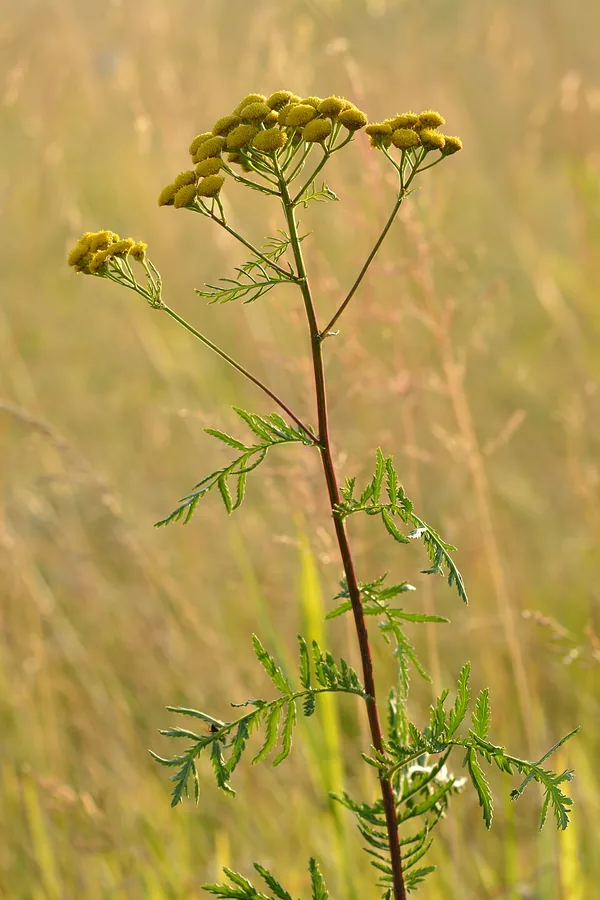
So what's common tansy? It's a hardy perennial in the daisy family, and it's easy to pick out thanks to those flat clusters of button-shaped golden-yellow flowers and its ferny, strong-smelling leaves. It hopped over from Europe as a garden and medicinal plant ages ago, and these days it's pretty much everywhere across North America. Rub a leaf and you'll catch a bitter, almost camphor smell that gives it away in a second.
Here's the thing: tansy actually likes being left alone. Poor soil, drought, cold down to zone 3? None of it bothers it, and it grows fast once it gets comfortable. The catch is that all that toughness cuts both ways, because it spreads hard through creeping rhizomes and loads of self-seeding, and several states have it flagged as a noxious weed. So put it somewhere you can keep it corralled, or give it a pass if your state says no.
One more thing worth knowing before it goes in the ground. The whole plant is loaded with thujone and sesquiterpene lactones, which make it toxic to pets, livestock, and people. That means it's a plant for looks and pest control, not for anything you'd eat.
Care
The short version: give it full sun and soil that drains well, water it while it's young or during a long dry spell and not much otherwise, and keep up with deadheading and dividing so it doesn't wander off.
Light
Tansy loves full sun, and that's where you'll get the sturdiest stems and the most flowers. It'll put up with partial shade, but it tends to get taller and floppier there, with fewer of those golden buttons, so brighter really is better.
Water
Once it's settled in, tansy is genuinely drought tolerant and only wants water during a long dry spell. Give the young plants a good soak until they root, then you can pretty much ease off, because soggy soil bugs it way more than a dry patch ever will.
Soil
Tansy isn't picky about dirt at all. It'll handle dry and poor soils without a fuss, though it does grow lushest in moist, rich ground. It's easygoing about pH too, happy anywhere from 6.0 to 8.0, as long as the water can drain away.
Temperature
This one's comfortable across a wide range, roughly 50°F to 86°F (10°C to 30°C), and its roots are tough enough to ride out winters down to zone 3. Once it's settled, a hot day or a cold snap barely registers.
Humidity
Tansy likes things on the drier side, somewhere around 30% to 60%, which is exactly what most gardens already have going. The only thing it really can't stand is damp, stuffy air, so give it a little breathing room.
Feeding
Here's an easy one: feeding is mostly unnecessary, since tansy actually does great in lean soil. A bit of compost or some balanced fertilizer in spring is plenty, and piling on more just makes it spread even harder, which nobody wants.
Pruning
Snip off the spent flower heads before they set seed, and that's really your best move against all that self-sowing. Then cut the stems back near the ground in late fall or early spring to tidy things up so it comes back fresh.
Repotting
If it's in a pot, plan to divide it every 1 to 2 years, before the roots start circling and the crown gets crowded. In the ground, just lift and split the clump every few years, which perks it up and keeps it from spreading too far all at once.
Size & spacing
Depending on conditions, tansy can stand anywhere from 1 to 5 feet (30 to 150 cm) tall, so give it some room. Each clump fills out to about 9 to 18 inches (23 to 46 cm) across before those rhizomes start creeping outward.
When to plant
Tansy runs on the same calendar as any cold-hardy perennial, so there's nothing tricky about it. Start seeds indoors in late winter, pop the plants outside after the last frost once the soil's warmed up, and you'll get those golden heads from July through September.
Northern hemisphere
Southern hemisphere
Typical months for a temperate climate: start earlier in warm zones, later where spring frosts linger.
- Sow: 6 to 8 weeks before the last spring frost
- Plant: After the last spring frost once soil has warmed
- Harvest: Blooms July through September
Hardiness
USDA hardiness zones: 3–8
Temperature: down to -40°C
Troubleshooting
Good news first: tansy's pretty hard to kill, so most of the trouble comes from either too much water or the plant just wanting to roam. Keep an eye out for the early signs below and step in before a wet crown or a wandering clump turns into a real headache.
Tansy taking over the bed and showing up where you never put it
Yep, that's aggressive spread, and tansy pulls it off two ways at the same time. Creeping rhizomes shove new shoots way past the main clump while dropped seed sneaks into all the gaps. So deadhead before the flowers set seed, dig those rhizomes out down to the last little bit, and keep mowing or cutting the patch through the season until it gives up.
Fix:
- Deadhead before seed set
- Dig out rhizomes including root fragments
- Mow or cut repeatedly through the season
Bottom leaves going yellow where the soil stays wet
This one's just wet feet, plain and simple. Poor drainage or overwatering leaves the soil soggy, the roots go dark and mushy, and the lowest leaves yellow to tell you about it. Sort out the drainage and back off the watering, and a plant this drought-tough will bounce right back.
Fix:
- Improve drainage
- Reduce watering frequency
Little soft bugs piling up on the fresh new tips
Those are aphids, soft-bodied little things that crowd onto the tender tips and leave a sticky honeydew behind. Blast them off with a good jet of water first, then bring in insecticidal soap only if they come back. And here's a bonus: tansy tends to attract predators on its own, so leaving a few aphids often lets the good bugs handle it for you.
Fix:
- Spray with a strong jet of water
- Apply insecticidal soap
Toxicity
Here's the part not to shrug off. The whole plant carries thujone and sesquiterpene lactones, and they can bring on vomiting, drooling, and tremors, and in bigger amounts they'll damage the organs and, in people, end a pregnancy. So wear gloves when you handle it, and keep it well clear of pets, grazing animals, and kids.
Toxic to
Cats · Dogs · Horses · Rabbits · Livestock · Birds · People
Cats Toxic
A cat that chews on tansy will usually start drooling and throwing up, with diarrhea and a sore, irritated mouth close behind. Keep the bigger nibbles out of reach, because the thujone in there can lead to tremors and worse.
Dogs Toxic
For dogs, watch for vomiting, diarrhea, and an itchy rash wherever they've been chewing the leaves. A big or repeated dose goes past a plain upset stomach into trembling, seizures, and damage to the liver and kidneys, so don't let them at it.
Horses Toxic
Most horses take one whiff of that bitter smell and walk away, but any that do eat it end up with a churning gut and a dull, off mood. The thujone stacks up the more they eat, so steady grazing risks tremors and strain on the organs.
Rabbits Toxic
Those same volatile oils that give other animals trouble make tansy a bad idea for rabbits too, bringing on drooling and an upset stomach. Just keep it off the menu completely instead of chancing even a nibble.
Livestock Toxic
Cattle, sheep, and goats mostly steer clear of the bitter plant, but hungry animals on overgrazed ground will go for it anyway. In any real amount the thujone and sesquiterpene lactones can cause vomiting, staggering, and convulsions.
Birds Toxic
The same aromatic oils that keep insects away aren't any friendlier to birds, so the leaves and seed just aren't safe to offer. Treat the whole plant as off-limits for backyard poultry and pet birds alike.
People Caution
No part of tansy is safe to eat, even with all its history in old kitchens and remedies. The thujone can trigger vomiting, drooling, and tremors, it can end a pregnancy, and a real dose damages the organs, so handle it with gloves and keep it well away from kids.
Wear gloves when handling; the aromatic foliage can cause contact dermatitis in sensitive people.
Helpline numbers

United States
ASPCA Animal Poison Control: (888) 426-4435 (fee applies)
Poison Control: (800) 222-1222



Canada
Poison Centres: 1-844-764-7669
Varieties
Most tansy you'll bump into is just the plain wild kind, but there are a couple of better-behaved garden versions that show up now and then for their looks.
Tanacetum vulgare var. crispum (Fern-leaf or Curly Tansy)
Its leaves are more finely cut, crisped, and curled than the wild plant's, which makes it a neater garden pick that doesn't spread around as freely.
'Isla Gold'
Folks grow this one just for the bright golden-yellow ferny leaves, which bring plenty of color on their own.
Companions
Tansy earns its keep next to roses and fruit trees, where its scent helps turn away some pests and draw in beneficial insects, but it's a poor neighbor for small vegetables it can quickly crowd out.
Plant near
Roses: Traditionally interplanted to help deter some insect pests and to attract beneficial predatory insects.
Fruit trees: Used as an aromatic companion thought to repel some pests while drawing in pollinators and predators.
Keep apart
Low-growing vegetable beds: Aggressive rhizomatous spread and heavy self-seeding can crowd out less competitive crops.
How to propagate
Want more tansy? That's the easy part, whether you go from seed or split a clump. Honestly, the tricky bit isn't making more, it's knowing when to stop.
SeedEasy
Spring · Germinates in 1 to 2 weeks; typically blooms by the second year
Toss some seed down in spring and it'll sprout in just 1 to 2 weeks, though the plant usually holds off on flowering until its second year. Heads up: tansy self-seeds like crazy, so deadhead the spent blooms if you'd rather it not turn up all over the place.
DivisionEasy
Spring or fall · Establishes within one growing season
Dig up an established clump in spring or fall and just pull it apart, since pretty much every piece of rhizome roots easily and settles in within one growing season. It's the fastest way to get more plants, and a handy excuse to shrink a clump that's outgrown its corner.
Myths
Tansy's got to be a safe cooking and healing herb, since old recipes used it all the time.
Sure, old cooks and healers leaned on tansy, but we know a lot more now. The plant's got thujone in it, which makes it unsafe to eat even in small amounts. So keep it out in the garden and out of the kitchen, simple as that.
Grow tansy and it'll keep every single garden pest away.
Tansy does chase off some insects, so it's not totally made up, but it's no force field. It actually pulls in a few pests right along with the helpful bugs, so think of it as one handy tool instead of a magic fix.