Ornamental · Asteraceae
Strawflower
Xerochrysum bracteatum
Hand it full sun and dry soil, and the strawflower gives back papery blooms that stick around long after summer's gone.
Full sun
75–90 days
USDA 8–10
1–5 ft · 0.3–1.5 m
Overview
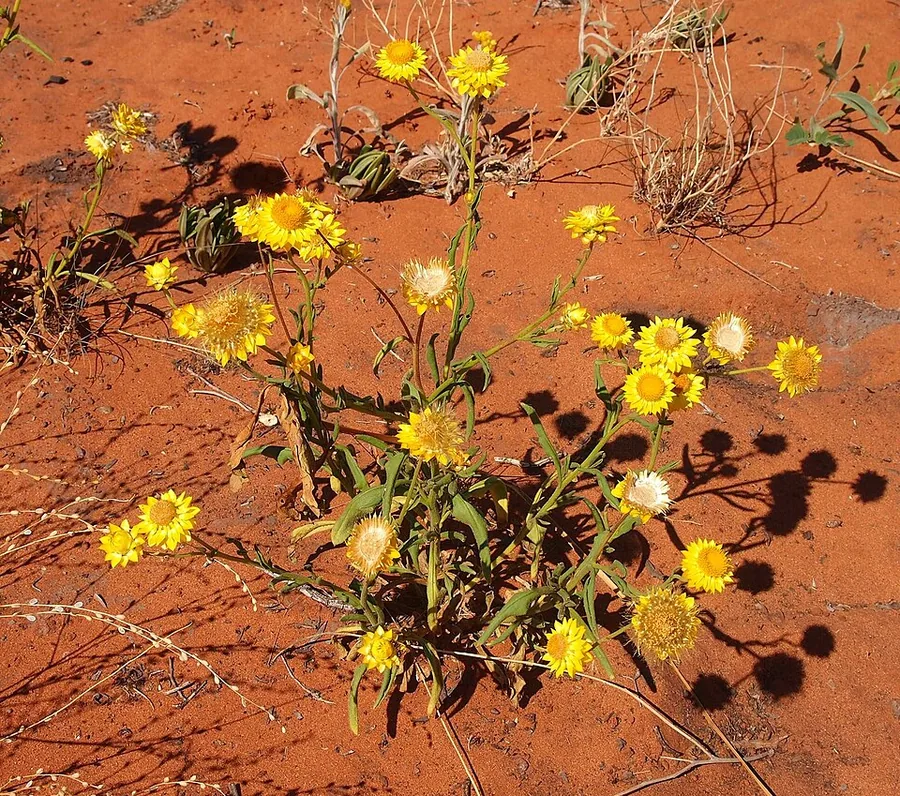
Give a strawflower a squeeze and you'll get why it's also called the golden everlasting. Those bright petals? They're not really petals at all, but stiff, papery bracts that crackle when you touch them and hold onto their color for months once cut. It's an Aussie native that belongs to the daisy family, and it'll grow just about anywhere in the yard as a warm-season annual.
Honestly, it barely asks for anything. Pop it in full sun, give it soil that drains, and it'll take the heat and dry spells in stride once it's rooted in. The flowers come in gold, bronze, pink, and white, and the bees and butterflies are all over them the whole summer.
For a lot of people, it's really about the cutting garden. Snip the stems while the bracts are still half-shut, hang the bunches upside down to dry, and you've got everlasting blooms for winter bouquets that keep their shape and color well after the plant outside has called it a day.
Care
The short version: full sun and soil that drains fast and runs on the dry side. Only water once the surface has dried, keep snipping the faded flowers so more show up, and stake the tall types before they flop.
Light
Strawflowers really want full sun, ideally six or more hours a day. They'll put up with a little afternoon shade, but give them too little light and the stems stretch out, start leaning, and you'll end up with way fewer of those papery blooms.
Water
Let the top half of the soil dry out before you water again. These guys are tough once they're established, so overwatering's the real risk, since that's what kicks off root rot. Ground that's average to dry suits them a lot more than staying wet.
Soil
Go with well-drained loam that's average on fertility. They're not picky about pH at all, anywhere from 5.5 to 8.0 works, and they'll take dry, lean soil that would starve a fussier plant. Drainage counts for way more than how rich it is.
Humidity
Regular outdoor air is all they need, so there's no number to chase here. What actually matters is air movement, because still, muggy air around crowded plants is exactly how mildew gets going.
Feeding
This is a light feeder that does just fine in average soil, so don't overthink it. A balanced general-purpose fertilizer once a month through the growing season is plenty, and there's really no point pushing it harder.
Pruning
Deadhead the spent blooms as they fade and the plant keeps right on flowering. A gentle pinch on young plants gives you a bushier, sturdier shape, and the taller ones might need a stake to stay standing.
Size & spacing
Depending on which one you grow, plants go from a neat 12 inches to a towering 1 to 5 feet (30 to 152 cm), spreading out 6 to 18 inches (15 to 45 cm). Just give each one enough space so air can move between them.
When to plant
Strawflowers are all about warmth, and frost is a hard no. Start the seeds indoors in early spring, wait to plant out until the cold's behind you and the soil's warmed up, and you'll be cutting flowers from early summer right up until frost shuts things down.
Northern hemisphere
Southern hemisphere
Typical months for a temperate climate: start earlier in warm zones, later where spring frosts linger.
- Sow: 6 to 8 weeks before the last spring frost; do not cover seed, as light aids germination
- Plant: After the last frost when soil has warmed
- Harvest: Blooms summer to fall (about June until frost); harvest for drying when bracts are partly open
Hardiness
USDA hardiness zones: 8–10
Temperature: down to -12°C
Troubleshooting
Put a strawflower in a good spot and it pretty much takes care of itself, so when something's off it's usually too much water or not enough air. Just keep an eye on the leaves, stems, and roots, and jump on any little problem before it spreads.
Wilting, yellowing, and going soft down at the base
So the plant's flopping over but the soil's still wet? That's root rot for you, and it comes straight from soggy ground. The roots go dark and mushy and just can't pull up water anymore. Ease off the watering, let things dry out, and then fix the drainage or move the plant somewhere it won't be sitting in a puddle.
Fix:
- Stop overwatering and let soil dry
- Improve drainage or move to a better-drained site
White powdery or fuzzy stuff showing up on the leaves
What you're seeing is powdery or downy mildew, a fungus that shows up when leaves stay damp and the air can't move around plants that are packed in tight. Here's the good part: it's an easy fix. Pull off the worst leaves, spread things out so a breeze gets through, and water at the soil instead of over the leaves. Keep them in full sun with a bit of room and it won't be back.
Fix:
- Improve spacing and air flow
- Water at the soil line and avoid wetting foliage
- Remove and discard affected leaves
Tall stems tipping and flopping right over
The taller kinds get top-heavy, so all it takes is a bit of rain or wind on those open flowers and over they go. The trick is to stake them early, before the stems get long and floppy. And pinching the young plants helps too, since it builds a stockier, bushier shape that holds itself up better.
Fix:
- Stake or provide support for tall plants
- Pinch young plants to promote sturdier branching
Toxicity
Got pets or kids running around? Good news, because the strawflower is non-toxic all the way through. The ASPCA says it's safe for cats, dogs, and horses, and that goes for rabbits, livestock, birds, and people too. A stray nibble isn't going to poison anybody.
Safe for
People · Cats · Dogs · Horses · Rabbits · Livestock · Birds
Cats None
Cats are totally fine here. The ASPCA has the strawflower down as non-toxic, so a curious nibble won't poison them.
Dogs None
No need to worry about dogs either. A bite of leaf or flower won't poison them, though scarfing a whole lot of any plant can upset a touchy stomach.
Horses None
Horses are good too. It's on the non-toxic list, so grazing near it isn't a problem.
Rabbits Safe
Rabbits can nibble away without any trouble, since there's nothing in it that's poisonous to them.
Livestock Safe
Cattle, goats, and sheep can share a field with it no problem, because it doesn't carry anything that would bother grazing animals.
Birds Safe
Birds are fine around it, whether they're picking at the seed heads or just passing through.
People Safe
And people? No worries there. The papery blooms are great for drying, and it's safe for kids to help out with.
Varieties
Strawflowers run from little knee-high dwarfs all the way up to three-foot giants, so there's something for pretty much any spot. Here are the named ones worth tracking down.
Bright Bikini
It's a dwarf strain that stays around 15 inches in a bunch of colors, so it's perfect if you're filling containers.
Dargan Hill Monarch
This one's got grey leaves and big golden-yellow flowers to go with them.
Kimberly Sunset
Another grey-leaved pick, except this one blooms in a soft pink.
Kingsize Mixed
It's bred for bigger blooms on plants that get to about 3 feet.
How to propagate
You can grow strawflowers from a packet of seed or clone a favorite with cuttings, and it really just comes down to whether you're after some variety or an exact copy.
SeedEasy
Start indoors 6 to 8 weeks before last frost; surface-sow as light aids germination · Germinates in roughly 1 to 3 weeks; blooms within the first season
Most folks just start these from seed indoors, about 6 to 8 weeks before the last frost. Set the seed right on top and don't cover it, because it needs light to get going, and it'll usually sprout in 1 to 3 weeks. Once frost is done, pop the seedlings outside and they'll flower that same year.
Stem cuttingsEasy
During active growth in the growing season · Several weeks to root
Cuttings are how you keep a named cultivar exactly the same. Take them while the plant's growing strong, give them several weeks to root, and you'll get a spot-on copy of the parent instead of the grab bag you'd get from seed.
Myths
Strawflowers are true everlasting flowers that never fade or die.
The name's a bit of a stretch, honestly. Sure, once they're dried the papery bracts keep their color and shape for ages, and that's how they got the everlasting tag, but the living plant is short-lived and grown as an annual. So the blooms hang around, but the plant itself won't.
You can save seed from a favorite cultivar and get identical plants.
Not quite, since named cultivars do not come true from seed. Save that seed and you'll get a mixed batch of plants instead of copies of the one you liked. Want to keep a certain look? Take stem cuttings instead of bothering with seed.