Ornamental · Asteraceae
Sunflower
Helianthus annuus
Hand it full sun and a spot out of the wind, and a sunflower will stand tall from summer into fall.
Full sun
70–100 days
USDA 2–11
2–10 ft · 0.5–3 m
Overview
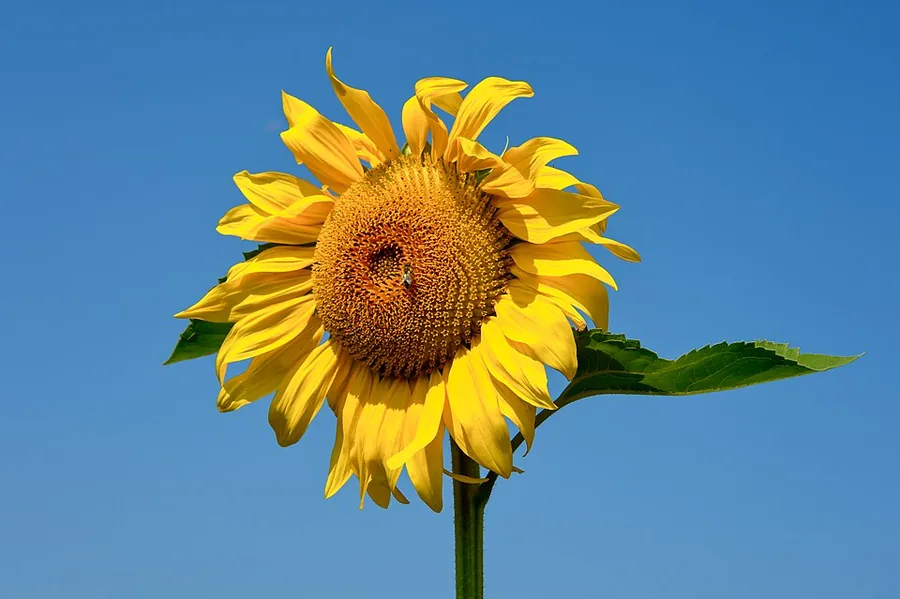
Nothing says summer quite like a sunflower, does it? It's part of the daisy family and grows wild all over much of North America, and it's a fast one too, shooting up from a single seed to something that can top 10 feet (3 m) in just one season. Give it a sunny spot and it pretty much runs with it.
So which sunflower should you grow? Depends on your space, really. Some are those big single-stem giants with one enormous head and loads of seed, while others branch out and keep tossing up smaller flowers for weeks. If you're cutting for a vase, the pollenless kinds stay nice and clean, and if space is tight, there are dwarfs that fit right in a window box.
Here's the nice part: sunflowers are hard to mess up. They just want sun, some warmth in the soil, and a bit of room, and once they've settled in they don't mind a dry spell at all. The one thing to keep an eye on is how tall they get, since the giants will want a stake and a sheltered corner before those heavy heads show up.
Care
The short version: full sun, deep and well-drained soil that doesn't need to be rich, and steady watering while the seedlings get going and again around bloom, then you can ease off once they're settled and shrugging off dry weather.
Light
Sunflowers want full sun, no two ways about it. Give them the brightest, most open patch you've got and you'll get sturdy stems and big, showy heads. Stick them in shade, though, and they'll come out thin, leaning, and short on flowers.
Water
Keep things moist while the seeds sprout and the little seedlings settle in. After that, water deeply and often for about 20 days before and after flowering, since that's when those heavy heads really need it. Once they're established, sunflowers barely need watering at all, they're that drought tolerant.
Soil
Go for deep, loose, well-drained soil, and don't worry, it doesn't have to be fancy. That long taproot likes to dig straight down, so loosen up any hard, packed soil before you sow. Plain old garden dirt works just fine.
Humidity
Out in the garden, humidity isn't really something you need to think about. What does matter is good airflow, because damp, crowded leaves are exactly what downy mildew loves.
Feeding
Sunflowers aren't hungry plants. Once a few true leaves show up, give them one side-dressing of a slow-release all-purpose fertilizer and call it done. Just go light on the nitrogen, or you'll get lots of leaves and disease instead of flowers.
Pruning
There's barely any pruning to do here. Just deadhead the faded flowers to keep a branching type going longer, and trim off anything that looks damaged or sick when you spot it.
Size & spacing
Depending on what you plant, a sunflower can be anywhere from 18 inches to 1.5 to 10 feet (0.5 to 3 m) tall and spread about 1.5 to 3 feet (46 to 91 cm). Pick one that suits your space, and give each plant a bit of room so the air can move through.
When to plant
Sunflowers are all about warmth, and frost is a hard no for them. So wait until the last spring frost is gone and the soil's warmed to at least 60°F (16°C), then just pop the seeds right in the ground. They'll flower from mid summer into fall, and when the seed heads' backs go yellow-brown and start to droop in early fall, they're ready to pick.
Northern hemisphere
Southern hemisphere
Typical months for a temperate climate: start earlier in warm zones, later where spring frosts linger.
- Sow: Usually unnecessary; sunflowers resent transplanting, so indoor starting is generally not recommended
- Plant: After the last spring frost, once soil has warmed to at least 60°F (16°C)
- Harvest: Blooms mid to late summer into fall; harvest seed heads in early fall when the back of the head turns from green to yellow-brown and nods downward
Hardiness
USDA hardiness zones: 2–11
Temperature: down to -46°C
Troubleshooting
With sunflowers, trouble usually turns up in one of three spots: the leaves, the flower heads, or those tall stems. Catch it early and it's rarely a big deal. Have a look below, find whatever matches, and deal with it while it still makes a difference.
Webbing and chewed-up seeds inside the flower
You're looking at caterpillars, usually sunflower moth larvae, and they tunnel into the head to munch on the buds, petals, and seeds that are still forming. Crack open a head that looks off and you'll spot the tunnels, webbing, and dark frass mixed in with the seeds. Pick them out when you can, snip off any head that's really bad, and if it keeps spreading, use a labeled control right as flowering starts.
Fix:
- Handpick caterpillars where practical
- Remove and destroy heavily infested heads
- Apply a labeled biological or insecticidal control at early flowering if needed
Yellow patches on top and gray fuzz underneath
That's downy mildew, a fungus that shows up in cool, wet weather with pale patches up top and gray fuzzy stuff underneath the leaves. As it spreads, it'll stunt and twist the new growth. Pull out and toss anything affected, give the plants more room so the air moves, and try to keep the leaves dry.
Fix:
- Remove and destroy affected plants and debris
- Improve air circulation and avoid overhead watering
- Plant resistant cultivars where available
Seeds disappearing off the head before harvest
Birds always seem to find the ripening seeds before anyone else and pick the heads clean as they fill in. Once the seeds start plumping up, just slip a mesh bag or some row cover over each head. Spinners, shiny tape, or an owl decoy will buy you some time too, and you can always cut the almost-ripe heads and let them dry off indoors.
Fix:
- Cover maturing heads with mesh or row cover
- Use scare devices such as spinners, reflective tape, or owl decoys
- Cut and dry nearly mature heads indoors to finish ripening
Tall plants leaning or snapping after a storm
Those big single-stem giants get so top-heavy that they lodge, meaning they lean over or snap when the wind and rain pick up. So stake the tall ones early, before the heads really fill out and get heavy. Watering deep and even helps them build stronger roots, and a sheltered spot keeps the worst of the wind off.
Fix:
- Stake tall and giant cultivars
- Provide deep, even watering to encourage strong rooting
- Site plants where they are sheltered from strong wind
Sticky leaves and little bugs bunched on the stems
Those little bugs are aphids, soft-bodied things that gather on stems and under the leaves and leave behind that sticky honeydew. Just hit them with a strong spray of water, and let the lady beetles and lacewings handle the rest, they're good at it. Only bother with insecticidal soap if a colony really takes off.
Fix:
- Dislodge aphids with a strong jet of water
- Encourage natural predators such as lady beetles and lacewings
- Apply insecticidal soap if populations are heavy
Toxicity
Worried about the pets? No need. The ASPCA has the sunflower down as non-toxic to cats, dogs, and horses, and people and birds happily eat the seeds. If your dog or cat grabs a bite of leaf or petal, it's really nothing to stress about.
Safe for
People · Cats · Dogs · Horses · Rabbits · Livestock · Birds
Cats None
Cats are totally fine around sunflowers, and if one takes a bite of a leaf or petal, it won't do any harm.
Dogs None
Dogs can hang out around sunflowers no problem, and a few seeds now and then actually make a nice treat.
Horses None
Horses are fine near sunflowers too, and the ASPCA lists the plant as non-toxic for them.
Rabbits Safe
Rabbits can nibble the leaves and flowers without any trouble, so don't sweat a chewed stem.
Livestock Safe
Cattle, goats, and sheep all do fine around sunflowers, and the seed even shows up in their feed.
Birds Safe
Birds go crazy for sunflower seed and it doesn't hurt them one bit, so a ripe head is basically a free feeder.
People Safe
People snack on the seeds all the time, raw or roasted, and the rest of the plant is safe too.
Varieties
There are thousands of sunflowers out there, but honestly you only need to know a handful to cover most gardens, everything from giants to tidy cut flowers. Here are the ones worth having on your radar.
Mammoth (Russian Giant)
This is the big skyscraper one, a single-stem giant grown for its huge heads and a whole lot of edible seed.
Autumn Beauty
A branching kind that keeps throwing out smaller flowers in warm fall colors for a good long while.
ProCut and Sunrich series
These are pollenless single-stem types, bred to give you clean cut flowers that last.
Teddy Bear
A little dwarf with fluffy double blooms that's happy in a small bed or a pot.
How to propagate
Sunflowers only grow from seed, and that's actually great news, because it makes them about as easy to start as a plant gets.
SeedEasy
Direct-sow after the last spring frost once soil has warmed to at least 60°F (16°C) · Germinates in about 7 to 10 days
Just sow the seeds straight into the garden after the last spring frost, once the soil's warmed to at least 60°F (16°C). Poke each one about 1 to 2 inches down and they'll usually be up in 7 to 10 days. Sunflowers really don't like being moved, so skip the indoor pots and plant them right where you want them to grow.
Myths
Grown sunflowers keep turning their heads to follow the sun across the sky all day.
Turns out only the young, still-growing ones actually do that, swinging east to west during the day and heading back east at night. Once the flower opens up for good, that whole sun-following thing just stops. A field of mature sunflowers all face east, they're not chasing the sun around.