Vegetable · Brassicaceae
Watercress
Nasturtium officinale
Give it cool, clean, moving water and watercress keeps handing you a peppery harvest from spring right through fall.
Full sun
Every 1–3 days
32–77°F · 0–25°C
50–60 days
Overview
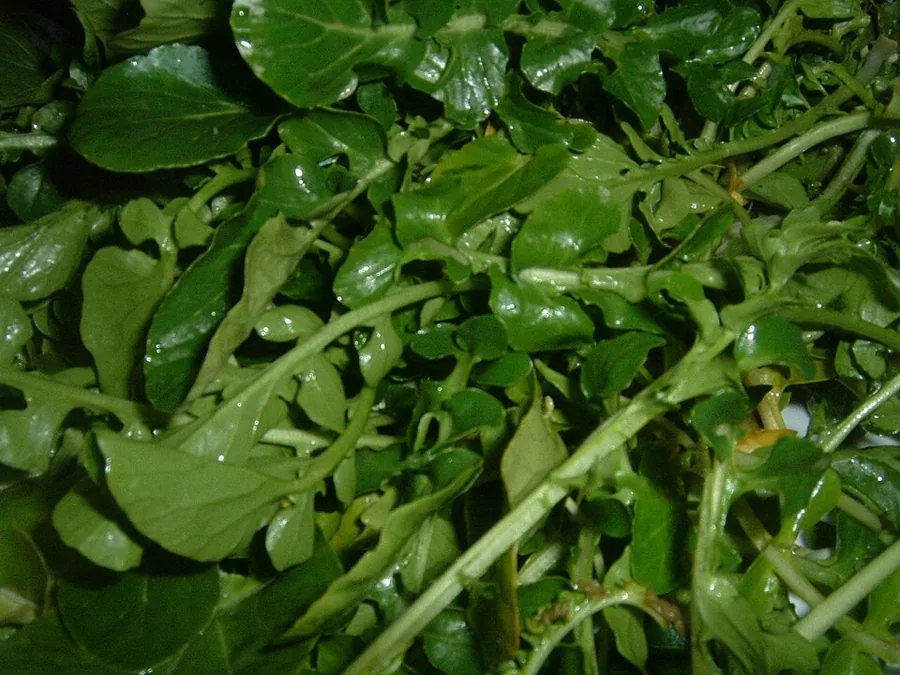
So what is watercress, exactly? It's a fast-growing water green with a bright, peppery kick that wakes up a salad or a sandwich. It's part of the mustard family, right alongside cabbage and radish, and no, it's not the climbing garden nasturtium people keep mixing it up with. You'll spot it growing wild along the edges of cool, clean streams across a lot of the temperate world.
Here's the thing that makes it different from most kitchen greens: it wants its feet wet. The roots like to stay soaked all the time, ideally in flowing spring water, but the plant's happy to root into a muddy bank or a pot sitting in a tray of water too. Keep that water cool and moving and it'll grow almost quicker than you can pick it.
And honestly? It's one of the easiest edibles to keep going. Pinch the shoots often and it bushes right out and stays soft and tender. Let the water warm up or go still, though, and it bolts, turns bitter, and thins out fast.
Care
The short version: keep cool, clean water around the roots all the time, give it full sun to a bit of shade, and pick it often so the leaves stay tender and it doesn't rush into flower.
Light
Watercress is fine with full sun to partial shade. More sun means heavier growth, but a bit of afternoon shade really pays off in summer since it keeps the water and the leaves cooler.
Water
This is the part that makes or breaks the whole thing. The roots have to stay submerged or in constantly soaked soil and can't dry out, not even for a bit. Cool, clean, flowing or spring water is the dream, but in a container you can just stand the pot in a tray of water and swap it out every 1 to 3 days to keep it cool, clean, and full of oxygen.
Soil
Grow it in rich, mucky loam at a water's edge, or a soil-filled pot standing in water. It's easygoing about pH, anywhere from 6.5 to 8.0, and it leans a little toward the neutral-to-alkaline side, which makes sense given its native limestone streams.
Temperature
Watercress is a cool-water plant, comfy from about 32°F to 77°F (0°C to 25°C). Frost doesn't faze it, but push much past the top of that range and it bolts and turns bitter, so summer shade and cool water keep it happy.
Humidity
Being an aquatic plant, it likes the air humid, from 70% up to nearly 100%. The standing water around the roots usually keeps things moist enough on its own, so this is one you barely have to think about.
Feeding
In clean flowing water it pretty much feeds itself, so you can skip the fertilizer. In a container it's a different story, so give it a dilute balanced liquid feed monthly through spring and summer, when still water can't keep up.
Pruning
Pinch and harvest the shoot tips often to push bushy, tender growth. The second you see flower stalks, snip them off, because flowering turns the leaves bitter and tells the plant to start winding down.
Repotting
Lift and divide the mat about once a year, or sooner if the stems get crowded and new growth slows down. Stems creeping over the edge of the tray? That's your sign it needs fresh room.
Size & spacing
Plants stay low, only 4 to 20 inches (10 to 50 cm) tall, but they spread sideways into a mat 12 to 35 inches (30 to 90 cm) across. Give that spread room to wander, or thin it so the water keeps moving through.
When to plant
Watercress is a cool-season green, so it really goes for it in spring and fall and gets grumpy in summer heat. Surface-sow the seed in late winter to early spring, move young plants outside once hard frost's behind you, and pick the leaves from spring through fall, or all year if the water stays cool and moving.
Northern hemisphere
Southern hemisphere
Typical months for a temperate climate: start earlier in warm zones, later where spring frosts linger.
- Sow: Late winter to early spring, surface-sown on constantly moist medium
- Plant: Spring after danger of hard frost, or fall in mild-winter regions
- Harvest: Harvest leaves spring through fall (year-round in mild flowing water); small white cross-shaped flowers appear late spring to summer
Hardiness
USDA hardiness zones: 4–10
Temperature: down to -34°C
Troubleshooting
Most watercress problems come back to one of two things: the water or the weather. Warm, still water and summer heat cause the bulk of them, and the leaves usually tip you off early. Find what matches below and sort out the conditions before the whole mat goes downhill.
Pale, yellow leaves on a tired-looking mat
This one usually comes down to warm, still water. When the water stops moving it loses oxygen and heats up, and the older leaves go pale first. Refresh or circulate the water to cool it down, move the plant into partial shade through the summer heat, and if it's in a container, give it a dilute balanced fertilizer to perk it back up.
Fix:
- Refresh or circulate the water to keep it cool and oxygenated
- Move to partial shade during summer heat
- Apply a dilute balanced fertilizer when grown in containers
Tall flower spikes pop up and the greens suddenly taste harsh and bitter
That's bolting, and heat's the culprit. Once the water gets past about 75°F (24°C), up come the flower stalks, the leaves shrink, and that nice peppery bite goes downright harsh. Pinch out the flowering stems, move the plant somewhere shady with cooler water, and if summer's winning, just start over from stem cuttings once things cool off.
Fix:
- Harvest and pinch out flowering stems
- Provide shade and cooler water
- Restart from stem cuttings in the cooler season
Twisted new growth crawling with insects, or leaves peppered with tiny round holes
Two pests do most of the damage here. Aphids gather on the leaf undersides and twist up the new growth, while flea beetles chew those little round holes that pepper a leaf like buckshot. A strong jet of water knocks both off, and you can just cut away any shoots that are badly chewed.
Fix:
- Dislodge pests with a strong jet of water
- Remove and discard heavily infested shoots
Toxicity
Good news here, watercress is food, not a hazard. It's safe for cats, dogs, horses, rabbits, livestock, birds, and people, with no toxin anywhere in the plant. The only real thing to watch is for people, and it's about where the cress grew, not the plant itself.
Safe for
People · Cats · Dogs · Horses · Rabbits · Livestock · Birds
Cats None
Watercress isn't toxic to cats at all. A curious nibble won't hurt them, though most cats won't bother with the peppery leaves anyway.
Dogs None
Dogs are totally fine with watercress, leaves and stems both. A dog that scarfs down a big mouthful might get a little harmless gas, but that's about it.
Horses None
Horses can graze it no problem. The sharp mustard tang usually keeps them from eating much of it in the first place.
Rabbits Safe
Rabbits can have watercress as part of a mixed green diet. Just bring it in slowly, like you would any new leafy veg, so their gut can adjust.
Livestock Safe
Cattle, goats, and sheep can browse watercress safely. There's no toxin in it that would bother grazing animals.
Birds Safe
Backyard hens and other birds peck at the tender leaves with no trouble, and the greens add a nice bit of variety to their feed.
People Safe
Watercress is a really nutritious salad green, good raw or cooked. The one catch is wild plants, since cress foraged from water grazed by livestock can carry liver fluke parasites, so cook wild-harvested cress or grow your own in clean water before eating it raw.
Food-safety note for people (not pet toxicity): wild watercress from water that may be contaminated by grazing livestock can carry liver fluke (Fasciola) larvae and waterborne pathogens. Cook wild-harvested cress or grow it in clean, uncontaminated water before eating it raw.
Varieties
Most watercress you'll grow is just the plain wild species, but there are a couple of named types worth knowing about.
Improved Broad Leaved
A cultivated strain grown for bigger, broader leaves and a fuller harvest than you'd get from the wild plant.
Nasturtium microphyllum (one-row, small-leaved watercress)
A close cousin with smaller leaves and single-rowed seeds that crosses easily with true watercress wherever the two end up growing together.
How to propagate
Watercress spreads so easily it's almost tricky to stop, whether you're rooting a few cuttings in a glass of water or scattering seed on damp ground.
Stem cuttingsEasy
Any time during active growth, best in spring or fall · 1 to 2 weeks
Cuttings are the quickest way to get going, and you can take them pretty much any time the plant's growing, though spring and fall work best. Just cut stems about 4 to 6 inches (10 to 15 cm) long and stand them in a glass of water or push them into wet soil. They'll root at the nodes within 1 to 2 weeks and you're set.
SeedEasy
Spring, in cool moist conditions · 2 to 3 weeks to germinate and establish
Seed does great in the cool, damp weather of spring. Scatter the tiny seeds right on the surface of a constantly moist medium instead of burying them, since they need light and can't ever dry out. Give them 2 to 3 weeks in cool temperatures to sprout and settle in.
Myths
Watercress foraged from a wild stream is perfectly fine to eat raw on the spot.
Cress you pull from water where livestock graze can carry liver fluke larvae and other waterborne bugs you'd never spot. So play it safe: cook wild-harvested cress, or grow your own in clean water, before you eat any of it raw.
The watercress in your salad and the garden nasturtium climbing a trellis are one and the same plant.
They share a peppery taste and a common name, and that's really where it ends. Edible watercress is Nasturtium officinale in the mustard family, while the climbing garden nasturtium is Tropaeolum majus, a totally different genus.
Without a deep flowing stream, growing watercress at home just isn't possible.
Flowing spring water's ideal, sure, but it's not a must at all. A pot of rich soil sitting in a tray of water, kept wet and refreshed, gives you a steady supply right on a windowsill or patio.