Houseplant · Asphodelaceae
Aloe Vera
Aloe vera
Hand it bright light, gritty soil, and a good dry spell between drinks, and aloe pretty much takes care of itself.
Bright indirect
50–86°F · 10–30°C
USDA 9–11
12–24 in · 30–60 cm
Overview
Think of aloe vera as the succulent that pulls its weight. Those thick, gel-filled leaves are why people started calling it the burn plant and first-aid plant, and that same chunky build is exactly what lets it ride out a forgotten watering. It grew up in dry country, so it packs away its own water and quietly waits for the next rain.
Honestly, few houseplants are this easygoing. Park it in a bright window, pot it in something that drains fast, and let it go properly dry before you water again. The one thing it really can't stand is sitting in soggy soil, which is what does in most aloes that struggle indoors.
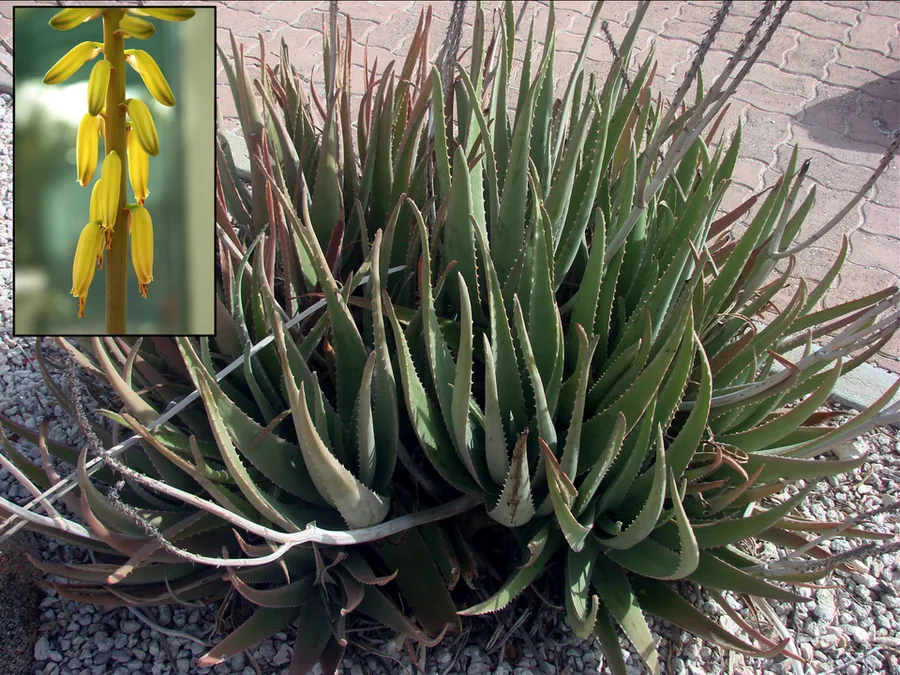
It's a genuine perennial, slow to grow but happy to stick around for years, and it keeps pushing out little pups around its base that you can pot up as fresh plants. Older aloes living outside in warm spots might even shoot up a tall stalk of tubular yellow to orange flowers.
Care
The short version: give it bright light, gritty soil that drains fast, and a thorough soak only after the pot has gone completely dry. Go light on the fertilizer, keep it warm, and never leave it standing in water.
Light
Aloe is happiest in bright light, so a sunny window or a perch that pulls in several hours of sun is ideal. Once it's been eased into it, full sun is fine, but drop a plant straight into harsh light and it scorches, while too little light leaves it pale and stretched out.
Water
This is where folks tend to go wrong. Let the soil go completely dry, then water deeply until it pours out the bottom, and hold off until it's bone dry again. Leaving it in standing water or a pot that never dries out is what rots the roots and crown.
Soil
Go with a gritty cactus or succulent mix that drains in a flash rather than a heavy potting soil that clings to moisture. Aloe leans slightly alkaline, somewhere around a pH of 7.0 to 8.5, which is right where most cactus mixes already land.
Temperature
Regular indoor warmth is all it asks for, roughly 50°F to 86°F (10°C to 30°C). It won't handle frost, so any aloe spending summer outside needs to come in before the cold sets in.
Humidity
Dry air doesn't faze it one bit, because this is a low-humidity desert plant through and through. There's no target percentage to chase and no reason to reach for the mister.
Feeding
Feeding aloe is barely on the to-do list. A diluted balanced houseplant fertilizer now and then across spring and summer covers it, and forgetting altogether won't really set it back.
Pruning
Not much happens here either. Snip away shriveled or dead lower leaves at the base with a clean knife, and trim off a flower stalk once it's spent.
Repotting
Plan on repotting every 2 to 3 years, or earlier if pups jam the pot and roots start poking through the drainage holes. Bump it up a single pot size into fresh gritty mix in a container that drains well.
Size & spacing
Kept indoors it tops out around 12 to 24 inches (30 to 60 cm) tall and fans out 12 to 35 inches (30 to 90 cm) wide as it clumps up. Pick a pot roomy enough to hold all the offsets it sends out.
Troubleshooting
Nearly everything that goes wrong with aloe comes down to one of three things: water, light, or the pot it's in. The leaves usually give the answer away if you know what to look for. Find your symptom below and treat the real cause, not just what shows on the surface.
Soft, mushy leaves browning at the base
When the lower leaves go squishy and see-through, you're looking at root and crown rot, and it comes from giving too much water, not too little. Soggy soil starves the roots of air, so the base of the plant turns to mush. Quit watering for now, tip the plant out, trim off the rotted roots and slimy leaves with a clean blade, and settle it into fresh gritty mix in a pot that actually drains.
Fix:
- Stop watering and let the soil dry out
- Remove the plant, cut away rotted roots and mushy leaves with a clean blade
- Repot into fresh gritty succulent mix in a pot with drainage holes
Thin, curling, or wrinkled leaves
Healthy aloe leaves are fat because they're full of water, so once they flatten and pucker, the plant is simply thirsty. That's just drought stress, and the good news is it bounces back quickly. Soak it well until water drips from the bottom, then return to your usual habit of waiting for the soil to go dry before the next drink.
Fix:
- Water thoroughly until it drains from the bottom
- Resume a regular deep-but-infrequent watering schedule
Reddish-brown or scorched patches on the leaves
Those scorched patches are sunburn, not some illness, and they happen when an aloe gets hit with strong light before it's ready. Take a plant straight from a windowsill out into full sun and the side catching the harshest rays will burn. Bring it back to bright indirect light, and when you try again, ramp up the sun across a week or two so it can build up some tolerance.
Fix:
- Move the plant to bright indirect light
- Acclimate gradually to stronger sun over one to two weeks
Toxicity
Aloe is fine for people but not for pets. That clear gel turns up in burn creams and lotions, yet the bitter yellow latex tucked just beneath the leaf skin holds saponins and anthraquinones like aloin that purge the gut. Since the ASPCA flags aloe as toxic to cats, dogs, and horses, keep it somewhere pets and little kids can't take a bite.
Toxic to
Cats · Dogs · Horses · Rabbits · Livestock · Birds · People
Cats Moderate
A cat that nibbles the leaves tends to throw up and get the runs, and it might lose interest in food and seem dull and tired. Keep an eye out for shaking or pinkish urine, both of which suggest it swallowed more.
Dogs Moderate
Dogs go through pretty much the same thing as cats: throwing up, loose stools, and a sluggish, gloomy mood. A bigger mouthful can trigger trembling and turn the urine a reddish shade.
Horses Moderate
That bitter latex acts as a purge in a horse too, so look for the runs, a listless attitude, and no interest in eating. Eat enough of the leaves and shaking can show up as well.
Rabbits Toxic
The very anthraquinones that upset other animals are rough on a rabbit's gut. Keep aloe somewhere a rabbit can't reach, because it can't nibble it the safe way it grazes on other greens.
Livestock Toxic
Cattle, goats, and sheep that munch on aloe swallow the purgative latex and wind up with serious scouring. Fence it off anywhere your stock might get to it.
Birds Toxic
On a bird's tiny frame the aloin in those leaves acts like a powerful laxative, so a nosy parrot or chicken should never reach the plant at all.
People Caution
You'll find the clear inner gel in loads of human products, but the yellow latex right under the skin is a harsh laxative that cramps the belly and isn't something to eat. Keep whole leaves away from kids, since one bite gives them both layers.
This is a medicinal-for-people, toxic-to-pets plant; the inner gel differs from the toxic latex, but pets chewing whole leaves ingest both.
Helpline numbers

United States
ASPCA Animal Poison Control: (888) 426-4435 (fee applies)
Poison Control: (800) 222-1222



Canada
Poison Centres: 1-844-764-7669
Varieties
Nearly all the aloe sold as aloe vera is one and the same plant, but a couple of forms show up often enough that they're worth recognizing.
Aloe vera 'Chinensis'
You'll spot this one by its bolder cream speckling and the looser, more sprawling habit it takes on compared with the tidy upright form.
Aloe vera var. barbadensis
This is the familiar medicinal kind, raised commercially for its plump, gel-packed leaves that end up in so many skincare products.
How to propagate
Making more aloe takes almost no effort, and most of the time you'll do it with the offsets that pile up around the base. Dividing a clump works too, and you can even start from seed, though seed is far and away the slowest option.
Offsets & pupsEasy
Spring to summer during active growth · 4 to 8 weeks to root and establish
Want more aloe? The simplest route by a mile is to detach the little pups that gather around the base of the parent plant. Tackle it in spring or summer while it's actively growing, let the cut spots dry and callus over for a day or two, then tuck each pup into gritty mix. Figure on 4 to 8 weeks for them to root and get comfortable.
DivisionEasy
At repotting in spring · 4 to 8 weeks
Repotting in spring is the perfect moment to split a packed clump that's grown several rooted crowns, since you can just tease them apart and pot each one up separately. As with the pups, give the divisions 4 to 8 weeks to settle in.
SeedModerate
Spring, warm conditions · Several months to a year
Growing from seed is the patient route and honestly seldom worth the bother. Scatter it over gritty mix in spring, keep things warm, and be prepared to wait anywhere from several months to a year before you've got a proper plant. Pups deliver the very same result a whole lot sooner.
Myths
Aloe gel is good for people, so the whole plant is safe for pets to chew.
Here's the catch: the clear gel we put on our skin and the bitter yellow latex sitting just under the leaf skin aren't the same stuff. A pet biting through a whole leaf gets both, and the latex carries saponins and anthraquinones like aloin that set off vomiting and diarrhea. The ASPCA lists aloe as toxic to cats, dogs, and horses, so it belongs somewhere they can't get to it.