Houseplant · Asphodelaceae
Haworthia
Haworthia
Give it bright indirect light and a long dry spell between drinks, and this little windowed succulent asks for almost nothing.
Bright indirect
Every 14–21 days
59–81°F · 15–27°C
USDA 9–11
Overview
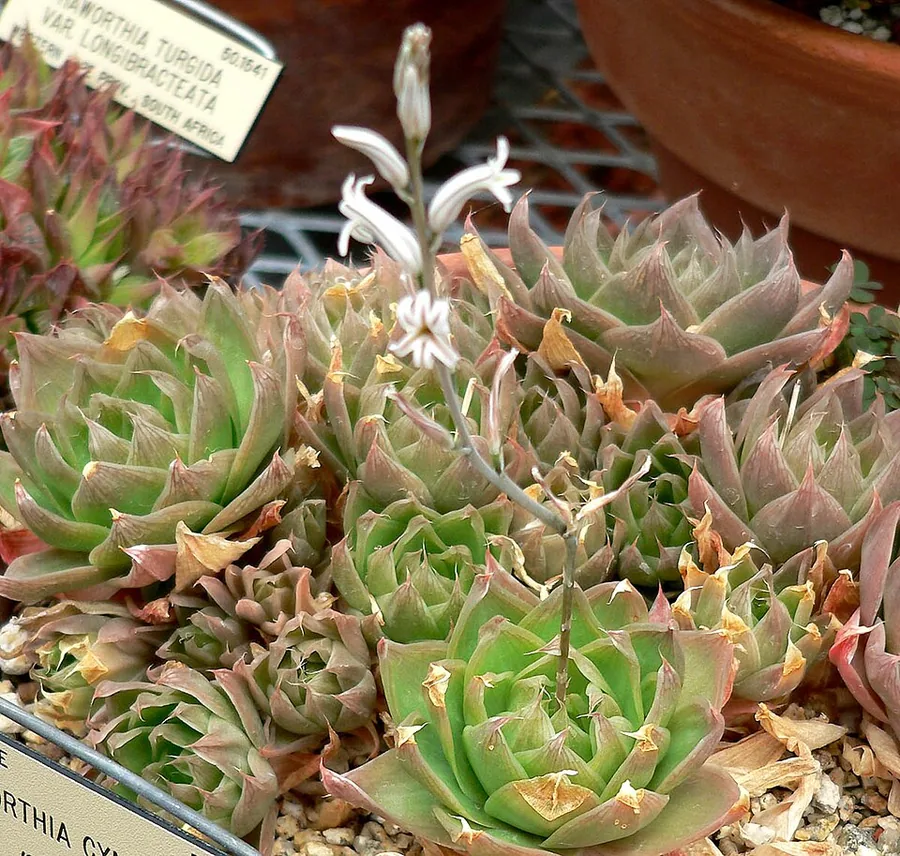
Haworthia is a little rosette succulent from the dry parts of southern Africa, and it's about as forgiving as houseplants get. Its fleshy leaves bunch up into tight little stars, and a lot of them have translucent leaf windows at the tips that catch the light in a really pretty way. And it stays small for years, only getting to about 3 to 6 inches (8 to 15 cm) across, so there's not much room for it to get away from you.
So what makes it different from most succulents? It's honestly okay with shade. In the wild it grows tucked among rocks and grasses in part shade, which means it puts up with the everyday light of a normal room way better than a sun-loving echeveria would. If a dim windowsill has done in a few of your plants before, this one's a solid place to start over.
The one thing it won't put up with is a soggy pot. Haworthia's built to wait out dry spells and it keeps water tucked away in its leaves, so it'd much rather be dry than wet. Get the watering right and the rest kind of takes care of itself, with slow, steady growth and a little cluster of offset pups that'll turn your one plant into a bunch.
Care
The short version: bright indirect light, a gritty fast-draining mix, and a good soak only once the soil's dried out all the way. Ease up in winter, feed it lightly during the growing season, and whatever you do, don't let it sit in water.
Light
Set it in bright indirect light by a window that skips the harsh midday sun. It'll hang on in medium or even low light better than most succulents, so don't sweat the spot too much, but too much direct sun does turn the leaves red or brown.
Water
Let the soil dry out completely before you water, then soak it until water runs out the bottom. In the growing season that's roughly every 14 to 21 days, and a lot less in winter. This plant's really prone to root rot, so when you're not sure, just wait it out.
Soil
Pot it in a gritty cactus or succulent mix that drains fast and never gets soggy. Any pH from 6.0 to 7.5 works, and honestly a pot with drainage holes matters more than nailing the exact recipe.
Temperature
Regular room warmth is spot-on, somewhere between 59°F and 81°F (15°C to 27°C). Just keep it clear of cold drafts and frost, since it can't take freezing at all.
Humidity
Low household humidity is exactly its thing, so there's no tray or mister to mess with. Dry air suits it just fine, and it even helps keep rot away.
Feeding
Feed it lightly through spring and summer while it's growing, using a balanced liquid fertilizer at half strength. One feeding here and there across the season is plenty for such a slow grower, and it needs nothing in winter.
Pruning
There's next to nothing to do here. Just pull off the dead, dried, or damaged outer leaves and snip away the spent flower stalks once they're done.
Repotting
Repot every 2 to 3 years, or sooner if the offsets start crowding and lifting out of the pot. Roots poking out of the drainage holes or soil that dries out weirdly fast are your other tip-offs that it's time.
Size & spacing
It's a small one, only reaching about 3 to 6 inches (8 to 15 cm) tall and roughly the same across. A snug pot suits it, and you can even let a little group share one shallow dish with just a bit of room between the rosettes.
Troubleshooting
Just about every haworthia problem comes down to water or light, and the good news is the plant tips you off early. Take a look at the leaves and the rosette, match up what you're seeing below, and you can head off a small issue before it gets serious.
Soft, blackened leaf bases and a crown that's caving in
What you're looking at is root and crown rot, and it's the thing that finishes off more haworthias than anything else. It happens when the roots are stuck sitting in wet soil that won't drain. So lift the plant out, trim off every soft brown root with a clean blade, let the cuts dry over, and pop it back into dry gritty mix.
Fix:
- Stop watering immediately
- Unpot and cut away all soft, rotted roots and tissue with a clean blade
- Allow cuts to callus, then repot into fresh dry gritty mix
- Resume watering only sparingly once established
Wrinkly leaves that feel soft and thin
This is just a thirsty plant leaning on the water it's got stashed in its own leaves. First, make sure the soil's bone dry the whole way down, then give it a good drink until water runs out the bottom. Give it a few days and the leaves fill right back out, good as new.
Fix:
- Water thoroughly until it drains from the bottom
- Allow excess to drain fully
- Return to a regular dry-then-water cycle
Leaves going red, orange, or brown
Getting a bit too much sun? That warm color is sun stress, not some disease, and you'll notice it first on the leaves closest to the window. Just move the plant into bright indirect light and you're set. The leaves that already changed won't go back to green, but don't worry, because the new growth comes in the right color.
Fix:
- Move the plant to bright indirect light
- Shade from intense midday sun
- Damaged leaves will not recover but new growth returns to normal color
A stretched-out, pale rosette with gaps opening up
When the light's too dim, the plant starts stretching toward it, and that's a habit called etiolation. You'll see the rosette go pale, lean toward the window, and its tight leaves start to spread apart. Move it somewhere with strong indirect light, and give the pot a turn now and then so it grows nice and even.
Fix:
- Move to a brighter spot with bright indirect light
- Rotate the pot regularly for even growth
Toxicity
Good news if you've got pets or kids around: haworthia is non-toxic and pet-safe. It's not on the ASPCA's toxic list, and there's nothing in the leaves that'll hurt a cat, a dog, or a curious kid. A stray nibble might mean a quick tummy ache from the fibrous bits, but that's really it.
Safe for
People · Cats · Dogs · Horses · Rabbits · Livestock · Birds
Cats None
Totally fine to keep around a cat. If yours sneaks a nibble, the worst that happens is a bit of a passing tummy ache, and nothing poisonous.
Dogs None
No poisoning risk for dogs at all. A dog that really goes at the fibrous leaves might feel a little off, but that's about it.
Horses None
It won't hurt a horse, and honestly it's such a tiny plant that no horse would even give it a second look.
Rabbits None
No harm done if a rabbit has a bite. There aren't any toxins in those thick succulent leaves.
Livestock None
There's no risk to grazing animals, and since it lives indoors in a pot, it hardly ever ends up near them anyway.
Birds None
Perfectly safe around pet birds. There's nothing toxic in the leaves to worry about.
People None
It won't poison people, kids included. Nobody's growing it for a snack, so there's no reason to taste it, but a stray nibble does no harm.
Varieties
There are dozens of species in the genus, but only a handful show up on windowsills over and over. These are the ones worth knowing by name.
Haworthia cooperi
You'll spot it by the plump, rounded leaves that end in see-through windows, which light up whenever the sun hits them from behind.
Haworthia cymbiformis
Its boat-shaped leaves tuck into a tight little rosette, and each one's got faint window markings up near the tip.
Haworthia retusa
It's a star-shaped rosette of triangular leaves, and their flattened tops stay clear and see-through.
Haworthia truncata
Its leaves look like they've been sliced off flat across windowed tops, all lined up kind of like a row of a horse's teeth.
How to propagate
Haworthia makes more of itself without much fuss, and once you've got one going, chances are you'll never have to buy another.
Offsets & pupsEasy
Spring to summer during active growth · 4 to 8 weeks to root
The easiest way to go is with the offsets, those little pups crowding around the base, and you'll want to grab them in spring or summer while it's growing. Just wiggle them off the parent, let the cut ends dry over for a day or two, and settle each one into dry gritty mix. They'll root in about 4 to 8 weeks.
DivisionEasy
Spring, often at repotting · 4 to 8 weeks
Once you've got a clump that's turned into a bunch of crowded rosettes, why not split it in spring while you're repotting anyway? Tease the roots apart so every rosette keeps some of its own, then pot them up on their own. Give them around 4 to 8 weeks and they'll settle right in.
Leaf cuttingsModerate
Spring to summer · Several weeks to a few months
You can also grow a whole new plant from just one leaf in spring or summer. Pull off a healthy leaf, let it callus, and set it on dry mix. It's slower and a bit less of a sure thing than the pups, and it can take several weeks to a few months before you see roots.
Myths
Haworthia needs full, direct sun all day like a desert cactus.
Not so, actually. Out in the wild it's tucked into part shade among rocks and grasses, not sitting out in the blaze all day. What it really wants is bright indirect light, because harsh direct sun just scorches and discolors the leaves.
Haworthia is a kind of aloe.
Easy mistake, right? The two used to get lumped together and they still share the family Asphodelaceae, so you can see where the mix-up comes from. But haworthia is its own genus of little rosette succulents, and it's separate from the true aloes.