Houseplant · Arecaceae
Areca Palm
Dypsis lutescens
Give it bright indirect light, clean water, and humid air, and the areca palm turns any empty corner into soft, feathery green.
Bright indirect
61–84°F · 16–29°C
USDA 10–11
6–10 ft · 1.8–3 m
Overview
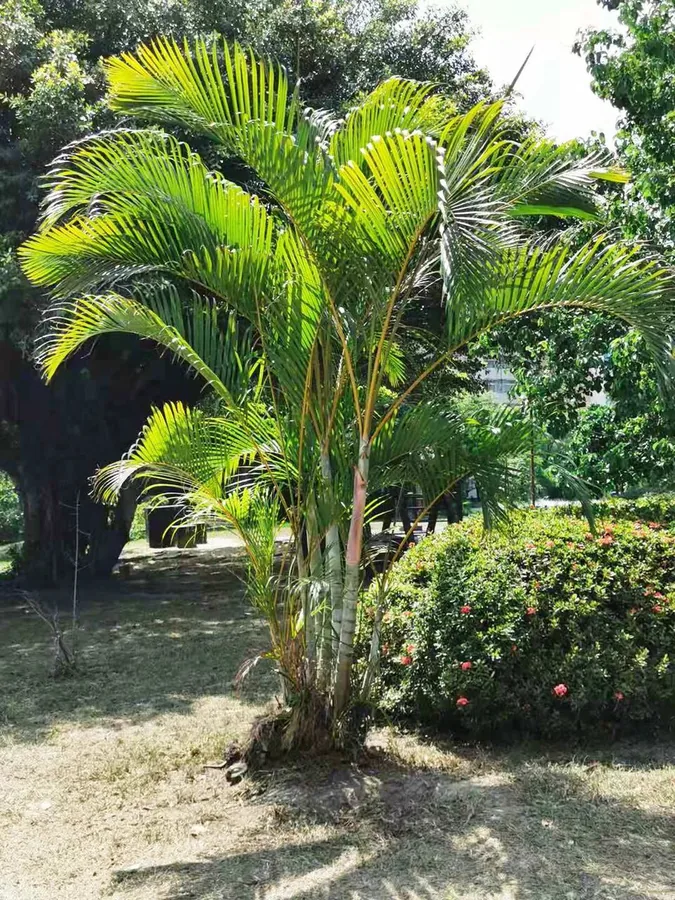
It's no surprise the areca palm has become such a favorite indoor palm. Thin yellow-green canes cluster together and arch out into soft, feathery fronds that take the hard edge off any corner. Originally from Madagascar, where it shoots up much taller outside, it's perfectly content as a manageable floor plant indoors.
Think of this one as a plant you keep for the foliage, not the flowers. It almost never blooms inside, and the real appeal is that full, bushy crown of green rather than the yellow summer panicles it puts out in the wild. Those canes give it a bamboo-like shape that feels tropical without swallowing the whole room.
It's pretty low-fuss overall, but it does have a few preferences. Keep the soil moist, the air humid, and the water clean, and the fronds stay green; serve it hard tap water in a dry room, though, and you'll see brown, crispy tips in no time. Nail those couple of things and the rest pretty much sorts itself out.
Care
The short version: give it bright indirect light, soil that stays evenly moist but never soggy, humidity above 50%, and distilled water or rainwater to keep those leaf tips happy. Feed it lightly through spring and summer and it'll stay full and green.
Light
Set the areca where it gets bright, indirect light, a few feet back from a sunny window is ideal. It'll cope with medium light and a touch of shade, but a dark corner leaves the fronds looking thin, while strong direct sun scorches them.
Water
Aim to keep the soil evenly moist but never waterlogged. Once the surface feels dry, water well, then pour off whatever pools in the saucer so the roots never sit in standing water. Stick with distilled water or rainwater, since the fluoride and salts in tap water burn the leaf tips.
Soil
Pot it up in a rich, porous potting mix loaded with organic matter that hangs onto moisture but still drains freely. A pH between 6.0 and 7.0 works well for it, and that free drainage is what keeps the roots in good shape.
Temperature
The areca feels best somewhere between 61°F and 84°F (16°C to 29°C) and really doesn't like the cold. Keep it clear of chilly drafts and frosty windows once winter hits, because it just can't handle a genuine chill.
Humidity
This palm is all about humidity, so try to keep the air above 50%. Dry indoor air browns the tips and brings in spider mites, which is exactly why a humidifier or a regular misting earns its place.
Feeding
Only feed it through the spring and summer growing season, two or three times across those months. Go with a slow-release palm fertilizer with micronutrients like iron and manganese, and keep a light hand, since piling on fertilizer scorches the leaf tips.
Pruning
There isn't much pruning to do. Just clip away the dead, brown, or damaged fronds and leave every healthy green leaf where it is. Fancy a tidier, more single-stemmed shape? You can take out some of the basal suckers.
Repotting
Only repot it every 2 to 3 years, in spring or early summer, and just once the roots have filled the pot. Arecas actually like being a little rootbound, so don't rush yours into a much bigger container.
Size & spacing
Indoors, the areca grows to roughly 6 to 10 feet (1.8 to 3 m) tall and stretches 3 to 6 feet (90 to 180 cm) across. Leave it enough space for the fronds to arch out freely without bumping a wall or blocking a walkway.
Troubleshooting
The areca pretty much shows you what's bothering it right in the fronds. Brown tips? That usually traces back to the water or the air. A dull, speckled look? Odds are pests have settled in. Find the symptom that matches below and sort it out before it climbs up the rest of the plant.
Faint webbing with a speckled, bronzed cast over the fronds
Warm, dry rooms are exactly what spider mites love, and arecas tend to be first in line. Flip the fronds over and look for tiny specks on the move plus a bit of webbing, or tap a leaf above a sheet of white paper and see if the dots start to crawl. Give the whole plant a hard rinse, undersides and all, bump up the humidity so the room feels less inviting, and treat again so you catch the next generation too.
Fix:
- Spray sturdy plants forcefully with water, including leaf undersides, to dislodge mites and break webbing
- Raise humidity to discourage mites
- Repeat treatments to break the life cycle; use insecticidal soap if needed
Crispy brown tips working their way in from the leaf edges
When the tips go brown on an areca, it's the water and the air to blame far more often than any disease. This palm doesn't get along with fluoride and soluble salts in tap water, and leftover fertilizer or a dry room will singe the edges just as easily. The fix is simple enough: move to distilled water or rainwater, run plenty of water through the pot every so often to rinse the salts away, and snip off just the dead brown bits.
Fix:
- Switch to distilled water or rainwater, or let tap water stand 24 hours before use
- Periodically drench the pot to leach salts and discard the drainage
- Remove salt crusts from the soil surface and add fresh soil
- Reduce fertilizer and raise humidity above 50 percent
- Trim only the dead brown tissue
Toxicity
Here's the good news if you've got pets or little ones at home: the areca palm is non-toxic across the board. The ASPCA lists it as safe for cats, dogs, and horses, and there's no toxic compound to fret over for the other animals either. A chewed frond might upset a tummy the way any plant can, but it won't poison a soul.
Safe for
People · Cats · Dogs · Horses · Rabbits · Livestock · Birds
Cats None
Cats are in the clear here. The ASPCA marks the areca palm as non-toxic, so if your cat takes a bite out of a frond, there's nothing to panic about.
Dogs None
No poison risk for dogs. A quick chew won't harm them, but keep in mind a big gulp of any houseplant can leave a stomach unsettled for a day.
Horses None
The ASPCA gives the areca palm the all-clear for horses too, so the fronds hold nothing toxic for them.
Rabbits None
There's nothing poisonous in this plant for rabbits. It isn't food, though, so think of any nibbling as harmless rather than a snack.
Livestock None
No toxic compounds threaten grazing animals here. Being an indoor tropical palm, it hardly ever ends up where they can reach it anyway.
Birds None
Pet birds are fine around it. Nothing in the fronds is toxic, so perching or pecking does no harm.
People None
It's harmless to people, kids included. This is a foliage plant and not a snack, but a stray leaf in a small mouth carries no poisoning risk.
Varieties
The areca palm you'll see sold as a houseplant is just the plain species, so there's no lineup of named cultivars to pick from.
Dypsis lutescens (species)
This is the clumping golden cane palm you'll find sold as a houseplant, and it gets its name from the yellow leaf stalks and the arching, feathery fronds that fan up out of a bunch of bamboo-like canes.
How to propagate
Want more areca palms? You can either split up an established clump or sow fresh seed, though neither one is fast and both call for a bit of patience.
DivisionModerate
Spring or early summer during active growth · Several weeks to a few months for divided clumps to root and resume growth
Since the areca grows as a multi-stemmed clump, you can divide it in spring or early summer by pulling apart basal suckers or sections that each come with their own roots. Just go gently, because those roots are brittle and snap easily. From there, give the divisions anywhere from a few weeks to a few months to settle in and pick up growth again.
SeedModerate
Sow fresh seed in a warm, humid environment · Germination and establishment are slow, often taking several months
Starting from seed is doable, but it really tests your patience. Pop fresh seed somewhere warm and humid, since that steady warmth and moisture is what nudges it into sprouting. Even so, the whole process of germinating and getting established crawls along, often for several months before you've got a plant worth keeping.
Myths
Since areca palms love moisture, their soil should stay soggy and wet all the time.
Sure, they like the soil kept evenly moist, but soggy roots are a whole different story. Whatever drains into the saucer needs to go, so the roots are never left sitting in it. Staying constantly wet leads to root rot, and that takes out far more arecas than dry soil ever will.
An areca palm will be happy with whatever tap water you give it.
Not quite. This palm doesn't tolerate the fluoride and soluble salts found in regular tap water, and you'll spot the damage as scorched, brown leaf tips. Reach for distilled water, rainwater, or tap water you've let sit for 24 hours instead.