Houseplant · Arecaceae
Majesty Palm
Ravenea rivularis
Keep it in steady moisture, bright light, and humid air, and this riverbank palm fills a room with feathery green.
Bright indirect
Every 4–7 days
64–84°F · 18–29°C
USDA 10–11
Overview
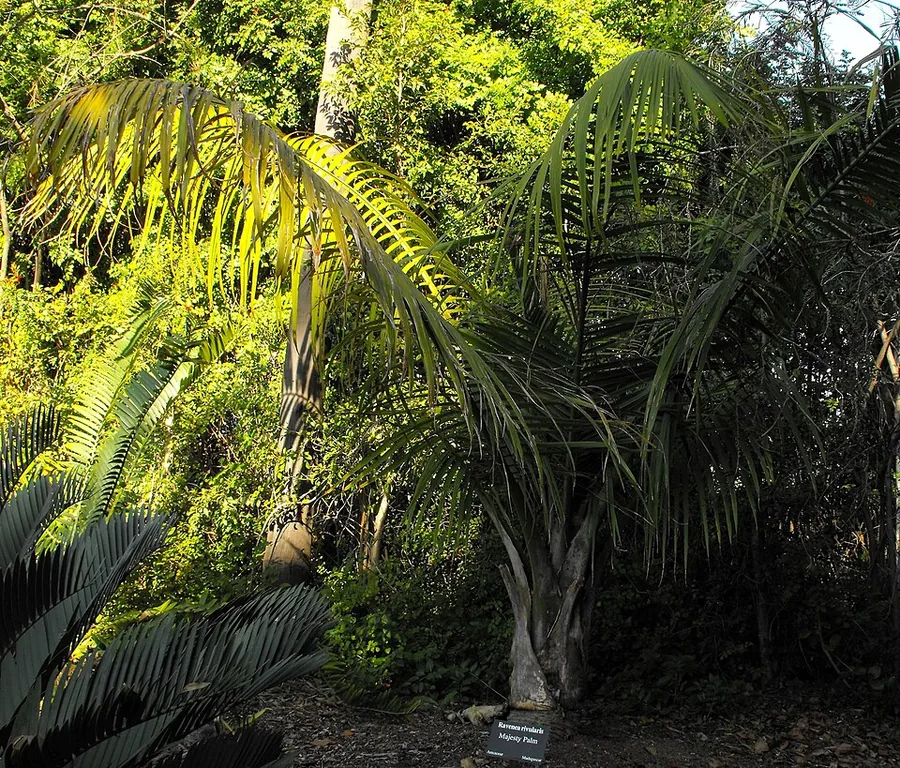
Looking for a tall, leafy plant that softens a room? The majesty palm does exactly that, with arching fronds that fan out from one trunk. It's originally from the riverbanks of southwest Madagascar, where it grows in damp, seasonally wet ground, and honestly that one fact tells you most of what it wants from you. In the wild it can get huge, but indoors it stays a nice, manageable floor plant.
Here's where folks slip up: they treat it like a tough, drought-proof palm. It isn't. This is a thirsty plant that likes its soil kept evenly moist and the air on the humid side. Give it bright indirect light and water before the soil dries out, and it'll reward you with steady, graceful growth. Let it dry out and sit in dry indoor air, though, and those frond tips brown fast.
And if you've got animals at home? Good news. The ASPCA lists it as non-toxic to cats, dogs, and horses, which sets it apart from that dangerous sago palm people always mix it up with. Get the watering and humidity dialed in, and the rest is pretty easy.
Care
The short version: bright indirect light, soil kept evenly moist but never soggy, and humid air. Feed it lightly through the growing season, keep it warm, and only trim the fronds that have gone fully brown.
Light
Give the majesty palm bright, indirect light, like a spot near a window that dodges the harsh midday sun. It'll put up with partial shade and a little gentle sun, but direct rays scorch the fronds, and a really dark corner just leaves it thin and weak.
Water
This is a thirsty riverbank palm, so it wants its soil kept consistently moist, more than most palms do. Water it about every 4 to 7 days, before the soil dries out, but don't ever leave it sitting in water. Soggy soil in a pot without drainage is the quickest way to root rot.
Soil
Pot it up in a rich, organic loam or a clay-based mix that holds moisture but still drains. It's happy with plenty of organic matter and a wide pH range from 6.0 to 8.0, so regular potting soil with good drainage works just fine.
Temperature
Keep it in the comfy warm range it's used to, between 64°F and 84°F (18°C to 29°C). It really can't handle cold drafts or chilly windowsills, so keep it away from doors and AC vents once winter rolls around.
Humidity
Humidity is honestly what makes or breaks this palm. It wants high humidity, and dry indoor air is usually why you get brown, crispy tips. Group it with other plants, set it on a pebble tray, or run a humidifier close by.
Feeding
Feed it lightly through the spring and summer growing season, about once a month. Use a balanced or palm-specific fertilizer with micronutrients, and just skip it entirely through the dim, slow winter months.
Pruning
Only cut off the fronds that have gone fully brown, dead, or damaged, snipping them right at the base. It grows from a single crown at the top of each stem, so never cut or wound that growing point, or the stem won't come back at all.
Repotting
Repot every 2 to 3 years, or sooner if roots are circling the bottom and water races straight through. Spring's the time to do it. Keep an eye out for roots poking out the drainage holes and soil that dries out almost as soon as you water it.
Size & spacing
Indoors a majesty palm gets to around 5 to 10 feet (1.5 to 3 m) tall and spreads its fronds 3 to 6 feet (90 to 180 cm) wide. So give it floor space where those arching leaves can stretch out without getting crushed against a wall.
Troubleshooting
Most majesty palm trouble shows up in the fronds, and it usually comes down to dry soil, dry air, or the pests those two things invite. Catch the early signs and you can jump in before a couple of brown tips spread everywhere. Find what matches your plant below, then act while it still does some good.
Fine webbing and speckled fronds
Notice faint webbing and a dusty, speckled look on the leaves? That's usually spider mites, and they love the hot, dry air a majesty palm can't stand. Not sure? Tap a frond over a piece of white paper and watch for specks that start moving. Rinse the foliage to knock most of them off, crank up the humidity, and if a few stubborn ones stick around, hit them with insecticidal soap or horticultural oil.
Fix:
- Rinse or wipe the foliage to physically remove mites
- Raise humidity to discourage them
- Treat with insecticidal soap or horticultural oil as needed
Brown, crispy frond tips and yellowing leaves
Seeing crispy brown tips? On a majesty palm that almost always means the soil got too dry or the room air is parched. It's a thirsty riverbank palm, so when water runs short the oldest fronds are the first to complain. Keep the soil evenly moist, bump up the humidity with a pebble tray or humidifier, and park it in bright indirect light, and you'll see the new growth come back looking good.
Fix:
- Keep the soil consistently moist and water before it dries out
- Raise humidity with grouping, a pebble tray, or a humidifier
- Move to bright indirect light
- Feed lightly during the growing season if growth is pale
Toxicity
Got pets or little kids? You can relax with this one. The majesty palm is non-toxic to cats, dogs, and horses, and there's no poison anywhere in it. The fronds are coarse and fibrous, so a pet that chews a bunch might get a passing stomach ache, but nothing in there can actually poison them.
Safe for
People · Cats · Dogs · Horses · Rabbits · Livestock · Birds
Cats None
Got a cat? You're fine here, because the ASPCA calls the majesty palm non-toxic to cats. If one really goes to town on the tough, fibrous fronds, the worst that happens is a quick tummy ache that clears up by itself.
Dogs None
Dogs are all good too. There's nothing poisonous in it, and a serious chewer might just get a bit of mild, short-lived stomach upset from the stringy leaves.
Horses None
Horses? No problem, since the ASPCA lists this palm as safe for them. If one nibbles a frond, there's simply no toxin to worry about.
Rabbits None
Nothing in the plant hurts rabbits, so it's safe for them as well. Honestly, the leaves are so coarse and stringy that most rabbits won't bother with it anyway.
Livestock None
Goats, sheep, and cattle have no poison to fear from this palm, and since it's a tropical houseplant, they're not likely to run into it in the first place.
Birds None
Pet birds can perch and nibble away, no worries, because the fronds carry no toxic compounds.
People None
It's safe around people too, kids included, with no poisoning risk at all. Nobody grows it to eat, sure, but a curious little taste won't do any harm.
How to propagate
The majesty palm is one of the trickier houseplants to multiply at home, mostly because it grows from a single trunk, so you can't clone it the way you would a trailing plant.
SeedDemanding
Sow fresh seed in warm, humid conditions; germination is slow and erratic · Several months to a year or more for seedlings to establish
Want more of these? Seed is pretty much your only real option, and it takes some patience. Sow fresh seed somewhere warm and humid, and don't be surprised when germination is slow and all over the place, with several months to a year or more before a seedling settles in. Since it's a solitary, single-trunked palm that grows from one point, you can't divide it either. That full, bushy plant you bought is usually a few seedlings sharing a pot, and sure, you can tease them apart, but that's not really splitting one palm.
Myths
The majesty palm is the same as the sago palm and just as dangerous to pets.
Here's the thing: these two only share the word palm. The majesty palm (Ravenea rivularis) is a real palm, and the ASPCA lists it as safe for cats, dogs, and horses. The sago palm (Cycas revoluta) isn't even a palm, it's a cycad, and it's severely poisonous to pets. So grab the right plant and don't let the name mix you up.