Houseplant · Arecaceae
Pygmy Date Palm
Phoenix roebelenii
Give it bright, indirect light and a steady drink, and this easygoing palm keeps its shape for years.
Bright indirect
61–81°F · 16–27°C
USDA 10–11
5–7 ft · 1.5–2 m
Overview
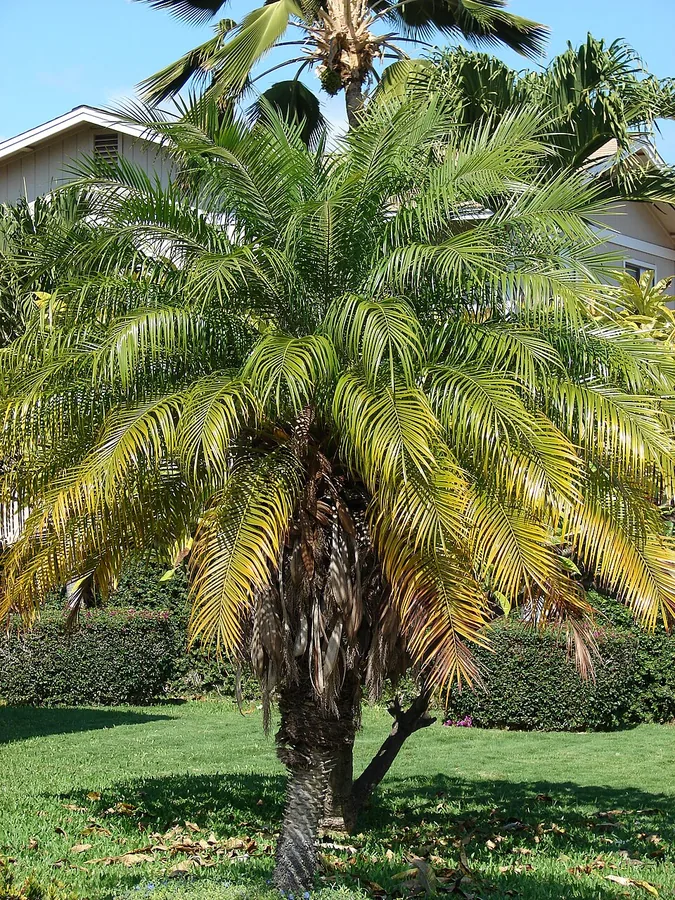
So what makes the pygmy date palm such a popular little tree? For starters, it's a small, elegant palm that comes from the riverbanks of Southeast Asia, and indoors it only reaches about 5 to 6.5 feet (150 to 200 cm), nowhere near the size it hits in the wild. Its thin, arching fronds give it a soft, feathery look that fits right into a bright corner.
Here's the thing about it: it's a slow grower, and that's actually a plus. You won't be wrestling it into a bigger pot every year, and one plant will keep its shape for ages. When a female plant flowers, it sets small purple drupes, and the seeds inside are how you'd grow more.
There's one catch that sets it apart from your average leafy houseplant. Right at the bottom of each frond, those lowest leaflets turn into stiff, needle-sharp spines that can jab you pretty good. The plant itself won't hurt anyone who takes a bite, but you'll want to treat those spines with respect whenever you prune or move it.
Care
The short version: it wants bright, indirect light, soil that's kept a little damp but never waterlogged, regular room warmth and humidity, and just a light feed while it's growing. And don't forget the gloves when you're working near those spiny frond bases.
Light
It's happiest in bright, indirect light, like what you'd get near an east-facing window. Sure, it'll cope with partial sun or medium indirect light too, but give it too little and the fronds start to stretch out thin and go pale.
Water
Try to keep the mix a little moist all through the growing season, and whatever you do, don't let the pot sit in water, because that's a fast track to root rot. Palms can also be fussy about the fluoride and salts in tap water, so if the tips go brown, low-mineral water usually clears it up.
Soil
Pop it in a porous, well-drained mix with lots of organic matter, and it'll be happy. It's not picky about the type either, so clay, loam, or sand all work, and anything in the 6.0 to 8.0 pH range is fine.
Temperature
Normal room temperature does the trick here, somewhere between 61°F and 81°F (16°C to 27°C). Just steer it clear of cold drafts and those chilly windows in winter, and it'll be comfy.
Humidity
Regular household humidity is fine, so there's no magic number to hit. If your air gets really dry, though, the leaf tips might brown a bit, and a touch more moisture helps with that.
Feeding
Only feed it in spring and summer while it's actively growing. A slow-release palm fertilizer with micronutrients, say 12-4-12 or 8-2-12, works well two or three times over the season. Go easy though, because overdoing it is exactly what burns the leaf tips.
Pruning
Only snip off fronds that are fully dead or browned, and never, ever cut into that single growing crown, or you could lose the whole stem. Pop your gloves on first, because those lower leaflets come with really sharp spines.
Repotting
Good news if you're low on time: this palm actually likes being a bit root-bound, so it hardly ever needs moving. Only repot it when roots start circling or poking out the drainage holes, water runs straight through, or growth just stops.
Size & spacing
59–79 in (150–200 cm) tall
Troubleshooting
Most of the time, if something's off with this palm, you'll see it on the fronds, and it usually comes down to water, salts, or a pest or two. The good news? If you catch the early signs, you can usually fix things before a whole frond gives up. Find what matches below and sort it out while it still counts.
Yellowing fronds and a soggy, smelly base
When the soil stays wet and the roots can't breathe, you get root rot. Dig down a little and you'll probably find soft, brown roots and a base that smells kind of sour. Let the soil dry out a bit between waterings, move it into a porous palm mix that actually drains, and never leave the pot standing in a saucer of water.
Fix:
- Allow the soil to dry slightly between waterings
- Repot into a porous, well-drained palm mix with drainage holes
- Never let the pot stand in water
Sticky, speckled, or spotty leaflets
If the leaflets go sticky, speckled, or spotty, you're probably looking at scale insects and thrips, and sometimes a fungal leaf spot tags along. Take a close look for little brown bumps, a dusty stippling, or round discolored patches. Wipe the scale away with horticultural oil or insecticidal soap, get some air moving around it, and cut off any frond that's just too far gone.
Fix:
- Wipe off or treat scale with horticultural oil or insecticidal soap
- Improve air circulation and avoid wetting foliage to limit leaf spot
- Remove and discard severely affected fronds
Dry, browning tips down the leaflets
Those brown, crispy tips are leaf-tip burn, and on a palm it's usually down to fluoride and salts in the tap water, or a bit too much fertilizer. You'll spot it on the older leaflets first, and dry or salt-crusted soil only makes it worse. Switch over to low-fluoride water, flush the pot every now and then to wash the salts out, and dial back the feeding.
Fix:
- Water with low-fluoride water and leach the pot periodically to flush salts
- Maintain slightly moist soil during the growing season
- Reduce fertilizer rate and follow a slow-release palm fertilizer schedule
Toxicity
Got pets? Then here's some good news. The ASPCA says the pygmy date palm is non-toxic to cats, dogs, and horses, with nothing poisonous in it, so a chewed leaflet won't make anyone sick. The thing to watch isn't the sap, it's the sharp spines at the base of each frond, which can poke a nosy pet or an unsuspecting hand, so keep it out of the way and grab gloves before you handle it.
Safe for
People · Cats · Dogs · Horses · Rabbits · Livestock · Birds
Cats None
There's nothing here that'll poison a cat, so you can cross that off your list. The only real thing is a cat brushing up against the frond bases and catching a sharp spine, so set the pot somewhere it won't get knocked.
Dogs None
Dogs are totally fine around this palm, nothing toxic at all. That said, a curious nose down by the low leaflets could still get a nasty poke from the stiff spines, and that's the one thing to keep an eye on.
Horses None
Horses have nothing to worry about here, since there aren't any toxic compounds in it. And honestly, as an indoor palm, it's not like it'll cross a horse's path much anyway.
Rabbits None
Rabbits won't be affected by anything toxic in this plant. Just keep a free-roaming bunny away from those spiny frond bases, because the spines poke just as easily down at floor level.
Livestock None
There's no poisoning risk for grazing animals with this one. The spines are the only hazard, and they only matter if the plant's somewhere they can actually reach.
Birds None
Pet birds won't get any toxic effects from this palm at all. Still, those sharp basal spines are worth watching around a bird that likes to perch or clamber about.
People None
It won't poison anyone, and get this, female plants even grow small edible drupes. The spines are another story, though, sharp enough to draw blood and sometimes cause an infection, so wear gloves when you handle it and keep the kids at arm's length.
Although non-toxic, the lower leaflets near the frond base are modified into very sharp, stiff spines that can cause painful puncture wounds and occasional infections; wear gloves and supervise children and pets around the plant.
Varieties
You'll pretty much always find this one sold as the plain species, and it shows up in a couple of different forms. It's worth knowing which is which before you grab one.
Phoenix roebelenii (single-trunk form)
This is the single slim-trunked one, sold as one plant on its own instead of the bushy multi-stem clump you'll usually spot at garden centers.
How to propagate
Want to grow more of these? You'll need some patience. It comes from seed, not cuttings, and even the seed likes to take its time.
SeedModerate
Sow fresh, cleaned seed when warm; germination is slow and uneven · Several months to germinate and one or more years to develop into an established plant
Seed is how you'd normally grow this palm. Clean up some fresh seed from the purple drupes a female plant makes while it's warm out, then sow it right away, and get comfortable, because germination is slow and a bit hit-or-miss. It takes several months just to sprout and a year or more to turn into a proper established plant. And since it won't root from cuttings, seed really is the only way to go.
Offsets & pupsModerate
Growing season, when basal suckers are large enough to separate · Several months to root and establish after division
If your plant happens to throw up basal offshoots, you can sometimes split it during the growing season, once the suckers are big enough to come away cleanly. Each division takes a few months to put down roots and settle in. Even so, seed's still the go-to for raising new ones.
Myths
Pygmy date palms will poison your cat or dog.
Nope. The ASPCA lists Phoenix roebelenii as non-toxic to cats, dogs, and horses, so a nibbled leaflet isn't going to poison your pet. The real problem is physical, not chemical: those sharp basal spines can leave a painful puncture that sometimes gets infected, and that's what's actually worth worrying about.