Houseplant · Cactaceae
Barrel Cactus
Ferocactus wislizeni
Give it full sun and gritty, fast-draining soil, water it once in a blue moon, and this desert barrel will stick around for decades.
Full sun
Every 14–28 days
USDA 9–11
2–10 ft · 0.6–3 m
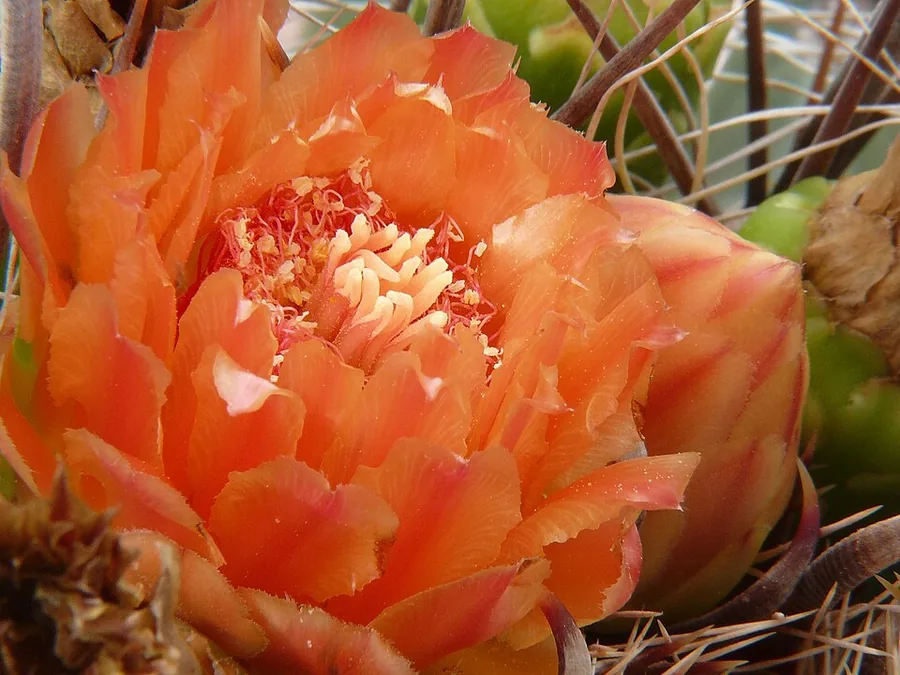
Overview
The barrel cactus is pretty much what the name promises, a stout, ribbed barrel that keeps its shape for life. It comes from the deserts of Arizona and Sonora, where it just shrugs off blazing sun and goes ages with no rain. Want to keep it happy indoors? Give it the same deal: a bright window, gritty soil, and a hands-off approach to watering.
A couple of things make it stand out. First up are the fishhook spines, those stiff curved central spikes that earn the plant its other name and really do need careful handling when you move it. Second is how it grows, because this is a slow grower that can take years to bulk up, and that's a big part of why it lives so long without much fuss.
Here's the thing: it pays off with restraint way more than effort. Nail the light and drainage and you can basically forget about it most of the year. And if you ever do lose one, it's almost always from killing it with kindness, watering it like a regular houseplant until the roots rot.
Care
The short version: full, direct sun in gritty, sharply drained soil, watered only when the mix is bone dry and kept nearly dry all winter, with thick gloves close by whenever you move it.
Light
Give it full, direct sun, and honestly the more the better. Sure, it'll get by in partial sun or bright indirect light, but skimp on the light and the new growth stretches out pale and thin instead of staying nice and round.
Water
Let the soil dry out completely between drinks, then water deeply but sparingly through the growing season, roughly every 14 to 28 days. All winter, keep it nearly dry. It rots easily, so whatever you do, don't leave it sitting in wet soil.
Soil
Pot it up in a gritty, sharply drained sandy or cactus mix that water just runs straight through. A pH anywhere from 6.0 to 7.5 is totally fine. Drainage matters way more here than how rich the soil is.
Temperature
It handles a big range, from about 41°F to 95°F (5°C to 35°C). Desert heat? No problem. A hard freeze, though, is a deal-breaker, so bring it in or shelter it before things drop near the low end.
Humidity
Low humidity is exactly its thing, just like the dry desert air it grew up in. There's no number to chase and no reason to mist, since damp, still air just invites rot.
Feeding
Feed it lightly through spring and summer while it's growing, about once a month with a dilute, low-nitrogen cactus fertilizer. Skip feeding altogether in winter. Pile on too much nitrogen and you'll get soft, weak growth.
Pruning
Good news, it needs no routine pruning whatsoever. The only time you'd cut is to clear off damaged, rotted, or dead tissue, and even then you grab sterile tools and thick gloves to get rid of just the bad bits.
Repotting
No rush here, since you only repot every 3 to 4 years or once it's obviously rootbound, with roots poking out the drainage holes or the plant going top-heavy. Always use thick gloves or a band of rolled material, because those hooked spines really do bite.
Size & spacing
Thanks to its slow pace it stays pretty small indoors for years, though out in the ground over a long life it can hit 2 to 10 feet (60 cm to 3 m) tall. Leave room for a spread of 12 to 24 inches (30 to 60 cm), and keep it well clear of walkways so nobody brushes the spines.
Troubleshooting
Almost everything that goes wrong with a barrel cactus boils down to water and light, so there isn't much to keep track of. The one sign you really don't want to miss is a soft or discolored body, since rot moves fast and there's no undoing it. Find your match below and get on it before it spreads.
Soft, mushy brown or black patches on the body or base
Soft, smelly spots like these? That's rot, and it almost always comes down to too much water sitting in soil that won't drain. Once the tissue's gone mushy, that bit's done for, so quit watering and trim it back to clean green flesh with a sterile blade. Let the cuts dry and callus, then pop it into a fresh gritty, fast-draining mix and it'll bounce back.
Fix:
- Stop watering immediately
- Cut away all rotted tissue back to clean, firm green flesh with a sterile blade
- Allow cuts to callus in dry air
- Repot into dry, gritty, fast-draining mix and resume watering only once established
Pale, stretched new growth losing the round shape
When new growth goes pale and stretchy and leans toward the glass, that's etiolation, which is just the plant hunting for more light. Nothing's ruined, so don't sweat it. Give it a full-sun spot, but ease it over there across a week or two so the soft new tissue doesn't get scorched in the switch.
Fix:
- Move to a full-sun location, acclimating gradually to avoid scorching
A wrinkled, shriveled body
A wrinkly, shrunken body usually just means it's gone thirsty for too long. Before you water, though, peek at the roots, because rot can fake the exact same look by leaving fine-looking roots that can't actually drink. If the roots are firm, give it a good soak and watch it plump up over a few days. If they're mushy? Then it's rot, so treat it that way instead.
Fix:
- Water thoroughly once and observe for firming over days
- If roots are rotted, treat as rot: cut to clean tissue and re-root in dry gritty mix
Corky brown scarring low on the body
Firm, dry, corky brown patches near the bottom are usually just age, so there's nothing to fix. Sometimes they're old sunscald too, from light that came on too strong too fast. As long as those patches stay firm and don't smell, leave them alone, and next time just bring the plant into bright light a bit more gradually.
Fix:
- No action needed for natural corking; for sunscald, shade and acclimate gradually
Toxicity
Here's the reassuring bit: this cactus is not poisonous to people, pets, or livestock, and the ASPCA doesn't list it as toxic. The real thing to watch is physical, not chemical. Its stiff, fish-hook spines can jab deep into skin and paws, so keep the plant out of reach and only handle it with thick gloves.
Safe for
People · Cats · Dogs · Horses · Rabbits · Livestock · Birds
Cats None
Good news, there's nothing in this cactus that'll poison a cat. What you've actually got to watch are the hooked spines, which can jab a curious nose or paw.
Dogs None
A dog won't get poisoned from chewing it, so no panic there. Those fish-hook spines do puncture skin and snag in the mouth, though, so keep it up out of reach.
Horses Safe
No chemical worries for horses at all. The only thing to think about is a sore spine jab if one brushes past the plant.
Rabbits Safe
Rabbits won't be poisoned here, which is a relief. Just keep an eye on the sharp spines, since a little critter can blunder right into them.
Livestock Safe
Cattle, goats, and sheep can hang around it with no toxic trouble. The stiff hooked spines are the one catch, since they can still leave a scratch.
Birds Safe
It's totally fine for birds to peck at, no poisoning involved. The spines are pretty much the only thing to be careful about near it.
People Safe
You're in no danger handling it or being around it. The spines are the whole deal, so throw on thick gloves and keep the kids back a bit.
Stout, rigid spines with sharp, fish-hook-shaped tips readily cause painful puncture wounds and can embed in skin or paws; keep out of reach of pets and children and handle only with thick leather gloves or rolled material.
Varieties
Botanists recognize a few named forms of Ferocactus wislizeni, mostly sorted by where they grow. These are the ones that actually show up in the references.
Ferocactus wislizeni subsp. tiburonensis
It's an island form from Isla Tiburon in Sonora, and POWO counts it as its own infraspecific taxon.
Ferocactus wislizeni subsp. herrerae
This one grows taller with skinnier stems, and you'll sometimes see it treated as its own species, Ferocactus herrerae.
Ferocactus wislizeni var. ajoensis
It's tied to the Ajo region of Arizona and shows up documented in POWO.
How to propagate
Making more barrel cacti is a waiting game, since seed is realistically your only option and the seedlings grow at a crawl.
SeedModerate
Spring, with sustained warmth (about 21-27°C / 70-80°F) · Several years to reach a few centimeters; very slow
Want more of these? Seed is pretty much your only shot, since this cactus hardly ever throws offsets or pups. Sow in spring and keep things steadily warm around 70°F to 80°F (21°C to 27°C) so the seedlings come up. Then settle in, because they take several years just to hit a few centimeters.
Myths
A barrel cactus is a reliable emergency water source in the desert.
It sounds handy, right? Trouble is, the pulp inside a fishhook barrel is sharply acidic, not clean water, and drinking it can hit you with nausea, vomiting, and diarrhea that leave you worse off than you started. Plus most barrel cacti are protected by law. Chalk this one up to survival folklore, not an actual plan.