Houseplant · Cactaceae
Bunny Ear Cactus
Opuntia microdasys
Hand it bright sun and a dry, gritty pot, and the bunny ear cactus pretty much runs itself.
Full sun
Every 14–28 days
50–86°F · 10–30°C
USDA 9–11
Overview
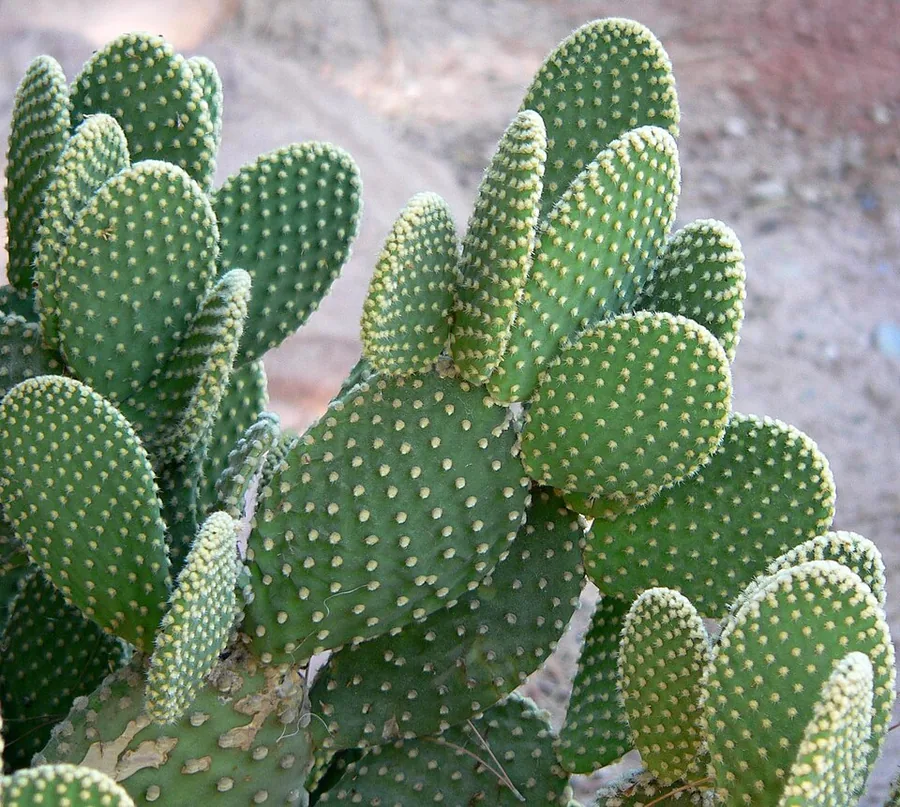
So where does the name come from? It is those flat, paddle-shaped pads that grow in pairs and stand up just like a rabbit's ears. The plant comes from the deserts of Mexico and grows slowly, building into a low, branching clump that gets to about 12 to 24 inches (30 to 60 cm) indoors. Older plants can put out pale yellow flowers in late spring and summer too, but that is more of a happy extra than the reason most folks keep one.
Here is the catch, though: that soft-looking fuzz on the pads is not soft at all. Every polka-dot tuft is a cluster of glochids, tiny barbed bristles that pull free at the lightest brush and lodge in skin, lips, and eyes. Getting them back out is a real chore, so this is a plant you look at and handle with gloves, not one you pet.
As a houseplant, it honestly asks for almost nothing. Give it bright light, a pot that drains fast, and long dry stretches between waterings, and it is happy. The one thing that trips people up is kindness in the form of too much water, which is far and away its biggest enemy.
Care
The short version: give it all the direct sun you can, a gritty mix that drains fast, and water only once the soil has dried out completely. And handle it with gloves or tongs, never bare hands.
Light
Give it all the direct sun you can, and a bright south-facing window is about perfect. It will manage in bright indirect light, but go easy on the sun and the pads stretch out thin and pale instead of staying plump and tight.
Water
This is a desert plant, so let the soil dry out completely, then water deeply until it runs out the drainage holes. That usually lands around every 2 to 4 weeks in the growing season, and a lot less in winter. Water that just sits there is the fastest way to rot it, so when in doubt, hold off.
Soil
Pot it in a gritty, sharply drained sandy or cactus mix that never keeps water hanging around the roots. Any pH from 6.0 to 7.5 works fine, and tossing in some extra perlite or coarse sand only helps.
Temperature
It is happy anywhere from 50°F to 86°F (10°C to 30°C), which covers most homes all year. Just keep it above freezing, because frost will wreck the soft pads.
Humidity
Low household humidity is exactly what this desert native wants, so there is no number to aim for. If anything, dry air suits it just fine, while still, damp air is what invites rot.
Feeding
Feed it monthly through spring and summer with a diluted, low-nitrogen cactus fertilizer, and that is all it needs. Skip it completely in fall and winter while it rests, since pushing growth then does more harm than good.
Pruning
Honestly, it barely needs pruning. Take a pad off only to shape it or to start a new plant, and always work with thick gloves and tongs, because the glochids let go at the lightest touch and stick fast in your skin.
Repotting
No need to rush this; every 2 to 3 years in spring is plenty, once roots poke out the drainage holes or pads crowd the rim. Grab it with tongs and a collar of folded newspaper, and freshen up the gritty mix while you are at it.
Size & spacing
Indoors it stays a neat little clump, climbing slowly to around 12 to 24 inches (30 to 60 cm) tall and roughly the same wide. Because it is so slow, one pot will do it for years before it asks for more space.
Troubleshooting
Just about every problem with this cactus comes back to water or light, so that narrows things down nicely. Take a look at the pads and check the soil before you grab the watering can, because soft pads and dry pads need opposite fixes. Find your symptom below and jump on it early.
Pads going soft and brown down at the base
When a pad turns squishy and brown near the soil, that is root and stem rot, and it usually comes from too much water sitting in dense soil. You will want to move quickly here: stop watering, slide the plant out, and trim every soft bit back to firm green tissue with a clean blade. Then pot it into fresh gritty mix and let it dry out all the way before its next drink.
Fix:
- Stop watering immediately
- Remove the plant and cut away rotted tissue with a clean blade
- Repot into fresh gritty cactus mix
- Allow soil to dry fully before watering again
New pads coming in long, pale, and weak
If the new pads are growing long and thin and leaning toward the glass, they are simply reaching for more light, which gardeners call etiolation. The fix is easy: move it to your brightest window, or out into full sun. Just bump the light up over a week or two instead of all at once, because soft new pads can scorch if you go too fast.
Fix:
- Move to the brightest available window or full sun
- Introduce direct sun gradually to avoid scorch
Pads going thin and wrinkly
Notice the pads thinning out and creasing? That is just plain underwatering after the soil has gone bone dry for too long. Give it a good deep soak and let whatever runs through drain away. The pads will firm right back up in a few days, and then you are clear to wait until the mix dries out again before watering.
Fix:
- Water thoroughly and allow to drain
- Resume regular deep watering once soil dries
Toxicity
Good news if you have pets: there is no poison here at all, and the ASPCA does not list this cactus as harmful to cats or dogs. The catch is physical, not chemical. Its glochids, those fuzzy-looking tufts of barbed bristles, come loose at a touch and dig painfully into skin, mouths, and eyes, so keep it up out of reach of pets and kids and only handle it with gloves.
Safe for
People · Cats · Dogs · Horses · Rabbits · Livestock · Birds
Cats Safe
There is no poison in this one, so a curious taste will not make a cat sick. What can go wrong is the glochids, since a swat or a chew loads up the paw, lips, and tongue with tiny barbed bristles, and you might catch some pawing at the mouth or face afterward.
Dogs Safe
For a dog, this cactus is not poisonous at all. The trouble is physical, because one sniff or bite presses dense barbed glochids into the muzzle and tongue, and once they are in, they really do not want to come out.
Horses Safe
Nothing here is going to poison a horse, so that is one less thing to worry about. A grazing nose or mouth can still snag the fine barbed bristles, though, so it is best kept well out of reach.
Rabbits Safe
A rabbit will not be harmed by any toxin, because there is not one. A nibble can still push glochids into the lips and mouth, and that alone is reason enough to keep it somewhere a rabbit cannot get to.
Livestock Safe
Cattle, goats, and sheep are not in any chemical danger from this cactus. It is the barbed bristles you have to think about, since they lodge in the mouth and muzzle of any animal that goes poking at it.
Birds Safe
There is nothing poisonous for a bird to swallow here. A pecking beak can still catch the tiny barbs, though, so a perch or pet bird is better off kept clear of the pads.
People Safe
It will not poison you, but here is the thing: do not ever grab it bare-handed. Those fuzzy-looking tufts are glochids that pull loose at a touch and dig into fingers, lips, and eyes, where they hurt and are a pain to get out, so go for thick gloves or tongs every time.
The pads are covered in dense tufts of glochids, tiny barbed bristles that look soft and fuzzy but detach at the slightest contact and lodge painfully in skin, lips, mouth, and eyes. They are difficult to remove. Handle only with thick gloves or tongs and keep away from curious pets and children.
Varieties
Besides the golden form everyone knows, you will run into a couple of named selections now and then, mostly told apart by the color of their glochids.
Opuntia microdasys var. albispina
Its glochid tufts are white instead of the usual golden yellow, so the pads end up with a frosted, polka-dot look.
Opuntia microdasys 'Rufida'
This one has reddish-brown glochids, and you will sometimes see it listed as its own species, Opuntia rufida.
How to propagate
Want a few more without spending a thing? This is one of the easiest cacti going, since the bunny ear roots from a single pad and a parent plant will hand you copies for free.
Stem cuttingsEasy
Spring to summer during active growth · 2 to 6 weeks to root
Want more of these for free? A single detached pad roots with hardly any effort, so spring or summer, while the plant is growing, is your window. Twist or cut a pad off with tongs, leave the cut to callus over for several days, then sit it in dry gritty mix and it will root in about 2 to 6 weeks. Just keep gloves or tongs on the whole time so the glochids stay off your hands.
Myths
It looks fuzzy, so surely it is soft and safe to pet.
You would think so, but those soft-looking tufts are actually glochids, clusters of fine barbed bristles that come loose the second you touch them and dig into skin, lips, and eyes, where they hurt and take ages to get out. Never handle this cactus with bare hands. Keep thick gloves or a pair of tongs handy and use them every time.