Houseplant · Cactaceae
Old Lady Cactus
Mammillaria hahniana
Give it bright sun, gritty soil, and a dry winter rest, and this woolly little cactus crowns itself with pink flowers.
Full sun
45–84°F · 7–29°C
USDA 9–11
4–12 in · 10–30 cm
Overview
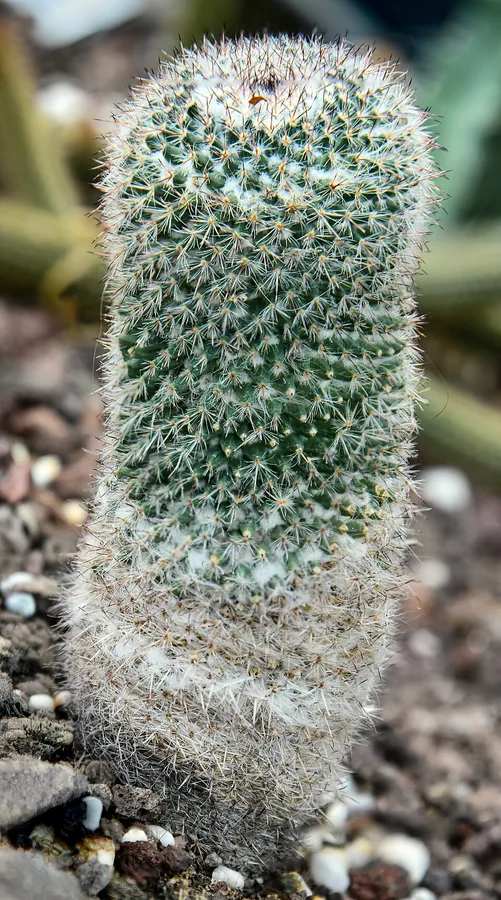
So what is the old lady cactus? It's a small, round desert plant bundled up in soft white hairs that make it look like a powdered head. It comes from the dry hills of northeastern Mexico, and it stays nice and compact, only getting to about 4 to 12 inches (10 to 30 cm) tall before it starts throwing out a clump of offsets. That slow, tidy growth is a big reason it's one of the easiest cacti to keep going on a sunny windowsill.
Under all that wool you'll find fine spines and bristles, and come spring a grown plant circles its crown with pink to purplish-red flowers. That ring of bloom is where the fun nickname birthday cake cactus comes from. Give it enough light and a proper cool rest over winter, and guess what? Those flowers keep coming back year after year.
It's a forgiving plant with one hard rule: it hates wet feet. Overwatering is what does most of them in, so the whole trick is sharp drainage and a bit of patience between drinks. Nail that part, and honestly, the rest of its care is close to hands-off.
Care
The short version: give it bright direct light, a gritty fast-draining mix, and water only once the soil's dried out completely. Ease way back in winter for a cool, dry rest, and it'll pay you back with spring flowers.
Light
Give this cactus full, direct sun, ideally at a south- or west-facing window where it gets several hours a day. It'll get by in bright indirect light, sure, but skimp on the sun and it stretches tall, goes pale, and quits flowering.
Water
Let the soil dry out completely between waterings, then soak it right through and dump whatever pools in the saucer. Water sparingly in summer and almost not at all through the cool winter rest. Standing water at the roots? That's the single fastest way to kill it.
Soil
Plant it in a gritty, sharply drained cactus mix so water runs straight through. Any pH from 6.0 to 7.5 works just fine. The texture matters way more than the exact number, since it's the loose, fast-draining grit that keeps the roots from rotting.
Temperature
It's happy anywhere from 45°F to 84°F (7°C to 29°C) through the year. A cooler spell in winter, down toward the low end, is what sets up the spring flowers, so don't keep it warm and cozy the whole year round.
Humidity
Low household humidity is exactly what this desert plant wants, so there's no number to chase. Dry air is a plus here, not a problem, and damp, stagnant conditions just invite rot and pests.
Feeding
Feed it once a month through the spring and summer growing season with a dilute low-nitrogen cactus fertilizer like 5-10-5. Then stop completely in winter while it's resting, because a dormant cactus has no use for it.
Pruning
Here's an easy one: this cactus needs no routine pruning. Just snip off spent flowers and pull offsets when you want to propagate or thin out a crowded clump. Always wear thick gloves or use folded paper, because those spines and bristles bite.
Repotting
Repot it every 2 to 3 years in spring, or whenever the clump outgrows its pot. Keep an eye out for roots pushing out the drainage holes, offsets crowding the rim, or soil that dries almost the second you water it.
Size & spacing
Expect a compact little plant just 4 to 12 inches (10 to 30 cm) tall that slowly spreads into a clump up to 20 inches (50 cm) wide as the offsets pile up around the base. Its slow, tidy habit makes it an easy fit even on a crowded windowsill.
Troubleshooting
Almost every problem with this cactus starts down at the roots or shows up as stretched, flowerless growth. Catch the early signs and you can step in before rot really gets going. Just find what matches what you're seeing below, then act while it still does some good.
A soft, browning base and a plant that starts to keel over
Seeing a soft, discolored base? That's root and basal rot, and it almost always comes from too much water or a mix that stays wet down at the roots. First thing, put the watering can down and leave it there. Lift the plant out and cut off every soft, blackened bit with a clean blade. Give the good tissue or offsets a few days to callus, pot it back up in dry gritty mix, and go easy on the water until it settles in again.
Fix:
- Stop watering immediately
- Unpot and cut away all soft, rotted tissue with a clean blade
- Let healthy tissue or offsets callus for several days, then repot in dry gritty cactus mix
- Resume watering only sparingly once re-established
White cottony tufts or fine webbing turning up on the plant
Little cottony white puffs buried in the wool? Those are usually mealybugs. Fine webbing with dull, speckled growth instead? That points to red spider mites, which love hot, dry air. Either way, move the plant away from the others first. Then dab the mealybugs with a cotton swab dipped in 70 percent isopropyl alcohol, rinse the mites off, and treat with insecticidal soap or horticultural oil. Come back every week until it's all clear.
Fix:
- Isolate the plant from others
- Dab mealybugs with a cotton swab dipped in 70 percent isopropyl alcohol
- Rinse off mites and treat with insecticidal soap or horticultural oil
- Repeat weekly until the infestation clears
No flowers, or pale stretched growth that loses its round shape
If it's leaning toward the window and going tall and skinny, it just needs more light, and that stretching has a name: etiolation. And when the spring flower ring never shows up? That usually means winter was too warm and damp instead of cool and dry. So move it to a bright south- or west-facing window, give it a cool, dry spell around 45°F to 55°F (7°C to 13°C) with barely any water through winter, and then get back to normal care once spring rolls around.
Fix:
- Move to a bright south- or west-facing window with several hours of direct sun
- Give a cool, dry winter rest around 7 to 13°C with minimal water
- Resume normal watering and feeding in spring
Toxicity
Good news if you've got pets or kids around: this cactus doesn't hold any toxin, and the ASPCA lists its close relatives as non-toxic to cats, dogs, and horses. The catch is purely physical, though. Those soft-looking white hairs are hiding fine spines and bristles that lodge in skin, paws, and mouths, so keep it out of easy reach and handle it carefully.
Safe for
People · Cats · Dogs · Horses · Rabbits · Livestock · Birds
Cats None
Worried a cat might bite one? There's no poison to fear here at all. The real catch is the fine spines and bristles, which can stick in the mouth, tongue, or paws and really sting, so it's smart to keep the pot out of pouncing range.
Dogs None
For a curious dog, there's nothing toxic going on. A nose or mouth full of those fine bristles is the only thing to watch, and it leaves sore, prickled skin you might have to clear with tweezers.
Horses None
A horse is perfectly safe around it, with no toxic effect whatsoever. If one does have a nibble, the bristles can lodge in the muzzle and lips, which is uncomfortable but definitely not poisonous.
Rabbits None
No chemical danger to a rabbit, so that's one less thing to think about. Those dense spines make it a lousy snack anyway, and the only real problem is any that catch in the mouth or fur.
Livestock None
Cattle, goats, and sheep won't be poisoned by this cactus at all. The bristles and spines can irritate the mouth if an animal grazes it, though, so it's better off behind glass than out in a paddock.
Birds None
It's not toxic to birds in any way. Still, a pet bird could snag a fine spine while poking around, so it's best kept somewhere beaks and feet can't reach.
People None
Handling it, or even tasting it, won't poison you at all. The one downside is the fine hairs and spines, since they break off in skin so easily, so it's worth pulling on thick gloves or using folded paper whenever you move it.
The main hazard is physical rather than chemical: the dense white hairs, bristles, and fine spines can lodge in skin, paws, and mouths. Handle with thick gloves or folded paper and keep the plant out of reach of pets and children.
Varieties
The species splits into two accepted subspecies, and they mostly differ in their hair and spines. These are the two you're likely to bump into by name.
Mammillaria hahniana subsp. hahniana
This is the usual form you'll run into, covered in long white hairs and topped each spring by a ring of pink to purplish-red flowers.
Mammillaria hahniana subsp. woodsii
It used to be its own species, but as an accepted subspecies now, you can pick it out by its spination and a thinner coat of hair.
How to propagate
Making more of this cactus is pretty simple, and you've got two ways to go: pull off the offsets it grows on its own, or take the slow route and start from seed.
Offsets & pupsEasy
Spring to summer during active growth · About 4 to 8 weeks to root after callusing
Want the easy route? A grown plant clusters on its own, so you just twist or cut off one of the offsets in spring or summer while it's actively growing. Let the cut callus for a few days, pop it into dry gritty mix, and it'll root in about 4 to 8 weeks.
SeedModerate
Early spring, sown warm at about 19 to 24°C · Several months to a year or more to reach a handleable size
Seed is the slow lane, and it does ask for some patience. Sow it on a gritty surface in early spring, keep things warm at around 66°F to 75°F (19°C to 24°C) and humid, and don't be surprised if it takes several months to a year before the seedlings are big enough to handle.
Myths
Cacti thrive on neglect and need almost no water.
Not really. Through the growing season this one actually wants a good soak every time the soil dries out completely. Leave it thirsty too long and it shrivels, but let water sit around the roots and it rots instead. What keeps it happy is a deep drink and then a full dry-out.
Old lady cactus is poisonous to pets.
Nope, Mammillaria cacti don't carry any toxin, and the ASPCA lists close relatives as non-toxic to cats, dogs, and horses. The only thing that'll actually get you is the spines and bristles, which can lodge in skin, paws, and mouths.