Ornamental · Dryopteridaceae
Christmas Fern
Polystichum acrostichoides
Give it shade and soil that drains, and the Christmas fern keeps its green fronds going all winter.
Partial shade
Every 5–10 days
USDA 3–9
12–35 in · 30–90 cm
Overview
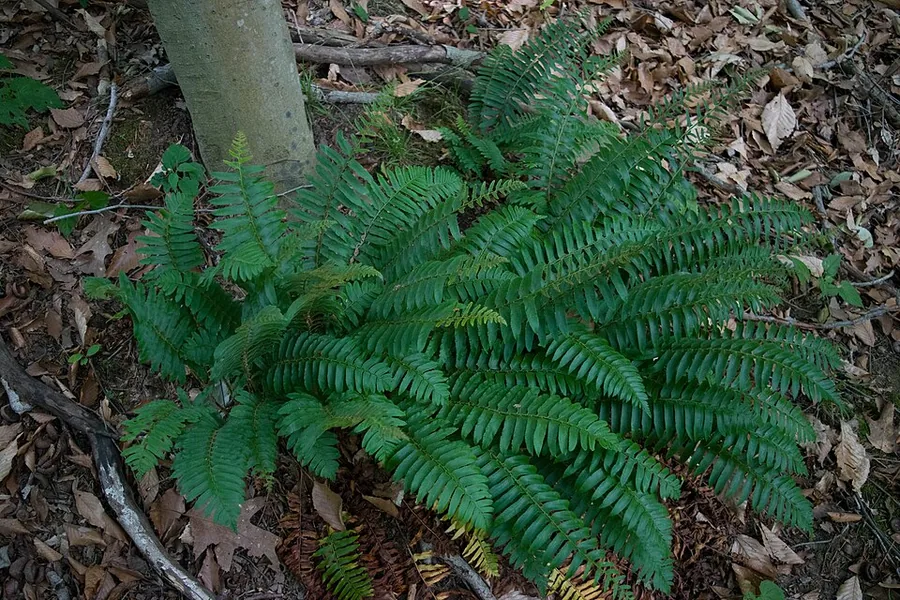
This is one of the easiest native ferns you can grow, and it's also one of the rare ones that stays green right through winter. It makes a neat, non-spreading clump of leathery, dark green fronds, and the small leaflets look a bit like Christmas stockings, which is exactly how it got its name. It's part of the wood fern family and grows wild all over the eastern woodlands, so it pretty much knows the drill already.
What really makes it stand out? Its toughness. It laughs off cold down to -40°F (-40°C), deals with deep shade just fine, and even gets by in the dry, rocky, root-tangled ground under trees where hardly anything else wants to live. New fiddleheads come up in spring while last year's fronds are often still hanging on, so the plant never goes totally bare.
And once it's settled in, it barely asks for a thing. Give it shade, soil that drains, and a bit of patience while the clump fills out, and it'll keep up a quiet, evergreen presence in the garden for years. Lots of gardeners use it to hold a shady slope in place or carpet a woodland bed, and it's happy to do either.
Care
The short version: pop it into part to full shade in rich, well-drained soil, keep it evenly moist while it settles, and after that you can mostly just leave it alone.
Light
At its core, this is a shade plant. It's happiest in partial to full shade and takes deep shade in stride too, which makes it a great pick for those gloomy corners where not much else will grow. A little morning sun is fine, but harsh afternoon light will scorch the fronds.
Water
Keep the soil evenly moist while the fern is settling in, watering every 5 to 10 days whenever the rain doesn't show up. Once the roots take hold it shrugs off short dry spells, so you can ease right off. The one thing it really can't stand? Sitting in standing water.
Soil
Plant it in rich, well-drained loam with lots of organic matter, though honestly it'll cope with sandy or shallow rocky ground too. It likes things a touch acidic, around a pH of 5.0 to 6.5. Good drainage matters more than anything else here, since wet feet are an open invite for crown rot.
Temperature
Not many garden plants are this hardy. It comes through anything from -40°F to 86°F (-40°C to 30°C), which covers USDA zones 3 through 9. Winter cold? No problem at all, and the fronds hold their color right through it.
Humidity
Regular outdoor humidity suits it just fine, so there's no number you need to hit. What this fern really cares about is steady soil moisture, way more than whatever's going on in the air.
Feeding
This fern hardly needs feeding at all. A light topdressing of compost or a balanced slow-release fertilizer in spring is plenty, and plenty of gardeners skip even that. Overdo the feeding and you'll do more harm than good.
Pruning
Pruning is just a once-a-year thing. In late winter or early spring, before the new fiddleheads push up, trim away the old, tattered, or winter-beaten fronds so the fresh growth can come in nice and clean.
Size & spacing
Each clump grows 12 to 35 inches (30 to 90 cm) tall with a spread to match. Give plants about that much elbow room so the fronds can arch out, and since the clumps don't spread, they'll hold their shape without crowding each other.
When to plant
There's no flowering season to keep tabs on with a fern, and nothing to harvest either. Just plant it out in spring as the soil warms up and the fiddleheads start poking through, and it'll settle in over the next season or two.
Northern hemisphere
Southern hemisphere
Typical months for a temperate climate: start earlier in warm zones, later where spring frosts linger.
- Plant: spring
Hardiness
USDA hardiness zones: 3–9
Temperature: down to -40°C
Troubleshooting
This fern stays healthy with hardly any fuss, so trouble doesn't come up often, and when it does it usually traces back to soggy soil or a hungry pest. Get to know the two signs below and you'll catch either one early. Just match what you're seeing, then step in before it spreads.
Fronds flopping over a soft, dark crown
Seeing the fronds flop while the base goes soft and black? That's crown rot, and it shows up when the soil stays wet for too long, usually over a soggy winter. Back off the watering and sort out the drainage, then dig down and scrape away any mushy, dark bits at the base. Here's a handy trick: tuck the rhizome back in at a slight tilt so water drains off the crown instead of puddling on top of it.
Fix:
- Improve drainage and reduce watering
- Plant the rhizome at an angle to shed water from the crown
- Remove and discard affected tissue
Chewed-up leaflets and stems picked clean
Ragged edges and stems that look picked clean? That's almost always the Florida fern caterpillar, which does its munching after dark and can strip a frond in no time. So grab a flashlight, head out after sunset, and pluck the caterpillars off by hand. If things have really gotten out of hand you can reach for a suitable insecticide, but keeping an eye on the foliage and catching them early usually does the trick.
Fix:
- Hand-pick caterpillars
- Treat with an appropriate insecticide if infestation is heavy
Toxicity
Got pets or little kids at home? Then here's some good news, because the Christmas fern is safe all around. The ASPCA lists it as non-toxic to cats, dogs, and horses, and there's no poison in the fronds to worry about for other animals or people.
Safe for
People · Cats · Dogs · Horses · Rabbits · Livestock · Birds
Cats None
Good news for cat people: the ASPCA lists this fern as non-toxic to cats, so a curious nibble is nothing to stress about. Sure, a big mouthful of fronds might leave a cat a little queasy, the way any plant can, but there's no actual poison in play.
Dogs None
Dogs can hang out around this fern without any trouble, since it doesn't carry toxins. A dog that chews on a few fronds is totally safe, though if it gobbles a big pile of rough greenery, that might come back out the messy way.
Horses None
It's confirmed non-toxic to horses, so a horse grazing nearby has nothing to fear. The fronds just aren't poisonous, plain and simple.
Rabbits Safe
Rabbits can nibble away at the fronds without coming to harm. There's just no toxin in this fern to bother a bunny.
Livestock Safe
Cattle, goats, and sheep can graze near this fern with no worries, because there's nothing poisonous in it. It won't cause the kind of headache that some pasture ferns are famous for.
Birds Safe
Pet and backyard birds are perfectly fine around this fern. Nothing in the fronds is going to hurt them.
People Safe
There's no poisoning risk for people either, kids who like to handle the fronds included. It isn't grown to eat, so there's no reason to snack on it, but a touch or even a little taste won't do any harm.
Varieties
Unlike a lot of garden plants, this fern is almost always grown as the plain wild species, and named cultivars are hard to come by. So there's really just the one to get to know.
Polystichum acrostichoides (species)
You'll pretty much always find it sold as the plain wild species, sporting leathery, evergreen, dark green fronds with stocking-shaped leaflets that keep their color through winter into the Christmas season, and named cultivars are tough to track down.
How to propagate
Making more Christmas ferns is easy, whether you split a clump you've already got or take the slower road and grow them from spores.
DivisionEasy
Spring · 1 to 2 growing seasons
Want more of them? The easiest way is to divide an established clump in spring, just split the crown and replant the pieces, and they'll take a season or two to settle in and bulk up. There's also the spore route, using the ones on the upper third of the fertile fronds, but fair warning, that's a whole lot slower.
Myths
The Christmas fern is named for blooming or fruiting at Christmas.
Easy mistake, but ferns don't flower or grow berries at all, so the name has nothing to do with a winter bloom. It's really about those leathery fronds that stay green through winter into the Christmas season, plus leaflets shaped like little Christmas stockings.