Ornamental · Cleomaceae
Cleome
Cleome hassleriana
Sow it once in full sun and the spider flower shoots up tall, blooms till frost, and comes right back on its own.
Full sun
Every 5–10 days
55–90°F · 13–32°C
70–80 days
Overview
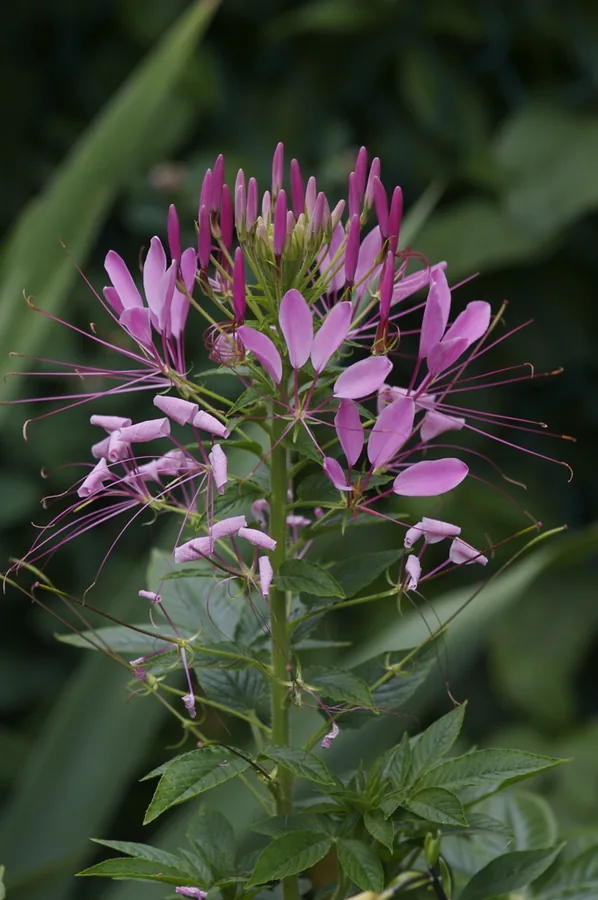
Cleome, or spider flower, is a tall garden annual people grow for the airy, whiskered blooms that sit on top of its stems all summer. Look closely and you'll see each flower throws out long stamens and slim seed pods that splay out like spider legs, which is exactly where the name comes from. It shoots up fast to 2 to 6 feet (60 to 180 cm) in one season, so it's a natural for the back of a bed.
Here's the best part: it barely asks for anything. Give it full sun and ground that drains, and it powers through heat, dry spells, and poor soil that would leave fussier flowers sulking. The one catch? It self-sows with real gusto, dropping seed that pops up as volunteers next spring unless you snip off the spent pods.
Bees, butterflies, and hummingbirds work the flowers from early summer right up until the first frost finishes the plant off. The stems carry small prickles and the leaves give off a musky scent, so pull on gloves before you handle it, or just grow one of the thornless, scentless types instead.
Care
The short version: full sun, average well-drained soil, and just the odd drink once the plant's established. Go easy on the fertilizer, pinch young plants so they stay bushy, and deadhead the pods if you'd rather skip the volunteers next year.
Light
Cleome wants full sun, 6 or more hours a day, to stand up straight and flower well. It'll take a bit of afternoon shade, but skimp on light and you'll end up with tall, floppy stems and way fewer blooms.
Water
Keep the soil moist while the plants are young, then back off once they're established, since cleome handles dry spells just fine. Water during a real drought, but no more than that, because overwatering pushes the soft, leggy growth you don't want.
Soil
Average, well-drained loam is what it likes best, though it'll cope with clay or rocky ground as long as water moves through. Aim for a pH of 6.0 to 7.0, and don't go overboard enriching poor soil, since lean ground keeps the plant nice and compact.
Temperature
Cleome loves the warmth and grows happily between 55°F and 90°F (13°C to 32°C). It needs heat to get going and won't make it through a frost, so in cold-winter gardens it's a one-season plant.
Humidity
Everyday outdoor humidity is no bother, so there's no level to chase here. What matters more is air circulation, since crowded, still plantings are what invite mildew and rust onto the leaves.
Feeding
Feed it lightly through the growing season with a balanced fertilizer, once a month at the most. Pile it on and you'll regret it, because that gives you a soft, leggy plant with weak stems, so when in doubt, feed less.
Pruning
Pinch back the stem tips in early summer to nudge the plant into bushier, branching growth. Deadhead or strip off the spent seed pods through the season to keep all that self-seeding under control.
Size & spacing
Plants reach 2 to 6 feet (60 to 180 cm) tall and spread 1 to 5 feet (30 to 150 cm) wide depending on the strain. Set them about 10 to 15 inches (25 to 38 cm) apart so air moves freely and mildew stays away.
When to plant
Cleome's a warm-season annual that waits on heat and won't take a frost. You can start seed indoors in late winter or just sow it straight into the ground once it warms up, then enjoy the bloom from early summer right through to the first frost.
Northern hemisphere
Southern hemisphere
Typical months for a temperate climate: start earlier in warm zones, later where spring frosts linger.
- Sow: 6 to 8 weeks before the average last spring frost
- Plant: After all danger of frost has passed and soil reaches 70 to 75°F; or direct sow then
- Harvest: Early summer until first frost
Hardiness
USDA hardiness zones: 10–11
Temperature: down to -1°C
Troubleshooting
Cleome's about as trouble-free as flowers get, and most of what goes sideways comes back to too much water, too little sun, or crowding. Find what you're looking at below, and the fix is usually a small tweak to how you're growing it.
Tall, floppy stems with loads of leaf but barely any flowers
Seeing soft, leggy growth? It usually comes down to a bit too much water or feed, or a spot that's just too shady. Dial both back, and if the plant's sitting in the shade, shift it into full sun with 6 or more hours of light. Pinch the stem tips in early summer too, and it'll branch out lower and firm up nicely.
Fix:
- Reduce watering and feeding
- Site in full sun (6+ hours)
- Pinch back stem tips in early summer to force branching
A white powdery film or rusty spots on the leaves
When it gets hot and sticky and the plants are packed in tight, powdery mildew and rust can show up. The trick is to open things up so air moves through, pull off the worst leaves, and water down low so the foliage stays dry. And honestly, just giving each plant 10 to 15 inches of breathing room heads off most of it.
Fix:
- Improve air circulation
- Remove affected foliage
- Water at the base to keep leaves dry
Twisted new growth and a sticky film on the leaves
Those little clusters of aphids, spider mites, or whiteflies love the soft new growth, and the sticky film they leave is the giveaway. A good blast of water knocks most of them right off, and you'd only need insecticidal soap if they really settle in. The nice part? A healthy, unstressed plant usually shrugs the rest off by itself.
Fix:
- Spray off with a strong jet of water
- Apply insecticidal soap if infestation is heavy
Holes and notches chewed into the leaves
Little holes? That's usually flea beetles or cabbage budworm grabbing a snack. Just pick off any caterpillars you spot and move on. Cleome's a tough customer and rarely bothered by pests, so a healthy plant in full sun pretty much grows right past a bit of nibbling.
Fix:
- Handpick caterpillars
- Tolerate minor damage as plants are generally pest-free
Toxicity
Got pets? You can relax, because cleome is non-toxic to cats, dogs, and horses, and the ASPCA has no records of toxic ingestion. The only thing to keep in mind is the prickly stems and musky leaves, so just keep a pair of gloves handy when you handle it.
Safe for
People · Cats · Dogs · Horses · Rabbits · Livestock · Birds
Cats Safe
No need to fret about a nosy cat, since the ASPCA lists spider flower as non-toxic to them and a nibble won't hurt. The prickly stems are really the only thing to note, and a cat will keep clear of those on its own.
Dogs Safe
Dogs are fine around cleome, with no poisoning risk to speak of. Sure, a dog that wolfs down loads of any plant might get a slightly upset tummy, but there's nothing harmful in the leaves themselves.
Horses Safe
Horses are safe around cleome too, since it has no known toxins. And here's the thing, that musky scent usually keeps grazers away well before they'd ever take a bite.
Rabbits Safe
Rabbits can't be poisoned by cleome, so there's nothing to worry about there. Between the prickly leaves and the strong smell, they'll usually just hop off to tastier plants in the bed.
Livestock Safe
Cattle, goats, and sheep can hang around cleome without any trouble. There aren't any records of toxic ingestion, and the musky foliage rarely tempts them anyway.
Birds Safe
Cleome's no threat to backyard or wild birds at all. The flowers pull in pollinators and hummingbirds, and later on the seed pods turn into a snack for the birds.
People Safe
It's perfectly safe to grow around kids, with no poisonous parts to think about. Just grab some gloves when you handle it, because those stems and leaves carry small prickles.
Stems and leaves bear prickles/spines and the foliage has a pungent, musky scent; wear gloves when handling. Thornless cultivars exist. These are handling nuisances, not toxicity.
Varieties
Cleome comes in a handful of named strains that mostly differ in height, color, and whether they keep the usual thorns and scent. Here are the ones you'll bump into most often.
Helen Campbell
An old favorite that puts fragrant, pure white flowers on tall plants reaching 4 to 5 feet.
Queen series
The classic 3 to 5 foot strain you'll find in rose, violet, pink, and white, sold as Rose Queen, Violet Queen, and so on.
Linde Armstrong
A tidy 18 to 24 inch pink pick that skips both the thorns and the musky scent.
Senorita series
Thornless, odorless sterile hybrids grown from cuttings, so they keep blooming all season without tossing seedlings everywhere.
How to propagate
Cleome grows from seed and nothing else, and the good news is it does most of the work itself once it likes a spot.
SeedEasy
Start indoors 6 to 8 weeks before last frost, or direct sow after frost when soil is 70 to 75°F · Germinates in 7 to 14 days; blooms about 70 to 80 days after germination
Seed's the only way to grow cleome, but that's no trouble at all. Start it indoors 6 to 8 weeks before your last frost, or skip the fuss and sow it right into warm ground once the soil hits 70°F to 75°F (21°C to 24°C). Just barely cover the seed, and you'll see sprouts in 7 to 14 days with flowers about 70 to 80 days after. A few strains like the Queen series come up better with 4 or 5 days of chilling in the fridge first, and once a plant's settled in it'll sow next year's batch for you.
Myths
Cleome is poisonous to cats and dogs.
Good news here: the ASPCA lists spider flower as non-toxic to cats, dogs, and horses, and there aren't any records of toxic ingestion. What folks usually mistake for danger is the prickly stems and the musky scent, which are just handling nuisances. Cleome is safe to grow around pets and children.
Cleome has to be started indoors and transplanted to do well.
Not really, since cleome doesn't like having its roots disturbed and a transplant can sulk afterward. Just sow the seed straight into warm ground once frost's done and it'll come up fine on its own. Direct sowing often works as well as transplants, and once it's settled it reseeds itself freely.