Ornamental · Primulaceae
Creeping Jenny
Lysimachia nummularia
A low gold carpet that's happy in moist ground, sun or shade, and runs fast enough that you'll want to keep it in bounds.
Full sun
Every 2–5 days
USDA 3–9
2–4 in · 5–10 cm
Overview
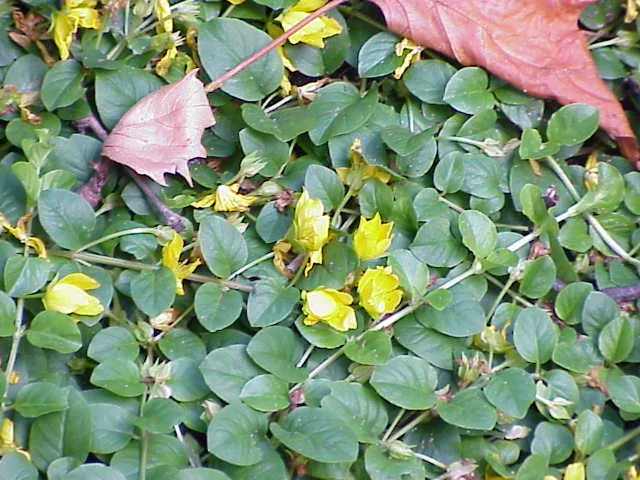
Creeping Jenny is a low, fast groundcover, and those round coin-shaped leaves hug the soil and spill right over the edges of pots and walls. The golden forms brighten up shady corners with chartreuse to gold foliage, while the plain green species keeps to a deeper green. It's part of the primrose family and it loves damp ground, which is exactly why you'll spot it in rain gardens and along pond edges.
Here's the thing though: what makes it easy is what makes it a handful. The stems root at every node they touch, so even a small plug knits into a dense mat in a single season, and that mat just keeps pushing outward. It's hardy from USDA zone 3 to 9 and laughs off cold down to -40°F (-40°C), so once it's settled in, it's not going anywhere.
The catch? It really loves to spread. The green species escapes gardens and invades wetlands, stream banks, and moist woodlands, and it's listed as invasive or regulated in parts of the US. Give it a clear edge or grow it in a container and it's a great-looking, dependable carpet. Let it run loose near water, and that's when it turns into a headache.
Care
The short version: keep it steadily moist, then go for sun if you want the brightest gold or shade for greener, scorch-free leaves. Pop it in rich, damp soil, feed it only rarely, and trim the runners so it doesn't wander off where you don't want it.
Light
It'll grow in just about anything from full sun to full shade. Full sun gives you the brightest gold, but it scorches the leaves where the soil dries out, so a shadier spot gets you greener, tougher foliage with way less worry.
Water
Keep that soil moist to wet all the time, since the roots sit shallow and the plant feels it fast when things dry out. Water it every 2 to 5 days, more when it's hot, and don't worry, it's totally happy even in shallow standing water at a pond edge.
Soil
Give it rich, damp, humus-rich soil that holds onto moisture. Past that it's not picky at all and takes clay, loam, sand, or shallow rocky ground across a wide pH of 5.5 to 8.0, and it'll even shrug off the odd flood.
Temperature
This one's seriously cold-hardy, comfy anywhere from about -40°F to 100°F (-40°C to 38°C). That toughness through USDA zones 3 to 9 is part of why it spreads so freely once it's established.
Humidity
Regular outdoor humidity is fine, and there's no number to chase here. What it actually cares about is wet feet, not damp air, so think about the soil, not the air around it.
Feeding
It barely wants feeding at all. One dose of balanced general-purpose fertilizer in spring is plenty for this low-maintenance groundcover, and plenty of gardeners just skip it.
Pruning
Trim or shear the creeping stems whenever you feel like it to keep the patch in check. Pull out any stems that have rooted past where you want them, and that's pretty much the only chore this plant gives you.
Repotting
In a container, refresh or divide it whenever it gets crowded. Watch for a mat spilling over the edges, a thinning center, or roots filling the pot, then split it to perk it back up.
Size & spacing
Each plant stays low at just 2 to 4 inches (5 to 10 cm) tall but spreads 12 to 24 inches (30 to 60 cm) wide, and it keeps right on going. Space them out with that fast spread in mind, and give it room to roam or an edge to run up against.
When to plant
Creeping Jenny isn't fussy about when it goes in, which is handy. Plant it in spring once the frost's done, or in fall, and keep an eye out for its little yellow cup-shaped flowers in early summer around June.
Northern hemisphere
Southern hemisphere
Typical months for a temperate climate: start earlier in warm zones, later where spring frosts linger.
- Plant: Spring after frost, or fall
- Harvest: Yellow cup-shaped flowers in early summer (around June)
Hardiness
USDA hardiness zones: 3–9
Temperature: down to -40°C
Troubleshooting
With creeping Jenny, the question is usually where it grows, not whether it'll make it, because this thing is tough. So the real stuff to keep an eye on is keeping it in bounds and stopping the gold leaves from scorching. Find what you're seeing below, then jump on it before a runner or a dry spell gets a head start.
The stems keep wandering and the patch won't stay put
Here's the big one, and it's all about the plant's eager spreading, which is worst in the plain green species. Every stem roots down wherever a node lands, and even snapped-off bits will resprout, so a patch ends up crowding neighbors and creeping into wetlands and stream banks. So what do you do? Dig out the runners and rooted pieces completely, shear it back to hold the line, and pop in a root barrier or a container near any natural water. If you just love how it looks, the gentler golden 'Aurea' is the friendlier pick.
Fix:
- Pull or dig out runners and rooted stem fragments, removing all pieces since fragments resprout
- Shear or mow back regularly to confine the patch
- Install root barriers or grow in containers to limit spread
- Choose the less-aggressive golden 'Aurea' form for ornamental use
Spotty, rusty, or chewed-up leaves
Damp spots bring two visitors: rust and leaf spot diseases, plus slugs that can chew a mat down to almost nothing where they pile up. Open the planting up a bit so air can move through, pull off the worst leaves, and then go after the slugs with traps, baits, or just picking them off by hand. The good news? The plant usually shrugs off the slug damage and fills right back in.
Fix:
- Improve air circulation and avoid prolonged leaf wetness for disease
- Remove and discard badly affected foliage
- Control slugs with traps, baits, or hand removal
Gold leaves going pale and crispy at the edges
Seeing brown, crunchy edges? That's sun scorch, and it makes sense once you know the roots sit shallow and hate drying out. The gold is brightest in full sun, but hot dry sun nips those edges brown wherever the soil's run low on water. Just keep the ground steadily moist, and give it some afternoon shade if you're somewhere hot down south.
Fix:
- Keep soil consistently moist
- Provide afternoon shade in hot southern climates
- Water more often during heat
Toxicity
Good news if you've got pets: creeping Jenny is not toxic. It's nowhere on the ASPCA poison lists and it's safe around cats, dogs, and the rest, with maybe a mild upset stomach if one really goes to town on the leaves. The thing to watch is its spreading, not poison, so your job is keeping it contained, not keeping it away from curious mouths.
Safe for
People · Cats · Dogs · Horses · Rabbits · Livestock · Birds
Cats None
Cats are fine here, since it's not toxic and never shows up on the ASPCA list. If one chews down a bunch of foliage it might drool or be sick, but that's just an upset tummy, not poisoning.
Dogs None
Dogs are in the clear too. The worst a big mouthful of leaves does is leave a dog with a passing stomach ache, and that's it.
Horses Safe
There's no toxicity reported in horses, so a patch growing near where they graze isn't anything to worry about.
Rabbits Safe
Rabbits can nibble the leaves with no trouble at all. Like any new green though, it's smart to introduce it slowly so their gut can adjust.
Livestock Safe
Cattle, goats, and sheep don't face any known toxic risk from this groundcover, so there's nothing to fret about.
Birds Safe
Backyard and wild birds that poke around the leaves and stems aren't in any toxic danger.
People Safe
Touching it is perfectly safe and gloves are totally optional. It's grown to look good, not to eat, so there's really no reason to nibble it.
No special handling needed for toxicity; gloves optional. The practical caution is containing its aggressive spread, not poisoning.
Varieties
Most folks grow one of the golden picks rather than the plain green species. These are the two you'll bump into most.
'Aurea' (Golden Creeping Jenny)
Those coin-shaped leaves go a bright chartreuse to gold in full sun and mellow to lime green in shade, and it doesn't run quite as hard as the green species while still covering ground fast.
'Goldilocks'
It's a really low golden-yellow groundcover that spreads 1 to 3 feet across, though its rounded leaves can drift back to green over time.
How to propagate
Creeping Jenny pretty much propagates itself, which is both its charm and a bit of a warning. Any one of three easy methods gets you new plants in a few weeks.
DivisionEasy
Spring or fall · A few weeks
The easiest way in is division in spring or fall, and honestly it's hard to mess up. Just lift a clump from the edge of a patch, pull apart the pieces that already have roots, and replant them, and they'll settle in within a few weeks.
Stem cuttingsEasy
Spring through summer · A few weeks
Cuttings root with zero fuss from spring through summer. Lay a healthy stem on moist soil and it'll strike roots right at the nodes, leaving you with a rooted plant in a few weeks.
LayeringEasy
Growing season · A few weeks
Honestly, layering just happens by itself all season long. The trailing stems root themselves wherever a node touches damp ground, taking hold in a few weeks without you lifting a finger.
Myths
Creeping Jenny is a tidy, well-behaved groundcover you can plant anywhere.
Not quite. The green species is an aggressive mat-former that roots at every node, slips out of gardens, and invades wetlands, stream banks, and moist woodlands, and it's even listed as invasive or regulated in parts of the US. So site it carefully and keep it contained, and go for the gentler golden 'Aurea' in your ornamental beds.