Shrub · Betulaceae
Hazelnut
Corylus avellana
Give it full sun, a pollen buddy, and room to spread, and the hazel pays you back with nuts every fall.
Full sun
Every 7–14 days
USDA 4–8
12–20 ft · 3.7–6.1 m
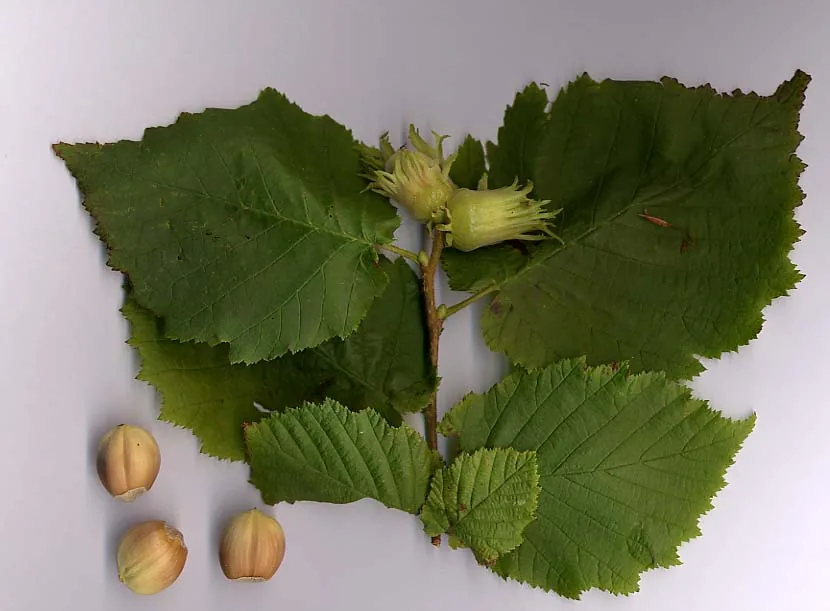
Overview
The hazelnut is a tough, multi-stemmed shrub in the birch family, and it's grown wild across Europe and into western Asia for ages. You'll hear it called cobnut or filbert, and it pulls its weight two ways: a steady fall crop of edible nuts and a suckering shape that's handy for a hedge or the edge of an orchard. It's hardy from zone 4 to 8, so it laughs off the kind of cold winters that would finish a softer tree.
Here's a fun quirk: it flowers way before the leaves show up, when pale yellow catkins dangle from bare branches in late winter. The wind moves the pollen, not the bees, and that's exactly why a single bush hardly ever fills out a crop. Most hazels can barely pollinate themselves, so you'll want a second, compatible cultivar close by for the female flowers to set nuts.
Grow it right and a hazel's a long-lived, easygoing plant. Really, two things decide how it goes: picking blight-resistant cultivars and staying on top of the suckers, which keep pushing up from the base and roots all season long. Handle those and the shrub keeps a clean, tidy shape for decades.
Care
The short version: put it in full sun and deep, well-drained soil, set a compatible pollinizer close by, water it through the first few years and any dry spells, and prune in late winter while you clear the suckers and any blight.
Light
Hazelnut crops best in full sun, which ripens more wood and fills out more nuts. It'll handle partial shade and keep growing, but you can bet on a lighter harvest where it's shadier.
Water
Water it regularly through the first two or three years while the roots are digging in, and again in dry spells while the nuts are sizing up. Once it's established it copes with drought okay, though steady moisture always gets you a better crop. Just let the top half of the soil dry out between waterings.
Soil
Give it deep, well-drained loam with lots of organic matter, though honestly hazel puts up with a wide range of ground, even shallow rocky spots. Shoot for a pH somewhere between 6.0 and 7.5, so slightly acidic to slightly alkaline.
Temperature
It's a really tough, cold-hardy shrub that takes winter lows near -31°F (-35°C) and summer heat up around 95°F (35°C). The one soft spot is a hard freeze during the late-winter bloom, which can cost you that year's nuts.
Humidity
Regular outdoor air is all it wants, somewhere around 40% to 70%, so there's no number to chase. What matters more is airflow through the canopy, since open growth keeps fungal trouble down.
Feeding
Feed it in early spring before bud break, and go off a soil or leaf test instead of just guessing. A nitrogen-rich balanced fertilizer, given seasonally, keeps the growth and the nut fill ticking along.
Pruning
Prune in late winter while dormant, pulling out dead, weak, and crossing wood and thinning things to keep an open center. Cut any blight cankers well below the visible stromata, and clear the basal suckers regularly so it holds a clean tree form.
Repotting
Hazelnut's a long-lived landscape and orchard shrub that lives in the ground, not in pots, so you'll hardly ever repot it. If you do start one in a container, move it on before the roots circle, the shoots stall, or water just runs straight through the mix.
Size & spacing
A grown hazel gets to 12 to 20 feet (3.7 to 6 m) tall and spreads 8 to 15 feet (2.4 to 4.5 m) wide. Leave it that much room from its neighbors so air moves freely and you've got space to cut the suckers back.
When to plant
Hazelnut pretty much runs on the dormant season. Get new plants in the ground from late fall to early spring while they're asleep, watch for the wind-pollinated catkins in late winter, and then gather the nuts as they ripen and drop from late summer into early fall.
Northern hemisphere
Southern hemisphere
Typical months for a temperate climate: start earlier in warm zones, later where spring frosts linger.
- Plant: Late fall to early spring while dormant
- Harvest: Wind-pollinated catkins open late winter to early spring; nuts ripen and drop late summer to early fall
Hardiness
USDA hardiness zones: 4–8
Temperature: down to -34°C
Troubleshooting
Most hazelnut trouble turns up in one of three spots: the wood, the crop, or the crowd of shoots down at the base. Once you can read those signs, you can jump in before a little issue spreads. Find what matches below, then act while it still does some good.
Branches dying back with rows of raised black bumps on the bark
See those little rows of black bumps shaped like footballs? That's eastern filbert blight, a fungus that creeps along the bark and slowly chokes the wood. Cut the affected limb 2 to 3 feet below the lowest canker you can spot, then burn or bin what you took off. After that, plant resistant cultivars and clear out any wild hazels nearby, since they just keep the fungus going.
Fix:
- Prune out infected limbs at least 2 to 3 ft below the lowest visible canker and destroy the wood
- Apply protectant fungicides during the spring bud-break infection period
- Replace highly susceptible plantings with resistant cultivars
Loads of catkins but barely any nuts, or shells that come up empty
Plenty of catkins and still no nuts? Hazelnut leans on the wind and can hardly pollinate itself, so a bush on its own usually sets almost no nuts. And if a hard freeze hits during that late-winter bloom, it can knock out the catkins or the female flowers too. So plant a cultivar that sheds matching pollen at the same time, and put your plants somewhere the late frosts aren't so brutal.
Fix:
- Plant at least one cultivar that sheds compatible pollen and overlaps bloom with the main variety
- Site plants where late frosts are less severe
A tangle of shoots coming up from the base and roots
This is just what Corylus avellana does, since it suckers freely from the base and roots, and if you leave those shoots be, they'll thicken into a real tangle. The trick is easy though: cut or pull the suckers while they're young, and do it a few times over the season. Running a mower or cultivator around the drip line snaps off the spreading shoots before they dig in.
Fix:
- Cut or pull suckers while young, several times per growing season
- Mow or cultivate around the drip line to sever spreading shoots
Toxicity
Good news if you've got pets or kids around: the hazelnut is not poisonous. Nothing on the plant is listed as toxic, and the ripe kernels are a food you already eat. The only things worth watching are the choking risk from whole nuts and the upset all that fat can give a dog.
Safe for
People · Cats · Dogs · Horses · Rabbits · Livestock · Birds
Cats None
Nothing on the hazelnut will poison a cat, so if yours nibbles a leaf or a bit of shell, there's no harm done.
Dogs None
The plant's fine for dogs. It's the nuts you've got to watch, because a whole one can choke a small dog, and all that fat can upset the belly or even lead to pancreatitis if they get into a lot.
Horses Safe
Horses are in the clear here, since neither the leaves nor the nuts of hazelnut will poison them.
Rabbits Safe
The leaves and twigs won't hurt rabbits at all, though those rich, fatty nuts really aren't right for them, so it's best to keep them away.
Livestock Safe
Cattle, goats, and sheep can graze right around a hazelnut and nothing about it is toxic to them.
Birds Safe
None of the plant bothers birds, and plenty of wild ones are more than happy to crack open the ripe nuts.
People Safe
The ripe kernels are a food everybody knows, fine to eat raw or roasted, unless you've got a tree-nut allergy.
Whole nuts are a choking and gastrointestinal obstruction hazard and are high in fat, so large quantities can cause stomach upset and, in dogs, raise the risk of pancreatitis.
Varieties
Most named hazels get chosen for their blight resistance, their kernel quality, or just their looks. Here are the ones worth knowing by name.
Jefferson
It's a blight-resistant OSU release that folks plant all over for its big, top-notch kernels.
Yamhill
This one's a compact, early-maturing OSU cultivar with really strong resistance to eastern filbert blight.
Barcelona
It's a classic Oregon commercial cultivar, but it catches eastern filbert blight very easily.
Contorta
You'll know it as Harry Lauder's Walking Stick, grown for those twisted, corkscrew stems and its winter interest.
Companions
Plant near
Compatible pollinizer hazelnut cultivar: Supplies overlapping, cross-compatible pollen needed for nut set
Clover or other legume ground cover: Living mulch that fixes nitrogen and suppresses weeds in the orchard floor
Keep apart
Wild or abandoned hazel (Corylus) plants: Act as a reservoir of eastern filbert blight inoculum that infects nearby plantings
How to propagate
Hazelnut takes to a few different methods, whether that's rooting a low branch or just lifting the suckers it hands you for free. It really comes down to whether you want an exact copy of a cultivar or you're happy with a seedling.
LayeringModerate
Late winter to early spring · 1 to 2 years to rooted, separable plants
Want an exact copy of a cultivar on its own roots? Mound and simple layering are the usual go-to. Pin or heap soil over the low shoots in late winter to early spring, let them grow their own roots over the next 1 to 2 years, and then cut them loose as brand new plants.
DivisionEasy
Dormant season, late fall to early spring · 1 season
The easiest trick is to grab the suckers the shrub tosses up anyway. Dig the rooted basal suckers off an established clump while it's dormant, sometime from late fall to early spring, replant them, and they'll settle in within a single season.
GraftingDemanding
Late winter on dormant rootstock · 1 to 2 years
Grafting sticks a named cultivar onto a chosen rootstock, and yeah, it takes a steady hand. Do the work in late winter on dormant rootstock, and then give the union 1 to 2 years to grow into a solid, productive plant.
SeedModerate
Sow outdoors in fall or stratify cold and moist for 2 to 3 months · Several years to bearing
Seed's easy enough, but it won't copy the parent, since seedlings don't come true to cultivar. Sow it outdoors in fall, or give it 2 to 3 months of cold, moist chilling first, and then plan on several years of growth before the plant starts giving you nuts.
Myths
A single hazelnut bush will reliably crop on its own.
Nice idea, but Corylus avellana rides on the wind and can barely pollinate itself, so a lone bush usually sets little or no fruit. You need a separate compatible pollinizer cultivar nearby if you want a real crop of nuts.
Hazelnut plants are poisonous to cats and dogs.
Not so, since the plant isn't on the ASPCA toxic list and the leaves and nuts won't poison a pet. What you actually want to watch is choking on a whole nut and an upset stomach from the high fat, not poisoning.