Ornamental · Athyriaceae
Japanese Painted Fern
Athyrium niponicum var. pictum
Find it a spot with soft shade and damp soil, and this fern makes even a gloomy corner look surprisingly bright.
Partial shade
Every 4–7 days
USDA 3–8
12–18 in · 30–46 cm
Overview
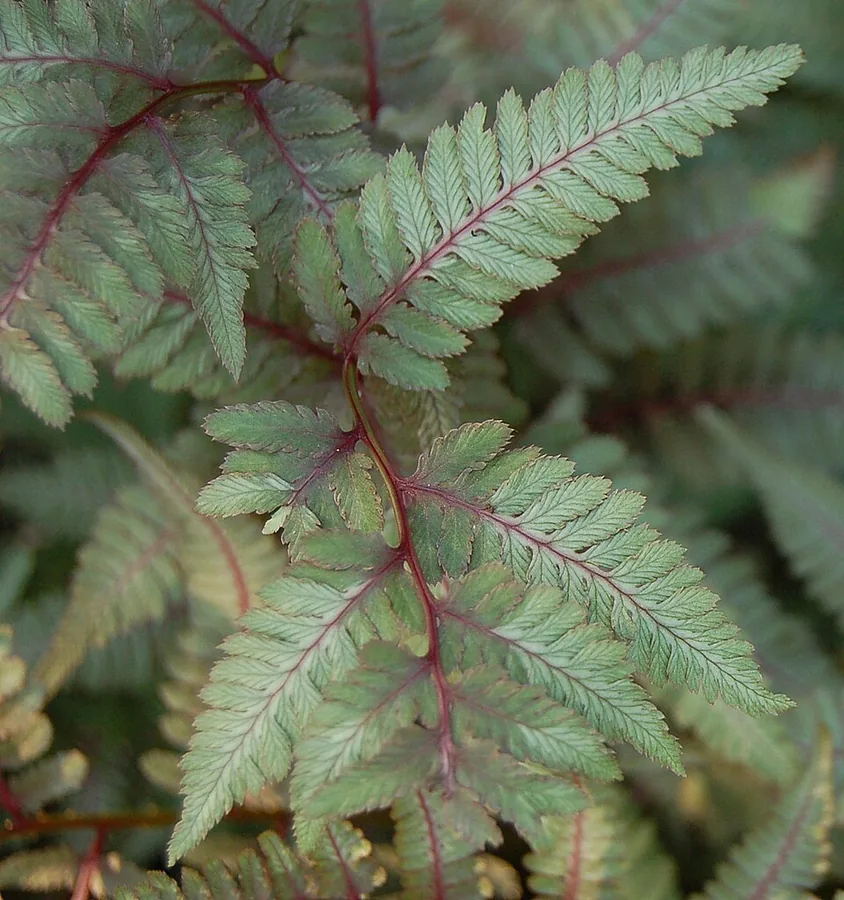
The Japanese painted fern is about as colorful as ferns get. Its fronds come in silvery-gray brushed with wine-burgundy over dark reddish stems, and that combo is exactly what makes it pop next to all the plain green ferns nearby. It's also a hardy perennial for shade, and it's tough enough to sail through winters from USDA zone 3 to 8.
This one's a slow, clumping grower that stays pretty modest, topping out around 12 to 18 inches (30 to 46 cm) tall and a little wider. It dies back to the ground every fall and pops up again in spring, and the new fronds carry the freshest, brightest color of all. Want the most out of it? Plant it somewhere you'll walk past, because that painted detail really rewards a closer look.
The best part is how little fuss it makes. Give it light to dappled shade and soil that stays moist but drains well, and it pretty much runs itself. Only two things really knock it back, and both are easy to dodge: too much sun, which fades the color, and waterlogged ground, which rots the crown.
Care
The short version: part to full shade, soil kept evenly moist but never soggy, and a humus-rich bed with some compost mixed in. Mulch to hold the moisture, split the clump every few years, and give it room to spread out.
Light
Pop it in part to full shade, because that's where this fern is happiest. Light, dappled shade brings out the strongest silver and burgundy, while too much direct sun fades the color and scorches the frond tips, so err on the shadier side.
Water
Keep that soil consistently moist and don't let it dry out, since a dried-out fern is what ends up with crispy edges. Water more often when it's hot or dry, and a layer of mulch helps hold the moisture in between drinks.
Soil
It wants humus-rich soil with plenty of organic matter, moist but still well-drained. Boggy, waterlogged ground is the one thing to steer clear of, because that's what rots the crown and roots.
Temperature
This is a seriously cold-hardy plant that shrugs off winters down to -31°F (-35°C) and handles summer heat up to around 86°F (30°C). That wide comfort range is exactly why it grows across USDA zones 3 to 8.
Humidity
It's a fan of high humidity and does great in the moist, sheltered air of a shaded bed. In a dry, windy spot the frond edges start to brown, so steady soil moisture and a little shelter really pay off.
Feeding
Feed it lightly in spring with a balanced fertilizer, or just top-dress with compost or leaf mold. It's a light feeder, so there's no need to hit it with heavy doses.
Pruning
Cut back the old, dead fronds in late winter or early spring before the new fiddleheads push up. Snip off any tattered fronds through the season, but otherwise it dies back on its own each fall.
Repotting
This fern lives in the ground, not a pot, so there's no repotting to worry about. Instead, divide the clump every 3 to 4 years in early spring to keep it going strong, splitting it when the center thins out or the fronds shrink.
Size & spacing
Plants get to 12 to 18 inches (30 to 46 cm) tall and spread 18 to 24 inches (46 to 61 cm) wide. Give each one that much room so the clump can fill out without crowding the neighbors.
When to plant
This fern goes by the seasons, not a sowing schedule, so there's no calendar to stress about. Set new plants out in spring once hard frost is done, enjoy the painted fronds unfurling all through the growing season, then let them die back when the cold rolls in and watch them return the next spring.
Northern hemisphere
Southern hemisphere
Typical months for a temperate climate: start earlier in warm zones, later where spring frosts linger.
- Plant: Spring, after danger of hard frost has passed
Hardiness
USDA hardiness zones: 3–8
Temperature: down to -40°C
Troubleshooting
Just about every issue with this fern turns up on the fronds, and it's usually a water or light thing rather than a disease. Catch the early signs and you can step in before a patch really slips. Find what matches below, then sort it out while there's still time.
Whole plant flopping over with a soggy base
If the whole plant flops over and the base feels soft and mushy, the roots have basically drowned. That's crown rot, and it shows up wherever the soil stays waterlogged or water keeps pooling around the base. Work some organic matter into the ground so it drains better, move the fern to a raised or drier spot, and go easy on the watering for a while.
Fix:
- Improve drainage by amending with organic matter
- Replant in a raised or better-drained location
- Reduce overwatering
Frond edges going brown and crunchy
Seeing crispy edges? That's usually the fern telling you it got thirsty or caught too much sun. Drought stress is the top suspect, and hot afternoon light and dry wind aren't far behind. Give it a deep drink so the soil stays evenly moist, pile on a few inches of mulch, and shift a scorched plant somewhere shadier.
Fix:
- Water deeply to keep soil evenly moist
- Apply 5-8 cm of organic mulch to retain moisture
- Relocate or shade plants exposed to hot afternoon sun
That silvery color slipping away into plain old green
Wondering why the color's slipping? It naturally comes and goes with the light and the time of year. Too much sun bleaches out the silver, and plain old summer heat dulls things down as the season rolls on. A bit of midsummer greening is totally normal, and the bright spring fronds bounce back, but if a sunny spot keeps rinsing the color away, just move the fern into lighter, dappled shade.
Fix:
- Provide light to dappled shade
- Accept natural midsummer greening, as fresh spring fronds return with color
Ragged holes chewed through the fronds
Torn holes and a shiny silvery smear nearby? That's the calling card of slugs and snails, which love the same cool, damp shade your fern does. Head out after dark to pick them off, scatter some iron-phosphate bait, and clear away the leaf litter and debris where they hang out during the day.
Fix:
- Hand-pick slugs and snails at night
- Use iron-phosphate slug bait
- Remove debris and litter that shelter slugs
Toxicity
Good news if you've got pets: this is a true fern with no known toxins, and it doesn't show up on the ASPCA's list of harmful plants. It is safe around cats, dogs, horses, and other animals. It's not a food plant, so there's no reason to let a pet graze on it, but a stray nibble here and there is nothing to stress about.
Safe for
People · Cats · Dogs · Horses · Rabbits · Livestock · Birds
Cats None
A cat can nibble a frond and be perfectly fine, because this is a true fern with no known toxins. That said, it's not a snack worth encouraging, since a cat that scarfs down a lot of any greenery might drool or bring it back up.
Dogs None
Dogs are totally fine around this fern, which doesn't carry any toxic compounds. The worst that happens if one wolfs down a big pile of fronds? A passing upset stomach, just like overdoing any plant.
Horses None
There's nothing in this fern that's known to hurt horses. It's not something they'd normally eat, so a stray mouthful grabbed while grazing is really no big deal.
Rabbits None
Rabbits can munch the fronds without any trouble, though honestly they usually skip this one. Keep it to the odd taste rather than a regular meal, since there's not much in it for them.
Livestock None
Cattle, goats, and sheep have nothing to fear from this fern. It doesn't hold any toxins that would bother a grazer that wanders into a patch of it.
Birds None
Backyard birds and pet birds alike are safe around these fronds. There's just nothing in the plant that could harm a bird that stops to peck at the foliage.
People None
This fern is a safe pick for homes with kids, and it's fine to touch and handle. It's not grown to eat, though, so there's really no reason for any part of it to end up on a plate.
No known toxicity, but the plant is not a food and large quantities of any plant material can cause mild stomach upset if eaten.
Varieties
There are a handful of named painted ferns out there, and each one plays with the same silver-and-burgundy look in its own way. These are the ones worth knowing by name.
Pictum
The original painted fern shows off silvery-gray fronds flushed with wine-burgundy over dark reddish midribs and stems.
Silver Falls
You get brightly silvered fronds with deep burgundy veining on a vigorous, mounding plant.
Burgundy Lace
A silvery overlay sits on top of strong wine-burgundy across finely divided, lacy fronds.
Ursula's Red
Deep red-burgundy fans out from the midrib into silvery frond margins.
Pewter Lace
Finely divided fronds pick up a soft pewter-silver finish.
How to propagate
Making more painted ferns is easy, and splitting one clump hands you free copies of a plant you already grow.
DivisionEasy
Early spring · One growing season
Want more of these? Splitting an established clump in early spring is the go-to home method, and it's honestly about as easy as propagation gets. Just lift the clump, pull it into pieces, and replant, and each division settles in over a single growing season. It'll grow from spores too, but that's a slow road and better left to the specialists.
Myths
Having this fern around the house puts pets in danger of poisoning.
It doesn't show up in the ASPCA toxic plant database, and true ferns count as non-toxic. It is safe around cats, dogs, and other animals, but it's still a foliage plant to look at, not something to feed them.
You've got to stick a fern somewhere the sun never reaches.
This one actually shows its best silver and burgundy in light to dappled shade. Too much direct sun washes the color out, but heavy, sunless shade just leaves the plant thin and weak, so the middle ground wins.
You can't overwater a fern, since they all love swampy ground.
The painted fern likes soil that stays moist but still drains freely, with lots of humus worked in. Waterlogged ground rots the crown and roots, so good drainage matters just as much as steady moisture.