Ornamental · Balsaminaceae
New Guinea Impatiens
Impatiens hawkeri
Hand it rich soil that stays moist plus a bit of shade, and New Guinea impatiens keeps blooming from spring right up to frost.
Partial shade
59–81°F · 15–27°C
85–110 days
USDA 10–12
Overview
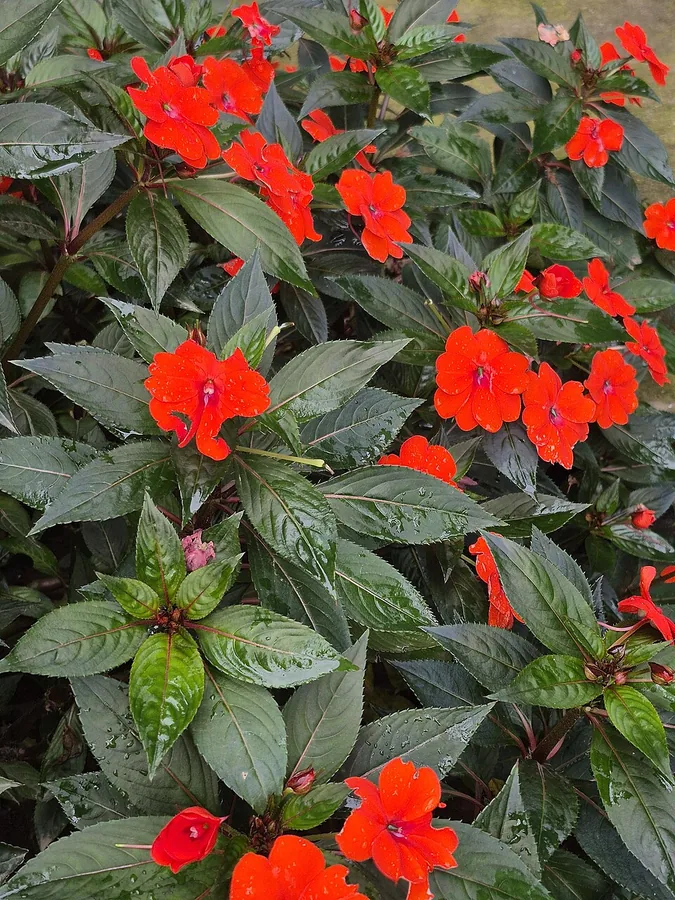
New Guinea impatiens really earns its spot with those big, bright flowers sitting against deep green or bronze leaves. It hails from the islands north of Australia and it's technically a tender perennial, but most folks just grow it as a garden annual and replant every spring. The plants stay neat and mounded, so they're easy to pop into beds, borders, or a pot right by the door.
So what makes it different from the old bedding impatiens? Basically, it's tougher. It handles more sun, the flowers and leaves come out bigger, and it shrugs off the downy mildew that wrecked common impatiens in so many gardens. And if you want even more muscle, the interspecific SunPatiens hybrids stand up to full sun and real summer heat.
Honestly, it doesn't ask for much beyond steady moisture. Keep the soil damp but not soggy, feed it through the season, and it'll bloom nonstop from spring until the first frost. Let it dry out in the heat, though, and you'll see the leaves stipple and the flowers fade fast.
Care
The short version: give it partial shade and rich, well-drained soil kept evenly moist, feed a balanced fertilizer every couple of weeks, and pinch off the spent blooms so more keep coming.
Light
Give it partial shade, especially where summers get hot. It'll take more sun than common impatiens, but bright afternoon light without enough water leaves the plants stressed and the leaves stippled, so keep an eye on that.
Water
Keep the soil evenly moist the whole time, not soggy and not bone dry. The more sun a plant gets, the thirstier it is, so a spot in full light or a pot is going to need water more often. And good drainage is what keeps all that moisture from turning into root rot.
Soil
Plant it in rich, well-drained soil with plenty of organic matter mixed in. You want a mix that holds moisture without staying wet, because these plants like damp roots but they'll rot in standing water.
Temperature
It's happiest between 59°F and 81°F (15°C to 27°C) and has zero tolerance for frost. One cold snap and it's done, which is why it's grown as an annual outside the warmest zones.
Humidity
Regular household humidity is totally fine, so there's no number to worry about. What really counts is steady moisture at the roots, way more than the air, and it's dry heat that tends to bring on spider mites.
Feeding
These are heavy feeders, especially in pots. Give it a balanced liquid fertilizer every couple of weeks through the growing season and you'll keep the blooms coming and the foliage nice and full.
Pruning
There's no real pruning to deal with. Just deadhead the spent flowers to keep new ones coming, and pinch off any damaged or diseased growth whenever you notice it.
Size & spacing
Plants get 6 to 20 inches (15 to 50 cm) tall and spread 12 to 24 inches (30 to 60 cm) wide, making a tidy little mound. Give them some space so air can move and the leaves dry off quick after rain.
When to plant
New Guinea impatiens can't handle frost, so it all comes down to the cold. Wait to set plants out until after the last frost, once nights are staying above 50°F (10°C), and from there they'll bloom from spring right through to the first frost in fall.
Northern hemisphere
Southern hemisphere
Typical months for a temperate climate: start earlier in warm zones, later where spring frosts linger.
- Sow: 8 to 10 weeks before last spring frost (seed strains only)
- Plant: After last frost when soil and night temperatures stay above 50°F (10°C)
- Harvest: Spring through fall until frost
Hardiness
USDA hardiness zones: 10–12
Temperature: down to -1°C
Troubleshooting
Most problems with New Guinea impatiens come back to water and air, either too much sitting at the roots or not enough getting to the leaves in the heat. Catch the early signs on the foliage and flowers and you can jump in before things spread. Find what matches below, then act while it still does some good.
Wilting and flopping when the soil's still wet
Here's the tricky part: a plant drooping in soggy soil is almost always dealing with root rot, not thirst, so don't reach for the watering can. Slide it out of the pot and check the roots, which go brown and mushy instead of white and firm. Water less, sort out the drainage or move it into a looser mix, and let go of anything that's too far gone.
Fix:
- Reduce watering frequency
- Improve soil drainage or repot
- Remove severely affected plants
Pale flecks, yellowing leaves, and a wispy webbing
Seeing pale speckling and a bit of webbing? That's usually spider mites, and they show up once a plant gets hot and dry. Flip a leaf over to spot the tiny dots and webbing, or tap one over white paper and watch the specks crawl. Give the foliage a rinse, keep the soil moist so the plant isn't so stressed, and hit the undersides with insecticidal soap or horticultural oil.
Fix:
- Rinse foliage with water
- Keep soil moist and reduce heat/drought stress
- Apply insecticidal soap or horticultural oil to leaf undersides
Fuzzy gray mold on flowers and leaves
When it's cool, damp, and the air just sits there, gray mold likes to move in on tired blooms and spread out from them. So pick off the flowers and leaves that are affected, loosen up the planting so air can actually move through, and water down at the base rather than over the whole plant. Simple fixes, and they work.
Fix:
- Remove and discard affected plant parts
- Improve air circulation and spacing
- Water at the base and avoid wetting foliage
Warped new shoots, sticky leaves, and stripy blooms
Aphids and thrips love the soft new growth and the flowers, so that's where trouble tends to start. Take a look at the shoot tips and blooms for little insects, and watch for the silvery streaks and scarring that thrips leave behind. A good rinse with water, a spray of insecticidal soap, and snipping off the worst growth is usually all it takes.
Fix:
- Rinse plants with water
- Apply insecticidal soap
- Remove heavily infested growth
Toxicity
Got pets and kids? Good news, because New Guinea impatiens is non-toxic all around. The ASPCA lists impatiens as safe for cats, dogs, and horses, and a stray nibble won't poison the other animals in the house either. So plant it wherever you like and don't give it a second thought.
Safe for
People · Cats · Dogs · Horses · Rabbits · Livestock · Birds
Cats None
Cats are fine here, so if one takes a curious nibble of a leaf or flower, it won't get poisoned.
Dogs None
Dogs are good too, since the ASPCA lists impatiens as non-toxic, so a chewed leaf is nothing to stress about.
Horses Safe
Horses have nothing to worry about, and a mouthful of the plant won't make them sick.
Rabbits Safe
Rabbits can munch the leaves and blooms all they like without any harm.
Livestock Safe
Cattle, goats, and sheep can hang around it just fine, since there's nothing in the plant to bother them.
Birds Safe
Backyard and pet birds are safe, so a pecked leaf or flower is no big deal.
People Safe
It's fine around kids too. Nobody's growing it to eat, but a leaf in a little mouth won't poison anyone.
Varieties
New Guinea impatiens comes in named series instead of a big list of standalone names, and a few of them keep popping up. These are the ones worth getting to know.
'SunPatiens'
They're interspecific hybrids built for scorching heat and full sun, and they grow strongly enough to take rough weather in stride.
'Divine'
Here's a series you can actually grow from seed, a real exception since nearly all of these are propagated by cuttings.
'Celebration'
This one's a cuttings series with big flowers in loads of different colors.
'Sonic'
This cuttings series flowers early and all at once on a small, tidy plant.
How to propagate
The easiest way to make more New Guinea impatiens is from cuttings, but there are a handful of seed strains too if you'd rather start from scratch.
Stem cuttingsEasy
Spring to summer during active growth · 2 to 4 weeks to root
Cuttings are how most New Guinea impatiens get going. Take tip cuttings in spring or summer while the plant's growing, and they'll root in about 2 to 4 weeks. Just keep in mind that lots of named cultivars are patented, so propagating them at home might not be legal.
SeedModerate
Indoors 8 to 10 weeks before last frost · 10 to 14 days to germinate
Only a few seed strains work this way, like the Divine series, so seed isn't the usual path. Want to try it? Sow indoors 8 to 10 weeks before the last frost, leave the seed sitting on the surface since it needs light, and keep it warm around 70°F to 75°F (21°C to 24°C) until it comes up in 10 to 14 days.
Myths
New Guinea impatiens does great in full sun wherever it's planted, like your average sun annual.
They'll take more sun than common impatiens, sure, but they still want steady moisture and they're happier with some afternoon shade where summers get hot. The interspecific SunPatiens types are the ones bred for real sun and heat tolerance.
New Guinea impatiens catch downy mildew and die off the way garden impatiens once did.
Nope. Impatiens hawkeri and the SunPatiens hybrids just shrug off the impatiens downy mildew that flattened the old bedding impatiens. They are the recommended stand-in for the susceptible Impatiens walleriana.