Houseplant · Piperaceae
Baby Rubber Plant
Peperomia obtusifolia
Bright indirect light plus a proper dry-out between drinks? That's honestly about all this easygoing peperomia ever asks for.
Bright indirect
USDA 10–12
6–24 in · 15–61 cm
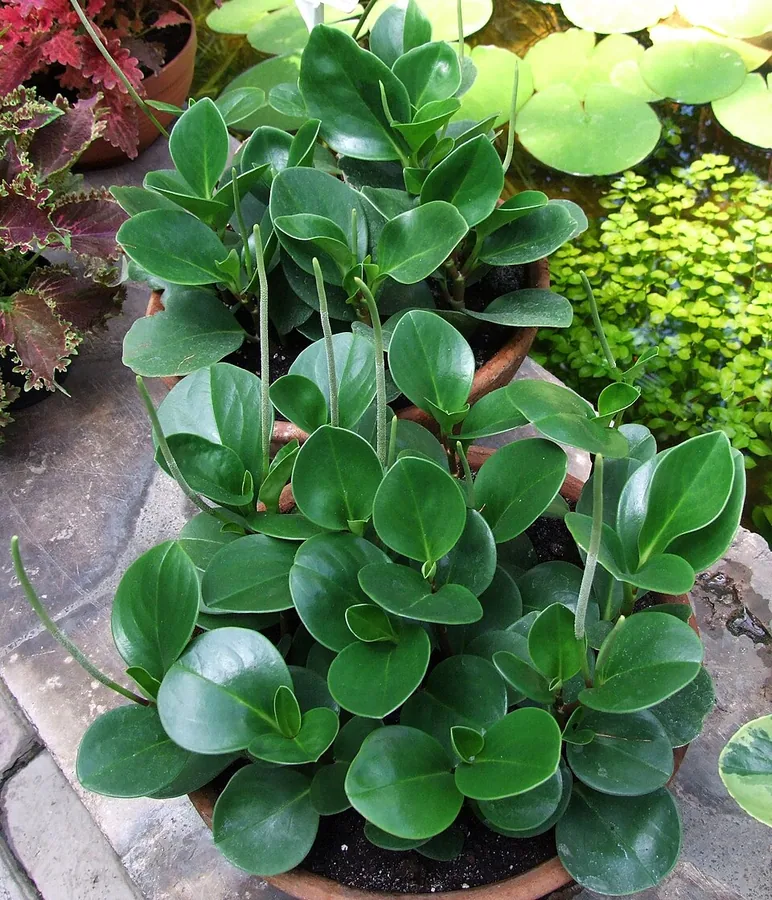
Overview
The baby rubber plant is one of those houseplants that just forgives you, which is why it's so easy to love. It's part of the pepper family and grows wild from Florida down through tropical America, creeping low across the forest floor. Indoors it stays small, hitting 6 to 24 inches (15 to 61 cm), with thick, glossy leaves that look almost too tidy to be real.
Here's the thing about those fleshy leaves: they store water like a succulent, so the plant shrugs off a skipped watering but really doesn't like sitting in wet roots. Get the watering right and the rest is a breeze, since it doesn't ask for much light, much food, or much fuss at all.
Want a bit of color? The variegated forms bring in cream, white, and gold, and they only hold those shades in brighter light. The plain green types are the toughest of the lot and shrug off a dim corner that would totally wash out a fancier cultivar.
Care
The short version: give it bright indirect light and let the potting mix dry almost all the way before you water again. Pot it in a fast-draining mix, feed it lightly in spring and summer, and just keep it above 50°F (10°C).
Light
Give it bright, indirect light and you'll get the best growth and the richest leaf color. It'll manage in low light too, especially the plain green types, but a variegated plant tends to fade and stretch when a spot's too dim. Just keep it out of direct sun, since that scorches the leaves.
Water
This is where most baby rubber plants live or die, so pay attention here. Let the mix dry almost completely before the next drink, because the fleshy leaves carry their own reserve and rot fast in wet soil. Ease off even more from fall through late winter, when growth slows down.
Soil
Pot it in a well-drained houseplant or cactus mix, or a peaty blend that drains nicely. It's not picky about pH and takes anything from 6.0 to 8.0, but the soil can't ever stay soggy. A pot with drainage holes matters just as much as the mix itself.
Temperature
Treat it like the tropical plant it is and keep it above 50°F (10°C). Normal room warmth suits it all year, but cold drafts and chilly winter windowsills will set it back, so watch out for those.
Humidity
Average indoor humidity is plenty, so there's no number you need to hit. It handles dry rooms better than most tropicals, though a little more moisture in the air does help keep spider mites away.
Feeding
Only feed it during the spring and summer growth, when it's actually putting the food to use. A diluted liquid houseplant fertilizer once a month does the trick, or drop in a slow-release granular feed once a year and forget about it. Skip feeding through fall and winter.
Pruning
Pull off old or damaged leaves whenever you notice them. Want a fuller, bushier plant? Cut a stem just above a leaf node, and it'll branch right out from that spot.
Repotting
This plant's happy to stay put and can sit in the same pot for several years. Only repot when roots crowd or circle the pot, the soil dries out weirdly fast, or new growth stalls.
Size & spacing
Expect a tidy little plant, about 6 to 24 inches (15 to 61 cm) tall and roughly as wide. Its small, mounding shape slots onto a desk, a shelf, or a windowsill without crowding whatever's next to it.
Troubleshooting
Almost every problem with this plant comes back to water, and usually to a bit too much of it. Once you can read the leaves and stems, you'll catch trouble before the roots ever rot. Find what matches below, then tweak things before a small issue gets bigger.
Droopy, toppling plant with squishy stems right at the soil
So the stems near the soil have gone soft and the whole thing is flopping? That's root and stem rot, and it almost always comes from soil that stayed wet too long. Those water-packed leaves make it top-heavy, so it caves in quick once the roots quit. Tip it out, snip off every mushy brown root and stem, and pot it back into fresh, fast-draining mix. If the middle's already gone, don't stress, just root a couple of healthy cuttings and start again.
Fix:
- Remove the plant from wet soil and cut away all soft, brown, rotted roots and stem tissue
- Repot into fresh, well-drained potting or cactus mix in a pot with drainage holes
- Withhold water until the mix is nearly dry, then water sparingly
- If the crown is lost, root healthy stem or leaf cuttings to save the plant
Leaves yellowing and dropping off
Yellow leaves that drop are basically the plant waving a flag that says too much water. The thing is, those fleshy leaves already keep their own supply, so the soil really should go nearly dry before the next drink. Just stop watering, tip out the saucer, and let it dry. Honestly, it copes with a dry stretch way better than a soggy one.
Fix:
- Stop watering and allow the soil to dry out almost completely
- Improve drainage and empty any standing water from the saucer
- Resume a let-dry-completely watering routine
Little webs, white fluff, or a tacky coating on the plant
These are the usual houseplant party crashers. Spider mites leave fine webbing and a speckled, dusty look, mealybugs show up as cottony white fluff tucked in the leaf joints, and whiteflies scatter the second you brush the plant. Pull it away from your other plants, dab the mealybugs with an alcohol-soaked swab, then rinse and treat the leaves with insecticidal soap or horticultural oil until they're gone for good.
Fix:
- Isolate the plant to prevent spread
- Wipe off mealybugs with a cotton swab dipped in alcohol
- Rinse foliage and treat with insecticidal soap or horticultural oil, repeating as directed
- Raising humidity discourages spider mites
Weird scabby, bumpy spots showing up under the leaves
Those rough little bumps look worrying, but they're just oedema, and no, the plant can't spread it to anything else. They pop up when the roots drink faster than the leaves can breathe the water back out, usually after wet soil teams up with dim light or damp air. Water a bit less, give it brighter light and some airflow, and the new leaves come in clean. The old marks are here to stay, so only pull a badly spotted leaf if the look bugs you.
Fix:
- Reduce watering and let the mix dry between waterings
- Increase light levels and air circulation
- Lower ambient humidity around the plant
- Remove badly affected leaves for appearance (damage is permanent on existing leaves)
Stems going long and lanky while the variegation dulls
When the light's too dim, the plant leans and reaches for it, and the stems go long and thin. Notice how variegated types lose their contrast and drift back toward plain green? Move it somewhere brighter but out of that harsh midday sun, give it a turn now and then so it grows evenly, and pinch the stretched stems above a node to fill it back out.
Fix:
- Move to a brighter spot with bright indirect light (out of direct midday sun)
- Rotate the plant periodically for even growth
- Pinch or prune leggy stems above a node to encourage branching
Crispy, faded marks on the leaves closest to the window
See dry, browned patches on the leaves facing the window? That's direct sun, and these leaves just can't take it for long. Strong afternoon light is usually the thing to blame. Scoot the plant back to a bright but indirect spot, then trim off the worst-burned leaves, because those patches aren't going to heal.
Fix:
- Move the plant out of direct sun to a bright indirect location
- Remove severely scorched leaves
Toxicity
Good news if the house is a busy one: the baby rubber plant is non-toxic and pet-safe. The ASPCA and university extensions list it as harmless to cats, dogs, and horses, so a stray nibble from a pet or a curious kid is nothing to sweat.
Safe for
People · Cats · Dogs · Horses · Rabbits · Livestock · Birds
Cats None
Got a cat? You're fine, because the ASPCA lists this one as non-toxic, so a curious nibble won't poison her. Sure, a cat that goes overboard on any houseplant might bring a bit back up, but the leaves themselves are totally harmless.
Dogs None
Dogs are fine too, and the ASPCA backs that up with no toxic effects on record. A big mouthful might just pass through as a soft stool, so there's really no poison at play.
Horses None
NC State says it's non-toxic to horses, so a stray taste won't do any damage. Being a little indoor plant, it hardly ever ends up anywhere near a horse anyway.
Rabbits None
Rabbits have nothing to worry about here, since there are no toxins in those fleshy leaves. That said, greens grown just for them still make the better everyday snack.
Livestock None
It's free of the stuff that bothers grazing animals, so livestock are in the clear. It's a houseplant, not something out in the field, so they'd rarely bump into it anyway.
Birds None
Nothing in the plant poisons birds, so if the household parrot sneaks a peck, no big deal. The thick leaves just aren't part of a proper bird diet, that's all.
People None
It's safe around kids, with no toxic compounds to worry about if a leaf gets chewed. It's not grown to eat, so there's no reason to serve it, and no reason to panic over a little taste either.
No special handling required for pet households; documented non-toxic
Varieties
Most of the named forms really come down to the leaves, running from solid green to bold cream and gold variegation. These are the ones you'll bump into most.
'Variegata'
You'll spot grey-green leaves blotched with green and edged in a wide creamy-white margin, and that margin keeps its color best when the light's a bit brighter.
'Alba'
Its new growth comes in almost pure white to yellow with a flush of bright red, then mellows into greener shades as it ages.
'Albomarginata'
The grey-green leaves get a silvery border, and there's an 'Albomarginata Minima' form that shrinks the whole plant down to a dwarf.
'Minima'
It's a compact grower with little leaves just one to two inches long, so it's great for a tight spot or a small pot.
'Gold Tip'
You'll see marbled variegation running through the leaves, and each one wraps up with a gold tip.
'USA'
Its leaves break into multi-shaded variegated patches, so you get a busier, mottled kind of look.
'Obtipan Green'
This one's a short, clumping plant with solid emerald-green leaves and none of the variegation.
How to propagate
Not many plants share themselves as easily as this one does. A single leaf, a stem tip, or a split clump will all root with barely any effort, so one healthy plant turns into several before you know it.
Leaf cuttingsEasy
Spring to summer · Several weeks to root
Grab a single leaf with about an inch of petiole in spring or summer and tuck it into moist mix, and over several weeks it'll root into a whole new plant. Honestly, it's about the easiest way there is to grow more.
Stem cuttingsEasy
Spring to summer · Several weeks to root
Snip a tip or stem cutting while it's growing in spring and summer, then stand it in water or moist mix. Roots show up over a few weeks, and the cutting grows on looking just like the parent.
DivisionEasy
Spring at repotting · Several weeks
Next time you repot in spring, just pull a crowded clump apart into smaller pieces, making sure each one keeps its own roots. They settle in over several weeks and hand you full-sized plants right off the bat.
Myths
This plant is really just a small rubber tree from the same family.
The name's honestly the only thing they've got in common. Peperomia obtusifolia is in the pepper family, Piperaceae, while the true rubber plant, Ficus elastica, sits over in the fig family. That shared name is just about the thick, glossy, rubbery-looking leaves, not any actual family tie.
It's tough enough to live out in a regular garden through every season.
It's a tropical plant, really, hardy only in USDA zones 10 to 12 and easily nipped by cold. Keep it above about 50°F (10°C) and it's happy, which is exactly why it lives as a houseplant almost everywhere and only heads outside for summers where the nights stay warm.
Sources
- ASPCA Animal Poison Control
- NC State Extension Gardener Plant Toolbox
- Missouri Botanical Garden Plant Finder
- Clemson Cooperative Extension HGIC
- University of Missouri Integrated Pest Management
- UF/IFAS Extension (EDIS FPS466/FP466)
- UMass Amherst Center for Agriculture, Food, and the Environment (Greenhouse & Floriculture)
- Plants of the World Online, Royal Botanic Gardens Kew